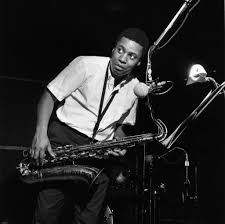
Wayne Shorter didn’t just play jazz; he expanded the horizon of what music could be. Known for his enigmatic tone and his ability to tell stories with just a few notes, Shorter was the creative force behind three of the genre’s most important pillars: Art Blakey’s Jazz Messengers, Miles Davis’s legendary second great quintet, and the pioneering fusion group Weather Report. His international relevance is absolute; he was considered by many the greatest living jazz composer until his passing, leaving a legacy of themes that have become mandatory standards for musicians on every continent.
What set Shorter apart was his cinematic and spiritual approach. He didn’t see music as a sequence of chords, but as an exploration of the unknown. His compositions—such as ‘Footprints,’ ‘Infant Eyes,’ and ‘Nefertiti’—abandoned predictable structures in favor of mysterious harmonies and melodies that seem to float in time. This sensibility led him to a deep connection with Brazil, immortalized in the album Native Dancer (1974) with Milton Nascimento, a record that redefined the collaboration between jazz and Brazilian music on the global stage, elevating syncopation to a level of universal mysticism.
At Jazz Latitude, Wayne Shorter is celebrated as the eternal explorer. He proved that technique serves imagination, not the other way around. His ability to reinvent himself, from aggressive bebop to electronic fusion and orchestral suites, solidified him as an intellectual and artistic authority whose influence transcends cultural and temporal boundaries.