
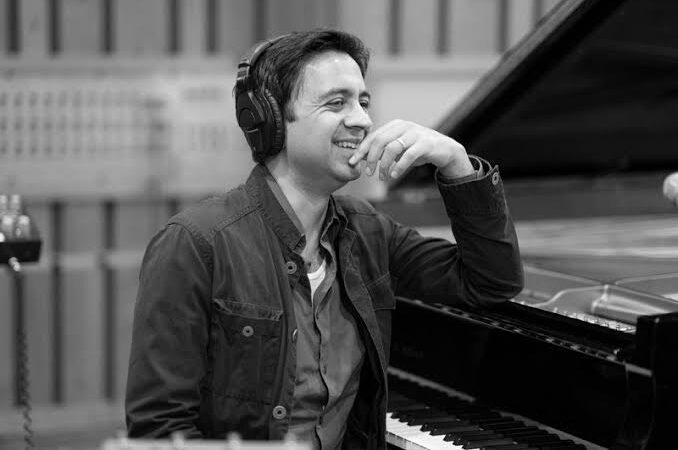
When Rhythm Became a Way of Thinking
Every generation of jazz produces musicians whose influence extends beyond the notes they play. Some transform harmony. Others reinvent improvisation, orchestration or instrumental technique. A rare few fundamentally alter how musicians think about music itself. Vijay Iyer belongs unmistakably to this last category. Over the past three decades, the American pianist, composer and scholar has emerged as one of the most intellectually compelling and artistically adventurous figures in contemporary jazz, creating a body of work in which rhythm becomes philosophy, improvisation becomes research and performance becomes a profound exploration of human perception.
What distinguishes Iyer is not simply extraordinary technical ability, although his command of the piano is remarkable. Nor is it merely his compositional sophistication, widely admired across jazz, classical and experimental music. His greatest achievement lies in revealing unexpected relationships between disciplines that many people assume exist independently. Mathematics informs rhythm. Cognitive science illuminates improvisation. South Indian musical traditions reshape concepts of pulse and time. African American jazz history becomes inseparable from broader questions concerning identity, migration and cultural memory.
Yet none of these ideas appears as academic theory translated into music.
Instead, they become music.
Listeners unfamiliar with his intellectual background often respond first to the extraordinary physical energy of his performances. Rhythms interlock with astonishing precision. Harmonic structures evolve organically beneath intricate melodic lines. The interaction between ensemble members possesses unusual intensity, as though every musician were participating simultaneously in composition and spontaneous discovery. Only later does one begin to appreciate the deeper conceptual architecture supporting that emotional immediacy.
This balance between intellect and feeling explains why Vijay Iyer occupies such a singular position within modern jazz. His recordings reward close analytical listening, yet they never require technical knowledge to communicate. They speak directly to the body before inviting the mind into conversation.
Understanding his career therefore means exploring not only one of today’s greatest pianists, but one of contemporary music’s most original thinkers.
Growing Up Between Worlds
Born in Albany, New York, in 1971, to Indian immigrant parents, Vijay Iyer experienced multiple cultural traditions from an early age. His family valued education, literature and South Asian cultural heritage while raising him within American society during a period of profound cultural transformation.
Music entered his life early.
Classical piano lessons provided technical foundations.
Jazz arrived through curiosity rather than formal instruction.
South Indian rhythmic traditions remained present through family and cultural experience.
Rather than choosing one musical identity over another, Iyer gradually learned to inhabit several simultaneously.
This experience profoundly shaped his later artistic philosophy.
Identity became fluid rather than fixed.
Tradition became dialogue rather than inheritance.
Improvisation became a means of navigating cultural complexity.
Unlike many jazz musicians whose development followed relatively direct paths through conservatories or professional apprenticeships, Iyer’s journey remained unusually interdisciplinary from the beginning.
That intellectual openness would eventually become one of his defining strengths.
Science, Mathematics and the Piano
Before establishing himself internationally as a musician, Vijay Iyer pursued studies in physics and later completed doctoral research examining the cognitive foundations of musical perception.
For many artists, such academic work might have remained separate from creative practice.
For Iyer, the opposite occurred.
Scientific inquiry deepened musical intuition.
Research into rhythm, embodiment and human perception directly informed his understanding of improvisation.
Importantly, this relationship never reduced music to mathematical formulas.
Instead, it reinforced one of jazz’s oldest truths.
Rhythm is physical before it is theoretical.
People experience pulse through movement.
Through breathing.
Walking.
Gesture.
Shared attention.
Iyer’s scholarship simply provided new language for phenomena musicians had understood instinctively for generations.
This remarkable synthesis of research and performance would later make him one of the most influential voices in contemporary discussions about improvisation.
Discovering the Jazz Tradition
Although often celebrated for innovation, Vijay Iyer has always emphasized the importance of deep engagement with jazz history.
The piano traditions established by Duke Ellington, Thelonious Monk, Bud Powell, Herbie Hancock, McCoy Tyner and Andrew Hill remain clearly audible throughout his work.
Yet Iyer approaches this lineage less as a museum than as an ongoing conversation.
Rather than imitating previous generations, he asks how their ideas continue evolving within the cultural realities of the present.
This attitude distinguishes him from both strict traditionalists and superficial innovators.
The past remains essential.
But never final.
Every performance becomes another chapter in an unfinished dialogue extending across decades of jazz history.
JazzLatitude Insight
Vijay Iyer reminds us that intelligence in jazz is never measured by complexity alone. Its highest form lies in making profound ideas feel completely natural, allowing rhythm, emotion and thought to become inseparable.
The Early Recordings
During the 1990s and early 2000s, Vijay Iyer gradually attracted attention through a series of increasingly ambitious recordings that revealed extraordinary originality.
Albums such as Memorophilia (1995), Architextures (1998) and Panoptic Modes (2001) introduced listeners to a pianist already exploring rhythmic concepts unlike those of any contemporary.
Improvisation unfolded through constantly shifting layers of pulse.
Harmony evolved without abandoning melodic clarity.
The influence of Indian rhythmic thinking appeared not as stylistic quotation but as structural imagination.
Critics immediately recognized exceptional talent.
Musicians recognized something perhaps even more significant.
A genuinely new musical language.
These early recordings laid the foundation for a career that would soon reshape international perceptions of contemporary jazz piano.
Buy Amazon

Finding a Personal Language
The history of jazz piano is, in many ways, a history of extraordinary individual voices. Art Tatum expanded the instrument’s technical possibilities. Thelonious Monk reinvented its harmonic vocabulary. Bill Evans transformed ensemble interaction. Herbie Hancock united sophistication with accessibility. Keith Jarrett brought spontaneous lyricism to unprecedented levels of freedom. By the beginning of the twenty-first century, the challenge facing any ambitious pianist was no longer mastering the tradition. It was discovering how to contribute something genuinely new.
Vijay Iyer accomplished that rare feat by shifting attention away from virtuosity alone and toward the architecture of rhythm itself.
His music rarely depends upon spectacular speed.
Instead, it creates tension through overlapping pulses, asymmetrical phrasing and constantly evolving relationships between meter and movement.
Listening to Iyer often feels like observing multiple conversations occurring simultaneously.
Each remains perfectly coherent.
Together, they generate extraordinary complexity without sacrificing emotional immediacy.
This rhythmic imagination would soon define his most celebrated recordings.
Historicity: A New Piano Trio
Released in 2009, Historicity marked one of the decisive turning points in Vijay Iyer’s career. Featuring bassist Stephan Crump and drummer Marcus Gilmore, the album introduced what many critics immediately recognized as one of the most innovative piano trios of the new century.
The title itself revealed much about Iyer’s artistic philosophy.
History was never static.
Every performance reinterpreted inherited traditions.
Every improvisation reshaped collective memory.
Rather than presenting original compositions alongside standard repertoire, the trio approached familiar material with extraordinary imagination.
Pieces by M.I.A., Andrew Hill, Roscoe Mitchell and Julius Hemphill appeared naturally beside Iyer’s own works.
The boundaries separating jazz history, contemporary culture and experimental composition quietly dissolved.
Critics praised the album not merely for its technical brilliance but for its conceptual coherence.
Here was a trio that treated repertoire as living material rather than historical artifact.
JazzLatitude Insight
One of Vijay Iyer’s greatest gifts is demonstrating that complexity does not require distance. His music may challenge the intellect, but it always begins by engaging the listener physically through pulse, touch and movement.
Accelerando: Motion Without Rest
If Historicity announced the arrival of a remarkable trio, Accelerando (2012) confirmed that it belonged among the defining jazz ensembles of its generation.
The album explored movement in every possible sense.
Rhythms accelerated and contracted.
Motifs evolved continuously.
Improvisations generated extraordinary momentum without relying upon conventional climactic structures.
The trio performed with astonishing unity.
Marcus Gilmore’s drumming constantly reshaped rhythmic perspective.
Stephan Crump anchored the music while simultaneously challenging its harmonic assumptions.
Iyer’s piano moved effortlessly between crystalline lyricism and dense architectural construction.
The recording earned widespread acclaim, culminating in Iyer being named DownBeat’s Jazz Artist of the Year, an extraordinary recognition of both his artistic achievements and his growing influence upon contemporary jazz.
The MacArthur Fellowship
In 2013, Vijay Iyer received the prestigious MacArthur Fellowship, often referred to as the “Genius Grant.”
The award recognized far more than instrumental excellence.
It celebrated a career that had already transformed relationships between performance, scholarship, composition and cultural criticism.
Unlike many musicians whose public identities remain confined to concerts and recordings, Iyer had become an important voice in broader conversations concerning race, migration, creativity, education and artistic responsibility.
The fellowship affirmed what many musicians already understood.
His influence extended far beyond jazz.
He had become one of contemporary music’s leading intellectual figures.
Break Stuff: Improvisation Reimagined
Among Iyer’s most celebrated recordings, Break Stuff (2015) represents perhaps the clearest synthesis of his artistic philosophy.
The title derives from an idea found within hip-hop production.
Breaking existing structures apart.
Discovering unexpected possibilities within familiar materials.
Rebuilding them into something entirely new.
The trio embraces this concept with extraordinary imagination.
Rhythms fracture and recombine.
Themes emerge only to dissolve into fresh configurations.
Improvisation becomes architectural reconstruction rather than decorative variation.
Despite its conceptual sophistication, the music remains remarkably physical.
Listeners feel the pulse before analyzing its complexity.
That balance between intellect and instinct remains one of Iyer’s defining strengths.
Collaboration as Creative Philosophy
Throughout his career, Vijay Iyer has consistently sought collaborations that challenge his assumptions rather than reinforce them.
His work with legendary trumpeter Wadada Leo Smith produced some of the most profound duo recordings in modern jazz.
Their conversations unfold with extraordinary patience.
Every note appears essential.
Silence carries equal expressive weight.
Similarly, Iyer’s collaborations with pianist Craig Taborn reveal two extraordinary musical minds engaging in dialogue without competition.
Neither performer dominates.
Ideas circulate freely.
The music evolves through shared curiosity.
Perhaps most surprising to some listeners has been his collaboration with Pakistani-American vocalist Arooj Aftab and bassist Shahzad Ismaily.
Their album Love in Exile (2023) dissolves boundaries separating jazz, South Asian musical traditions, ambient music and chamber composition.
The recording demonstrates Iyer’s continuing commitment to artistic exploration beyond conventional categories.
ECM Records and a New Chapter
The beginning of Vijay Iyer’s relationship with ECM Records marked another important stage in his artistic evolution.
Producer Manfred Eicher has long encouraged musicians whose work values atmosphere, sonic clarity and thoughtful pacing.
Iyer’s mature compositional language found an ideal environment within this tradition.
Albums such as Uneasy (2021), recorded with bassist Linda May Han Oh and drummer Tyshawn Sorey, reveal extraordinary refinement.
The trio balances structural sophistication with remarkable emotional openness.
Improvisation unfolds patiently.
The production preserves every subtle interaction.
Silence becomes part of the composition itself.
Rather than representing a dramatic stylistic departure, ECM allowed Iyer’s existing musical philosophy to reach new levels of clarity.
Linda May Han Oh and Tyshawn Sorey
The trio featuring Linda May Han Oh and Tyshawn Sorey stands among the finest contemporary piano ensembles.
Each musician contributes a remarkably individual voice.
Linda May Han Oh combines lyrical bass playing with extraordinary rhythmic intelligence.
Tyshawn Sorey, equally celebrated as drummer and composer, continually reshapes musical time through astonishing sensitivity.
Together with Iyer, they create performances that balance rigorous structural thinking with genuine spontaneity.
The result differs significantly from the earlier trio with Stephan Crump and Marcus Gilmore.
Not better.
Simply different.
Another stage in Iyer’s continuing artistic evolution.
Essential Albums
For listeners discovering Vijay Iyer for the first time, these recordings provide the clearest introduction to one of contemporary jazz’s most remarkable careers.
- Memorophilia (1995) — The fascinating debut introducing many of the rhythmic concepts that would later define Iyer’s mature work.
- Panoptic Modes (2001) — An increasingly confident exploration of improvisation, pulse and harmonic architecture.
- Historicity (2009) — The breakthrough masterpiece featuring Stephan Crump and Marcus Gilmore.
- Accelerando (2012) — A landmark contemporary piano trio recording balancing extraordinary rhythmic sophistication with emotional immediacy.
- Break Stuff (2015) — Perhaps the definitive statement of Iyer’s mature trio philosophy.
- Uneasy (2021) — The remarkable ECM debut with Linda May Han Oh and Tyshawn Sorey.
- Love in Exile (2023) — A luminous collaboration with Arooj Aftab and Shahzad Ismaily that expands the boundaries of contemporary improvised music.
Together, these recordings document one of the most intellectually adventurous and emotionally compelling artistic journeys in twenty-first-century jazz.
Buy Amazon

Rethinking What a Jazz Musician Can Be
One of the most remarkable aspects of Vijay Iyer’s career is that he has quietly challenged the traditional image of the jazz musician without ever rejecting the music’s deepest values. Throughout jazz history, many of the genre’s greatest innovators have also been profound thinkers. Duke Ellington viewed composition as cultural history. Charles Mingus wrote with the urgency of a social philosopher. Anthony Braxton developed vast theoretical systems that extended far beyond improvisation. Vijay Iyer belongs naturally within that lineage, yet his contribution feels uniquely contemporary. He represents a generation for whom artistic creation, scientific inquiry, cultural criticism and public scholarship are not separate pursuits but interconnected ways of understanding the world.
This interdisciplinary vision explains why Iyer’s influence extends well beyond concert halls.
His essays are studied in universities.
His lectures explore perception, race, improvisation and embodiment.
His compositions appear in concert halls, jazz festivals, museums and multidisciplinary art spaces.
Few contemporary musicians move so comfortably between these worlds.
Even fewer do so without sacrificing emotional immediacy.
For all its intellectual richness, Iyer’s music continues to communicate first through sound.
Rhythm as Human Experience
Perhaps the single idea most consistently running throughout Vijay Iyer’s work is that rhythm cannot be reduced to mathematics.
Although his music frequently displays extraordinary structural complexity, its foundation remains profoundly physical.
Rhythm begins with breathing.
Walking.
Gesture.
Collective movement.
Shared attention.
This understanding reflects both scientific research and centuries of musical practice across numerous cultures.
In Iyer’s performances, complex polyrhythms never feel abstract because they remain connected to the body.
Listeners may not consciously analyze changing meters.
They experience them instinctively.
The music moves before it explains.
This balance between conceptual sophistication and physical immediacy distinguishes Iyer from many contemporary composers whose intellectual ambitions sometimes overshadow emotional communication.
JazzLatitude Insight
Vijay Iyer demonstrates that the future of jazz does not depend on choosing between intellect and emotion. At its highest level, the two become inseparable. Every rhythmic idea carries emotional meaning, and every emotional gesture reveals deeper structural intelligence.
A Voice for Contemporary Jazz
As contemporary jazz has become increasingly international, Vijay Iyer has emerged as one of its most respected public voices.
His influence extends beyond recordings and performances.
He has taught at leading universities.
Written extensively about music and culture.
Participated in discussions concerning artistic freedom, cultural identity and creative responsibility.
Unlike many celebrated performers, Iyer has consistently viewed education as an extension of artistic practice rather than a separate profession.
Students frequently describe his teaching as an invitation to question assumptions rather than imitate established methods.
This generosity reflects one of the central principles running throughout his career.
Knowledge grows through dialogue.
Exactly as jazz itself has always done.
Beyond Categories
One reason critics sometimes struggle to describe Vijay Iyer’s music is that it refuses to settle comfortably within any single stylistic category.
Certainly it is jazz.
Yet it also embraces elements of contemporary classical composition.
South Asian rhythmic thought.
Experimental improvisation.
Electronic music.
Hip-hop aesthetics.
Chamber music.
Modern concert composition.
Rather than combining these traditions superficially, Iyer reveals the deeper principles connecting them.
Curiosity.
Listening.
Collective creation.
The result is music that feels simultaneously global and deeply rooted in jazz history.
His work reminds listeners that jazz has always evolved through dialogue with the wider world.
The Continuing Evolution
Unlike many artists who eventually settle into recognizable formulas, Vijay Iyer continues treating every new project as an opportunity for genuine discovery.
His recent collaborations reveal remarkable openness.
Whether working with Arooj Aftab, Tyshawn Sorey, Linda May Han Oh, Wadada Leo Smith or large ensembles, he approaches each situation with the same curiosity that shaped his earliest recordings.
Nothing appears predetermined.
Nothing feels routine.
This willingness to remain intellectually and artistically vulnerable explains why his music continues surprising audiences more than three decades after his professional debut.
The search itself remains central.
The destination never final.
Essential Collaborations and Artistic Connections
Throughout his career, Vijay Iyer has developed artistic relationships that illuminate the extraordinary breadth of his musical imagination.
Among the most significant are:
- Wadada Leo Smith — Their duo recordings stand among the great conversations of contemporary improvised music, balancing philosophical depth with extraordinary emotional restraint.
- Stephan Crump and Marcus Gilmore — Together they formed one of the defining piano trios of the twenty-first century, producing landmark recordings such as Historicity, Accelerando and Break Stuff.
- Linda May Han Oh and Tyshawn Sorey — This later trio brought new levels of spaciousness and structural sophistication, particularly on Uneasy for ECM Records.
- Arooj Aftab and Shahzad Ismaily — Their collaboration on Love in Exile demonstrated Iyer’s remarkable ability to dissolve boundaries between jazz, South Asian traditions, ambient music and chamber composition.
- Craig Taborn — Another visionary pianist whose collaborative performances with Iyer reveal two extraordinary musical thinkers exploring improvisation through dialogue rather than competition.
Together, these collaborations reveal an artist who consistently views conversation—not individual display—as the highest form of musical creation.
Technical Profile
Born:
- October 26, 1971
Birthplace:
- Albany, New York, USA
Primary Instrument:
- Piano
Professional Roles:
- Pianist
- Composer
- Improviser
- Author
- Educator
- Scholar
Primary Styles:
- Contemporary Jazz
- Modern Piano Jazz
- Avant-Garde Jazz
- Chamber Jazz
- Experimental Improvisation
Musical Characteristics:
- Advanced polyrhythmic language
- Deep ensemble interaction
- Integration of South Asian rhythmic concepts
- Sophisticated harmonic architecture
- Intellectual and emotional balance
- Expansive compositional design
Essential Albums:
- Memorophilia (1995)
- Panoptic Modes (2001)
- Historicity (2009)
- Accelerando (2012)
- Break Stuff (2015)
- Uneasy (2021)
- Love in Exile (2023)
Five Lesser-Known Facts About Vijay Iyer
1. He earned a Ph.D. before becoming one of the world’s leading jazz pianists.
His doctoral research explored music cognition, rhythm and human perception, subjects that continue to influence his compositional thinking.
2. He is largely self-taught as a jazz pianist.
Although classically trained, Iyer developed much of his jazz language independently through listening, experimentation and collaboration rather than formal jazz conservatory education.
3. The MacArthur Fellowship recognized more than his performances.
The award celebrated his contributions as composer, scholar, educator and public intellectual, acknowledging the unusually broad impact of his work.
4. South Indian rhythmic thought shapes his music structurally.
Rather than quoting traditional Indian melodies, Iyer integrates concepts of rhythmic organization into the very architecture of his improvisations.
5. He has become one of the most influential educators in contemporary jazz.
Through university teaching, public lectures and published essays, Iyer has profoundly influenced how younger musicians think about improvisation, identity and artistic responsibility.
Frequently Asked Questions
Who is Vijay Iyer?
Vijay Iyer is an American pianist, composer, improviser, educator and scholar widely regarded as one of the most influential figures in contemporary jazz. His work combines advanced rhythmic concepts, jazz improvisation, global musical traditions and interdisciplinary research into one of the most distinctive artistic voices of the twenty-first century.
Why is Vijay Iyer important?
Beyond his acclaimed recordings, Iyer has reshaped contemporary jazz through groundbreaking work in composition, education, rhythm studies and interdisciplinary artistic research, influencing musicians across jazz, classical and experimental music.
Which Vijay Iyer album should new listeners hear first?
Historicity remains the ideal introduction to his music, while Accelerando demonstrates the extraordinary maturity of his celebrated piano trio and Love in Exile reveals the breadth of his collaborative imagination.
Is Vijay Iyer influenced by Indian music?
Yes, particularly by South Indian rhythmic concepts. However, these influences appear primarily in the structural organization of rhythm rather than through direct quotation of traditional melodies, creating a musical language that remains fundamentally rooted in jazz.
Which artists are similar to Vijay Iyer?
Listeners who appreciate Vijay Iyer often explore Craig Taborn, Brad Mehldau, Tyshawn Sorey, Jason Moran, Andrew Hill, Henry Threadgill, Thelonious Monk, Wadada Leo Smith, Nik Bärtsch’s Ronin and Kris Davis, all of whom expand the possibilities of contemporary improvised music through distinctive artistic perspectives.
JazzLatitude Rating
| Category | Rating |
|---|---|
| Compositional Originality | ★★★★★ |
| Rhythmic Innovation | ★★★★★ |
| Piano Performance | ★★★★★ |
| Intellectual Depth | ★★★★★ |
| Ensemble Interaction | ★★★★★ |
| Influence on Contemporary Jazz | ★★★★★ |
| Replay Value | ★★★★★ |
| Historical Significance | ★★★★★ |
| JazzLatitude Essential | ★★★★★ |
Final Thoughts
Vijay Iyer stands among the defining musical thinkers of the twenty-first century not because he has abandoned jazz tradition, but because he has revealed new ways of understanding it. His work reminds us that jazz has always been more than a collection of harmonic conventions or improvisational techniques. It is a way of listening, questioning and imagining relationships between people, cultures and ideas. Throughout his career, Iyer has continually expanded those relationships without losing sight of the music’s human core.
His achievements as a pianist alone would secure an important place in jazz history. The extraordinary rhythmic sophistication of his improvisations, the architectural precision of his compositions and the remarkable depth of his ensemble collaborations have already influenced a generation of musicians. Yet his broader legacy extends even further. As an educator, writer and scholar, he has helped articulate why improvisation matters—not only as an artistic practice but as a model for dialogue, empathy and collective creativity.
This dual commitment to artistic excellence and intellectual generosity has made Iyer one of the most respected voices in contemporary music. His recordings challenge experienced listeners while remaining emotionally direct. They reward detailed analysis without requiring it. Every performance reflects the same essential conviction: that complexity becomes meaningful only when it deepens human connection.
In many respects, Vijay Iyer represents the future of jazz precisely because he understands its past so profoundly. Rather than treating tradition as a fixed inheritance, he approaches it as a living conversation, one continually enriched through curiosity, openness and fearless exploration. His music invites us to hear rhythm not simply as pulse, harmony not simply as structure and improvisation not simply as freedom, but as expressions of how people think, move and create together.
For anyone seeking to understand the most ambitious directions of contemporary jazz, Vijay Iyer is far more than one of today’s greatest pianists.
He is one of the artists redefining what it means to make—and to think about—music in the modern world.