The Other History of Hard Bop
Beyond the Prestige Records Everyone Knows
Mention Prestige Records and a familiar sequence of names immediately appears: Miles Davis, Sonny Rollins, John Coltrane, Thelonious Monk. The association is justified. Some of the most durable recordings in modern jazz emerged from the label, and albums such as Saxophone Colossus, Soultrane and the sessions by the Miles Davis Quintet remain central to the way listeners understand the 1950s. But the fame of those records can distort the scale of what Prestige actually documented. Its catalog was not built around a handful of canonical masterpieces surrounded by secondary material. It was an enormous working archive of postwar jazz, filled with musicians moving between leadership and sideman roles, established figures sharing sessions with younger players, and stylistic boundaries that were far less rigid than later histories sometimes suggest.
Founded by Bob Weinstock in New York in 1949, Prestige arrived at a moment when modern jazz was still reorganizing the language established by bebop. Over the following two decades, the label would document far more than what eventually became known as hard bop. Bebop, post-bop, soul jazz, freer forms of improvisation and older jazz traditions all found space in its catalog. Yet the hard-bop years remain especially fascinating because Prestige recorded so many musicians whose careers did not produce the same concentrated mythology that surrounds the stars of Blue Note. The result is a catalog in which recognition is remarkably uneven. Famous names coexist with records that can still surprise listeners who believe they already know the period.
Calling those albums “underrated” requires some caution. Many are hardly unknown among musicians, historians or serious jazz listeners. Tommy Flanagan’s Overseas, Jackie McLean’s Lights Out! or Mal Waldron’s Mal/2 do not need to be rescued from complete obscurity. What they lack is the broader cultural visibility enjoyed by the small group of records that repeatedly define hard bop in introductory histories, streaming playlists and retrospective lists. Rediscovering Prestige therefore does not mean searching for obscurity as a form of prestige in itself. It means widening the story until musicians who were always present become audible again.
Prestige Was More Than the Opposite of Blue Note
Writing about Prestige often produces an irresistible comparison with Blue Note. Alfred Lion’s label is associated with rehearsal, distinctive photography, Reid Miles’s graphic design and carefully cultivated album identities, while Prestige is frequently portrayed as the spontaneous alternative: Bob Weinstock assembled musicians, Rudy Van Gelder switched on the microphones, and whatever happened became the record. There is some historical basis for contrasting the working methods of the two companies, but turning that difference into a simple opposition obscures more than it explains.
Prestige certainly relied heavily on musicians who could enter a studio and create convincing music quickly. That was hardly unusual in an era when professional jazz players worked constantly, carried a large shared repertoire and were expected to respond immediately to unfamiliar musical situations. Many Prestige dates preserve the feeling of musicians discovering how a particular combination might work without the elaborate conceptual framing later associated with some jazz productions. But spontaneity should not be confused with carelessness, and Blue Note was not the only label capable of preparation or strong artistic direction. Prestige itself changed over time, employing producers and supervisors beyond Weinstock as its catalog expanded.
Rudy Van Gelder provides another connection between histories that are too often separated. Long before his name became almost inseparable from Blue Note in the imagination of later listeners, he was recording extensively for Prestige. His engineering forms part of the sonic history of both labels, as well as numerous others, reminding us that the jazz recording world of the 1950s was an interconnected network rather than a collection of isolated aesthetic kingdoms. Musicians crossed those boundaries constantly. A player might record for Prestige, appear as a sideman elsewhere and later become strongly associated with another company. The label on the record mattered, but the musical community was larger than the label.
That is precisely why Prestige’s deeper catalog is so revealing. It captures careers in motion.
Booker Ervin and the Tenor That Refused Politeness
Few musicians demonstrate the rewards of exploring beyond the most familiar Prestige names better than Booker Ervin. His association with Charles Mingus gave him an important place in jazz history, particularly through the force of his tenor playing in Mingus’s groups, but Ervin’s work as a leader reveals a musician whose identity was far too strong to remain defined by another bandleader.
The Book Cooks, recorded at the beginning of the 1960s, presents the qualities that make Ervin immediately recognizable. His tenor sound does not glide through the music so much as press against it. There is blues in his phrasing, but not blues used as decoration or reassurance. It is structural. His lines can stretch, tighten and suddenly accelerate while retaining a vocal urgency that distinguishes him from both the smoothest hard-bop tenors and the increasingly abstract saxophone languages developing around him.
What makes Ervin especially important in the Prestige story is that he complicates the idea of hard bop as a stable style. His playing points backward toward Texas tenor traditions and blues expression while simultaneously pushing toward the more open forms that would characterize parts of the 1960s. Prestige would remain important to his recorded career, documenting a musician whose intensity never required him to imitate the increasingly dominant language of John Coltrane.
Ervin’s records deserve attention not because he is a substitute for a more famous tenor player but because he offers a different answer to the same historical moment. Hard bop was never a single saxophone vocabulary. Ervin’s presence makes that diversity impossible to ignore.
Curtis Fuller and the Authority of the Trombone
The mythology of hard bop tends to privilege trumpet and tenor saxophone. Album covers, canonical solos and historical narratives repeatedly reinforce those instruments as the music’s primary dramatic voices. Curtis Fuller’s work offers a useful correction. By the late 1950s he had already demonstrated that the trombone could occupy the center of modern small-group jazz without sacrificing either agility or lyrical detail.
Images of Curtis Fuller belongs to a period in which Fuller’s reputation was growing through an extraordinary sequence of recordings and collaborations. His approach is particularly revealing because virtuosity rarely announces itself as spectacle. The trombone can easily become heavy in fast modern-jazz settings, but Fuller learned to make the instrument move with unusual flexibility. His phrases retain weight without becoming cumbersome, and his melodic sense gives even technically demanding passages an almost conversational quality.
The album also illustrates why evaluating Prestige sessions primarily through rarity or collectibility misses their real value. What matters is not whether an original pressing has become difficult to find. The importance lies in hearing a musician who helped establish the trombone as a fully modern hard-bop voice. Fuller would become associated with numerous landmark sessions elsewhere, including recordings for Blue Note and his later role in Art Blakey’s Jazz Messengers, but Prestige forms part of the broader picture of a musician working across labels during one of the most fertile periods in modern jazz.
Listening chronologically rather than by label loyalty changes the story. Fuller does not belong to one company. He belongs to the music.
Tommy Flanagan Before the Accompanist Became the Story
Tommy Flanagan presents another problem of historical memory. Few pianists were more respected by other musicians, and his long career included work with an extraordinary range of major figures. Yet accompaniment became so central to his reputation that his own recordings can sometimes seem like a parallel history waiting to be discovered.
Overseas, recorded in Stockholm in 1957 with bassist Wilbur Little and drummer Elvin Jones, catches Flanagan early in his career as a leader. The setting is modest — a piano trio, no elaborate concept required — but that modesty reveals precisely what made him distinctive. Flanagan’s playing rarely demands attention through exaggerated gestures. His authority comes from touch, harmonic judgment and the ability to make a line feel both carefully shaped and completely natural.
The presence of Elvin Jones adds another historical dimension. Before Jones became inseparable from the revolutionary rhythmic architecture of John Coltrane’s classic quartet, he was already an extraordinarily responsive drummer whose sense of pulse could energize a trio without overwhelming it. On Overseas, the interaction offers a reminder that jazz history becomes distorted when musicians are understood only through their most famous later associations. Jones existed before Coltrane’s quartet just as Flanagan existed beyond his celebrated role as an accompanist.
The record’s importance is therefore not based on hidden-masterpiece mythology. It offers a clear view of musicians before later narratives hardened around them. Prestige and its related imprints are filled with such moments.
Jackie McLean Before the Blue Note Years
Jackie McLean’s career is frequently understood through his extraordinary Blue Note period, when albums such as Destination… Out!, One Step Beyond and Let Freedom Ring placed him near the center of jazz’s transition from hard bop toward more exploratory forms. But that transformation becomes far more meaningful when his earlier Prestige recordings are heard as part of the same continuous development.
Lights Out! captures McLean in 1956, when Charlie Parker’s influence remained audible but no longer explained everything about his playing. The sharpness of his alto tone was already unmistakable. McLean never cultivated the kind of rounded beauty that could make the instrument disappear comfortably into an ensemble. His sound had edges, and those edges would eventually become one of his greatest expressive resources.
The Prestige period allows listeners to hear those qualities before the music around him became more structurally adventurous. Hard bop provided the framework, but McLean’s personality was already pushing against easy conformity. This is what makes early recordings valuable: not because they contain an incomplete version of the artist waiting to become mature, but because they reveal how supposedly separate stylistic periods were connected.
McLean did not suddenly become adventurous when he changed labels. The questions were already present.
Mal Waldron and the Composer Inside the Session
Among the deepest rewards in the Prestige catalog is Mal Waldron, a pianist whose later career would eventually move far beyond conventional hard bop. Mal/2, recorded in 1957, already demonstrates why reducing Waldron to a supporting pianist misses so much of his importance. The sessions brought together a remarkable group of musicians, including John Coltrane, Jackie McLean, Sahib Shihab, Bill Hardman, Idrees Sulieman, bassist Julian Euell and drummers Arthur Taylor and Ed Thigpen. Yet the attraction of the album is not simply the famous names assembled around the leader. It is the way Waldron organizes them.
His writing possesses a structural character that would become increasingly recognizable throughout his career. Repetition, carefully placed accents and strong internal shapes give the music an identity beyond the familiar head-solos-head formula often associated with routine hard-bop sessions. Standards and originals coexist, but Waldron’s arranging makes the repertoire feel connected by a particular intelligence. His relationship with Billie Holiday during this period also gives the presence of “Don’t Explain” an emotional context extending beyond the mechanics of a jazz arrangement.
Waldron is particularly useful for understanding why the Prestige catalog resists simple hierarchy. John Coltrane appears on Mal/2, but hearing the record merely because Coltrane is present reverses the musical relationship. This is Waldron’s environment. The saxophonists and trumpeters contribute to structures shaped by a pianist-composer whose later work would become increasingly individual, repetitive, spacious and resistant to conventional expectations.
Seen from that perspective, Mal/2 is not a collectible curiosity or a footnote in somebody else’s discography. It is an early chapter in Mal Waldron’s own long argument about what composition and improvisation could become.
A Catalog That Changes When You Stop Ranking It
Booker Ervin, Curtis Fuller, Tommy Flanagan, Jackie McLean and Mal Waldron do not form a secret alternative canon. They demonstrate something more useful: Prestige was deep enough that the distinction between major and minor records becomes unstable once listeners move beyond the most familiar titles. The label documented musicians at transitional moments, preserved combinations that might never become permanent bands and captured artists whose later reputations would develop in radically different directions.
This is why the deeper Prestige catalog should not be approached primarily as a hunt for bargains, rare pressings or albums capable of outperforming Blue Note in some imaginary contest. Those concerns turn musical history into consumer hierarchy. The real pleasure lies in discovering how crowded the hard-bop landscape actually was.
The canonical records remain canonical.
Nothing needs to replace them.
The story simply becomes larger.
Buy Amazon
A Catalog Too Deep for a Single Definition
Red Garland and the Piano at the Center of Prestige
If Prestige is remembered through saxophonists and trumpet players, Red Garland offers one of the clearest reminders that the label’s identity was also built from the piano outward. Garland entered jazz history permanently through the first great Miles Davis Quintet, where his touch, block chords and unhurried sense of swing became essential to the group’s character. Yet treating his career primarily as an extension of Davis obscures an enormous body of work under his own name, much of it recorded for Prestige and its associated labels during the years when hard bop was becoming one of the dominant languages of modern jazz.
Garland’s playing presents an interesting challenge to the idea that innovation must always announce itself through disruption. He was not trying to dismantle the piano trio or radically redefine harmonic language. His individuality emerged through refinement: the relationship between his right-hand lines and left-hand chords, the spaciousness of his phrasing, his command of blues vocabulary and his ability to establish swing without making rhythm feel forced. Albums such as A Garland of Red and Groovy demonstrate how much personality can exist inside familiar structures when touch and timing are sufficiently distinctive. His trios with bassist Paul Chambers and drummer Art Taylor also reveal the extraordinary interconnectedness of the Prestige world. These were musicians moving constantly among sessions, creating a shared vocabulary without producing identical records.
The deeper lesson of Garland’s Prestige catalog is that hard bop was sustained as much by musicians who perfected existing forms as by those who pushed aggressively toward the next stylistic frontier. Jazz history understandably emphasizes moments of transformation, but music is also built by artists who deepen a language from within. Garland did precisely that. His recordings reward attention not because they conceal some unknown revolution but because they demonstrate how swing, blues and harmonic elegance could remain endlessly renewable.
Harold Land and the West Coast Beyond Cool Jazz
The geography of hard bop is often simplified almost as aggressively as the history of its record labels. New York becomes the center of intensity and blues feeling, while the West Coast is reduced to cool jazz, careful arrangements and emotional restraint. Harold Land’s career makes that division difficult to sustain. Born in Houston and raised in San Diego, Land developed a tenor style capable of warmth and muscularity without conforming neatly to either stereotype. His work with Clifford Brown and Max Roach had already placed him inside one of the foundational hard-bop groups of the 1950s, but his recordings as a leader reveal a musician whose importance extends well beyond that celebrated association.
Harold in the Land of Jazz, issued by Contemporary rather than Prestige, is often a natural starting point for his leadership work, but Land’s broader presence within the hard-bop ecosystem matters here because Prestige’s catalog repeatedly intersects with musicians whose careers moved across labels and coasts. Listening to this period by company alone can create false boundaries. The same players, compositional ideas and rhythmic approaches circulated through Contemporary, Pacific Jazz, Blue Note, Prestige and independent sessions that together formed a much larger musical network.
Land’s example therefore expands the purpose of rediscovering Prestige. The goal is not to construct a rival canon in which every overlooked Prestige album must defeat a more famous Blue Note title. It is to use the catalog as an entry point into a period whose musicians were less geographically and institutionally contained than retrospective marketing suggests. Hard bop traveled. So did its musicians.
Gene Ammons and the Weight of the Tenor Tradition
Gene Ammons occupied a different position. His tenor saxophone carried a direct connection to the blues and to the big-toned tenor tradition that preceded bebop, yet he was fully capable of operating within the harmonic vocabulary of modern jazz. Prestige documented Ammons extensively, making his recordings an essential part of the label’s identity and one of the clearest examples of how porous the boundary between hard bop and soul jazz could be.
Ammons did not need complexity to establish authority. His sound itself could organize a performance. Large, warm and immediately vocal, it carried traces of earlier tenor traditions without sounding nostalgic. Where some modernists defined progress partly by moving away from the expressive conventions of swing-era saxophone playing, Ammons demonstrated that older elements could be renewed from inside bebop and hard bop rather than discarded.
His extended relationship with Prestige also shows the usefulness of a label willing to document musicians repeatedly rather than waiting for a single definitive statement. Ammons’s discography contains studio sessions, encounters with other tenor players and performances whose value lies partly in their informality. The jam-session atmosphere associated with portions of the Prestige catalog could be particularly productive for a musician like Ammons because his language thrived on interaction. A blues, a standard or a familiar harmonic structure could become sufficient material when the central question was not compositional novelty but how musicians would respond to one another.
This is another reason the modern obsession with identifying “masterpieces” can distort a catalog like Prestige’s. Ammons’s significance does not depend on one universally agreed album. It accumulates across performances. The voice becomes the argument.
When the Organ Changed the Room
Any serious account of Prestige during the late 1950s and 1960s eventually has to move beyond a narrow definition of hard bop and into the world of the Hammond organ. Soul jazz did not emerge as a lesser commercial branch of modern jazz. It developed from a dense exchange among bebop technique, blues, gospel, rhythm and blues, dance culture and the practical realities of clubs where musicians performed for audiences that expected the music to communicate physically as well as intellectually.
Prestige and its associated imprints became deeply involved in that world. The Hammond B-3 changed the architecture of the small jazz group. With an organist capable of providing bass lines, chords, rhythmic accents and solo lines, the ensemble could function differently from the conventional piano-bass-drums format. Guitar and tenor saxophone often became natural partners, and drummers could respond to a harmonic instrument whose sustained sound filled space in ways the piano could not.
The rise of organ jazz also exposes one of the biases that shaped later jazz criticism. Music connected strongly to blues, groove and popular audiences was sometimes treated as less ambitious than recordings whose complexity was easier to describe in theoretical terms. Yet the best organ groups required a specialized form of interaction. Groove was not the absence of sophistication. Maintaining rhythmic intensity while allowing improvisation to breathe demanded discipline, and organists had to coordinate several musical functions simultaneously.
Prestige understood that audience long before later histories fully restored soul jazz to the broader modern-jazz narrative.
Brother Jack McDuff and Music Built From the Groove Up
Brother Jack McDuff became one of the musicians most strongly associated with the organ tradition, and his recordings demonstrate why the instrument became so important to the Prestige family. McDuff’s music was grounded in groove, but reducing it to groove alone misses the intelligence of his ensemble conception. His groups could generate enormous rhythmic momentum while leaving room for soloists to develop ideas without fighting against the arrangement.
The organ encouraged a particular relationship between harmony and rhythm. McDuff could sustain chords, punctuate phrases and create bass movement within the same performance, producing a continuous harmonic environment rather than the more percussive framework of a piano. Guitarists and saxophonists could then position their lines against that sustained field, while the drummer negotiated the tension between forward motion and pocket.
These recordings also belonged to a social environment different from the mythology surrounding the concert hall or the solemn listening room. Soul jazz lived in clubs, bars and spaces where conversation, movement and audience reaction formed part of the atmosphere. That context did not diminish the music. It shaped it. Jazz has always existed partly as social music, even when later institutions have preferred to present it primarily as an art object demanding silent reverence.
McDuff’s Prestige years remind us that hard bop’s legacy cannot be understood without the music that carried its blues vocabulary into more explicitly groove-centered settings. The distance between the two was often much smaller than genre labels suggest.
Oliver Nelson Before the Arranger Became the Institution
Oliver Nelson presents almost the opposite case. His reputation eventually became inseparable from arranging, orchestration and composition on a larger scale, but his early work as a saxophonist and leader reveals a musician whose ideas were already extending the possibilities of small-group modern jazz. Prestige became crucial to that development.
The Blues and the Abstract Truth, released on Impulse!, would become Nelson’s most celebrated album, and deservedly so. Its combination of compositional clarity, unusual structures and extraordinary personnel established it as one of the defining recordings of the early 1960s. But hearing Nelson only through that masterpiece creates the illusion that his mature language appeared suddenly. His Prestige recordings reveal the process by which blues feeling, saxophone technique and compositional thinking were being brought together before the wider recognition arrived.
Albums such as Screamin’ the Blues demonstrate how Nelson could use familiar materials without treating them conventionally. The blues was not simply a twelve-bar structure to be repeated between solos; it could become a compositional problem, a source of melodic shapes and an organizing principle for ensemble interaction. His writing increasingly distinguished him from musicians whose sessions were built primarily around blowing vehicles.
This is where the variety of Prestige becomes particularly clear. The same catalog capable of documenting extended tenor exchanges and groove-centered organ sessions also provided space for a musician whose compositional ambitions would eventually lead toward sophisticated large-ensemble writing. Prestige did not possess a single hard-bop aesthetic. It documented several ways of moving through and beyond hard bop.
The Blues Was Not a Limitation
A recurring mistake in jazz history is to describe the blues as though it were a primitive foundation that sophisticated musicians eventually transcend. The deeper Prestige catalog repeatedly demonstrates the opposite. Blues language could coexist with advanced harmony, intricate composition and highly developed improvisation because the blues was not simply a harmonic formula. It was an expressive grammar.
Gene Ammons used that grammar differently from Booker Ervin. Red Garland approached it differently from Mal Waldron. Jack McDuff built grooves from it, while Oliver Nelson could transform it compositionally. The shared source did not produce stylistic sameness because each musician understood a different set of possibilities within it.
This matters especially when evaluating records that have sometimes been placed below more overtly experimental work in critical hierarchies. A performance does not become conservative merely because listeners can recognize its blues foundation. Innovation can occur through phrasing, ensemble balance, rhythmic placement or the reorganization of familiar material. Not every historical development requires a new harmonic system.
Prestige’s catalog makes that point repeatedly because the label recorded so many musicians for whom blues language remained central even as jazz changed around them.
Prestige, New Jazz and a Wider Modernism
The Prestige story also becomes more complicated when its associated labels are considered. New Jazz, originally used by Weinstock before Prestige became the dominant name and later revived as an imprint, became home to recordings that often reveal the more exploratory edges of the company’s catalog. The distinction was never perfectly clean, but it allowed a broader range of music to circulate within the Prestige ecosystem.
This is where musicians such as Eric Dolphy become impossible to ignore. Dolphy’s presence radically expands any attempt to define what a Prestige-related recording could sound like at the beginning of the 1960s. His music retained deep connections to bebop while stretching intervallic language, timbre and formal expectations toward something far less predictable. His alto saxophone, bass clarinet and flute could make familiar structures sound newly unstable.
Dolphy’s work reminds us that the transition from hard bop toward the avant-garde did not happen through a clean generational rupture. Musicians overlapped. Labels overlapped. A player could appear in relatively conventional contexts and then participate in music that challenged the assumptions of those contexts. The historical categories were created later because they make the past easier to organize.
The musicians themselves were living through the uncertainty.
Booker Little and the Future That Was Cut Short
Trumpeter Booker Little belongs to that same unstable territory between hard bop and the emerging new jazz. His death in 1961 at only twenty-three remains one of the great losses of modern jazz, not because we can know what he would have accomplished, but because the music he left already demonstrates an unusually individual compositional and instrumental mind.
Little’s trumpet playing avoided easy comparison. His sound could be precise and penetrating without depending on the extroverted attack associated with some hard-bop trumpet styles, while his compositions reveal a musician thinking carefully about harmony and form. His work with Max Roach and Eric Dolphy placed him near musicians who were questioning established structures without rejecting the discipline that bebop had demanded.
Recordings connected to the Prestige/New Jazz environment preserve part of that development. Hearing Little within this broader catalog is another reminder that “underrated hard bop” eventually becomes an inadequate description. Some musicians were already moving beyond the category while still carrying its language with them.
The catalog is interesting precisely because the borders fail.
The Problem With Rediscovery
There is a particular pleasure in finding an album that seems to have escaped the standard histories. Streaming services, reissue programs and digital archives have made that experience easier than at any earlier point in jazz listening. Records once difficult to encounter outside specialized collections can now appear beside canonical albums with almost no friction.
But rediscovery can create its own mythology. The language of “lost masterpiece,” “forgotten genius” and “secret classic” is tempting because it makes listening feel like archaeological discovery. It can also distort the historical record. Many supposedly forgotten musicians were respected professionals, reviewed by critics, admired by peers and heard by substantial audiences. What changed was not necessarily their reputation during their own lifetime but their visibility within the narrower canon constructed afterward.
Prestige contains countless examples. The deeper one moves into the catalog, the less useful it becomes to divide records between famous masterpieces and hidden treasures. What emerges instead is an ecosystem: leaders and sidemen exchanging roles, blues and bebop interacting with gospel and rhythm and blues, composers becoming arrangers, accompanists becoming leaders, and musicians moving toward freer forms without announcing that one era had ended and another had begun.
That ecosystem is the real discovery.
The Prestige Story Was Always Larger Than Hard Bop
By the early 1960s, the term hard bop could no longer contain everything happening within the Prestige orbit. Gene Ammons could draw deeply from the tenor and blues traditions. Jack McDuff could build music around the Hammond organ and the physical logic of groove. Oliver Nelson could use the blues as a compositional framework. Eric Dolphy could stretch modern jazz toward radically different forms. Booker Little could occupy the unstable space between established language and a future he would not live to explore.
The significance of the catalog lies in those contradictions. Prestige was not a single aesthetic program, and its best lesser-known records do not reveal one secret definition of jazz. They reveal how many definitions were active at the same time.
Hard bop remains the doorway into much of this music.
It is not the wall around it.
Buy Amazon
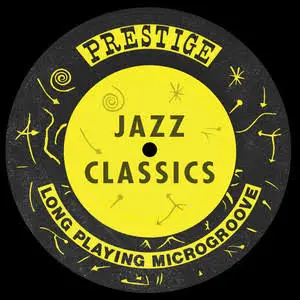
Rediscovering Prestige Without the Mythology of Rarity
What Does “Underrated” Actually Mean?
The word “underrated” has become so common in music writing that it can mean almost anything. Sometimes it identifies an artist who never achieved commercial success. Sometimes it describes a critically respected album that remains unfamiliar to casual listeners. At other times, it is little more than a device for making a familiar record appear newly discovered. Prestige Records demonstrates why the term requires greater precision. Many of the musicians discussed here were never obscure. Jackie McLean, Red Garland, Curtis Fuller, Gene Ammons, Mal Waldron and Oliver Nelson enjoyed substantial reputations among musicians and jazz audiences. Booker Ervin was recognized as a distinctive tenor voice, while Brother Jack McDuff became an important figure in the organ-jazz tradition. Their recordings do not need a fictional history of neglect in order to deserve renewed attention.
What changed was the shape of the canon. As jazz history became increasingly organized around a manageable group of landmark albums, certain recordings acquired enormous symbolic weight. They became the records through which entire periods were introduced: Kind of Blue for modal jazz, Moanin’ for hard bop, The Shape of Jazz to Come for the emergence of free jazz, A Love Supreme for spiritual intensity. Such albums deserve their positions, but a canon designed to make history comprehensible inevitably compresses the world surrounding them. Hundreds of musicians, sessions and recordings become secondary not because they lacked value but because historical narratives require selection. Prestige is particularly rewarding once that compression is reversed. Its deeper catalog reveals not an alternative canon waiting to overthrow the familiar one, but the density of the musical culture from which canonical records emerged.
To call these Prestige albums underrated, then, is not to claim that critics failed to understand them or that collectors have only recently uncovered their importance. It is to say that they are often underrepresented in the simplified version of hard-bop history encountered by listeners entering the music today. The remedy is not another ranking. It is more listening.
Prestige and the Myth of the Perfect Jazz Label
Record labels inevitably develop personalities in retrospect. Blue Note has become perhaps the clearest example. Its combination of extraordinary music, Francis Wolff’s photography, Reid Miles’s graphic design and a remarkably coherent visual identity created an image so powerful that the label now functions almost as an aesthetic category of its own. To say that something “feels like Blue Note” can refer to music, photography, typography or an entire conception of mid-century jazz culture.
Prestige never produced exactly the same mythology, and there is no reason it should have. Bob Weinstock’s company operated differently, and its catalog often feels less unified precisely because it documented such a wide range of working musicians. The apparent disorder is part of its historical usefulness. Prestige captures jazz not only as a sequence of carefully framed artistic statements but as professional activity: musicians entering studios between engagements, sidemen becoming leaders, established figures meeting younger players, standards sharing space with quickly prepared originals, and combinations of musicians appearing for a session without necessarily becoming permanent groups.
This does not make Prestige more authentic than Blue Note. That would simply replace one mythology with another. Alfred Lion’s preparation produced extraordinary results, while Weinstock’s approach could also produce extraordinary results. Riverside, Contemporary, Atlantic, Savoy, Impulse!, Pacific Jazz and numerous smaller companies developed different relationships with musicians and repertoire. The richness of postwar jazz came partly from this plurality. No single label contains the definitive version of the period.
Prestige becomes more interesting when it no longer has to compete with Blue Note.
The Session as Historical Evidence
One of the great pleasures of exploring Prestige is hearing the same musician appear repeatedly in different contexts. A rhythm-section player who seems secondary on one album may become crucial on another. A young saxophonist may enter as a sideman before appearing under his own name. A musician associated retrospectively with one famous band may appear years earlier in combinations that reveal different aspects of his playing.
This interconnectedness challenges the modern habit of treating albums as isolated artistic objects. Jazz musicians of the 1950s and 1960s often lived professional lives built around constant movement. They performed in clubs, toured, participated in recording dates, accompanied singers, joined temporary groups and learned new repertoire continuously. The studio album was one result of that activity, not always the singular conceptual event that later rock-oriented ideas about albums encouraged listeners to expect.
Prestige preserved that working culture unusually well. Its catalog allows us to hear development happening incrementally rather than through a series of dramatic breakthroughs. Tommy Flanagan does not suddenly become Tommy Flanagan on one record. Jackie McLean’s later exploratory language does not appear without precedent. Mal Waldron’s highly individual approach to repetition and structure develops across years of playing, composing and accompanying. Elvin Jones can be heard before his role with John Coltrane transformed the way later listeners understood him.
A session can therefore matter even when it does not qualify as a masterpiece. It can document relationships, vocabulary and development that become visible only when several records are heard together. Historical value and aesthetic value overlap, but they are not identical.
Rudy Van Gelder Beyond the Audiophile Story
Any discussion of Prestige eventually encounters Rudy Van Gelder, and modern writing about his work often moves almost immediately toward equipment, pressing quality and audiophile evaluation. That emphasis risks reducing one of the most important recording engineers in jazz history to a supplier of test records for expensive playback systems.
Van Gelder matters for a much larger reason: he helped determine how an extraordinary amount of postwar jazz entered recorded history. His work for Prestige, Blue Note, Impulse! and other labels created documents through which later generations encountered musicians they could never hear in person. Engineering choices inevitably shaped those documents, but the historical importance of his work does not depend on whether a particular reissue produces greater perceived depth, stronger bass or a wider stereo image on a specific system.
For Prestige, Van Gelder’s role is especially useful because it further undermines the tendency to imagine record labels as completely separate worlds. The same engineer recorded musicians for competing companies, and many of the same players moved through his studios under different contractual circumstances. What changed from session to session was not simply sound. Leadership, repertoire, preparation, personnel and the priorities of the producer all mattered.
The best way to appreciate that history is still remarkably straightforward: listen to the musicians.
From Scarcity to Availability
For much of the twentieth century, discovering deeper jazz catalogs required a combination of luck, geography and money. Records went out of print. Imports were difficult to obtain. Specialist stores became essential sources of knowledge, and collectors sometimes spent years searching for particular sessions. In that environment, rarity could genuinely determine which music a listener was able to hear.
That relationship has changed dramatically. Reissue programs, compact-disc editions, digital distribution and streaming have made enormous sections of jazz history more accessible than they were to previous generations. Availability remains imperfect — licensing issues still remove recordings, documentation can be inconsistent, and not every session is equally easy to locate — but the general transformation is profound.
This should change the way we write about older jazz. When the primary barrier was physical scarcity, information about pressings could help listeners locate the music. When many recordings are available instantly, obsessing over the monetary value of an original copy can become a distraction from the very thing preservation was supposed to make possible: hearing the record.
Original Prestige pressings are historically interesting objects. Their typography, covers, labels and manufacturing details belong to the material history of jazz. Collecting them can be a legitimate passion. But monetary rarity is not evidence of musical importance, and a listener does not need an original pressing to understand why Booker Ervin, Mal Waldron or Gene Ammons matters.
Access should enlarge the audience, not create another hierarchy.
The Musicians Who Refuse to Stay in Categories
Listening deeply to Prestige also reveals how quickly genre categories begin to fail. Hard bop provides a useful historical framework, particularly for music that strengthened the relationship among bebop, blues, gospel and rhythm and blues during the 1950s. Yet musicians rarely behaved as though they were responsible for maintaining a textbook definition.
Booker Ervin could carry the force of hard bop into increasingly open structures. Jackie McLean’s language moved toward the exploratory music of the 1960s. Mal Waldron would eventually develop an approach almost impossible to contain within his early stylistic associations. Oliver Nelson moved toward composition and orchestration on a scale that transformed the balance between improvisation and arrangement. Eric Dolphy pushed far beyond conventional hard-bop vocabulary while retaining an unmistakable relationship with bebop discipline. Brother Jack McDuff made groove central without abandoning improvisational seriousness.
The value of a label catalog is that it preserves these transitions without knowing how history will later classify them. We hear musicians before the categories become permanent.
That uncertainty is one of the most exciting qualities of the music.
Hard Bop Was an Ecosystem, Not a Formula
Hard bop is sometimes reduced to a recognizable collection of ingredients: bebop harmony, blues feeling, gospel influence, strong drums and compositions designed for compact frontline ensembles. The description can be useful, but the Prestige catalog demonstrates how much variation existed inside those ingredients.
Red Garland’s elegance does not resemble Booker Ervin’s urgency. Curtis Fuller’s trombone creates a different center of gravity from Gene Ammons’s tenor. Mal Waldron’s compositional logic does not function like Jack McDuff’s groove-based organ groups. Yet all can occupy adjacent territory in the history of modern jazz.
This diversity helps explain why the period continues to reward exploration. Once hard bop stops being treated as a formula, records that initially appear similar begin separating into distinct artistic worlds. Touch matters. Tone matters. The placement of a drummer’s cymbal beat matters. The difference between two musicians interpreting the blues matters. Small choices accumulate until stylistic labels become only the beginning of description.
Prestige documented those differences in extraordinary quantity.
The catalog is not valuable because every session is equally important. It is valuable because so many different versions of modern jazz were allowed to exist beside one another.
Why These Records Still Matter
The strongest argument for returning to lesser-known Prestige albums has nothing to do with rarity. It is not that the records are secret, expensive, collectible or capable of revealing something extraordinary about a playback system. They matter because they complicate the history.
They remind us that jazz was not created only through masterpieces. It developed through working musicians making thousands of decisions across thousands of performances and sessions. Some recordings became famous because they genuinely concentrated those developments into unusually powerful statements. Others remained part of the wider landscape from which such statements became possible.
Listening to Tommy Flanagan before later accompaniment roles defined his public reputation changes the way we hear him. Following Jackie McLean from Prestige toward Blue Note makes his artistic development more continuous. Hearing Mal Waldron as a composer and leader rather than merely a pianist associated with Billie Holiday or other famous musicians restores the scale of his individuality. Spending time with Gene Ammons reconnects hard bop to older tenor and blues traditions. Jack McDuff makes it impossible to separate modern jazz neatly from the social energy of soul jazz and organ clubs.
These are not footnotes.
They are the surrounding text.
A Better Way to Explore Prestige
There is no need to approach Prestige chronologically or to build a checklist of supposedly essential albums. A more rewarding method is to follow musicians. Begin with a familiar name and move sideways. If John Coltrane appears on a Mal Waldron session, listen to Waldron next. If Elvin Jones appears with Tommy Flanagan, follow Jones backward rather than only forward toward the classic Coltrane quartet. If Curtis Fuller leads to Art Blakey, follow the trombonist in the opposite direction and hear what he was doing before the Jazz Messengers. If Oliver Nelson leads toward The Blues and the Abstract Truth, move backward and hear how the compositional language developed.
Jazz history becomes far more interesting when listening follows relationships instead of rankings.
Prestige is particularly suited to this method because its catalog is filled with intersections. Famous musicians appear where they are not expected. Sidemen become leaders. Players associated with other labels enter temporarily. A blues session can sit near music pointing toward the avant-garde. Organ jazz and bebop occupy neighboring rooms.
Every connection opens another door.
Beyond the Canon Without Rejecting It
Rediscovering lesser-known records sometimes produces an unnecessary hostility toward famous ones. Once listeners become deeply involved in a genre, there can be a temptation to demonstrate expertise by dismissing the albums everyone else knows. The familiar masterpiece becomes too obvious, while obscurity becomes evidence of sophistication.
That attitude reproduces the same hierarchy it claims to escape.
There is no need to diminish Miles Davis, Sonny Rollins or John Coltrane in order to appreciate Booker Ervin. Saxophone Colossus does not become less extraordinary because Prestige recorded hundreds of other worthwhile sessions. Blue Note does not become less important because Prestige deserves greater attention. Canonical albums can remain canonical while the landscape around them becomes richer.
A mature relationship with jazz history should be capable of holding both ideas at once.
Some records became famous for good reasons.
Many other records deserve to be heard.
Prestige as a Living Archive
More than seven decades after Bob Weinstock founded Prestige, the label’s deepest value may be its ability to preserve jazz as a living professional culture rather than a sequence of monuments. The catalog contains masterpieces, ordinary sessions, transitional recordings, unexpected combinations and performances whose significance grows when they are placed beside what came before and after.
That unevenness is not a weakness.
It is history.
The musicians did not enter the studio knowing which albums future generations would canonize. They did not know which sideman would become a major leader, which style would fall temporarily out of fashion or which session would be rediscovered decades later. They were working inside the present tense of the music.
Prestige captured that present tense repeatedly.
And that is why its lesser-known records remain so rewarding. They return uncertainty to a history that can sometimes feel excessively settled. They remind us that hard bop was larger than its famous albums, that soul jazz belonged to the same evolving conversation, that musicians crossed labels more easily than modern branding suggests, and that stylistic change occurred through countless overlapping decisions rather than a neat succession of revolutions.
The point of exploring Prestige is therefore not to locate the rarest record in the room.
It is to make the room larger.
Once that happens, the familiar masterpieces do not disappear.
They finally have their world around them.
Buy Amazon