
A Guitar Language Born in Minas Gerais
There are musicians whose identity can be recognized before a melody has fully revealed itself. A few chords are enough. In the case of Toninho Horta, those chords seem to contain several musical worlds at once: Brazilian song, jazz harmony, bossa nova, the openness of Minas Gerais, traces of rock, and an almost orchestral understanding of the guitar. His playing rarely treats harmony as simple accompaniment. Chords move like voices inside an arrangement, opening and closing spaces around a melody, sometimes carrying as much emotional weight as the melody itself. This quality would eventually make Horta one of the most distinctive Brazilian guitarists of his generation and a musician admired far beyond Brazil. But the language did not begin as an attempt to connect Brazilian music with international jazz. It grew organically from a particular place, family and generation.
That place was Belo Horizonte, capital of Minas Gerais, where Antônio Maurício Horta de Melo was born in 1948. Music was already part of the family’s vocabulary. His grandfather João Horta had been a musician and conductor; his mother played mandolin, his father guitar, and his brother Paulo Horta became a bassist and an important early influence. Horta has described himself as essentially self-taught, but this does not mean that he developed in isolation. Quite the opposite: music surrounded him. Long before an international audience associated his name with sophisticated Brazilian harmony, he was absorbing sounds from Brazilian popular music, jazz, sacred music and the musical life around him. By his late teens, according to Horta’s own recollections, he had already developed much of the harmonic curiosity that would later become central to his style.
The geography matters because the music that emerged from Minas Gerais during this period did not sound quite like anything coming from Brazil’s more internationally visible centers. Rio de Janeiro had bossa nova and samba at the center of its modern musical identity; São Paulo offered another mixture of urban experimentation, popular song and avant-garde impulses. Belo Horizonte was geographically inland and culturally receptive. Records, radio broadcasts and friendships brought distant sounds into the city, where they could be absorbed without necessarily belonging to one established scene. For Horta and the musicians around him, musical identity became less a question of choosing between Brazilian and foreign influences than of discovering how they might coexist.
Before the Corner
It is tempting to begin Toninho Horta’s story with Clube da Esquina because the 1972 album became such a defining landmark in Brazilian music. Yet doing so can obscure something essential: Horta was already becoming Horta before that record existed. He had begun working professionally as a young musician and had developed an unusually harmonic approach to the guitar. Jazz was an important part of that formation, as was bossa nova, but neither category fully explains what he was doing. His ear seemed attracted less to genre than to possibility — to what could happen inside a chord and to the way harmony could alter the emotional meaning of a melody.
That distinction helps explain why Horta’s guitar would later fit so naturally into music that resisted simple classification. He has referred to himself in those years as closer to the bossa nova and jazz side of the emerging Minas scene, while musicians such as Lô Borges and Beto Guedes carried a more obvious relationship with British rock. Those differences were not obstacles. They were precisely what made the encounter fertile. Horta could bring extended harmony and the vocabulary he had absorbed from jazz; others brought the melodic directness and textures of rock, Brazilian regional traditions, popular song and a different sense of rhythm. Instead of flattening these influences into a single style, the musicians allowed the contrasts to remain visible.
Horta’s harmonic thinking also affected the physical way he approached the instrument. His guitar was not simply there to mark chords beneath a singer. The instrument could become a miniature ensemble. Inner notes moved. Bass lines suggested another independent voice. Open strings added resonance. Chords could sound complete and ambiguous at the same time, rich enough to stand alone yet spacious enough to leave room for a singer or another instrumentalist. This approach would become one of the most recognizable characteristics of his work, particularly for guitarists who later tried to understand why apparently gentle passages could contain so much harmonic information.
The jazz connection is obvious, but it can also be misleading if taken too literally. Horta was not trying to reproduce American jazz guitar in a Brazilian setting. Jazz gave him a vocabulary of harmonic freedom, but the syntax became his own. His relationship with melody remained deeply connected to Brazilian song, and his sense of space differed from the more linear language of many jazz guitarists. He could use sophisticated chords without turning the composition into a demonstration of sophistication. The harmony served color, atmosphere and emotion. This is one reason his music would later appeal to jazz musicians: it was harmonically advanced but did not sound academic. Complexity arrived disguised as beauty.
Belo Horizonte and the Art of Encounter
The musical environment surrounding Horta was built as much from friendship as from professional ambition. This is crucial to understanding what would become known as Clube da Esquina. The name can suggest a formal movement, perhaps even an organized collective with a defined aesthetic program. In reality, much of its power came from the opposite condition. Musicians, composers and lyricists met, listened, played, exchanged records, wrote songs and learned from one another. Milton Nascimento became the gravitational center of this constellation, but the music developed through collaboration rather than hierarchy.
Horta’s connection with Milton preceded the famous 1972 album. By the time Clube da Esquina was recorded, he was not arriving as an outsider hired to decorate an established sound. He belonged to the musical network from which that sound emerged. The distinction is important because Horta’s guitar was not an accessory to Clube da Esquina. It was one of the elements that helped define its instrumental character.
The larger story is familiar today: Milton Nascimento, Lô Borges, Beto Guedes, Wagner Tiso, Fernando Brant, Márcio Borges, Ronaldo Bastos and a remarkable group of musicians and writers transformed friendships formed in Minas into one of Brazilian music’s most enduring bodies of work. Yet what remains striking is how naturally incompatible influences seemed to coexist. The Beatles could sit beside jazz. Bossa nova could encounter rock. Brazilian regional traditions could appear beside sophisticated vocal writing. Harmonic complexity did not exclude memorable melody, and ambitious arrangements did not eliminate intimacy.
Horta has described this diversity as fundamental to the Clube da Esquina sound. The musicians did not repeat the same instrumental formula from song to song. Arrangements could change radically within the same album, and the collective character encouraged individual personalities rather than suppressing them. That freedom was ideal territory for Horta. His guitar could function rhythmically in one passage, harmonically in another, and almost orchestrally in the next.
The result was not Brazilian jazz, Brazilian rock or a continuation of bossa nova. It was something harder to name.
And that difficulty became part of its strength.
The Guitar Inside Clube da Esquina
Released in 1972 under the names Milton Nascimento and Lô Borges, Clube da Esquina is now widely regarded as a central work of Brazilian popular music. Its reputation has expanded dramatically outside Brazil as successive generations have discovered its unusual mixture of songwriting, arrangement and atmosphere. Horta’s participation belongs to the architecture of that sound. He played guitar, and his recollections of the sessions reveal a working environment in which musicians moved between instruments and responded to the needs of individual songs rather than rigidly defined roles.
The album’s guitars are particularly important because they occupy a space between accompaniment and texture. They do not merely support harmonic progressions; they help create the emotional weather of the recordings. This is an area where Horta’s sensibility was especially valuable. His instinct for chord voicing allowed harmony to remain dense without becoming heavy. A chord could contain many notes and still feel weightless. A progression could move unexpectedly while retaining melodic inevitability.
That balance — sophistication without stiffness — would become a defining characteristic of his mature work.
It also helps explain why musicians outside Brazil eventually responded so strongly to him. Jazz players could hear the harmonic depth immediately, but they also encountered structures that did not behave exactly like jazz standards. Guitarists could recognize familiar extended chords while discovering unfamiliar fingerings, bass movements and resolutions. Composers heard melodies that appeared effortless even when the harmony beneath them was anything but simple. Horta occupied a fascinating territory: accessible enough to invite the listener in, intricate enough to reward years of study.
Within Clube da Esquina, however, this language was only one component of a larger conversation. Horta himself has emphasized the musical differences among the participants. Lô Borges and Beto Guedes brought elements that forced musicians from other backgrounds to rethink how they accompanied songs. This reciprocal learning is one of the reasons the records associated with the movement still sound unusually alive. Nobody appears to be simply applying a pre-existing formula. The musicians were discovering the formula while recording the music.
Harmony as Emotional Architecture
To describe Toninho Horta merely as a guitarist risks missing half the story. His importance comes equally from composition. Songs such as “Beijo Partido,” “Diana,” “Viver de Amor” and “Aquelas Coisas Todas” reveal a composer for whom harmony and melody are inseparable. The chord is not a platform onto which a melody is placed; it is part of the melody’s emotional logic.
This approach has a particular effect on the listener. Horta’s compositions can create the sensation of constant movement even at slow tempos. One chord seems to illuminate another from a slightly different angle. Major and minor colors can blur. Unexpected bass notes change the emotional temperature without disrupting the melodic line. Instead of the conventional feeling of departure and return, there is often a sense of floating — of moving through harmonic landscapes whose destination matters less than the changing light along the way.
That quality connects Horta to the wider aesthetic of Minas Gerais music while also distinguishing him within it. The celebrated “Minas sound” has often been associated with expansive harmony, layered voices, melancholy, landscape and an unusual fusion of Brazilian and international influences. Horta embodies all of these qualities, yet his personal version is immediately recognizable. His chords have physical character. Guitarists who study his music often discover that knowing the chord symbol is not enough; the voicing matters, the position matters, the relationship between open and fretted strings matters. The sound exists in the architecture of the instrument itself.
Perhaps this is why his influence cannot be measured only by recordings or commercial visibility. Horta became a musician’s musician without becoming inaccessible to ordinary listeners. One does not need to identify a major seventh, a suspended interval or an altered bass note to feel the emotional effect. Technical knowledge explains some of the machinery, but the music works before the machinery is understood.
Toward a Music of His Own
The years surrounding Clube da Esquina established Horta as an important musician, arranger and collaborator, but they did not immediately produce the international solo career that later generations might assume followed naturally from such an extraordinary musical environment. Like many Brazilian musicians of his generation, he spent years moving through recording sessions, performances and collaborations. His guitar became part of the broader fabric of Brazilian popular music, while his own compositions accumulated a distinct identity.
There was also a practical difficulty: the music Horta wanted to make was not necessarily easy to package. It could be vocal and instrumental, Brazilian and jazz-inflected, intimate and orchestrally ambitious. The same qualities that would eventually make his work so attractive internationally complicated the question of where it belonged commercially.
His first major statement under his own name would therefore emerge slowly.
Terra dos Pássaros, released in 1980, had been developed through years of work rather than created as a conventional record-label project. Its cast reflected the musical world Horta had built around himself, and its compositions gathered many of the qualities already present in his earlier career into a more personal frame. Here the guitarist, singer, composer and arranger could finally occupy the center rather than contribute his language to someone else’s record.
The album would become a crucial bridge. Behind it stood Belo Horizonte, Clube da Esquina, Brazilian song and the harmonic imagination Horta had cultivated since his youth. Ahead lay a different landscape: international recording projects, encounters with major jazz musicians, growing recognition among guitarists, and an audience that increasingly understood that Toninho Horta was not simply a Brazilian musician who could play jazz.
He had created a language that jazz itself would eventually want to learn.
Buy Amazon
When the World Began to Hear Toninho Horta
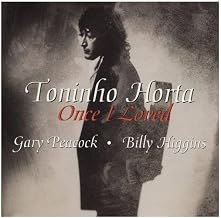
If Clube da Esquina revealed what could happen when a remarkable generation of musicians shared ideas without worrying too much about borders, Terra dos Pássaros revealed what happened when Toninho Horta finally placed his own musical imagination at the center. The distinction is important. Horta had already contributed decisively to records by other artists, composed songs, arranged music and established himself among Brazil’s most inventive guitarists. But a personal album demanded something different: not simply excellent playing, but a world coherent enough to carry his name. Terra dos Pássaros became that world. Its importance lies not in announcing a sudden new direction but in gathering threads that had been developing for years — the harmonic freedom of Minas Gerais, the melodic intimacy of Brazilian song, the rhythmic elasticity of jazz and a conception of the guitar capable of suggesting an entire ensemble.
The album’s long gestation seems appropriate for music that refuses easy categories. Horta was not constructing a conventional singer-songwriter record, nor was he making an instrumental jazz album in the usual sense. Voice and guitar, composition and arrangement, intimacy and sophistication constantly overlap. The songs can feel meticulously constructed and strangely spontaneous at the same time. This paradox would remain central to Horta’s appeal. His music contains enough harmonic information to fascinate musicians, yet its emotional effect does not depend on understanding any of it technically. A listener can enter through melody and atmosphere while a guitarist may spend years trying to understand exactly how those apparently effortless chords were assembled.
That duality became increasingly significant as Horta’s music traveled beyond Brazil. Brazilian music already possessed enormous international prestige by the beginning of the 1980s. Bossa nova had permanently altered jazz harmony and repertoire, Antônio Carlos Jobim had become a global reference, and musicians such as Milton Nascimento had established creative relationships with important figures in American jazz. But Horta represented something subtly different. He was not simply another Brazilian musician whose compositions could be adapted by jazz players. His actual instrumental language — his chord shapes, harmonic movement, touch and sense of space — became an object of fascination in itself.
A Brazilian Guitar Without Borders
Horta’s relationship with jazz was never based on imitation. This becomes especially clear when his playing is placed beside the dominant guitar traditions of the period. Jazz guitar had developed powerful lineages built around single-note improvisation, chord melody and the amplified vocabulary established by generations of American players. Brazilian guitar carried its own traditions, from samba and choro to bossa nova. Horta seemed capable of drawing from both without fully submitting to either.
His voicings could be unusually wide. Open strings might remain ringing against fretted notes, creating intervals that would be awkward or impossible on a keyboard. Bass movement could alter the meaning of a chord without disturbing its upper structure. Notes inside the harmony behaved almost like independent melodic voices. Instead of simply moving from one chord symbol to the next, Horta allowed each sonority to breathe before transforming it from within.
The result was a guitar style inseparable from the physical nature of the instrument. This is one reason transcriptions can tell only part of the story. Writing down the notes identifies the ingredients but not necessarily the gesture. Horta’s music depends on resonance, sustain, attack and the relationship between strings. The same harmonic structure played mechanically can lose the luminous quality that makes his guitar immediately recognizable.
For younger musicians encountering his records outside Brazil, this offered another possibility for the instrument. Harmonic sophistication did not have to sound cerebral. Virtuosity did not have to announce itself through speed. A guitarist could command an enormous vocabulary while appearing to do little more than accompany a melody.
Horta made difficulty sound natural.
And that may have been one of his most radical qualities.
From Minas Gerais to the International Jazz Conversation
The connection between the Minas generation and American jazz had already been strengthened through Milton Nascimento. Milton’s work with Wayne Shorter, particularly the celebrated 1974 album Native Dancer, demonstrated how naturally the melodic and harmonic sensibilities emerging from Brazil could interact with some of the most adventurous musicians in jazz. The relationship was not one of Brazilian music being absorbed into an American language. If anything, the exchange worked in both directions. Musicians accustomed to jazz improvisation encountered Brazilian compositions whose harmonic and rhythmic logic opened unfamiliar paths.
Horta belonged naturally within this conversation.
His increasing presence abroad exposed musicians to a guitarist whose relationship with harmony seemed both familiar and new. Extended chords were certainly not foreign to jazz, but Horta organized them differently. The Brazilian rhythmic foundation changed their movement; his melodic instincts changed their emotional purpose; the particular resonance of his voicings changed their color. What an American jazz musician might recognize theoretically could still sound surprising in practice.
This helps explain why Horta gradually acquired a reputation disproportionate to his mainstream celebrity. He became the kind of artist whose name circulated among musicians. Guitarists mentioned him to other guitarists. Composers studied his songs. Arrangers listened to the movement of his inner voices. Jazz players traveling through Brazil encountered a musical vocabulary that did not fit the familiar stereotypes of Brazilian guitar.
The relationship with Pat Metheny became especially meaningful in this context. Metheny’s own career had already demonstrated an unusual openness toward Brazilian music, melody and atmospheric harmony, and the affinity between the two guitarists was more profound than a superficial similarity of tone. Both treated the guitar as a source of color as much as a vehicle for improvisation. Both understood that harmonic richness could coexist with lyrical simplicity. And both resisted the idea that sophistication required emotional distance.
Yet it would be reductive to define Horta through Metheny, just as it would be reductive to describe him simply as a product of Clube da Esquina. The importance of such connections lies precisely in the opposite direction: internationally respected musicians could recognize in Horta a language that already existed on its own terms.
Diamond Land and a Wider Horizon
By the late 1980s, that recognition was becoming increasingly visible. Diamond Land, released in 1988, represented an important step in Horta’s international discography. The record placed his compositions and guitar within a context that made sense to listeners following contemporary jazz while preserving the qualities that made his music unmistakably Brazilian.
The title itself carried an evocative connection to Minas Gerais, a region whose history is inseparable from mineral wealth and whose landscape had already provided an emotional geography for the music associated with Clube da Esquina. But Horta’s “diamond land” was not a folkloric reconstruction of Minas. His music had traveled too far for that. Brazil remained fundamental, yet it functioned as origin rather than limitation.
This distinction matters because international success can sometimes pressure artists from outside the United States and Europe into performing an easily recognizable version of national identity. Brazilian musicians have frequently faced this problem. The global market may celebrate Brazilian music while simultaneously expecting samba, bossa nova or another immediately identifiable signifier. Horta’s work resisted that simplification. Brazilian identity existed everywhere in his phrasing, rhythm and melodic imagination, but it did not need to announce itself constantly.
Diamond Land therefore offered international listeners an artist who could inhabit a jazz environment without becoming a conventional jazz guitarist. Horta’s compositions retained their unusual harmonic turns. His melodies remained songlike even when instrumental. His guitar continued to function simultaneously as accompaniment, orchestra and improvising voice.
The album also helped establish a sequence of recordings that would bring his music into closer contact with the international jazz audience. What had once traveled largely through collaborations, musician networks and imported Brazilian records was becoming easier to encounter under Horta’s own name.
Moonstone: The Language Comes Into Focus
If Diamond Land widened the doorway, Moonstone in 1989 made the international dimension of Horta’s music even clearer. The album brought together musicians capable of moving comfortably between jazz improvisation and the distinctive rhythmic and harmonic territory of Horta’s compositions. Among the collaborators associated with this period were figures whose presence demonstrated how seriously his music was being received within the jazz world.
But celebrity names are less interesting than what happens when the music begins.
Horta did not abandon his vocabulary to accommodate an international ensemble. Instead, the ensemble entered his vocabulary.
That difference is central to understanding his achievement. Cross-cultural collaborations can easily become exercises in compromise, with each participant contributing recognizable elements of a national or stylistic tradition. Horta’s strongest international work rarely feels like that. The borders are more porous. Jazz improvisation occurs inside compositions whose architecture remains unmistakably his. Brazilian rhythm is present without becoming decorative. The guitar moves between structural and improvisational roles so naturally that separating them becomes difficult.
On Moonstone, this maturity becomes particularly evident. The music is polished but not sterile, harmonically elaborate but still warm. Horta’s singing, sometimes overlooked when attention concentrates on his guitar technique, reinforces the connection with Brazilian songwriting. His voice does not attempt the projection of a conventional jazz vocalist. It belongs inside the arrangements almost as another instrumental color, preserving the intimacy of the compositions.
This mixture of voice and instrumental sophistication is another reason conventional genre labels struggle with his work. Remove the vocals and parts of the music could comfortably enter contemporary jazz programming. Concentrate on the songs and the lineage of Brazilian popular music becomes unmistakable. Study the harmony and one discovers structures capable of challenging advanced musicians. Listen without analyzing anything and the experience can remain remarkably gentle.
Few artists make complexity feel so hospitable.
The Pat Metheny Connection — Influence Without Imitation
For guitar listeners, the names Toninho Horta and Pat Metheny are often drawn together, and there are legitimate reasons for the association. Both developed highly personal approaches to harmony. Both valued lyrical improvisation over displays of technical aggression. Both were attracted to expansive textures and compositions in which jazz could interact with music from outside its traditional American framework. Metheny’s long-standing engagement with Brazilian musicians and Brazilian musical language made the connection especially natural.
But chronology is important.
Horta’s harmonic identity had already developed in Brazil before Metheny became an international star. The Minas Gerais guitarist was forming his language during the 1960s and early 1970s, and his work within the Clube da Esquina circle preceded the recordings that established Metheny’s own career. Their later friendship and musical admiration therefore make more sense as a meeting between distinctive voices than as a story of one musician resembling the other.
For international listeners discovering Horta through jazz, Metheny could function as a useful point of reference. The spaciousness, lyrical sensibility and refusal to treat virtuosity as spectacle offered familiar territory. But moving deeper into Horta’s catalogue reveals how different the foundations are. His harmonic thinking comes from the guitar culture of Brazil, from song, from Minas Gerais, from bossa nova and from his individual way of absorbing jazz. His rhythmic instincts carry histories that cannot be reduced to jazz fusion.
The relationship ultimately tells us something larger about influence. Musical influence does not always move from cultural centers toward their supposed peripheries. Brazilian musicians did not simply receive jazz and reinterpret it locally. They also changed the ears of the musicians who encountered them. Horta belongs to that reverse current.
The Musician Other Musicians Wanted to Understand
By the end of the 1980s, Toninho Horta occupied an unusual position. He was deeply respected in Brazil, inseparable from the history of Clube da Esquina and increasingly visible internationally, yet he had not become a conventional crossover celebrity. In some ways, this strengthened his influence. His reputation traveled through attentive listening rather than through image. Musicians discovered him because another musician told them they needed to hear him.
There is a particular kind of longevity attached to artists who circulate this way. Fashion matters less. Records remain objects of discovery. A guitarist hears an unfamiliar voicing and searches for its origin. A jazz student encounters a Horta composition in another musician’s repertoire. A listener who arrived through Milton Nascimento follows the credits backward and discovers the guitarist behind some of the textures. Another arrives through Pat Metheny and discovers that the relationship between Brazilian harmony and contemporary jazz has a much deeper history than expected.
And once Horta enters that listening map, the map itself begins to change.
Brazilian music no longer appears as a separate territory periodically visited by jazz. The relationship becomes continuous. The harmony of Minas Gerais, the experiments of Clube da Esquina, American improvisation and the modern guitar begin to look like interconnected chapters of a larger story.
Horta had crossed an important threshold. The young guitarist from Belo Horizonte who once absorbed records, songs and harmonies from different worlds was now sending a musical language back across those same borders.
But international recognition would not be the final chapter.
During the decades that followed, Horta’s compositions would continue to circulate, his guitar vocabulary would become a subject of study, collaborations would multiply, and new generations of musicians would discover that the harmonic universe created in Minas Gerais had lost none of its capacity to surprise. Eventually, recognition would arrive not only from fellow guitarists and devoted listeners but from institutions capable of confirming what musicians had understood for years.
Toninho Horta had become more than an important Brazilian guitarist.
He had become part of the vocabulary of modern jazz guitar itself.
A Language That Never Stopped Traveling
There is a moment in the career of certain musicians when influence becomes difficult to measure. It is no longer contained in record sales, concert appearances or even direct collaborations. It enters the vocabulary of other musicians. A chord voicing appears somewhere else. A guitarist begins thinking differently about open strings. A composer discovers that sophisticated harmony does not need to interrupt the natural movement of a melody. A younger player encounters a song written decades earlier and finds that it still sounds strangely contemporary. By this measure, Toninho Horta’s importance extends far beyond the chronology of his albums.
The international recognition that developed around Horta during the 1980s and 1990s did not transform him into a different musician. That may be one of the most revealing aspects of his career. There was no dramatic reinvention designed to make his music acceptable to jazz audiences abroad. The language that attracted those audiences was essentially the language he had been developing since Belo Horizonte: harmony rooted in song, guitar voicings shaped by the physical possibilities of the instrument, Brazilian rhythmic intuition, and an openness toward jazz that never required him to surrender his own musical identity.
As his career continued, Horta moved increasingly freely between Brazil and the international jazz world. Albums, concerts and collaborations reinforced a reputation already circulating among musicians. Yet his position remained unusual. He could be understood as a Brazilian songwriter, guitarist, arranger, singer or jazz musician, depending on which recording one encountered first. None of those descriptions was incorrect, and none was sufficient.
Perhaps the most accurate description was simply Toninho Horta.
When Songs Become Standards
One of the clearest signs that a composer’s music has moved beyond its original context is the moment other musicians begin treating the compositions as places to return to rather than artifacts to reproduce. Horta’s songs gradually acquired this quality. “Beijo Partido,” “Diana,” “Viver de Amor,” “Manuel, o Audaz” and other pieces survived their original recordings because the harmonic and melodic structures remained open to reinterpretation.
This is where his relationship with jazz becomes especially interesting. Jazz has always depended upon repertoire that musicians can inhabit repeatedly. Standards survive because their structures provide enough identity to remain recognizable and enough space to allow transformation. Horta’s compositions possess a similar quality, even when their harmonic language is considerably more intricate than the traditional American songbook. The melodies are strong enough to withstand rearrangement, while the chords invite musicians to explore the spaces between written structure and improvisation.
But Horta’s compositions also challenge the conventional idea of what a jazz standard should be. Their Brazilian identity is not something that can simply be removed by changing the rhythm section. Melody, harmony and rhythmic inflection are intertwined. To play the notes accurately without understanding their internal movement is to miss part of the composition.
This may explain why musicians have approached his work with such respect. Horta’s songs do not demand imitation, but they reward attention.
For guitarists especially, the lesson extends beyond individual compositions. His work demonstrates that harmony can be instrumental technique. The way a chord is voiced becomes part of composition itself. An inversion is not merely an alternative fingering; it changes the emotional direction of a passage. An open string is not simply convenient; it introduces resonance unavailable elsewhere on the instrument. A moving bass note can transform a familiar harmony into something suspended between several possible destinations.
Once a player begins hearing the guitar this way, it becomes difficult to return to thinking of chords as static objects.
Beyond the Shadow of Clube da Esquina
For an artist so closely associated with a landmark musical movement, Clube da Esquina presents both a gift and a challenge. It provides an immediate historical reference, but it can also become too large a frame. Horta’s contribution to that universe is fundamental, yet his subsequent career demonstrates why he cannot be understood only through the records of Milton Nascimento or the generation that emerged around Belo Horizonte.
What Clube da Esquina provided was not a stylistic prison but a philosophy of possibility.
The musicians involved had already demonstrated that Brazilian music did not need to choose between local tradition and international influence. The Beatles could coexist with samba. Jazz harmony could encounter folk-like melodies. Electric guitars could appear beside orchestral arrangements. Sacred atmosphere, regional memory and urban modernity could inhabit the same album. Horta carried that freedom forward.
His solo career transformed the collective openness of Minas Gerais into an intensely personal harmonic vocabulary. The connection remained audible, but the center had shifted. What had once been one voice inside an extraordinary community became a complete musical universe.
This distinction became clearer with time. As international listeners encountered Horta through records released under his own name, many discovered Clube da Esquina afterward rather than before. The historical direction of discovery had reversed. Instead of Horta being explained by the movement, the guitarist became an entrance into the movement itself.
That reversal is significant for the international history of Brazilian music. The global narrative has often been organized around a relatively small number of gateways: samba, bossa nova, Antônio Carlos Jobim, João Gilberto, Astrud Gilberto, Sérgio Mendes, later tropicalismo and a handful of internationally visible singer-songwriters. Minas Gerais complicated that map. Its music was Brazilian but difficult to summarize through the categories foreign audiences already knew.
Horta made that complexity portable.
One guitar could carry it.
The Guitarist’s Guitarist
Calling someone a “musician’s musician” can sometimes sound like a polite explanation for limited commercial success. In Horta’s case, however, the phrase describes something more substantial. Musicians hear things in his work that generate questions. How is that chord voiced? Why does that bass note work? Why does a progression containing so much harmonic information sound so natural? How can accompaniment remain this active without competing with the melody?
Those questions have helped sustain his reputation across generations.
The relationship with Pat Metheny remains one of the most visible examples of the respect Horta earned among internationally prominent guitarists, but it should be understood as part of a much broader phenomenon. His admirers and collaborators have come from different corners of jazz and Brazilian music because the attraction is not based on one specific stylistic trick. What musicians recognize is a complete conception of harmony.
That conception also challenges conventional definitions of virtuosity.
Guitar culture frequently celebrates what can be measured: speed, precision, range, technical difficulty. Horta’s virtuosity operates differently. Certainly, his music can be technically demanding, but the difficulty is often hidden inside apparently relaxed gestures. A chord may require an unconventional hand position; an inner voice may move while other notes remain suspended; a melodic phrase may depend on subtle rhythmic placement rather than velocity. The listener experiences ease while the musician attempting to reproduce it discovers complexity.
This concealment of difficulty is not accidental. It reflects a larger principle in Horta’s music: technique should disappear into expression.
The same is true of his harmonic knowledge. One never has the sense that a chord has been chosen merely because it is sophisticated. The harmony exists because the emotional color of the composition requires it. Remove a note and something changes. Move the bass and the light falls differently.
This is why analysis alone cannot fully explain the effect.
The theory is real, but the music always comes first.
Recognition Without a Final Chapter
As the decades passed, the world surrounding Horta’s music changed dramatically. The record industry contracted and reinvented itself. Brazilian albums that had once been difficult to obtain outside the country became available through digital platforms. Online communities of guitarists began exchanging performances, transcriptions and lessons. Younger listeners could move from Milton Nascimento to Wayne Shorter, from Pat Metheny to Toninho Horta, from Brazilian popular music to contemporary jazz without depending upon the geographical limitations that had shaped earlier generations of listeners.
For an artist like Horta, this new environment created an unexpected advantage.
His music had always rewarded discovery.
An algorithm might bring a listener to one recording, but curiosity could open an entire network: Clube da Esquina, Milton Nascimento, Lô Borges, Wagner Tiso, Beto Guedes, Wayne Shorter, Brazilian instrumental music and generations of musicians influenced by the harmonic innovations that developed in Minas Gerais. What once required access to imported records could now unfold during a single evening of listening.
At the same time, institutional recognition began catching up with the esteem musicians had long expressed. One of the most important moments arrived through Belo Horizonte, a project by Horta and Orquestra Fantasma that received the Latin Grammy Award for Best MPB Album in 2020. The significance of the recognition extended beyond the trophy itself. More than half a century after Horta had begun developing his musical language in the city named by the album, Belo Horizonte had returned explicitly to the center of his work.
The circle was almost too perfect.
Yet the album was not an exercise in nostalgia. That would contradict the essential character of Horta’s music. His relationship with the past has never depended upon recreating it exactly. The deeper continuity lies in the musical values that survived: collaboration, harmonic curiosity, melodic generosity and the refusal to accept rigid boundaries between categories.
The award therefore felt less like a late correction of history than confirmation of something musicians already knew. Horta’s language had endured.
Minas Gerais as a Global Musical Place
Perhaps Toninho Horta’s most important legacy is geographical as much as musical.
He helped make Minas Gerais audible internationally.
Not simply as a Brazilian region, but as a place with a recognizable musical imagination. The achievement belongs to an entire generation, of course. Milton Nascimento became its most internationally visible voice, while Lô Borges, Beto Guedes, Wagner Tiso, Fernando Brant, Márcio Borges, Ronaldo Bastos and many others contributed to a body of work whose influence continues to expand. But Horta carried one particularly transferable element of that world: its harmony.
Through the guitar, those ideas could travel without translation.
A musician in New York, Tokyo, Paris or London did not need to understand Portuguese to hear what was happening inside the chords. The emotional ambiguity, unexpected resolutions and spacious voicings communicated directly. This does not make the music less Brazilian. On the contrary, its international reach demonstrates how something intensely rooted in a particular cultural environment can become universal without becoming generic.
That distinction is increasingly important when considering the history of jazz itself.
Jazz has never developed in isolation. Its evolution has depended upon encounters — with Caribbean rhythm, European harmony, African diasporic traditions, Latin American music, Brazilian music and countless other sources. Yet histories of jazz have sometimes described these relationships as influences entering a fundamentally American center.
Musicians such as Horta suggest another model.
There may be no single center.
The conversation can move in every direction.
Brazilian musicians listened to American jazz and transformed what they heard. American jazz musicians encountered Brazilian composers and changed their own musical vocabulary. Records crossed borders. Musicians met on tours and in studios. Harmonic ideas migrated without passports.
Toninho Horta stands inside this circulation rather than at its margins.
Why Toninho Horta Still Sounds Modern
Return, finally, to the guitar.
Strip away the historical importance of Clube da Esquina. Forget the international collaborations, the critical recognition and the awards. Ignore, for a moment, the names of the famous musicians who admired him.
Play a Toninho Horta recording.
The remarkable thing is how little the music depends upon its period.
Certain production details inevitably reveal when particular albums were recorded, but the harmonic thinking itself rarely feels dated. One reason is that Horta never built his identity around a fashionable surface. His language emerged from relationships between notes, from melody and from the resonance of the guitar. Those elements age differently from technology.
Another reason is that contemporary music has moved closer to some of the territory Horta explored decades ago. Modern jazz increasingly accepts porous boundaries between genres. Guitarists routinely combine acoustic and electric traditions. Musicians move between songwriting, improvisation, folk music and complex harmony without feeling obligated to choose a single identity. What might once have seemed difficult to categorize now appears almost prophetic.
Horta was comfortable in that territory before the industry had convenient language for it.
His music therefore offers an important lesson about originality. Originality does not always announce itself through rupture. Sometimes it appears through synthesis so complete that the influences can no longer be separated. Jazz is there. Bossa nova is there. Brazilian popular song is there. Minas Gerais is everywhere. Rock left traces. The guitar carries its own history.
Yet when the chord sounds, none of those labels arrives first.
Toninho Horta does.
More than fifty years after the musical friendships of Belo Horizonte began producing some of Brazil’s most extraordinary recordings, his guitar still carries something of that original sense of discovery. The harmony remains open. The melody seems to know where it is going even when the chords suggest several possible destinations. Complexity remains hidden beneath warmth.
Perhaps that is why musicians continue to study him while listeners continue simply to love the songs.
Toninho Horta did not build a bridge between Brazilian music and jazz because a bridge assumes two separate territories.
His achievement was more profound.
He showed how, in the right hands, they could become the same landscape.