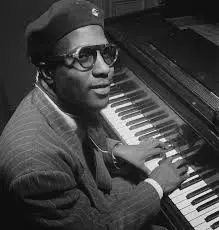
Thelonious Sphere Monk was the visionary who proved that a mistake, when executed with intention and authority, becomes a new form of beauty. While the jazz of his era sought fluidity, Monk introduced percussive syncopation, tritone intervals, and the strategic use of space—the silence between notes was as important as the notes themselves. His international relevance is beyond dispute: Monk is the second most-recorded jazz composer in history (behind only Duke Ellington), an extraordinary feat considering he wrote about 70 compositions, while Ellington wrote thousands.
Monk’s importance on the global stage lies in his absolute refusal to compromise his artistic vision. He transformed the piano into an extension of his geometric mind, influencing generations of musicians from Tokyo to Paris. His compositions, such as ‘Round Midnight,’ ‘Blue Monk,’ and ‘Straight, No Chaser,’ became global standards that require any musician to have a deep understanding of structure and improvisation. Monk didn’t just create a style; he established a new musical grammar that allowed jazz to evolve from popular entertainment into a highly complex intellectual art form.
At Jazz Latitude, Thelonious Monk is celebrated as the master of authenticity. He taught us that rhythm is the backbone of innovation and that dissonance is merely a harmony waiting to be understood. His legacy is that of an artist who, with his idiosyncratic style and iconic hats, conquered the world without ever leaving his own creative axis, solidifying his place as one of the immortal pillars of modern musical culture.