A Voice from the Other Side of Europe’s Jazz Map
When the history of European jazz is told, the conversation usually gravitates toward familiar cities such as Paris, London, Copenhagen or Stockholm. These cultural capitals undeniably played central roles in the development of modern jazz outside the United States. Yet beyond those well-known scenes, another remarkable story was unfolding in Central and Southeastern Europe, where musicians were quietly creating a distinctive musical identity under circumstances shaped by politics, geography and cultural exchange.
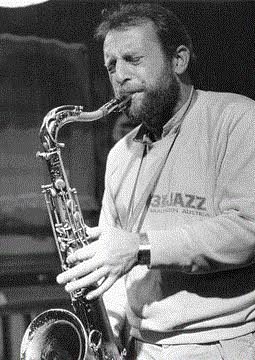
One of the most important figures to emerge from that landscape was Tone Janša.
For decades, Janša has stood among Slovenia’s most respected jazz musicians, earning international recognition through a career that combines exceptional saxophone playing, thoughtful composition and a lifelong commitment to artistic exploration. While his name may not be as widely recognized as some of his Western European contemporaries, his contribution to European jazz is profound. His music demonstrates that innovation does not belong exclusively to the world’s largest cultural centers. Sometimes it flourishes where curiosity, resilience and openness converge.
His career also tells a larger story.
It is the story of how jazz crossed political borders during the Cold War, adapted to local traditions and ultimately became a truly global language.
Growing Up in Yugoslavia
Tone Janša was born in 1943 in what is now Slovenia, then one of the republics of the former Yugoslavia.
Unlike many countries behind the Iron Curtain, Yugoslavia occupied a unique political position after its split with the Soviet Union in 1948. Under the leadership of Josip Broz Tito, the country followed an independent socialist path that maintained greater cultural openness toward Western Europe and the United States than most Eastern Bloc nations.
This unusual political environment had significant consequences for music.
Jazz, although never entirely free from ideological debate, was far more accessible than in many neighboring countries.
American records circulated.
European festivals welcomed Yugoslav musicians.
Radio broadcasts introduced listeners to modern jazz.
Young instrumentalists studied Charlie Parker, Sonny Rollins, John Coltrane and Cannonball Adderley alongside the rapidly growing European jazz movement.
For an aspiring saxophonist like Tone Janša, these circumstances created opportunities that musicians elsewhere in Eastern Europe often lacked.
Discovering the Saxophone
Janša’s musical development reflected both discipline and curiosity.
Drawn to the expressive possibilities of the saxophone, he immersed himself in the language of bebop before gradually expanding toward hard bop, modal jazz and contemporary European improvisation.
The influence of American masters remained unmistakable, but Janša never approached jazz as something to imitate.
Instead, he viewed it as a language capable of expressing his own cultural experiences.
This distinction would become one of the defining characteristics of his artistic voice.
Rather than reproducing familiar American idioms, he absorbed them into a broader musical vocabulary shaped by Central European traditions, classical training and the distinctive rhythmic sensibilities of the Balkans.
Jazz in a Country Between Worlds
The Yugoslav jazz scene of the 1960s occupied a fascinating position within the international musical landscape.
Geographically situated between East and West, it benefited from influences flowing in both directions.
American musicians toured the region.
European festivals encouraged collaboration.
Local conservatories produced increasingly sophisticated performers.
Radio orchestras provided valuable professional experience.
As a result, Yugoslav jazz developed with remarkable independence.
It neither copied American models unquestioningly nor isolated itself from international developments.
Instead, musicians sought a balance between global jazz traditions and local artistic identity.
Tone Janša emerged as one of the leading representatives of that generation.
JazzLatitude Insight
The history of European jazz cannot be understood solely through Paris, London or Copenhagen. Musicians from Central and Eastern Europe created equally compelling traditions, often under political and cultural circumstances that demanded extraordinary resilience and imagination.
Expanding Beyond National Borders
As Janša’s reputation grew, his ambitions naturally extended beyond Slovenia.
Like many European musicians of his generation, he recognized that artistic growth required international dialogue.
Festivals became essential meeting places.
Radio orchestras connected musicians across national boundaries.
Collaborations with performers from Germany, Austria and other neighboring countries broadened both his musical language and professional opportunities.
These experiences reinforced a defining characteristic of European jazz after the 1960s.
It increasingly became a continental conversation rather than a collection of isolated national scenes.
Janša would play an important role in that process.
Composition as Personal Expression
Although widely admired for his saxophone playing, Tone Janša has always regarded composition as an equally important aspect of his artistic identity.
His works reveal a musician interested not only in improvisation but also in structure, atmosphere and narrative development.
Rather than relying exclusively on familiar jazz forms, he explored broader compositional possibilities while maintaining strong melodic foundations.
His writing often reflects the spacious lyricism associated with European jazz, yet it never abandons rhythmic vitality.
The result is music that feels both intellectually engaging and emotionally direct.
The Emergence of a Slovenian Jazz Identity
By the 1970s, Slovenia had begun producing musicians whose work attracted growing international attention.
Although the country’s jazz community remained relatively small compared with larger European nations, its artistic standards continued rising steadily.
Janša became one of its most visible ambassadors.
His performances demonstrated that world-class jazz could emerge from a region often overlooked by international critics.
In doing so, he helped establish the foundations of a distinctly Slovenian contribution to modern European jazz—one characterized by lyrical sophistication, openness to collaboration and an enduring respect for both tradition and innovation.
A Career Ready to Expand
The decades ahead would see Tone Janša deepen his international reputation through collaborations with major European ensembles, increasingly ambitious compositions and recordings that confirmed his position as one of Central Europe’s leading jazz voices.
His story was no longer simply about a Slovenian saxophonist.
It had become part of the larger evolution of European jazz itself.
Buy Amazon
Finding a European Voice
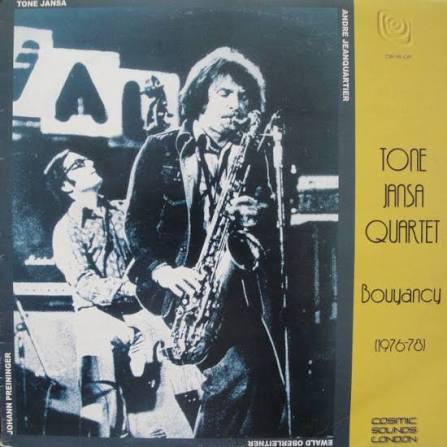
By the beginning of the 1970s, European jazz had reached an important moment of self-discovery. For decades, many musicians had measured themselves against American models, mastering bebop, hard bop and modal jazz with remarkable technical precision. Increasingly, however, a new generation began asking a different question. Instead of wondering whether European musicians could sound like their American counterparts, they explored what European jazz might sound like on its own terms.
Tone Janša belonged naturally to that generation.
He admired the great American saxophonists without attempting to imitate them. Charlie Parker’s fluency, Sonny Rollins’ thematic development, John Coltrane’s harmonic exploration and Wayne Shorter’s compositional imagination all left their mark on his musical education. Yet Janša gradually transformed those influences into a language that reflected his own cultural environment, creating performances in which lyrical expression and architectural clarity became as important as technical brilliance.
His music never rejected the American tradition.
It expanded upon it.
Germany and the Wider European Scene
As his reputation grew, Janša increasingly performed beyond the borders of Yugoslavia, particularly in Germany, which had become one of Europe’s most active centers for modern jazz.
German radio orchestras, conservatories and festivals offered opportunities unavailable in many smaller countries. They also brought together musicians from across the continent, encouraging collaborations that transcended national traditions.
For Janša, these experiences proved invaluable.
Working alongside performers from different musical backgrounds broadened both his compositional thinking and his improvisational vocabulary. Rather than reinforcing stylistic boundaries, the European jazz community encouraged dialogue between contrasting ideas.
This openness became one of the defining characteristics of Janša’s artistic development.
JazzLatitude Insight
One of European jazz’s greatest strengths has always been its willingness to absorb multiple cultural traditions without losing its connection to the language of jazz itself. Tone Janša’s career illustrates that balance with remarkable elegance.
The Big Band Tradition
Although admired as a small-group improviser, Janša also developed an impressive reputation within the world of jazz orchestras and big bands.
Large ensembles demanded different skills.
Precision.
Balance.
Sectional awareness.
Sophisticated reading.
A composer performing within a large ensemble must think not only as a soloist but as part of a much broader musical architecture.
Janša excelled in exactly that environment.
His experience with European radio orchestras and concert ensembles strengthened his understanding of orchestration while giving him opportunities to perform increasingly ambitious repertoire. These collaborations also influenced his own writing, which often combines the structural clarity of large-ensemble composition with the spontaneity of small-group improvisation.
Composition Beyond Convention
Unlike many outstanding instrumentalists who write primarily as extensions of their improvisational language, Janša approached composition as an independent creative discipline.
His works reveal careful attention to form.
Themes evolve gradually.
Motifs reappear in unexpected contexts.
Improvisation emerges naturally from compositional structure rather than interrupting it.
This architectural approach reflects the broader influence of European classical music while remaining firmly rooted in modern jazz.
The result is music that rewards repeated listening.
New details continue revealing themselves long after the first encounter.
The Sound of Slovenia
Although Tone Janša rarely relied on overt quotations from Slovenian folk music, listeners often sense something unmistakably Central European within his compositions.
Melodies unfold patiently.
Harmonic movement favors subtle development over dramatic contrast.
Rhythmic energy grows organically rather than explosively.
These qualities distinguish his work from both American hard bop and the more atmospheric Nordic school associated with ECM Records.
Instead, Janša occupies his own artistic space.
His music reflects a landscape shaped by Alpine traditions, Balkan influences and Central European musical culture while remaining unmistakably jazz.
That balance became one of his defining achievements.
The International Festival Circuit
As European jazz festivals expanded throughout the 1970s and 1980s, Janša became an increasingly familiar presence on the international stage.
These festivals served a purpose far beyond public performance.
They functioned as laboratories for artistic exchange.
Musicians met future collaborators.
New compositions premiered.
National traditions intersected.
Audiences discovered artists they might never otherwise encounter.
For musicians from countries with relatively small domestic jazz scenes, festivals provided essential international visibility.
Janša embraced those opportunities, helping introduce Slovenian jazz to audiences across Europe.
A Musician Respected by Musicians
Some artists achieve widespread commercial recognition.
Others become musicians’ musicians.
Tone Janša belongs firmly to the second category.
Throughout his career, fellow performers have admired his disciplined musicianship, thoughtful compositions and remarkable consistency.
He has never pursued fashionable trends.
Nor has he relied on technical display for its own sake.
Instead, he has built a reputation through artistic integrity, careful craftsmanship and an unwavering commitment to musical substance.
These qualities explain why his work continues earning respect across generations of European jazz musicians.
Essential Recordings
For listeners seeking an introduction to Tone Janša’s music, these recordings provide an excellent overview of his artistic development.
- Jazz a Confronto — An early recording that introduced Janša’s lyrical saxophone voice to a wider European audience while placing him alongside some of the continent’s leading improvisers.
- Green River — A mature statement showcasing his balance of sophisticated composition, melodic improvisation and modern European ensemble playing.
- Portraits — One of Janša’s most personal projects, highlighting his strengths as both composer and expressive saxophonist.
- International big band collaborations — Performances with European radio orchestras reveal another dimension of his artistry, demonstrating his ability to move effortlessly between intimate small groups and large ensemble settings.
- Later Slovenian recordings — His more recent work reflects decades of artistic refinement while maintaining the lyrical clarity and thoughtful improvisation that have defined his career.
Together, these recordings document the evolution of one of Central Europe’s most distinctive jazz voices.
Toward International Recognition
By the end of the twentieth century, Tone Janša had established himself as far more than Slovenia’s leading jazz saxophonist.
He had become an important representative of an entire generation of European musicians who proved that jazz could flourish far beyond its American birthplace without losing its essential identity.
His influence would extend not only through recordings and performances, but also through education, composition and the example he set for younger musicians throughout Central Europe.
A Legacy Beyond Borders
Jazz history often celebrates the musicians who transformed the music from the world’s great cultural capitals. New York, Paris, London and Copenhagen naturally dominate the conversation, while equally important voices from smaller countries frequently remain overlooked. Yet one of jazz’s greatest strengths has always been its ability to flourish wherever musicians approach it with imagination, discipline and a willingness to speak in their own voice.
Tone Janša represents that principle perfectly.
Throughout a career spanning more than five decades, he demonstrated that artistic significance is not determined by geography. A musician working from Ljubljana could contribute just as meaningfully to the evolution of modern jazz as artists recording in New York or performing in Paris. His achievements helped place Slovenia on the international jazz map while reinforcing the broader idea that European jazz had matured into a rich collection of regional traditions rather than a single, unified style.
His legacy extends far beyond his recordings.
It lies in the confidence he gave future generations of Central European musicians to develop their own artistic identities.
Building Slovenia’s Modern Jazz Tradition
When Janša began his career, Slovenia possessed talented musicians but only a modest international profile within jazz.
Over the following decades, that situation gradually changed.
Jazz festivals expanded.
Educational opportunities increased.
Radio orchestras strengthened professional standards.
Young improvisers gained greater access to international collaborations.
Throughout this transformation, Janša served as both ambassador and example.
His career demonstrated that musicians from relatively small countries could build international reputations without abandoning their cultural identity.
Rather than encouraging imitation of American models, he inspired younger performers to absorb the language of jazz while remaining connected to their own artistic backgrounds.
That philosophy continues shaping Slovenian jazz today.
JazzLatitude Insight
The greatest contribution of musicians like Tone Janša is not simply the music they create. It is the confidence they give future generations to believe that world-class jazz can emerge from anywhere.
Education and Mentorship
Like many European jazz musicians of his generation, Janša eventually became deeply involved in education.
Teaching allowed him to share not only technical knowledge but also a broader philosophy of musicianship.
He encouraged students to study the masters thoroughly while avoiding imitation.
Improvisation, in his view, required more than vocabulary.
It demanded curiosity.
Listening.
Personal honesty.
This educational work became one of the most enduring aspects of his career.
Many younger Slovenian musicians first encountered modern jazz through his performances, compositions or teaching, making his influence far greater than his discography alone might suggest.
A Composer as Much as a Saxophonist
Although audiences often recognize Janša first for his expressive tenor saxophone playing, composition occupies an equally important place within his artistic legacy.
His works reveal a musician fascinated by musical architecture.
Themes evolve patiently.
Motifs return with subtle variation.
Improvisation grows naturally from carefully constructed forms.
This balance between freedom and structure distinguishes much of his writing.
Rather than treating composition and improvisation as opposing forces, Janša demonstrates how each can enrich the other.
That approach aligns him with many of Europe’s finest composer-improvisers while preserving an unmistakably personal voice.
Central Europe Finds Its Own Sound
One of the most important developments in postwar European jazz was the emergence of distinct regional identities.
Scandinavian musicians developed spacious lyricism.
British improvisers pursued radical experimentation.
German artists often embraced avant-garde composition.
In Central Europe, musicians such as Tone Janša explored another path.
Their music combined modern jazz language with the melodic richness, rhythmic flexibility and cultural memory of the region itself.
Rather than competing with American jazz, they contributed something different.
That diversity ultimately strengthened jazz as an international art form.
Janša’s career stands among the clearest examples of this evolution.
Essential Artistic Relationships
Although Tone Janša built his reputation primarily through his own projects, his artistic journey was enriched by collaborations that connected Slovenia with the wider European jazz community.
Among the most significant relationships are:
- European radio orchestras — These ensembles provided opportunities to perform sophisticated repertoire while connecting musicians from across the continent.
- German jazz institutions — Janša’s work in Germany expanded his international profile and placed him within one of Europe’s most active postwar jazz scenes.
- Slovenian composers and improvisers — Throughout his career, he contributed significantly to the development of a modern national jazz tradition based on collaboration rather than competition.
- International jazz festivals — Performances across Europe established Janša as an important representative of Central European jazz while creating lasting artistic partnerships with musicians from many different countries.
Together, these experiences reveal an artist whose influence cannot be measured solely through individual recordings. His greatest contribution lies in the cultural bridges he helped build across European jazz.
Technical Profile
Born:
- 1943
Birthplace:
- Jesenice, Slovenia (then part of Yugoslavia)
Primary Instruments:
- Tenor Saxophone
- Soprano Saxophone
Professional Roles:
- Saxophonist
- Composer
- Arranger
- Educator
Primary Styles:
- Hard Bop
- Post-Bop
- Modal Jazz
- Contemporary European Jazz
Musical Characteristics:
- Warm, lyrical saxophone tone
- Thoughtful thematic improvisation
- Strong melodic development
- Sophisticated compositional structure
- Balance between American jazz language and Central European musical aesthetics
Recommended Listening:
- Jazz a Confronto
- Green River
- Portraits
- Selected European big band recordings
- Later Slovenian studio projects
Five Lesser-Known Facts About Tone Janša
1. He developed his career during one of Europe’s most unusual political periods.
Growing up in socialist Yugoslavia gave Janša access to Western jazz influences that were often unavailable elsewhere in Eastern Europe.
2. He helped establish Slovenia’s international jazz reputation.
Long before Slovenia became an independent nation, Janša had already introduced audiences across Europe to the country’s growing jazz tradition.
3. Composition has always been central to his artistic identity.
Although admired primarily as a saxophonist, Janša’s carefully structured original works occupy an equally important place in his career.
4. He built his reputation through consistency rather than publicity.
His influence has grown steadily over decades thanks to the respect of fellow musicians, educators and critics rather than commercial promotion.
5. His career reflects the broader evolution of European jazz.
Listening to Janša’s recordings offers insight into how Central European musicians transformed jazz into a genuinely international language while preserving their own cultural perspectives.
Frequently Asked Questions
Who is Tone Janša?
Tone Janša is a Slovenian jazz saxophonist, composer and educator widely regarded as one of the most important figures in the history of Slovenian and Central European jazz.
Why is Tone Janša important?
He helped establish an independent Central European jazz identity by combining modern American jazz traditions with the cultural and musical influences of Slovenia and the former Yugoslavia.
What style of jazz does Tone Janša play?
His music draws primarily from hard bop, post-bop, modal jazz and contemporary European jazz while emphasizing lyrical improvisation and thoughtful composition.
Did Tone Janša perform internationally?
Yes. Throughout his career, he collaborated with musicians, festivals and orchestras across Europe, particularly in Germany, helping introduce Slovenian jazz to international audiences.
Which artists are similar to Tone Janša?
Listeners interested in Tone Janša often explore Eje Thelin, Wolfgang Dauner, Association P.C., John Surman, Sadao Watanabe, Janko Nilovic, Tomasz Stańko, Palle Mikkelborg, Enrico Rava and George Gruntz, all of whom contributed in different ways to the evolution of modern European jazz.
JazzLatitude Rating
| Category | Rating |
|---|---|
| Saxophone Performance | ★★★★★ |
| Composition | ★★★★★ |
| European Jazz Contribution | ★★★★★ |
| Slovenian Jazz Legacy | ★★★★★ |
| Musical Originality | ★★★★★ |
| Historical Importance | ★★★★★ |
| Replay Value | ★★★★★ |
| Cultural Significance | ★★★★★ |
| JazzLatitude Essential | ★★★★★ |
Final Thoughts
Tone Janša’s career reminds us that the history of jazz has never been confined to a handful of famous cities or internationally celebrated musicians. While the United States provided the music’s foundations, its continued evolution depended upon artists around the world who embraced jazz not as a style to imitate but as a language through which they could express their own experiences. Janša belongs among those musicians. His work demonstrates how deeply the tradition could take root in Central Europe while remaining connected to the spirit of improvisation that defines jazz everywhere.
What makes his contribution particularly significant is the historical context in which it emerged. Developing an international career from Slovenia during the Cold War required far more than exceptional musicianship. It demanded openness to cultural exchange, resilience in the face of political boundaries and a belief that music could transcend the divisions of its time. Janša achieved exactly that, becoming both an ambassador for Slovenian jazz and an important participant in the broader European jazz movement.
His recordings reveal an artist who consistently favored substance over spectacle. Whether performing as a saxophonist, composing original works or mentoring younger musicians, he approached every aspect of his career with quiet authority and remarkable artistic integrity. Rather than chasing fashionable trends, he cultivated a personal musical voice that continues to sound fresh because it was built upon lasting principles rather than temporary styles.
Today, Tone Janša stands as one of the most important figures in the history of Slovenian jazz and one of the quiet architects of modern Central European improvisation. His legacy reminds us that jazz becomes richer every time it crosses a border, absorbs a new cultural perspective and discovers another distinctive voice.
For anyone seeking to understand how jazz truly became a global art form, Tone Janša is not simply an outstanding saxophonist.
He is one of the musicians who helped Europe find its own voice within the universal language of jazz.