The Prodigy of the Big Bands and the Birth of “The Sound”
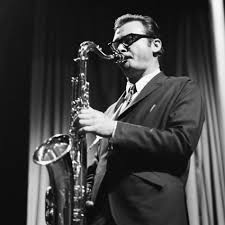
To understand the immaculate, weightless tone of Stanley Gayetzsky, you have to look back at the fiercely competitive big band era of the 1940s. A teenage prodigy from the Bronx, Getz was already playing with titans like Jack Teagarden and Jimmy Dorsey before finding his definitive spiritual home in Woody Herman’s legendary “Second Herd.” It was there, as part of the famous “Four Brothers” saxophone section, that Getz delivered his historic 1948 solo on “Early Autumn”. That single performance established his blueprint: a breathtakingly smooth, airy, and vibratoless tone that seemed to float effortlessly above the rhythm section. Influenced by the elegance of Lester Young, Getz proved that tenor saxophonists didn’t need to scream or shout to achieve absolute emotional depth—they just needed a whisper.
The Bossa Nova Earthquake: Transforming the Global Airwaves
In the early 1960s, after dominating the West Coast Cool Jazz scene, Getz pulled off one of the greatest artistic and commercial masterstrokes in modern music history. Guitarist Charlie Byrd brought him a stack of vinyl records from a new underground movement in Rio de Janeiro, and Getz was instantly paralyzed by its syncopated brilliance. For the high-art connoisseur navigating The Jazz Compass, albums like Jazz Samba (1962) and the monumental Getz/Gilberto (1964) are absolute holy scriptures. Joining forces with João Gilberto’s hypnotic guitar and Tom Jobim’s minimalist piano, Getz’s tenor became the perfect lyrical foil to the delicate Brazilian saudade. His golden, velvet phrasing on “The Girl from Ipanema” didn’t just win Album of the Year at the Grammys; it permanently altered the DNA of American popular music.
The Complex Latitude of an Uncompromising Master
True to the borderless, forward-thinking spirit of Jazz Latitude, Stan Getz spent the rest of his life proving that he was far more than just a bossa nova ambassador. He was a restless jazz chameleon who constantly surrounded himself with the fiercest young avant-garde intellects of the post-bop era. Throughout the 70s and 80s, he led jaw-dropping ensembles featuring icons like Chick Corea, Stanley Clarke, and Kenny Barron. Getz could pivot from a devastatingly beautiful, heartbroken ballad to a fierce, up-tempo post-bop burn with absolute technical authority. When Stan Getz passed away in Malibu, he left behind an unmatched coordinate on our musical geography—a permanent monument where American jazz intellect and tropical poetry remain locked in a beautiful, eternal embrace.