A New Beginning in 1967
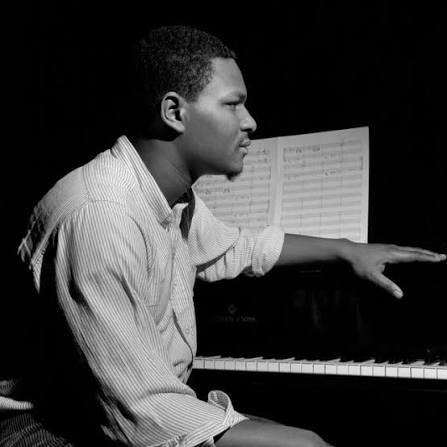
On April 21, 1967, McCoy Tyner entered Rudy Van Gelder’s studio in Englewood Cliffs, New Jersey, with three musicians: tenor saxophonist Joe Henderson, bassist Ron Carter, and drummer Elvin Jones. They recorded five Tyner compositions—“Passion Dance,” “Contemplation,” “Four by Five,” “Search for Peace,” and “Blues on the Corner”—that became The Real McCoy, Tyner’s first album for Blue Note and one of the defining recordings of his career. The session came less than two years after he had left John Coltrane’s celebrated quartet, and its significance is difficult to separate from that transition. Tyner was already famous among jazz musicians and listeners, but much of that fame was still attached to somebody else’s group. The Real McCoy presented something different: a pianist and composer establishing the terms of his own musical world.
That distinction matters because Tyner did not emerge from Coltrane’s quartet as an unknown sideman waiting for an opportunity. Between 1960 and 1965, his piano had been one of the defining elements of the John Coltrane Quartet. Alongside Elvin Jones and bassist Jimmy Garrison, he helped create an ensemble language in which modal harmony, rhythmic elasticity and extended improvisation could coexist with extraordinary intensity. Records such as My Favorite Things, Impressions, Crescent and A Love Supreme had already made Tyner’s muscular attack and spacious harmonic vocabulary recognizable. Yet being indispensable to another musician’s sound is not the same thing as possessing a fully independent career. After leaving Coltrane in late 1965, Tyner faced the difficult task of turning a musical identity developed inside one of jazz’s greatest groups into a language capable of supporting his own compositions and leadership. Blue Note’s own account of The Real McCoy treats the album as precisely that kind of turning point.
Life After Coltrane
Tyner’s departure from Coltrane has sometimes been framed too neatly as one artist rejecting another’s increasing radicalism. The reality is more interesting. Coltrane’s music was changing dramatically during 1965. Ensembles grew larger, collective improvisation became more prominent, and musicians including Pharoah Sanders were helping push the music toward levels of density that left less room for the kind of harmonic architecture Tyner had perfected within the classic quartet. Tyner eventually departed, while Jones followed not long afterward. What disappeared was not simply a rhythm section but one of the most distinctive systems of musical interaction in modern jazz.
For Tyner, the immediate aftermath was not an effortless ascent to solo stardom. His discography as a leader already included several Impulse! albums, but the commercial and professional momentum associated with Coltrane did not automatically transfer to him. The period after leaving the quartet was therefore both uncertain and creatively important. He needed to determine which elements of the Coltrane experience genuinely belonged to his own musical identity and which had existed because of the specific chemistry of that band.
The Real McCoy provides the answer.
Tyner did not abandon modal harmony, powerful left-hand voicings, pentatonic language or rhythmic intensity. Those elements had never belonged exclusively to Coltrane. But he reorganized them around his own compositions. The distinction is crucial. Instead of asking how Tyner sounded without Coltrane, the album encourages a better question: what happens when Tyner becomes the composer responsible for defining the entire musical environment?
Why This Quartet Was Different
The musicians Tyner selected made the answer possible. Elvin Jones was the familiar presence, but the reunion did not simply recreate the Coltrane rhythm section. Ron Carter, then central to Miles Davis’s second great quintet, possessed a very different approach from Jimmy Garrison. Carter’s bass could be remarkably mobile and precise, creating counterlines and subtle rhythmic displacement while maintaining a clear relationship with the harmonic movement. Joe Henderson, meanwhile, was already one of Blue Note’s most distinctive tenor saxophonists, having recorded as both leader and sideman in numerous adventurous post-bop settings.
The result was a quartet assembled from musicians who understood freedom without requiring the abandonment of composition.
That quality separates The Real McCoy from some of the more openly avant-garde jazz being recorded during the same period. Tyner was not trying to compete with the rapidly expanding free-jazz movement by producing greater density or more extreme instrumental techniques. Nor was he retreating into conservative hard bop. Instead, the album occupies the fertile territory between those poles: compositions have strong identities, harmonic environments remain clearly defined, but the musicians possess enormous freedom inside them.
All five pieces were written by Tyner, an important detail confirmed both by contemporary catalog records and later Blue Note documentation. That makes the album particularly valuable for understanding him. We are not hearing Tyner interpret a collection of standards selected to showcase his piano technique. We are hearing five different problems that he created for four improvisers to solve.
“Passion Dance”: Rhythm Before Resolution
The album begins with “Passion Dance,” and the opening immediately establishes that Tyner has no interest in easing the listener into his new chapter. The composition is built around a strongly modal environment rather than a rapidly changing conventional chord sequence. That harmonic concentration allows rhythm to become one of the primary engines of development.
This is where Elvin Jones becomes essential.
Tyner and Jones had spent years developing an unusually physical relationship inside Coltrane’s quartet. Jones rarely treated meter as a rigid grid. His cymbal patterns, snare accents, tom-tom figures and polyrhythmic layers could create the sensation that several rhythmic currents were moving simultaneously. Tyner understood how to play inside that turbulence without losing harmonic clarity.
On “Passion Dance,” their shared history becomes an advantage, but the context is new. Tyner is now directing the composition.
Blue Note describes the piece as an exploration of rhythmic upheaval in which Tyner’s attacks and Jones’s accents create a shifting environment for Henderson and Carter. What makes the performance successful is that rhythmic complexity never becomes merely decorative. Henderson has to respond to it. Carter has to negotiate it. Tyner’s piano simultaneously contributes to the rhythmic pressure and defines the harmonic landscape.
The piece therefore introduces one of the album’s central principles: Tyner’s harmony and rhythm cannot easily be separated.
His famous fourth-based voicings are often discussed primarily as harmonic innovations, but their physical spacing also affects rhythm. Large intervals played with force produce a different kind of momentum from closely voiced bebop chords. Tyner could strike the keyboard almost orchestrally, allowing harmony itself to become a percussive event.
Joe Henderson Was the Ideal Choice
Henderson’s presence deserves more attention than it sometimes receives in discussions centered almost entirely on Tyner. A less independent tenor player could easily have turned the session into an indirect imitation of Coltrane. Henderson prevents that from happening.
His sound, phrasing and rhythmic imagination were already unmistakably his own.
Henderson could move between inside and outside playing without making the transition sound ideological. He could develop an angular phrase, leave unexpected space, manipulate articulation and then reconnect with the composition’s melodic identity. This made him particularly well suited to Tyner’s music. The harmonic environment was open enough to encourage exploration but defined enough to reward a musician capable of hearing structure.
On “Passion Dance,” Henderson does not need to imitate Coltrane’s sheets of sound to match the intensity of the rhythm section. He finds another route through the music.
This is one reason the quartet sounds like a band rather than an all-star session assembled for a record date.
“Contemplation”: Another Side of Tyner
The transition into “Contemplation” immediately expands the album’s emotional range. Where “Passion Dance” is propelled by rhythmic force, “Contemplation” creates space. The tempo relaxes and Tyner’s harmonic vocabulary becomes less confrontational, revealing something essential about his musicianship: the same broad voicings capable of producing enormous power could also produce stillness.
The title is accurate without being simplistic. The performance does not merely become “quiet.” Jones’s rhythmic movement remains active underneath the surface, while Carter provides a flexible foundation that prevents the music from becoming static. Henderson’s tenor works particularly well in this environment because his phrasing can remain searching without destroying the atmosphere.
This contrast between “Passion Dance” and “Contemplation” is one reason The Real McCoy feels so complete despite containing only five pieces. Tyner is not demonstrating one signature sound repeatedly. Each composition creates a different set of relationships among the same four musicians.
The album is therefore already answering the question raised by Tyner’s departure from Coltrane.
He did not need another dominant saxophonist’s vision to give his playing direction.
He could create the direction himself.
Rudy Van Gelder and the Sound of the Quartet
The recording environment also deserves attention. The session took place at Van Gelder Studio in Englewood Cliffs, with Rudy Van Gelder engineering and Alfred Lion producing. Discographical records identify April 21, 1967 as the session date and list the five performances that became Blue Note BLP 4264/BST 84264.
Van Gelder’s studio had already become central to the recorded sound of Blue Note, Impulse! and other major jazz labels. In Tyner’s case there was an additional continuity: Van Gelder had engineered many of the Coltrane recordings on which the pianist had developed his reputation. The surroundings were therefore familiar even if the professional situation was different.
What matters for The Real McCoy is not some vague claim that it is an “audiophile reference recording.” That kind of language obscures what is actually interesting about the sound.
The recording lets us hear relationships.
Tyner’s piano has enough weight to communicate the physical character of his attack. Carter’s bass remains intelligible inside the ensemble rather than becoming merely low-frequency reinforcement. Jones’s drums convey both force and detail. Henderson occupies enough space to sound authoritative without making the quartet feel saxophone-led.
That balance serves the music rather than becoming the subject of it.
The Meaning of the Title
There is also an obvious playfulness in the album’s title. The Real McCoy is an established English expression meaning the genuine article, while simultaneously referring directly to McCoy Tyner himself. For a musician emerging from the enormous shadow of the John Coltrane Quartet, the phrase acquires an additional resonance even if we should resist turning a clever title into an elaborate manifesto.
This was McCoy.
His compositions.
His quartet.
His Blue Note debut.
His musical decisions.
And the album’s first two pieces had already demonstrated that his identity could contain both rhythmic force and introspection without depending upon the presence of Coltrane.
But the session was only halfway through its argument.
On the remaining pieces—“Four by Five,” “Search for Peace,” and “Blues on the Corner”—Tyner would reveal three additional dimensions: rhythmic complexity, lyrical spirituality and an enduring connection with the blues.
Together, the five compositions would explain why The Real McCoy was not merely a successful record made after Coltrane.
It was the moment when McCoy Tyner’s independent musical world became impossible to overlook.
Buy Amazon
Five Compositions, One Emerging Identity
The first half of The Real McCoy establishes two sides of McCoy Tyner’s language with unusual clarity. “Passion Dance” transforms modal concentration into rhythmic momentum; “Contemplation” slows that momentum without sacrificing harmonic depth. What follows is even more revealing. “Four by Five,” “Search for Peace,” and “Blues on the Corner” do not simply complete the album with contrasting moods. Together they demonstrate how broad Tyner’s compositional thinking had become by 1967. Complex meter, lyrical restraint and the blues could coexist inside the same musical identity. That range is central to understanding why The Real McCoy became such an important turning point. Tyner had already established a recognizable piano language during his years with John Coltrane, but a leader needs more than an instrumental signature. He needs material capable of creating different environments for other musicians. These five pieces demonstrate that Tyner could do exactly that.
The quartet also becomes increasingly important as the album progresses. Joe Henderson, Ron Carter and Elvin Jones are not simply prestigious names surrounding the leader. Each musician solves a different problem in Tyner’s compositions. Henderson gives the melodic line an identity independent from Coltrane; Carter provides harmonic and rhythmic mobility; Jones reconnects Tyner with the extraordinary rhythmic relationship they had developed during the previous decade. What makes the session exceptional is that these personalities remain audible rather than being absorbed into a uniform “McCoy Tyner sound.”
“Four by Five”: Complexity That Still Moves
The title “Four by Five” immediately announces a rhythmic concern. Tyner built the piece around an unusual metric conception, but the performance is valuable precisely because it never feels like an academic exercise in odd meter. The musicians make the structure move.
This distinction matters. Jazz composition in the 1960s was increasingly exploring alternatives to conventional 4/4 time, but complexity alone does not create musical interest. The challenge is making an unusual structure feel sufficiently natural that improvisers can develop ideas rather than merely survive the bar lines.
Tyner understood this because rhythm had always been fundamental to his piano playing. His left hand could create enormous harmonic blocks, but his voicings were rarely static. They were attacks placed in time. His right-hand lines often contained strongly accented pentatonic shapes that could shift against the underlying pulse.
Jones was therefore an ideal drummer for “Four by Five.” His relationship with meter had never depended upon simply marking beats. He could imply several rhythmic layers simultaneously, creating movement around the composition without making its unusual structure sound rigid.
Carter provides another kind of intelligence. Rather than emphasizing complexity for its own sake, he keeps the lower architecture clear enough for the ensemble to move through it. Henderson then negotiates the structure melodically, producing lines that sound exploratory rather than trapped by the composition.
The result demonstrates one of Tyner’s strengths as a writer: the composition creates difficulty, but the difficulty generates possibilities.
Tyner’s Harmonic Language Without the Mythology
Discussions of McCoy Tyner frequently arrive at the term quartal harmony, and with good reason. His use of voicings constructed substantially from fourths became one of the most influential characteristics of post-bop piano. But reducing his style to “stacked fourths” can obscure what those voicings actually accomplished.
Traditional jazz harmony often emphasizes thirds, sevenths and extensions that strongly identify individual chords. Fourth-based structures can produce greater ambiguity. They may suggest a tonal center without defining every harmonic function in conventional terms.
For modal improvisation, that openness is extremely useful.
But Tyner’s contribution was not simply theoretical. He gave these voicings a physical identity.
His widely spaced left-hand structures created enormous resonance across the piano. Combined with forceful attack and active bass movement, they could make a quartet sound much larger than four musicians.
That characteristic had been fundamental to the Coltrane quartet. On The Real McCoy, Tyner demonstrates that it was also fundamental to his own compositional language.
There is no need to describe this as a “quartz wall,” “volcanic architecture” or any of the metaphors that dominated the previous JazzLatitude version of the article. The actual musical achievement is more interesting.
Tyner found a way to make harmonic openness sound physically powerful.
“Search for Peace”
After the rhythmic challenge of “Four by Five,” “Search for Peace” changes the emotional center of the album. It is one of Tyner’s most enduring compositions, and its effectiveness comes partly from restraint.
The title inevitably invites spiritual interpretation, especially because Tyner had participated only a few years earlier in Coltrane’s A Love Supreme. But the composition does not need to be treated as an extension of Coltrane’s spiritual narrative. Tyner’s own work repeatedly demonstrates an interest in contemplation, dignity and emotional clarity, and “Search for Peace” expresses those qualities without requiring an elaborate philosophical explanation.
The melody unfolds patiently. Harmonic movement provides color without overwhelming the central theme. Tyner’s touch becomes more spacious, allowing notes to resonate rather than constantly filling the available space.
Henderson is especially effective here.
His tenor sound could be angular and penetrating, but he was equally capable of lyricism. On “Search for Peace,” he does not turn tenderness into sentimentality. His phrasing retains enough tension to keep the performance alive.
Carter and Jones similarly resist overplaying.
The quartet understands that intensity can come from concentration rather than volume.
Space as Part of Tyner’s Power
“Search for Peace” also corrects one of the most persistent caricatures of Tyner: the idea that his style was fundamentally about force.
Force was one tool.
Space was another.
The broad intervals in his voicings could create openness as effectively as they created power. His strongest playing often depends upon the contrast between resonant chords and the space surrounding them.
This becomes particularly important when comparing his work with later pianists influenced by him. The surface characteristics of Tyner’s style—pentatonic runs, fourth-based voicings, powerful left-hand attacks—became widely imitated. The harder lesson was knowing when not to use them.
“Search for Peace” demonstrates that discipline.
Ron Carter Changes the Equation
Because Elvin Jones reunites with Tyner on the album, discussions understandably emphasize their shared Coltrane history. But Ron Carter may be the musician who most clearly prevents The Real McCoy from becoming a continuation of that quartet.
Carter’s approach differs significantly from Jimmy Garrison’s. His harmonic mobility and extraordinary control of intonation allow him to move through Tyner’s compositions with a kind of independence that subtly changes the ensemble’s center of gravity.
By 1967 Carter was deeply involved in Miles Davis’s second great quintet, where conventional roles were being continuously renegotiated. With Herbie Hancock, Wayne Shorter and Tony Williams, Carter participated in performances in which time, harmony and accompaniment could shift almost invisibly.
He brings that flexibility to Tyner’s session.
Listen beyond the piano and saxophone and the album becomes much richer. Carter is constantly making decisions about whether to reinforce, anticipate or move against the harmonic direction.
His presence is one reason the record feels so balanced.
“Blues on the Corner”
Then Tyner closes the album by returning to something fundamental: the blues.
“Blues on the Corner” is particularly important because it prevents listeners from misunderstanding the preceding modal and rhythmic experiments as a rejection of jazz tradition. Tyner could explore harmonic ambiguity, unusual meter and expansive improvisation while remaining deeply connected to blues language.
This was not contradictory.
The blues had always been compatible with reinvention.
The performance also brings out another side of Henderson, whose ability to combine modern harmonic thinking with blues inflection made him one of the most adaptable tenor players of his generation. Jones responds with rhythmic exuberance, while Carter gives the piece enough elasticity to avoid turning the closing track into a conventional hard-bop exercise.
Tyner himself sounds completely at home.
After the modal urgency of “Passion Dance,” introspection of “Contemplation,” metric complexity of “Four by Five” and lyricism of “Search for Peace,” the blues feels less like a return backward than a statement of continuity.
Modernity did not require erasing origins.
Why the Sequence Matters
The five compositions are frequently discussed individually, but their sequence deserves attention:
Passion Dance — rhythmic force.
Contemplation — introspection.
Four by Five — structural complexity.
Search for Peace — lyricism and space.
Blues on the Corner — tradition renewed.
That sequence functions almost like a compact map of Tyner’s musical identity in 1967.
The album contains only five tracks because it does not need more.
Each piece has a reason to exist.
This is precisely the kind of quality we want to emphasize in the reformulated JazzLatitude. Historical importance becomes more convincing when the article demonstrates how the music works, rather than repeatedly declaring the album a masterpiece.
Blue Note at a Moment of Change
The Real McCoy also belongs to an extraordinary period in Blue Note’s history. By the middle and late 1960s, the label’s catalog contained music stretching from soul jazz and hard bop toward increasingly adventurous post-bop and avant-garde forms. Artists including Andrew Hill, Eric Dolphy, Wayne Shorter, Herbie Hancock, Sam Rivers, Bobby Hutcherson and Joe Henderson had expanded the range of what a Blue Note record could contain.
Tyner fitted naturally into that environment.
His music was advanced without severing its relationship with jazz tradition. It could appeal to listeners coming from hard bop while providing enough harmonic and rhythmic openness for musicians interested in the developments of the 1960s.
The relationship would become one of the important chapters of his post-Coltrane career.
But The Real McCoy came first.
Reid Miles and the Visual Identity
The album’s physical identity also belongs to the classic Blue Note visual language. Reid Miles designed the cover, while Francis Wolff’s photography formed part of the label’s broader visual culture. Blue Note understood something many record companies treated as secondary: presentation could establish expectations before the needle touched the record.
That visual discipline is one reason original Blue Note albums remain instantly recognizable.
Yet the cover should not overshadow what distinguishes The Real McCoy from countless beautifully packaged jazz records.
The music justified the presentation.
More Than a Post-Coltrane Album
Calling The Real McCoy Tyner’s great “post-Coltrane statement” is useful only up to a point. It explains the historical circumstances, but it can inadvertently keep Coltrane at the center of a record on which he does not appear.
A better interpretation emerges after hearing all five compositions.
Tyner had already become Tyner.
The album did not document his escape from Coltrane’s influence so much as reveal how much of the classic quartet’s musical language Tyner himself had helped create.
The broad harmonies.
The modal openness.
The rhythmic power.
The balance between spiritual concentration and physical intensity.
Those qualities did not disappear when he left Coltrane because they were partly his contributions in the first place.
The Real McCoy made that fact impossible to ignore.
And its consequences would extend far beyond 1967.
The harmonic vocabulary heard throughout the album would become deeply embedded in modern jazz piano. Tyner’s combination of pentatonic language, fourth-based voicings, powerful attack and modal freedom would influence generations of pianists—and eventually become so widespread that listeners could easily forget how distinctive it once sounded.
That is where the final part of the story begins.
Not with another declaration that The Real McCoy is a masterpiece.
But with a more useful question:
What exactly did this record change?
What The Real McCoy Changed
The influence of The Real McCoy is easiest to understand not by counting accolades but by listening to what happened to jazz piano after records like it entered the language. McCoy Tyner did not invent every element associated with his style, nor did a single 1967 session suddenly transform the instrument. His importance lies in the unusually coherent way he brought several ideas together: broad fourth-based voicings, pentatonic melodic language, strong rhythmic attack, modal openness and a conception of the piano that could simultaneously support and challenge a powerful rhythm section. These characteristics had developed during his years with John Coltrane, but The Real McCoy placed them inside Tyner’s own compositions and made their independence unmistakable. The consequences extended well beyond pianists who sounded explicitly like him. His harmonic vocabulary became part of the general language available to post-bop musicians, while his physical relationship with the instrument offered an alternative to both bebop linearity and the more radical abstraction of free-jazz piano.
This is why Tyner’s influence can sometimes be difficult to hear historically. Once an innovation becomes absorbed into common practice, it stops sounding revolutionary. Fourth-based voicings, modal vamps and pentatonic patterns became so widespread in subsequent jazz education and performance that younger listeners can encounter them before ever hearing Tyner. The vocabulary becomes familiar before its history is understood. Returning to The Real McCoy reverses that process. The album reveals these devices not as exercises or formulas but as components of a complete musical personality.
Influence Without Imitation
Tyner’s impact can be heard across several generations of pianists, but influence should not be confused with replication. Chick Corea developed a substantially different rhythmic and harmonic identity, as did Herbie Hancock, who was already pursuing his own experiments during the same period. Later pianists including Kenny Barron, Mulgrew Miller, John Hicks, Harold Mabern, Joanne Brackeen and Geri Allen engaged with a post-bop vocabulary in which Tyner’s contributions had become impossible to ignore, even when their individual styles moved elsewhere. The same is true of musicians far beyond the piano. Saxophonists, guitarists, arrangers and composers learned from the harmonic spaces his voicings helped normalize.
There is an important distinction here. Tyner did not merely provide a collection of chord shapes.
He demonstrated how harmony could determine scale.
His piano could make a quartet sound enormous. Wide intervals opened the register, powerful attacks increased the perceived weight of the harmony, and modal centers allowed melodic improvisers to work expansively without requiring constant chord changes. In the hands of lesser imitators, these devices could become clichés. In Tyner’s playing, they were inseparable from touch, timing and composition.
That is why simply learning “McCoy voicings” does not reproduce McCoy Tyner.
The notes are only the beginning.
The Album Inside Tyner’s Career
The Real McCoy also benefits from hindsight because we know what followed. Tyner’s career did not peak with his first Blue Note album. The late 1960s produced a remarkable sequence that included Tender Moments and Expansions, while the following decade brought a major new chapter through recordings for Milestone Records, including Sahara, Song for My Lady, Enlightenment and Fly with the Wind.
Those records expanded his palette considerably. Ensembles grew, instrumentation changed, African and global musical references became increasingly visible, and Tyner’s writing could become more orchestral. Sahara in particular demonstrated that the pianist who had established such a strong quartet identity was capable of thinking far beyond conventional small-group post-bop.
Seen from that perspective, The Real McCoy is not the culmination of Tyner’s career.
It is a hinge.
On one side stands the pianist whose international reputation was inseparable from John Coltrane.
On the other stands the composer-bandleader whose subsequent work would occupy several decades.
That makes the album historically valuable even before judgments about whether it is his “best” record enter the discussion.
Joe Henderson’s Contribution to Its Longevity
The record’s durability also owes a great deal to Joe Henderson. Tyner needed a saxophonist strong enough to operate beside his piano without forcing the music back toward the sound of the Coltrane quartet. Henderson provided exactly that.
By 1967, his Blue Note work had already established him as one of the most flexible tenor voices of the decade. He could negotiate hard bop, modal composition and more open post-bop structures without losing his individual sound. On The Real McCoy, that adaptability allows each Tyner composition to retain a distinct character.
Henderson’s role also illustrates why evaluating jazz albums primarily through the leader can be misleading. The compositions belong to Tyner and the record is unquestionably his statement, but the final identity of the session is collective. Replace Henderson with another saxophonist and the historical meaning of the album might remain similar; the actual music would not.
The same applies to Carter and Jones.
Great jazz records are often created precisely at the point where strong individual identities refuse to disappear inside the leader’s concept.
Elvin Jones Without Coltrane
For Elvin Jones, the session offered another fascinating context. His rhythmic relationship with Tyner was already one of the most celebrated partnerships in jazz, but here the familiar interaction existed without Coltrane and Jimmy Garrison.
That difference helps expose what Tyner and Jones themselves contributed to the classic quartet.
Jones could create immense propulsion without simply accelerating the tempo. His layered rhythms surrounded the pulse, while Tyner’s attacks could lock into, oppose or cut across those layers. Years of shared experience meant that the two musicians could create tension without destabilizing one another.
On The Real McCoy, this relationship belongs to Tyner’s compositions.
The reunion therefore does not make the album nostalgic.
It makes it revealing.
Ron Carter and the Importance of Difference
Ron Carter, conversely, brings productive unfamiliarity. His presence prevents the rhythm section from becoming a reconstruction of Tyner’s previous working environment.
Carter’s remarkable harmonic awareness and rhythmic flexibility give Tyner another type of foundation. He can establish the center of a piece while remaining melodically active, and his precision creates room for Jones to operate with considerable freedom.
This combination—familiarity between Tyner and Jones, difference introduced by Carter, and the independent voice of Henderson—is one reason the quartet works so convincingly.
The personnel are not simply impressive individually.
They are well chosen for the problem the music needs to solve.
Why the Album Still Works for New Listeners
There is another reason The Real McCoy has remained an effective entry point into Tyner’s work: it is adventurous without requiring specialized knowledge to follow.
A listener does not need to understand quartal harmony to feel the physical force of “Passion Dance.”
One does not need to analyze meter to recognize that “Four by Five” moves differently.
“Search for Peace” communicates its reflective character without theoretical explanation.
And “Blues on the Corner” reconnects the album with a language fundamental to jazz history.
That combination makes the record useful for listeners moving beyond canonical introductory albums such as Kind of Blue or A Love Supreme toward the broader post-bop landscape of the 1960s.
It introduces complexity without treating complexity as a barrier.
A Better Way to Listen to The Real McCoy
Rather than approaching the album as a monument that must be admired, try listening to it several times with a different focus.
On the first pass, follow Tyner’s left hand. Notice how the placement and spacing of chords affect the apparent size of the ensemble.
Then follow Elvin Jones. Listen to how rarely his drumming feels satisfied with merely defining the beat.
Next, concentrate on Ron Carter, particularly on the moments when the bass stops behaving like simple foundation and becomes another melodic voice.
Finally, listen almost exclusively to Joe Henderson and ask how he responds differently to each of Tyner’s five compositions.
The record changes.
What initially sounds like a powerful McCoy Tyner album becomes a study in four musicians negotiating five carefully differentiated environments.
That is more interesting than simply calling it a classic.
Where to Go Next
For listeners discovering Tyner through The Real McCoy, the next recording should depend on what aspect of the album is most compelling.
If the attraction is the Blue Note quartet language, continue with Expansions.
If it is Tyner’s interest in richer arrangements and broader colors, hear Tender Moments.
If the goal is to understand how dramatically his music expanded during the 1970s, move to Sahara.
For the intensity of Tyner in concert, Enlightenment provides another perspective.
And anyone approaching The Real McCoy without knowing Tyner’s work with Coltrane should eventually return to Crescent and A Love Supreme. Hearing those recordings after the Blue Note material can be revelatory because Tyner’s contribution becomes easier to isolate.
The chronology works in both directions.
The Blue Note Album as Historical Document
The album also captures Blue Note at an important transition. Hard bop remained central to the label’s identity, but the boundaries had expanded dramatically. By 1967, Blue Note had already documented the increasingly individual languages of Andrew Hill, Eric Dolphy, Herbie Hancock, Wayne Shorter, Bobby Hutcherson, Sam Rivers and Joe Henderson.
Tyner belonged naturally in that environment because his music refused the false choice between tradition and experimentation.
“Blues on the Corner” could coexist with “Four by Five.”
A strong melodic composition could coexist with modal openness.
Complexity did not require abandoning swing.
Freedom did not require abandoning structure.
That balance would become one of the central characteristics of sophisticated post-bop.
Beyond the Word “Masterpiece”
Jazz writing often becomes less useful precisely when it loves a record most. Words such as masterpiece, essential, monumental and legendary accumulate until they stop communicating information.
The Real McCoy does not need that treatment.
Its importance can be demonstrated.
Five original compositions reveal Tyner as a writer capable of creating sharply different musical environments. A carefully selected quartet gives each composition an independent life. The harmonic and rhythmic vocabulary Tyner had developed during the Coltrane years survives outside that ensemble and proves capable of supporting his own career. The record then becomes the beginning of an important Blue Note period and a bridge toward the much broader work that followed.
Those are observable reasons for listening.
And they tell us more than another superlative.
The Real McCoy, Finally on His Own Terms
The title now comes back into focus.
In 1967, McCoy Tyner did not need to prove that he had been important to John Coltrane. The recordings already demonstrated that.
What he needed was a future.
The Real McCoy provided one.
Not because it erased his past, but because it clarified what had always belonged to him: the harmonic breadth, the rhythmic authority, the combination of force and space, the modal imagination and an increasingly confident compositional voice.
Joe Henderson, Ron Carter and Elvin Jones gave those ideas an ideal environment.
Rudy Van Gelder captured the interaction with enough clarity for us to continue examining it decades later.
And five compositions were enough.
The most revealing way to hear The Real McCoy today is therefore not as an artifact sitting safely inside the jazz canon. Listen instead to the uncertainty surrounding its creation: a thirty-eight-year-old pianist who had left one of the most celebrated groups in modern jazz and now needed to demonstrate what his music could become without it.
The answer did not arrive as an imitation of Coltrane.
It did not arrive as a rejection of Coltrane.
It arrived as McCoy Tyner.
And that is why the album’s simple pun remains so appropriate.
This really was The Real McCoy.