The Philadelphia Crucible and the Call of the Prophet
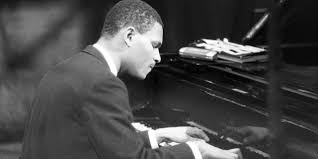
To truly comprehend the monumental, earth-shaking weight of McCoy Tyner’s piano, you have to realize that before he arrived, jazz piano was still largely trapped in the polite, linear corridors of bebop phrasing. Born in Philadelphia, Tyner grew up in a neighborhood overflowing with genius (living just down the street from the Heath brothers and developing his chops alongside a young Lee Morgan). But his destiny was permanently sealed when he met John Coltrane. In 1960, Tyner became the first official member of the Classic Quartet—a lineup that would include Elvin Jones and Jimmy Garrison, widely regarded as the most explosive, telepathic acoustic group in human history. Tyner provided the massive harmonic canvas that Coltrane needed to launch his modal, spiritual saxophone safaris into the stratosphere.
The Quartal Revolution: Transforming the Keyboard into an Anvil
For the high-art connoisseur tracking the tectonic evolutions on The Jazz Compass, McCoy Tyner’s work on masterpieces like A Love Supreme (1965) and My Favorite Things (1961) represents a complete restructuring of western harmony. Tyner famously discarded the traditional jazz chords built on thirds, pioneering “quartal voicings”—chords stacked in perfect fourths. Combined with his legendary, thunderous left-hand bass notes that acted as a hypnotic, droning pedal point, this technique unleashed a vast, open landscape of sound. He stopped treating the piano like a delicate string instrument and began playing it as a magnificent, percussive orchestra. Tyner could lock into an intense, volcanic groove with drummer Elvin Jones, delivering an unstoppable, roaring cascade of notes that gave the music a deeply spiritual, almost ancient gravitas.
The Solitary Titan: A Lifelong Odyssey of Spiritual Groove
True to the borderless, forward-thinking latitudes of Jazz Latitude, McCoy Tyner’s musical geography expanded beautifully after he left Coltrane’s group in late 1965, refusing to follow the band into absolute, unstructured free jazz. As a solo titan for Blue Note Records, he delivered timeless post-bop masterworks like The Real McCoy (1967) and Sahara (1972), where he integrated koto flutes and African rhythmic concepts into his massive acoustic sound. Tyner spent the next four decades proving that absolute energy and intellectual sophistication could live in the exact same heartbeat. When McCoy Tyner finally left the stage in 2020 as one of the last living pillars of modern jazz, he left behind a permanent, roaring coordinate on our musical map—a legacy that reminds us that the piano, in the right hands, can shake the very foundations of the earth.