The Architect of the Big Bop Tenor
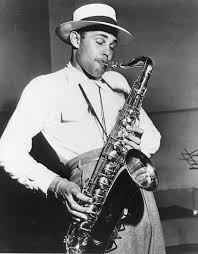
To understand the towering legacy of Dexter Gordon, you have to understand the sonic landscape of the 1940s. While Charlie Parker was rewriting the rules of jazz on the alto sax with lightning speed, it was Dexter who stepped up to prove that the heavier, deeper tenor saxophone could swing just as hard and fast. Armed with a massive, dark, and beautifully centered tone, “Long Tall Dexter” became the definitive blueprint for the modern jazz tenor player. He combined the sophisticated, pre-war elegance of Lester Young with the fierce, complex harmonic vocabulary of bebop. When Dexter played, he didn’t just blow notes; he declaimed them like a Shakespearean actor, frequently reciting the lyrics of a ballad into the microphone before playing it, ensuring his horn literally “spoke” to the audience.
The European Exile and the Blue Note Renaissance
In the early 1960s, suffocated by the racial tensions and the relentless grind of the American music business, Dexter joined the legendary migration of jazz titans to Europe, settling in Copenhagen. This wasn’t a retreat; it was a magnificent creative rebirth. From his European base, he recorded a string of absolute masterpieces for Blue Note Records—monuments that we treat with religious devotion here at The Jazz Compass, such as Our Man in Paris (1963) and Go! (1962). His playing during this era was a masterclass in relaxed authority. Dexter was famous for playing “behind the beat,” a rhythmic swagger that created an intoxicating sense of ease and suspension, proving to the world that ultimate sophistication doesn’t need to rush.
The Cinematic Latitude: Round Midnight
True to the expansive philosophy of Jazz Latitude, Dexter’s artistry eventually broke through the boundaries of music and stepped onto the silver screen. In 1986, director Bertrand Tavernier cast him as Dale Turner—a tragic, beautiful composite of real-life jazz exiles—in the cinematic masterpiece ‘Round Midnight. Dexter didn’t just act; he poured his own scars, his own triumphs, and his deep, smoky voice into the role, earning an Academy Award nomination. It was the ultimate validation of a man who lived his life as a work of high art. When Dexter Gordon passed away, he left behind a legacy that was truly global—a coordinate of pure, unadulterated cool that reminds us why the tenor sax remains the definitive instrument of urban romance.