The Metamorphosis of the Coltrane Fire
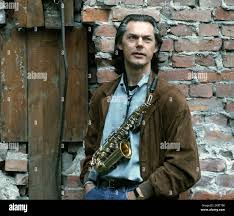
To understand the ethereal, ambient majesty of Jan Garbarek, you have to look at the massive paradox of his beginnings. In the late 1960s, a young Garbarek was deeply possessed by the spiritual, incendiary fire of John Coltrane and Albert Ayler. He was playing furious, avant-garde free jazz in Oslo, blowing his sax with a raw, muscular aggression. But Garbarek soon realized that copying the African-American urban scream didn’t match his own European soul. Under the visionary guidance of producer Manfred Eicher—the mastermind behind ECM Records—Garbarek stripped away the clutter. He slowed down his phrasing, embraced space, and allowed his tone to become sharp, clear, and hauntingly desolate, like a lone horn echoing across an empty, snow-covered landscape.
The Legendary Keith Jarrett Partnership
In the mid-1970s, Garbarek’s newly minted “Nordic tone” became the focal point of one of the most legendary ensembles in jazz history: Keith Jarrett’s European Quartet. Alongside bassist Palle Danielsson and drummer Jon Christensen, Garbarek’s sax became the perfect lyrical foil to Jarrett’s ecstatic, gospel-tinged piano lines. For the high-art collector diving into The Jazz Compass, masterpieces from this era like Belonging (1974) and My Song (1978) are absolute holy scriptures. Tracks like “Country” and “螺旋 (Spiral)” showcase Garbarek’s unique ability to play a melody with such a piercing, vocal clarity that it felt less like jazz and more like an ancient, sacred folk hymn. He proved to the world that ultimate emotional depth didn’t require a million notes—it just required the right note, held with absolute conviction.
The Borderless Latitude: Officium and the Polyphonic Echo
True to the expansive philosophy of Jazz Latitude, Jan Garbarek has spent his life blurring the boundaries between centuries and cultures. In 1993, he pulled off one of the most radical creative gambits in modern music with the album Officium. Collaborating with the Hilliard Ensemble, a British vocal group specializing in early classical music, Garbarek took his soprano and tenor saxophones into a medieval Austrian monastery. He began improvising modern, searching lines around 16th-century Gregorian chants. The result was an international phenomenon—a brilliant, haunting dialogue between ancient polyphony and modern jazz intellect. By connecting the dots between American jazz roots, Scandinavian folklore, and medieval church music, Garbarek built a global coordinate where silence is a musician, and every breath is pure high art.