
The Anti-Bossa Manifesto of 1964
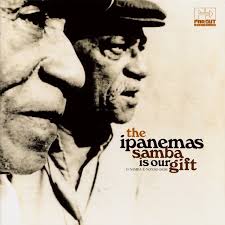
To truly map the evolutionary cracks of The Jazz Compass, you have to travel back to Rio de Janeiro in 1964. While the world was hypnotized by the breezy, polite jazz-samba of Stan Getz and Astrud Gilberto, a collective of brilliant Afro-Brazilian studio musicians and jazz cats gathered in a dimly lit studio to record a counter-cultural masterpiece. Calling themselves Os Ipanemas, this enigma of a band featured the aristocratic trombone of Astor Silva, the flawless, deep-pocket drumming of Wilson Das Neves, and the haunting guitar arrangements of a young Baden Powell (operating largely from the shadows due to contractual reasons). They took the sophisticated harmonic structures of bossa nova, stripped away the beachside innocence, and dragged it straight into the mystical, rhythmically dense universe of the Rio suburbs and Candomblé terreiros.
The Holy Grail of the Underground: Trance, Trombones, and Agogôs
The self-titled 1964 debut by Os Ipanemas is considered by high-art collectors worldwide as an absolute holy grail of crate-digging culture. Tracks like “Consolação” and “Canto de Xangô” are masterclasses in atmospheric tension. Instead of the gentle, whispered nylon strings of João Gilberto, Os Ipanemas drove their music with a heavy, hypnotic rhythmic spine made of atabaques, agogôs, and dark, repetitive vocal chants that felt like an ancient spiritual ritual. Against this raw, rootsy percussion, Astor Silva’s trombone slithered with a smoky, late-night jazz melancholy. It was a terrifyingly brilliant hybrid: urban jazz intellect completely possessed by the ancestral African pulse, mapping a rich, nocturnal coordinate where European modernism and Yoruba spiritualism became one.
The London Resurrection: A Timeless Groove Across the Latitude
True to the borderless, time-traveling spirit of Jazz Latitude, the story of Os Ipanemas did not end with their commercial disappearance in the mid-1960s. For nearly four decades, their single album remained a ghost, whispered about only by avant-garde DJs and rare groove connoisseurs in Europe. Then, in 2001, the independent British label Far Out Recordings tracked down the surviving members—including Wilson Das Neves and nonagenarian vocalist Rubinho—and brought them back into the studio. Albums like The Return of Os Ipanemas (2001) and Afro Samba (2003) proved that their unique, dark groove hadn’t lost a single drop of its intoxicating potency. Os Ipanemas remind us that the finest jazz does not always live in the bright, commercial spotlight; sometimes, the most sophisticated poetry is found deep in the shadows, where the drums beat slow and the soul risks everything to touch the sacred.