The Crucible of the Masters and the Williamsburg Bridge Exile
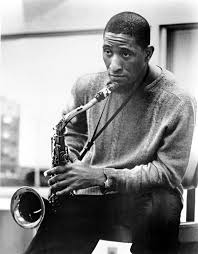
To understand the titanic, self-demanding genius of Sonny Rollins, you have to realize that by the mid-1950s, he was already considered the undisputed heavyweight champion of the tenor saxophone. He had recorded with Miles, driven Clifford Brown’s quintet to historic heights, and delivered his own absolute masterpiece, Saxophone Colossus (1956). Yet, at the absolute peak of his fame in 1959, Rollins did something unthinkable: he walked away from the clubs and the money. Feeling that his playing was becoming stagnant, he embarked on a legendary, self-imposed two-year exile. Lacking a quiet space in his New York apartment, Rollins took his horn every single day to the pedestrian walkway of the Williamsburg Bridge, practicing for up to fifteen hours a day against the roaring wind and the passing trains. When he returned with his 1962 album, fittingly titled The Bridge, he was no longer just a great jazzman; he had become an elemental force of nature.
The Trio Without a Net and the Calypso Groove
For the high-art connoisseur navigating The Jazz Compass, Rollins’s work in the late 50s and 60s represents the absolute pinnacle of structural freedom. He pioneered the radical use of the “pianoless trio”—performing solely with bass and drums. Without the harmonic safety net of a piano dictating chords, Sonny was completely liberated, weaving massive, polyphonic streams of melody that challenged his rhythm sections to an intellectual duel. At the same time, true to his mother’s West Indian roots, Rollins injected a joyful, syncopated Caribbean flavor into the hard bop landscape. Masterpieces like “St. Thomas” and “Valse Hot” proved that ultimate avant-garde sophistication could walk hand-in-hand with an infectious, sunny, and deeply grounded folk rhythm.
The Eternal Colossus: A Century of Modern Legend
True to the borderless, forward-thinking latitudes of Jazz Latitude, Sonny Rollins spent his multi-decade career proving that a saxophone could contain the entire history of human emotion. He was an improvisational marathon runner, famous for launching into unaccompanied solo introductions that could last for twenty minutes, jumping effortlessly from complex bebop patterns to avant-garde shrieks, classical quotes, and deep, guttural blues cries. He recorded with everyone from Coleman Hawkins to The Rolling Stones (delivering that searing, unmistakable solo on “Waiting on a Friend”). Sonny Rollins mapped out a permanent, towering coordinate on our musical geography—a monument that reminds us that true artistic freedom requires the courage to constantly tear yourself down just to rebuild something even more magnificent.