The Great Shift
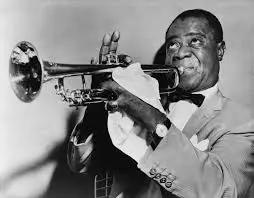
Before Louis Armstrong, jazz was a beautiful, chaotic tapestry of rhythmic syncopation played in unison. In the smoke-filled rooms of 1920s Chicago and New York, it was his trumpet that sliced through the collective noise to introduce a radical new concept: the soloist. Armstrong turned the jazz ensemble into a gravity well, with his genius acting as the center of orbit.
He proved that a single musician, armed with impeccable phrasing and raw emotion, could carry the weight of an entire art form.
The Architecture of Modern Phrasing
To analyze Armstrong’s early recordings—specifically his work with the Hot Five and Hot Seven—is to witness the invention of modern musical time. His rhythm was not mechanical; it floated. He played behind the beat, stretched melodies to their breaking points, and resolved them with a sophistication that stunned his contemporaries. Miles Davis once famously remarked: “You can’t play nothing on modern trumpet that doesn’t come from Louis.”
For the high-art listener, Armstrong is not nostalgia. He is the blueprint of avant-garde freedom, wrapped in a deceptively joyful tone.
The Vocal Latitude: Innovation in Scat
Just as he reshaped the trumpet, Armstrong fundamentally altered the geometry of vocal jazz. Legend has it that during a 1926 recording session for “Heebie Jeebies”, he dropped his lyric sheet and began improvising with nonsense syllables. Whether myth or fact, his “scatting” treated the voice exactly like his horn.
This single shift opened the doors for every vocal innovator who followed, establishing a direct lineage that leads straight to the modern latitudes of jazz vocalists like Sarah Vaughan.