The Great Metamorphosis of the Bass Drum
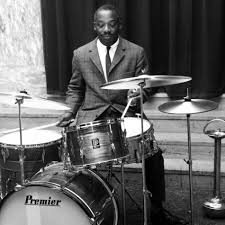
To understand the radical brilliance of Kenny Clarke, you have to realize that before him, the jazz drummer was essentially a time-keeping metronome, heavy-handedly stomping on the bass drum four times a measure to keep the dancers moving. In the early 1940s, inside the legendary, smoke-filled laboratory of Minton’s Playhouse in Harlem, Clarke decided that this approach was too rigid, too loud, and architecturally stagnant. He made a visionary leap: he shifted the continuous pulse of the rhythm from the floor to his right hand, creating a shimmering, fluid, and continuous cascade of time on the ride cymbal. The drum set was no longer an anchor; it became an atmospheric, floating cloud of rhythm that allowed the rest of the band to breathe.
Dropping Bombs and the Birth of Minton’s Vanguard
By freeing his feet from the relentless four-on-the-floor beat, Clarke unlocked a devastating new weapon: the “dropping of bombs.” He began using the bass drum and the snare for sudden, sharp, and highly unpredictable polyrhythmic accents that locked directly into the frantic solo lines of Charlie Parker and Dizzy Gillespie. This unpredictable style earned him his legendary nickname, “Klook” (short for Klook-mop, an onomatopoeia for his distinct snare-and-bass-drum combinations). For the high-art collector exploring The Jazz Compass, his work as a founding member of the Modern Jazz Quartet (MJQ) and his mid-50s sessions for Savoy Records are essential blueprints. He proved that a modern drummer could act as a sophisticated conversationalist, throwing intellectual curveballs at the soloists rather than just backing them up.
The European Haven and the Clarke-Boland Era
True to the borderless latitudes of Jazz Latitude, Kenny Clarke’s journey eventually led him away from the American grind. In 1956, he moved permanently to Paris, a city that embraced him not as a mere entertainer, but as a premier avant-garde intellectual. In France, he formed a legendary partnership with the brilliant Belgian pianist Francy Boland, co-leading the Clarke-Boland Big Band—one of the most formidable, hard-swinging, and culturally diverse orchestras in Europe. Alongside his old friend Bud Powell, he became the backbone of the expatriate community. Though he passed away in 1985, Kenny Clarke remains fixed on our musical map as the ultimate time-keeper of modernism, the man who took the chains off the jazz rhythm section and taught the music how to fly.