
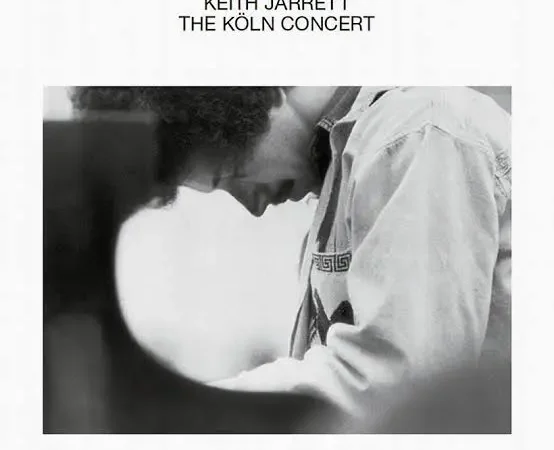
When the applause finally faded inside the Cologne Opera House, no one present imagined they had just witnessed the best-selling solo piano recording in history.
For producer Manfred Eicher, however, something extraordinary had happened.
As founder of ECM Records, Eicher had already developed an extraordinary ability to recognize performances that transcended technical excellence. He understood that great recordings were not simply collections of notes—they were moments in which emotion, space and silence combined to create something timeless.
Listening back to the tapes from Cologne, he immediately sensed that this concert belonged in that rare category.
The recording captured far more than a recital.
It documented a musician thinking aloud through the piano.
Unlike studio productions carefully assembled over multiple sessions, The Köln Concert unfolded as a single, uninterrupted act of creation. Every hesitation, every surge of energy and every unexpected melodic turn became part of its narrative.
The audience, almost imperceptible throughout much of the recording, contributed another essential element.
Their silence became part of the music.
JazzLatitude Insight
One reason The Köln Concert feels unusually intimate is that ECM preserved much of the hall’s natural acoustic environment instead of relying on heavy post-production. The recording allows listeners to experience the performance almost as if seated in the audience.
Improvisation Without a Safety Net
Improvisation lies at the heart of jazz, but few artists have embraced it as completely as Keith Jarrett.
During The Köln Concert, nothing was written in advance.
There were no rehearsed themes.
No predetermined harmonic roadmap.
No guarantee that the next musical idea would succeed.
Each phrase emerged directly from the previous one.
Motifs evolved into rhythmic patterns.
Rhythmic figures expanded into lyrical melodies.
Simple harmonic progressions gradually transformed into vast emotional landscapes.
Rather than constructing individual compositions, Jarrett created a continuous musical journey whose destination remained unknown even to himself.
This extraordinary level of spontaneity explains why every performance of Jarrett’s solo concerts differs dramatically.
The Köln performance cannot be recreated.
Its uniqueness is inseparable from the circumstances that produced it.
Music Born From Limitation
Ironically, many characteristics now associated with The Köln Concert arose because of the piano’s limitations.
Unable to rely on powerful bass notes, Jarrett developed repetitive left-hand patterns that established a hypnotic rhythmic foundation.
The brighter upper register encouraged long, singing melodic lines.
Dynamic control became more delicate than forceful.
Instead of overwhelming the instrument, Jarrett collaborated with it.
Every weakness suggested an alternative possibility.
This adaptability reveals one of the defining qualities of truly great improvisers.
They do not impose ideas upon circumstances.
They respond to them.
In doing so, limitations become catalysts rather than obstacles.
JazzLatitude Insight
Many musicians have attempted to transcribe passages from The Köln Concert. While individual phrases can be reproduced, the emotional momentum created by Jarrett’s continuous improvisation remains almost impossible to duplicate.
Why Listeners Fell in Love
Part of The Köln Concert‘s enduring appeal lies in its accessibility.
Although deeply rooted in jazz improvisation, the music frequently draws upon elements familiar to listeners outside the genre.
Repeating rhythmic patterns create an almost meditative quality.
Long lyrical melodies evoke Romantic classical composers.
Moments of gospel, folk and blues emerge naturally before dissolving into entirely new musical directions.
Listeners unfamiliar with bebop or advanced harmonic theory often discover that they can connect emotionally with Jarrett’s music without needing specialized knowledge.
The performance communicates directly.
Its emotional honesty transcends genre.
This ability to welcome newcomers without compromising artistic integrity remains one of the album’s greatest achievements.
A Commercial Success Nobody Expected
ECM Records anticipated critical appreciation.
Commercial success seemed far less certain.
After all, The Köln Concert consisted entirely of improvised solo piano music lasting more than an hour.
Conventional wisdom suggested that such recordings appealed only to a relatively small audience.
History proved otherwise.
The album steadily gained international recognition through enthusiastic recommendations rather than aggressive marketing.
Listeners returned repeatedly.
Musicians admired its courage.
Critics praised its originality.
Word spread across continents.
Eventually, The Köln Concert became the best-selling solo piano album ever released, with sales exceeding three million copies worldwide.
For a recording that almost never happened, the achievement remains astonishing.
Influence Beyond Jazz
The legacy of The Köln Concert extends well beyond the boundaries of jazz.
Contemporary classical pianists have cited Jarrett’s lyrical improvisation as an inspiration.
Minimalist composers have admired his patient development of simple musical ideas.
Ambient musicians have embraced his understanding of silence and resonance.
Even singer-songwriters have borrowed aspects of his harmonic language and emotional pacing.
Countless solo piano recordings released during the decades that followed bear traces of Cologne’s influence.
Some imitate its flowing melodies.
Others pursue its spontaneity.
Many attempt to recreate its emotional immediacy.
Few succeed.
Because the true achievement of The Köln Concert cannot be reduced to style.
It resides in authenticity.
Keith Jarrett’s Lasting Legacy
Throughout his remarkable career, Keith Jarrett continued exploring solo improvisation in concert halls around the world.
Many subsequent recordings display astonishing creativity.
Yet The Köln Concert remains the defining document of his artistic philosophy.
It demonstrates complete trust in intuition.
Complete commitment to the present moment.
Complete acceptance of uncertainty.
These qualities have inspired generations of musicians to view improvisation not merely as technical skill but as a way of thinking.
In an era increasingly dominated by digital editing and unlimited correction, the recording reminds us that beauty often emerges through vulnerability.
Perfection is rarely memorable.
Honesty is.
Why This Album Still Matters
Nearly fifty years after that winter evening in Cologne, The Köln Concert continues to captivate new generations of listeners.
Its historical importance is undeniable.
Its artistic influence remains profound.
But perhaps its greatest lesson reaches beyond music itself.
The concert teaches that creativity rarely appears under ideal conditions.
It flourishes when preparation meets resilience.
Keith Jarrett walked onto the stage believing the performance might fail.
Instead, he transformed disappointment into inspiration.
Every artist eventually encounters imperfect tools, unexpected setbacks and moments of doubt.
The Köln Concert stands as enduring proof that those obstacles need not define the outcome.
Sometimes they become the very reason a masterpiece exists.
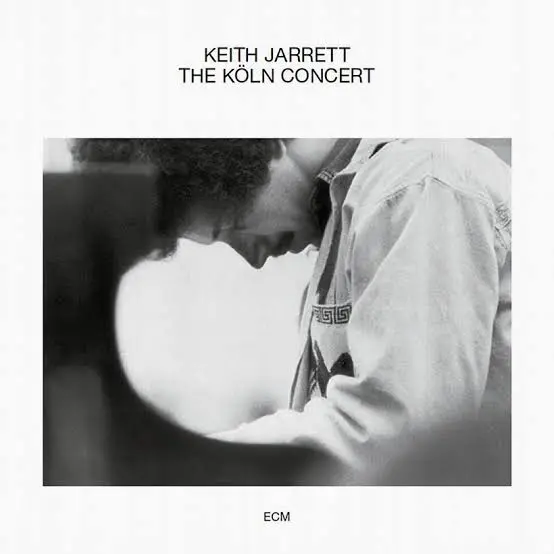
Technical Data
Artist: Keith Jarrett
Album: The Köln Concert
Recorded: January 24, 1975
Released: 1975
Venue: Cologne Opera House, Germany
Label: ECM Records
Producer: Manfred Eicher
Genre: Solo Piano · Contemporary Jazz
JazzLatitude Rating
| Category | Rating |
|---|---|
| Historical Importance | ★★★★★ |
| Musical Innovation | ★★★★★ |
| Improvisation | ★★★★★ |
| Recording Quality | ★★★★★ |
| Emotional Impact | ★★★★★ |
| Accessibility | ★★★★★ |
| Replay Value | ★★★★★ |
| JazzLatitude Essential | ★★★★★ |
Frequently Asked Questions
Why is The Köln Concert so famous?
It is widely regarded as the greatest improvised solo piano recording ever released and remains the best-selling solo piano album in history.
Was the concert really almost canceled?
Yes. Keith Jarrett considered canceling after discovering that the wrong piano had been placed on stage. He ultimately performed using the flawed instrument.
Was any of the music written beforehand?
No. The entire concert was improvised live without written compositions or prepared themes.
Why does the recording sound so intimate?
ECM Records preserved the natural acoustics of the Cologne Opera House, allowing the piano and the surrounding space to become integral parts of the listening experience.
Is The Köln Concert a good introduction to jazz?
Absolutely. Its lyrical melodies, emotional clarity and accessible improvisation make it one of the most welcoming entry points into modern jazz.
Final Thoughts
Few recordings illustrate the unpredictable nature of artistic creation as powerfully as The Köln Concert. What began as an evening overshadowed by fatigue, technical problems and uncertainty evolved into one of the defining moments in the history of recorded music.
Keith Jarrett did more than overcome adversity—he absorbed it into the performance itself. Every limitation of the instrument became an invitation to invent. Every unexpected challenge reshaped the music in real time.
Nearly half a century later, the album still feels remarkably alive. It is not simply a document of one extraordinary concert, but a reminder that the most enduring works of art often emerge when talent, courage and circumstance intersect in ways no one could have planned.
For anyone seeking to understand the expressive power of improvisation, The Köln Concert remains an essential listening experience—and one of the clearest examples that imperfection, in the right hands, can become timeless.