The Chicago Laboratory and the Counterpoint of Bebop
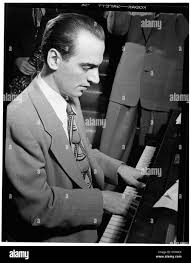
To understand the quiet, intellectual earthquake that was Lennie Tristano, one must look past the smoky, chaotic nightclubs of 52nd Street and enter a serene, academic laboratory. Blind from infancy due to the Spanish flu epidemic, Tristano developed a hyper-acute, almost mathematical relationship with sound. Graduating from the American Conservatory of Music in Chicago, he arrived in New York in 1946 and immediately polarized the jazz scene. While his contemporaries were mimics of Charlie Parker’s explosive, blues-based bebop, Tristano offered a radical alternative. He stripped jazz of its overt emotionalism, replacing it with long, labyrinthine, and completely even eighth-note lines that bypassed the bar lines, anchored by a rigorous, classical contrapuntal foundation deeply inspired by Johann Sebastian Bach.
The Birth of Free Jazz: Intuition and the Capitol Sessions
For the high-art connoisseur exploring the evolutionary anomalies of The Jazz Compass, Tristano’s 1949 sessions for Capitol Records are absolute holy grails of early modernism. In May of that year, alongside his telepathic disciples—alto saxophonist Lee Konitz and tenor saxophonist Warne Marsh—Tristano did something unprecedented. He instructed his band to step into the studio and play without any predetermined key, chord progression, or tempo. The resulting tracks, “Intuition” and “Digression”, stand as the absolute first documented examples of Free Jazz in history, beating Ornette Coleman to the punch by a full decade. It was a masterclass in pure, collective telepathy, proving that absolute freedom didn’t mean chaos, but rather a higher order of intellectual structure.
The Reclusive Professor and the Eternal Latitude
True to the uncompromising, forward-thinking spirit of Jazz Latitude, Lennie Tristano eventually turned his back on the commercial music business, preferring the role of a reclusive guru. From his East Village apartment, he became the first major jazz musician to establish a formal school of improvised music, teaching everyone from rock guitarists to avant-garde classical players. He was an early pioneer of studio multi-tracking, overdubbing piano lines on masterpieces like “Turkish Mambo” to create complex, polyrhythmic time signatures that defied human anatomy. Lennie Tristano mapped a fierce, singular coordinate on our musical geography—a monument to the purist ideal that music should never bow to the marketplace, reminding us that the deepest swing often lives in the cool, abstract architecture of the mind.