The Surf, the Slums, and the Battle with Bird
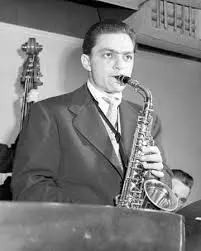
To comprehend the staggering emotional weight of Art Pepper, you have to look past the postcard-perfect image of 1950s California. While the West Coast jazz scene was celebrated for its sunny, relaxed, and academic Cool Jazz, Art Pepper brought a dangerous, bleeding-heart intensity to the palm-fringed coast. Raised in a dysfunctional, volatile home in Los Angeles, Art developed a sound on the alto saxophone that was completely unique: piercingly beautiful, driven by a raw blues crying, and swings with a terrifying urgency. During an era when almost every alto player on Earth was a carbon copy of Charlie Parker, Pepper was one of the very few who stood completely on his own ground. Miles Davis was so transfixed by his lyrical phrasing that he famously drafted him for a legendary, impromptu recording date that would alter the history of jazz.
The Contemporary Miracle: Recording with a Broken Horn
For the high-art connoisseur navigating The Jazz Compass, Pepper’s 1957 album Art Pepper Meets the Rhythm Section is an absolute holy text of modern jazz, born out of pure chaos. Art hadn’t touched his saxophone in months, his horn was literally falling apart with rubber bands holding the cork together, and he was deep in the throes of a severe heroin addiction when his wife dragged him to the studio. Unbeknownst to Art, he was booked to record with Miles Davis’s legendary rhythm section—Miles’s engine room consisting of Red Garland, Paul Chambers, and Philly Joe Jones. Despite being terrified, sick, and playing on a broken instrument, Pepper delivered a performance of immaculate genius. Tracks like “You’d Be So Nice to Come Home To” and “Straight Life” are masterclasses in rhythmic swing and crystalline improvisation, proving that his artistic soul was completely indestructible.
The Straight Life: Resurrection from the Concrete Cage
True to the borderless, forward-thinking spirit of Jazz Latitude, Art Pepper’s musical geography is a narrative of survival. His career was brutally fractured by nearly a decade spent behind bars in federal penitentiaries like San Quentin. Yet, unlike so many who faded into obscurity, Pepper staged one of the greatest late-career comebacks in music history during the late 1970s. Influenced by the avant-garde freedom of John Coltrane, his late style became fierce, aggressive, and deeply confessional. When he wrote his shocking, unfiltered autobiography Straight Life in 1979, he laid his demons bare for the world to see. Art Pepper mapped a permanent, deeply human coordinate on our musical map—a monument that reminds us that jazz isn’t just about flawless execution; it is about the courage to turn your own scars into the most beautiful poetry the world has ever heard.