
The Texas Outcast and the Plastic Saxophone
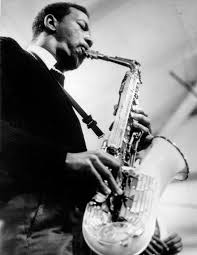
To understand the tectonic shockwave that Ornette Coleman sent through the jazz world, you have to picture a young, long-haired saxophonist in Fort Worth, Texas, being physically attacked and having his instrument thrown off a cliff by musicians who thought his playing was wrong. Ornette wasn’t playing wrong; he was playing the future. Unable to afford a brass horn, he bought a cheap, white plastic alto saxophone—an instrument that would become the visual scepter of a revolution. He realized that the rigid chord changes of bebop were a prison for the human voice. When he arrived in New York in 1959 for a legendary, polarizing residency at the Five Spot Café, he didn’t just challenge the jazz establishment—he split it right down the middle.
The Five Spot Earthquake and the Free Jazz Manifesto
For the high-art connoisseur exploring the foundational shifts in The Jazz Compass, Ornette’s late-1950s and early-60s Atlantic Records catalog contains the ultimate sacred texts of modernism. Masterpieces like The Shape of Jazz to Come (1959) and the double-quartet sonic explosion Free Jazz (1960) completely discarded the safety net of a piano. Without chords dictating the path, Ornette, alongside his telepathic companion Don Cherry on pocket trumpet, let the melody dictate the harmony. To traditionalists like Max Roach and Miles Davis, it initially sounded like amateurish noise. But to the avant-garde, it was absolute liberation. Ornette proved that a jazz solo could be a pure, unmediated stream of human emotion, swinging with a raw, blues-drenched Texas grit while floating completely free in space.
The Harmolodic Latitude: A Universal Language
True to the borderless, forward-thinking spirit of Jazz Latitude, Ornette Coleman spent his entire life expanding his musical geography. In the 1970s, he formulated his revolutionary philosophy of Harmolodics—a system where harmony, melody, and rhythm all share equal power, allowing musicians to improvise together without being locked into a single key or tempo. He formed Prime Time, a fierce electric band that fused his avant-garde theories with funk, rock, and loft-scene aesthetics. He traveled to Morocco to record with the Master Musicians of Jajouka, mapping a global coordinate where ancestral trance rhythms and futuristic jazz intellect became one. When Ornette was awarded the Pulitzer Prize in 2007, it was the ultimate validation for a man who never compromised, proving that true freedom isn’t the absence of structure, but the courage to build your own.