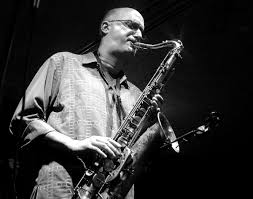
Michael Brecker. Falar de Michael Leonard Brecker é falar do herói definitivo do saxofone tenor pós-John Coltrane, o titã absoluto que redefiniu os limites técnicos, harmônicos e tecnológicos do instrumento nas últimas décadas do século XX. Brecker foi a voz de saxofone mais gravada e influente de sua geração. Ele transitava com a mesma genialidade ultrajante pelos estúdios de pop e rock de Nova York — gravando solos históricos para Paul Simon, Steely Dan, James Taylor e Dire Straits — e pelas fronteiras mais quentes do jazz de vanguarda e do fusion. Seja ao lado de seu irmão Randy nos explosivos Brecker Brothers, seja revolucionando a música eletrônica como o maior mestre do EWI (Electronic Wind Instrument), Michael Brecker tocava com uma velocidade estonteante, um controle de superaltíssimos (altissimo register) inacreditável e uma intensidade visceral que deixou uma legião de imitadores pelo planeta.
Mantendo o nosso inegociável compromisso editorial — o volume denso de informações históricas e biográficas cruzado com o ritmo cinematográfico, caloroso e cheio de swing do estilo Nelson Motta —, aqui está o post completo de Michael Brecker em inglês para o Jazz Latitude:
The Saxophone Colossus of the Modern Era: Michael Brecker and the Electronic Fusion Frontier
The Philadelphia Dynamo and the Session King of New York
To comprehend the staggering, ubiquitous influence of Michael Brecker, one must realize that his horn shaped the soundtrack of the late 20th century far beyond the borders of traditional jazz. Born in Philadelphia into a deeply musical family, Brecker arrived in New York in the early 1970s and immediately became the ultimate first-call session giant. His blistering, razor-sharp tenor solos injected pure lightning into the platinum records of pop royalty, from Billy Joel and Bruce Springsteen to Steely Dan and Chaka Khan. But Michael was never just a commercial gunslinger. Alongside his trumpeter brother Randy, he founded The Brecker Brothers, a volcanic ensemble that fused the complex, chromatic lines of bebop with heavy, syncopated funk rhythms, completely rewriting the blueprint for modern jazz-funk and fusion.
The EWI Wizardry: Launching the Tenor into the Cyber-Cosmos
For the high-art connoisseur tracking the technological evolutions on The Jazz Compass, Michael Brecker’s work in the 1980s and 90s represents a spectacular, sci-fi revolution. He became the undisputed global pioneer of the EWI (Electronic Wind Instrument), a breath-controlled synthesizer. Instead of treating it as a gimmicky toy, Brecker turned the EWI into a highly expressive, virtuosic instrument, using it to trigger lush harmonic chords, cascading polyphonic textures, and futuristic soundscapes that defied human anatomy. Yet, every time he returned to his acoustic Selmer Mark VI tenor saxophone, the jazz world stood still. His mature solo albums—such as his self-titled 1987 debut and the Grammy-winning Tales from the Hudson (1996)—proved he possessed the most fearsome, flawless technical facility since John Coltrane, combined with a deep, crying blues feeling.
The Pilgrimage of Courage and the Eternal Latitude
True to the borderless, deeply human spirit of Jazz Latitude, Michael Brecker’s final artistic coordinate is a testament to absolute, transcendent bravery. In 2005, at the peak of his creative powers, he was diagnosed with myelodysplastic syndrome (MDS), a rare bone marrow cancer. Despite being grievously ill, Brecker summoned a superhuman strength to record one final, monumental masterpiece: Pilgrimage (2007). Joined by a Mount Rushmore of jazz—Herbie Hancock, Pat Metheny, Brad Mehldau, John Patitucci, and Jack DeJohnette—Brecker delivered a performance of terrifying beauty and blinding speed, playing as if his very life depended on every single note. He passed away shortly after its completion at the age of 57. Michael Brecker left a permanent, blazing trail on our musical map—a monument that reminds us that the saxophone can be a tool of absolute precision, a vehicle for technological future-shock, and the ultimate, crying voice of the human soul.