The Trio That Changed the Meaning of Musical Time
Few ensembles in modern jazz challenge a listener’s expectations as profoundly as The Necks. Their concerts rarely begin with a composed melody. There is no obvious count-off, no familiar harmonic progression and often no indication of where the music intends to go. A single piano note appears. The bass answers almost imperceptibly. A cymbal shimmers somewhere in the distance. Minutes pass before the listener fully realizes that the performance has already begun. By the end of an hour, what initially seemed almost motionless has evolved into a vast musical landscape, rich with subtle transformations that feel both inevitable and impossible to predict.
This unusual relationship with time has made The Necks one of the most respected ensembles in contemporary improvised music. Since forming in Sydney in 1987, the trio has consistently resisted nearly every convention associated with jazz performance. Rather than presenting a set of individual compositions, they typically perform a single uninterrupted work lasting between forty and seventy minutes. Instead of alternating composed themes with improvised solos, they allow entire musical worlds to emerge collectively from the smallest possible gestures. Every performance becomes an act of discovery shared equally among musicians and audience.
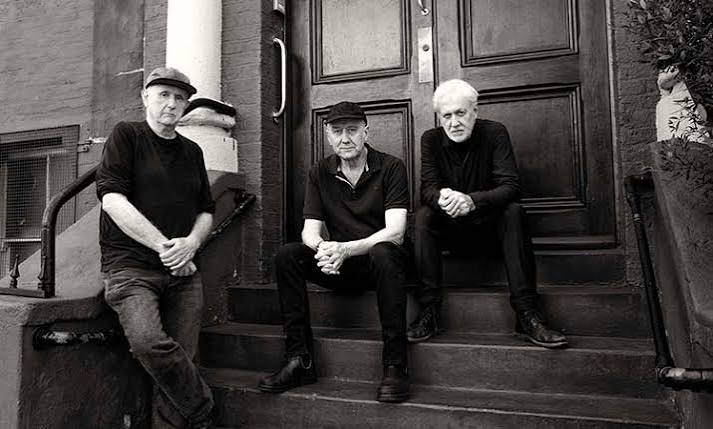
Describing The Necks simply as a jazz trio, however, captures only part of their artistic identity. Their music exists at the intersection of improvisation, minimalism, ambient music, contemporary classical composition and experimental sound art. Critics have compared them to Steve Reich, Morton Feldman, Brian Eno and even certain traditions of Indian classical music. Yet none of these comparisons fully explains what happens when pianist Chris Abrahams, bassist Lloyd Swanton and drummer Tony Buck begin listening to one another with extraordinary patience.
Their achievement lies not in rejecting jazz tradition but in expanding one of its oldest principles: collective improvisation. While early New Orleans ensembles created spontaneous dialogue within concise song forms, The Necks ask what might happen if that dialogue continued almost without interruption for an entire hour. The answer has become one of the most original bodies of work produced by any ensemble over the past four decades.
Sydney and the Australian Perspective
The story of The Necks begins far from the traditional centers of jazz history. Unlike musicians growing up in New York, Chicago or Paris, the members of the trio developed within Australia’s uniquely independent artistic environment. Geographic distance from the major institutions of jazz paradoxically created unusual creative freedom. Without constant pressure to conform to established stylistic expectations, Australian improvisers often explored broader relationships between jazz, experimental composition, indigenous musical traditions and contemporary art.
Sydney during the 1980s fostered an especially vibrant underground scene where musicians moved comfortably between clubs, galleries, avant-garde festivals and experimental theatre.
Improvisation belonged to no single genre.
Electronic musicians collaborated with jazz players.
Classical performers explored free improvisation.
Rock musicians attended experimental concerts.
The city’s artistic communities overlapped naturally.
This openness profoundly influenced the future members of The Necks.
Rather than asking whether a musical idea belonged to jazz, minimalism or experimental music, they asked a simpler question.
Did it deepen the listening experience?
If the answer was yes, stylistic categories became irrelevant.
Three Distinct Musical Personalities
Although The Necks functions as one of the most unified ensembles in modern music, each member brings a remarkably individual artistic background.
Pianist Chris Abrahams had already established himself as one of Australia’s most adventurous keyboard players. Deeply interested in jazz improvisation, electronic music and contemporary composition, he developed a touch capable of extraordinary subtlety. Unlike many virtuoso pianists who command attention through dazzling technique, Abrahams often builds entire performances from deceptively simple repeated figures whose emotional meaning changes almost imperceptibly over time.
Bassist Lloyd Swanton approaches the instrument less as harmonic support than as an architect of resonance. His lines frequently avoid conventional walking bass patterns, instead creating slowly evolving foundations that anchor the trio’s expansive structures. Every note appears carefully weighed for its acoustic color as much as its pitch.
Drummer Tony Buck completes the ensemble with one of the most distinctive rhythmic vocabularies in contemporary music. Equally comfortable with jazz, experimental percussion, world music and electronics, Buck rarely treats the drum kit as a timekeeping device alone. Brushes, cymbals, mallets, found objects and subtle textural effects become equal participants in the unfolding musical conversation.
Individually, each musician possesses extraordinary technical ability.
Collectively, they pursue something far more difficult.
The disappearance of individual ego.
Improvisation Without a Destination
Most jazz improvisation unfolds within recognizable frameworks.
A standard.
A blues.
A modal structure.
Even free jazz often derives its energy from deliberate resistance to familiar forms.
The Necks operate according to an entirely different philosophy.
Their performances begin without predetermined structure.
No musician knows where the music will arrive.
There are no agreed climaxes.
No fixed duration.
No compositional roadmap.
Instead, every performance develops through continuous collective listening.
One idea suggests another.
A rhythmic pulse gradually emerges.
Harmony appears almost accidentally.
Tiny variations accumulate until an entirely new landscape has formed.
This process resembles natural evolution more than traditional composition.
Nothing feels forced.
Everything appears inevitable in retrospect.
JazzLatitude Insight
The Necks demonstrate that improvisation is not simply the freedom to play anything. It is the discipline of listening so deeply that the music reveals possibilities no individual musician could have imagined alone.
Sex: The Beginning of a Remarkable Journey
The trio’s debut recording, Sex (1989), immediately announced an artistic vision unlike anything else in contemporary jazz.
Rather than presenting multiple tracks, the album consisted of a single extended improvisation lasting approximately one hour.
The decision puzzled some listeners.
It fascinated others.
Here was music that refused conventional narrative while remaining strangely compelling.
Themes emerged gradually.
Rhythms evolved with microscopic precision.
The performance invited immersion rather than analysis.
Over time, Sex became recognized as one of the defining statements of long-form collective improvisation, establishing principles that would continue shaping every subsequent Necks recording.
Few debut albums have introduced such a complete artistic philosophy.
Fewer still have remained so distinctive more than three decades later.
Buy Amazon
Building a Musical Universe One Note at a Time
One of the most remarkable aspects of The Necks’ career is how little their artistic philosophy has changed while the music itself has remained in constant evolution. Across more than three decades, the trio has continued exploring essentially the same question: how can three musicians create an hour of completely improvised music that feels inevitable rather than arbitrary? Most ensembles would eventually repeat themselves under such self-imposed constraints. The Necks has done precisely the opposite. Each recording reveals new approaches to rhythm, harmony, density and form, proving that limitation can become one of the greatest catalysts for artistic freedom.
This consistency has often confused listeners encountering the trio for the first time.
Album after album appears to follow the same concept.
One extended performance.
No obvious compositions.
No conventional solos.
Yet returning listeners quickly discover that each release inhabits its own emotional world.
Some unfold like slow-moving rivers.
Others resemble immense architectural structures.
Some pulse with hypnotic rhythmic energy.
Others drift through almost weightless harmonic landscapes.
The concept remains constant.
The experience never does.
Aquatic and the Emergence of Flow
Released in 1994, Aquatic marked one of the first major milestones in the trio’s artistic development. While earlier performances emphasized gradual structural evolution, Aquatic revealed increasing confidence in allowing rhythm to emerge organically from silence rather than introducing it explicitly.
The music behaves almost like water.
Tiny ripples become currents.
Currents become waves.
Without ever announcing dramatic change, the performance continually transforms itself.
Chris Abrahams introduces repeating figures that slowly acquire unexpected emotional weight.
Lloyd Swanton allows bass resonance to shape harmonic direction without relying on conventional chord progressions.
Tony Buck colors the unfolding landscape through subtle cymbal textures, delicate percussion and almost invisible shifts in pulse.
The result is music that seems simultaneously composed and discovered.
JazzLatitude Insight
Listening to The Necks requires abandoning the expectation that music should constantly announce its intentions. Their performances reward attention in the same way that observing nature does. The deeper one listens, the more extraordinary the smallest changes become.
Beyond Minimalism
Comparisons with minimalist composers such as Steve Reich, Terry Riley and Philip Glass appear frequently in discussions of The Necks.
The similarities are understandable.
Repetition.
Gradual transformation.
Hypnotic structures.
Yet these comparisons ultimately remain incomplete.
Minimalist composition typically depends upon carefully predetermined processes.
The Necks relies entirely upon collective improvisation.
Nothing is planned beyond the willingness to listen.
No algorithm guides development.
No score determines direction.
Every repetition remains vulnerable to unexpected change.
That distinction is crucial.
The trio’s music possesses the structural patience of minimalism but the living unpredictability of jazz.
Each performance becomes a unique organism incapable of exact repetition.
International Recognition
Throughout the 1990s and early 2000s, The Necks gradually built an international reputation that spread almost entirely through word of mouth.
Critics admired the trio’s originality.
Festival programmers recognized that no other ensemble offered comparable experiences.
Musicians from remarkably different backgrounds began citing The Necks as an influence.
Jazz improvisers.
Contemporary classical composers.
Ambient producers.
Experimental rock musicians.
Even electronic artists fascinated by long-form development found inspiration in the trio’s recordings.
Rather than belonging to a single musical community, The Necks quietly became respected across many.
This broad admiration eventually led to performances at leading festivals throughout Europe, North America and Asia, where audiences often encountered the trio with little prior knowledge yet left deeply transformed by the experience.
Drive By and the Expansion of Texture
Among the group’s most celebrated recordings, Drive By (2003) illustrates how dramatically The Necks had expanded its sonic vocabulary while preserving its essential philosophy.
The performance begins almost imperceptibly.
Individual gestures appear isolated.
Gradually, however, layers accumulate with astonishing precision.
The piano shifts from sparse melodic fragments to dense rhythmic patterns.
The bass alternates between resonance and propulsion.
The drums evolve from atmospheric color to irresistible momentum.
By the time the music reaches its climax, listeners often struggle to identify the precise moment when transformation occurred.
Everything happened slowly.
Everything felt inevitable.
This ability to generate enormous emotional power without theatrical gestures has become one of the defining achievements of the trio.
Albums as Landscapes
Unlike many jazz ensembles that organize recordings around themes, repertoire or guest musicians, The Necks treats each album almost as an individual ecosystem.
Hanging Gardens, Mosquito, Chemist, Open, Body, Unfold and Travel each explore different relationships between pulse, harmony, repetition and acoustic space.
Some recordings emphasize rhythmic movement.
Others prioritize harmonic suspension.
Certain performances remain almost entirely acoustic.
Others subtly incorporate electric keyboards, electronics or unconventional percussion.
Yet every album preserves the essential characteristic that has defined the trio since 1989:
Three musicians discovering music together in real time.
This consistency has made their discography unusually rewarding.
Listeners rarely speak about favorite individual tracks.
Instead, they remember complete sonic journeys.
Performing Without a Safety Net
Perhaps nowhere does the artistry of The Necks become more astonishing than in live performance.
Each concert begins without predetermined material.
The audience witnesses genuine creation.
No two performances can ever be repeated.
The musicians themselves often describe entering the stage with no clear expectation of what will happen during the following hour.
This absence of certainty creates extraordinary concentration.
Every gesture matters.
Every silence matters.
Every response influences everything that follows.
Unlike performances built upon rehearsed arrangements, The Necks depend entirely upon mutual trust developed over decades of shared listening.
Few ensembles in any musical tradition operate with such complete commitment to the unknown.
Travel and Continuing Evolution
Released in 2022, Travel confirmed that more than thirty years after their debut, The Necks remained artistically fearless.
Rather than functioning as a retrospective statement, the album introduced fresh approaches to pacing, timbre and dynamic architecture.
The trio demonstrated once again that its central concept remained inexhaustible.
No formulas had developed.
No habits dominated.
Curiosity continued leading the music.
That persistent openness explains why younger generations of musicians increasingly view The Necks not as historical pioneers but as active participants in the continuing evolution of improvised music.
Their influence continues growing precisely because they refuse to become predictable.
Essential Albums
For listeners approaching The Necks for the first time, these recordings offer an ideal introduction to one of contemporary music’s most extraordinary discographies.
- Sex (1989) — The groundbreaking debut that introduced the trio’s philosophy of hour-long collective improvisation.
- Aquatic (1994) — A beautifully flowing meditation on rhythm, resonance and gradual transformation.
- Drive By (2003) — One of the group’s masterpieces, demonstrating extraordinary architectural control and emotional depth.
- Chemist (2006) — A richly textured exploration of evolving harmonic landscapes and hypnotic pulse.
- Body (2018) — A powerful example of the trio’s mature language, balancing atmosphere with remarkable rhythmic intensity.
- Travel (2022) — A luminous late-career statement proving that The Necks continues discovering new musical territory after more than three decades together.
Taken together, these recordings reveal not simply an evolving ensemble, but one of the most coherent artistic projects in the history of contemporary improvised music.
The Legacy of Listening
Few ensembles have expanded the language of contemporary improvised music as profoundly—or as quietly—as The Necks. Their influence cannot be measured through chart positions, commercial success or stylistic imitation. Instead, it appears in a more subtle way: in how musicians think about time, structure and collective creativity. Over nearly four decades, Chris Abrahams, Lloyd Swanton and Tony Buck have demonstrated that improvisation is not merely the art of reacting quickly. It is the discipline of listening patiently enough for music to reveal possibilities that no individual imagination could produce alone.
This philosophy has resonated far beyond jazz.
Contemporary classical composers have admired the trio’s architectural sense of form.
Ambient musicians have embraced its patient manipulation of texture.
Electronic producers have studied its gradual rhythmic development.
Experimental rock artists have found inspiration in its willingness to sustain tension for extraordinary lengths of time without relying on dramatic gestures.
Few modern ensembles have crossed so many artistic communities while remaining so completely independent of commercial trends.
The Necks occupies a singular place in contemporary music because it has never attempted to belong anywhere except within its own artistic logic.
Improvisation as Collective Intelligence
Traditional jazz often celebrates the brilliance of individual improvisers.
The Necks proposes a different model.
Here, no musician dominates the conversation.
Leadership constantly shifts.
Sometimes the piano introduces an idea.
Moments later the bass quietly redirects its emotional meaning.
The drums reshape the entire landscape without announcing the change.
Improvisation becomes less a sequence of solos than a continuously evolving ecosystem.
This approach reflects an almost ecological understanding of music.
Every sound influences every subsequent decision.
Nothing exists in isolation.
Listening becomes more important than expression.
The result challenges one of the oldest myths surrounding improvisation—that freedom means playing whatever one wishes. The Necks demonstrates precisely the opposite.
True freedom emerges from extraordinary discipline.
The discipline to wait.
To observe.
To respond only when the music genuinely asks for it.
JazzLatitude Insight
Perhaps The Necks’ greatest lesson is that improvisation begins long before the first note is played. It begins with attention. Their performances remind us that listening is not passive. It is one of the most creative acts a musician can perform.
Beyond the Jazz Audience
One reason The Necks has achieved such remarkable longevity is that its music resists conventional marketing categories.
Jazz festivals invite the trio because of its improvisational mastery.
Contemporary classical audiences recognize its structural sophistication.
Experimental music festivals admire its fearless exploration of form.
Ambient listeners appreciate its immersive atmosphere.
Minimalist composers respect its architectural patience.
As a result, the trio has cultivated one of the most diverse audiences in contemporary instrumental music.
Concerts often include lifelong jazz enthusiasts sitting beside electronic producers, visual artists, composers and listeners encountering improvised music for the first time.
Few ensembles encourage such broad conversations across artistic communities.
The Importance of Consistency
Another extraordinary aspect of The Necks’ career is its remarkable continuity.
Since 1987, the trio has remained intact.
No personnel changes.
No radical shifts in artistic philosophy.
No attempts to chase fashion.
Instead, Chris Abrahams, Lloyd Swanton and Tony Buck have chosen the far more difficult path of continuous refinement.
Each album asks familiar questions in unfamiliar ways.
Each performance becomes another experiment in shared attention.
Rather than reinventing themselves every few years, they have gradually deepened a single artistic language until it has become almost limitless.
This consistency has earned profound respect among musicians, many of whom regard The Necks as one of the finest examples of long-term collective creativity in any genre.
A Legacy That Continues to Grow
Perhaps the most remarkable aspect of The Necks’ legacy is that it continues expanding.
Younger generations increasingly discover the trio through streaming platforms, contemporary jazz festivals and recommendations from artists working in remarkably different fields.
Groups such as GoGo Penguin, Mammal Hands, Portico Quartet, Dawn of Midi and numerous experimental improvising ensembles have explored similar questions concerning repetition, atmosphere and collective development, even while maintaining distinctly individual identities.
The Necks has not created a school.
It has created permission.
Permission to think differently about musical time.
Permission to trust silence.
Permission to value process as highly as destination.
Those ideas may ultimately prove even more influential than any individual recording.
Essential Collaborations and Artistic Connections
Although The Necks has remained steadfastly committed to its identity as an independent trio, its artistic relationships illuminate the broader context of its work.
Among the most significant are:
- Chris Abrahams’ solo and collaborative projects, which reveal his deep engagement with contemporary composition, electronics and experimental improvisation beyond the trio.
- Tony Buck’s international collaborations, particularly within Berlin’s improvised music community, where his work has connected jazz with avant-garde composition, free improvisation and global rhythmic traditions.
- Lloyd Swanton’s contributions to Australian improvised music, including numerous ensembles that have helped establish Australia as one of the world’s most adventurous centers for contemporary jazz.
- Steve Reich and Terry Riley, whose minimalist concepts provide valuable points of comparison, even though The Necks’ music remains entirely improvised rather than composed.
- Brian Eno, whose philosophy of atmosphere and gradual transformation parallels many of the trio’s aesthetic concerns, despite emerging from an entirely different musical tradition.
These connections illustrate why The Necks occupies a unique position at the intersection of jazz, experimental music, minimalism and ambient composition.
Technical Profile
Origin:
- Sydney, Australia
Formed:
- 1987
Members:
- Chris Abrahams – Piano
- Lloyd Swanton – Bass
- Tony Buck – Drums
Primary Styles:
- Contemporary Jazz
- Improvised Music
- Experimental Jazz
- Minimalism
- Ambient Jazz
Musical Characteristics:
- Long-form collective improvisation
- Gradual structural evolution
- Repetitive minimalist motifs
- Deep ensemble interaction
- Extraordinary dynamic control
- Organic development without predetermined form
Essential Albums:
- Sex (1989)
- Aquatic (1994)
- Drive By (2003)
- Chemist (2006)
- Body (2018)
- Travel (2022)
Five Lesser-Known Facts About The Necks
1. Most concerts consist of a single uninterrupted improvisation.
Rather than presenting multiple compositions, the trio usually performs one extended work lasting between forty minutes and more than an hour.
2. No performance can ever be repeated.
Because the music is almost entirely improvised, each concert exists as a unique artistic event that cannot be recreated, even by the musicians themselves.
3. The trio has remained unchanged since 1987.
Few ensembles in contemporary music have maintained the same lineup for nearly four decades while continuing to evolve artistically.
4. Their music is studied outside jazz departments.
Composers, sound artists and researchers interested in minimalism, systems music and collective improvisation frequently analyze The Necks’ recordings as examples of emergent musical form.
5. They have influenced musicians far beyond jazz.
Artists working in ambient music, post-rock, experimental electronics and contemporary classical composition regularly cite The Necks as a significant source of inspiration.
Frequently Asked Questions
Who are The Necks?
The Necks is an Australian piano trio formed in Sydney in 1987 by pianist Chris Abrahams, bassist Lloyd Swanton and drummer Tony Buck. The group is internationally renowned for creating long-form collective improvisations that blend jazz, minimalism, ambient music and experimental composition.
Why are The Necks important?
The trio has fundamentally expanded the possibilities of collective improvisation by demonstrating how extended musical forms can emerge spontaneously without predetermined structures, influencing musicians across numerous genres.
Are The Necks a jazz group?
Yes, although their music extends well beyond conventional jazz. Their foundation lies in improvisation and ensemble interaction, while incorporating ideas drawn from minimalism, ambient music, contemporary classical composition and experimental sound art.
Which album should new listeners begin with?
Drive By offers one of the clearest introductions to the trio’s artistic language, while Sex reveals the original concept that defined its career and Body demonstrates the remarkable maturity of its later work.
Which artists are similar to The Necks?
Listeners who appreciate The Necks often explore GoGo Penguin, Dawn of Midi, Portico Quartet, Mammal Hands, Brian Eno, Steve Reich, Terry Riley, Keith Jarrett’s solo concerts, Vijay Iyer and Nik Bärtsch’s Ronin, all of whom explore repetition, atmosphere, improvisation or extended musical form from different perspectives.
JazzLatitude Rating
| Category | Rating |
|---|---|
| Collective Improvisation | ★★★★★ |
| Compositional Innovation | ★★★★★ |
| Ensemble Communication | ★★★★★ |
| Originality | ★★★★★ |
| Artistic Consistency | ★★★★★ |
| Influence on Contemporary Improvised Music | ★★★★★ |
| Replay Value | ★★★★★ |
| Accessibility for Adventurous Listeners | ★★★★★ |
| JazzLatitude Essential | ★★★★★ |
Final Thoughts
The history of jazz has often been told through moments of dramatic transformation: the birth of bebop, the emergence of modal improvisation, the explosion of free jazz or the fusion experiments of the late twentieth century. The Necks reminds us that some of the most profound revolutions occur almost invisibly. Rather than overturning tradition through confrontation, the Australian trio has patiently expanded the very conditions under which improvisation can exist.
Listening to The Necks is unlike listening to almost any other ensemble. Their performances demand patience, but they reward it with extraordinary richness. As minutes become landscapes and repetition gradually reveals hidden variation, the listener begins to experience time differently. Music no longer unfolds as a sequence of events moving toward a destination. It becomes an environment—something to inhabit rather than merely observe.
This achievement is perhaps the trio’s greatest contribution to contemporary music. In an age increasingly dominated by speed, fragmentation and constant stimulation, The Necks has built an artistic philosophy based on attention. Their work suggests that creativity does not always emerge from doing more. Sometimes it emerges from noticing more.
That perspective has inspired generations of improvisers, composers and listeners across the world. Without establishing a formal movement or cultivating a recognizable school, The Necks has quietly altered how many musicians think about collaboration, structure and musical time. Their influence can be heard in contemporary jazz, experimental composition, ambient music and countless projects that value process as much as outcome.
Nearly four decades after Chris Abrahams, Lloyd Swanton and Tony Buck first sat together to explore what three musicians might discover without a predetermined destination, they remain as curious as ever. Every concert begins with uncertainty. Every performance becomes an act of shared exploration. Every recording reminds us that some of the deepest artistic experiences arise not from knowing exactly where we are going, but from trusting the journey enough to keep listening.
For anyone interested in the future of improvised music, The Necks is not simply an extraordinary trio.
It is one of the most original musical ideas of the modern era.