The Chamber Jazz Pioneer and the Art of the Soft Tone
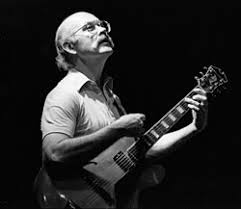
To fully appreciate the revolutionary genius of Jim Hall, you have to understand the power of restraint. Emerging from Ohio in the mid-1950s, Hall walked away from the aggressive, fast-flying horn lines that most guitarists of the bebop era were trying to copy. Instead, he approached the guitar as if it were a classical cello or a delicate piano. Joining the groundbreaking Chico Hamilton Quintet and the Jimmy Giuffre Three, Jim became a pioneer of “chamber jazz”—a sophisticated, airy style that stripped away the heavy, driving drums to focus on pure, contrapuntal interplay. He developed a signature tone using his Gibson ES-175 that was warm, dark, and utterly devoid of flashy ornamentation, proving to the world that an acoustic-electric whisper could carry more emotional weight than a stadium-sized roar.
The Telepathic Duets: Painting in Pastel with Bill Evans
For the high-art connoisseur navigating the most refined coordinates of The Jazz Compass, Jim Hall’s collaborative chemistry represents the absolute peak of musical empathy. He was the ultimate conversationalist. His historic studio encounters with pianist Bill Evans birthed masterpieces like Undercurrent (1962) and Intermodulation (1966)—albums that remain structural blueprints for the art of the jazz duo. The interplay between Evans’s impressionistic chords and Hall’s flawlessly placed, single-note counter-melodies was purely telepathic. Jim didn’t just play accompaniments; he listened deeply, using the blank spaces and the silence between his phrases to let the music breathe. This same exquisite sensitivity made him the perfect sonic foil for Sonny Rollins on the legendary album The Bridge (1962) and for Paul Desmond’s cool, floating saxophone excursions.
The Generational Bridge and the Eternal Latitude
True to the borderless, forward-thinking spirit of Jazz Latitude, Jim Hall’s creative geography never stopped evolving, bridging the gap between cool jazz roots and modern post-bop exploration. He was a tireless mentor who treated younger, experimental guitarists not as competitors, but as peers. His famous late-1980s and 90s collaborations with his disciple Pat Metheny showcased an incredible, multi-generational dialogue that pushed both players into new harmonic territory. When Jim Hall passed away in 2013 at the age of 83, he left an untouched, permanent coordinate on our map—a monument built on the absolute courage to be subtle. He proved that true virtuosity doesn’t require shouting, leaving behind a legacy that continues to teach the world that sometimes, the most powerful note you can play is the one you leave out.