The Blue Note Prodigy and the Miles Davis Laboratory
To plot the absolute gravity center of modern music on The Jazz Compass, one must look directly at the immortal genius of Herbie Hancock. A child prodigy from Chicago who performed a Mozart concerto with the Chicago Symphony Orchestra at age eleven, Herbie seamlessly bridged the worlds of classical architecture and street-level swing. In the early 1960s, his brilliant solo work for Blue Note Records—yielding timeless standards like “Watermelon Man”—caught the attention of Miles Davis. As the foundational pillar of Miles’s Second Great Quintet, Herbie reshaped the piano’s role in jazz. Alongside Wayne Shorter, Ron Carter, and Tony Williams, he dissolved traditional chord structures, introducing a fluid, impressionistic modal poetry that gave the music an entirely new, cinematic breath of freedom.
The Headhunters Revolution and the MTV Future Shock
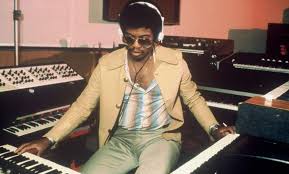
For the high-art connoisseur tracking the absolute zeniths of genre-shattering innovation, Herbie Hancock is a historic multi-hyphenate rebel. By the 1970s, he abandoned the comfort of the acoustic piano to pioneer the jazz-fusion galaxy. Fronting his explosive Mwandishi and Headhunters ensembles, Herbie plugged in the Fender Rhodes, the Clavinet, and an array of cosmic synthesizers, dropping the landmark 1973 album Headhunters. He single-handedly married complex post-bop intelligence with the heavy, unyielding street funk of James Brown and Sly Stone, creating a multi-million-selling blueprint that birthed modern dance culture, hip-hop sampling, and neo-soul. Not content with conquering radio, he shocked the world again in 1983 with “Rockit”, a futuristic electro-synth anthem whose iconic video dominated MTV, effectively introducing hip-hop turntablism and scratch culture to the global mainstream.
The Living Monument Across the Eternal Latitude
True to the forward-thinking, borderless spirit of Jazz Latitude, Herbie Hancock’s musical geography is a magnificent, ongoing testament to human unity and cultural diplomacy. He remains one of the highly decorated titans in music history, holding 14 Grammy Awards—including the historic 2008 Album of the Year win for River: The Joni Letters—and an Academy Award for his scoring work on Round Midnight. As a UNESCO Goodwill Ambassador and the visionary force behind the creation of International Jazz Day, Herbie has spent decades advocating for music as a universal language of peace. He has left an immovable, cosmic coordinate on our map—a beautiful, swinging reminder that true virtuosity does not look back at past laurels, but continually glides forward into the breathtaking mysteries of tomorrow.