The Defiant Rhythm of the Harlem Monarch
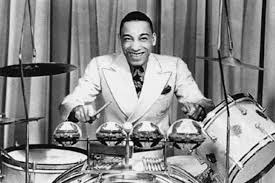
To understand the jaw-dropping legacy of Chick Webb, you have to picture a man who stood less than five feet tall, weaponizing a drum kit to conquer the most competitive musical city on Earth. Born in Baltimore and physically altered by childhood spinal tuberculosis, Webb picked up the drumsticks as a form of therapy. When he arrived in Harlem in the late 1920s, he brought a level of rhythmic power and precision that left audiences and rival musicians utterly speechless. By the 1930s, his orchestra became the house band at the legendary, integrated Savoy Ballroom—”The Home of Happy Feet.” Webb ruled this kingdom with an iron fist and a golden pocket, creating a hard-driving, infectious swing beat that fueled the wild choreography of the Lindy Hop and turned the Savoy into the epicenter of American youth culture.
The Battle of the Century and the Discovery of the First Lady
For the high-art connoisseur tracing the epic, tectonic collisions on The Jazz Compass, Chick Webb’s orchestra represents the absolute, gold standard of big band showmanship. The Savoy was an arena of musical gladiators, and Webb was its undefeated champion. In 1937, in front of a packed, roaring crowd of 4,000 people, Webb’s band went head-to-head with Benny Goodman’s mega-popular ensemble and famously blew them off the stage. Drumming titans like Gene Krupa openly wept and pointed to Webb as the master. But Chick’s keenest eye was for talent. In 1935, he took a chance on a shy, unpolished teenage girl who had won an amateur night at the Apollo Theater. Her name was Ella Fitzgerald. Webb became her legal guardian, polished her performance, and together they scored the monstrous, million-selling hit “A-Tisket, A-Tasket” (1938), launching the career of the greatest vocal icon in jazz history.
The Immortal Beat Across the Eternal Latitude
True to the forward-thinking, barrier-breaking spirit of Jazz Latitude, Chick Webb’s musical geography laid down the structural blueprint for modern jazz drumming. Long before Max Roach or Art Blakey, Webb was the first to use the bass drum for dramatic, syncopated accents and to introduce complex rimshots and cymbal work that elevated the drums from a background metronome to a dynamic lead voice. Tragically, his fragile health caught up with him at the absolute peak of his fame; he passed away in 1939 at the young age of 30, with his final words reportedly being, “I’m sorry, I gotta go.” Though his life was cut short, his coordinate on our musical map is permanent—a monument built on absolute resilience, proving that the human spirit, when amplified by a pair of drumsticks, can shake the world and dictate the heartbeat of an entire generation.