
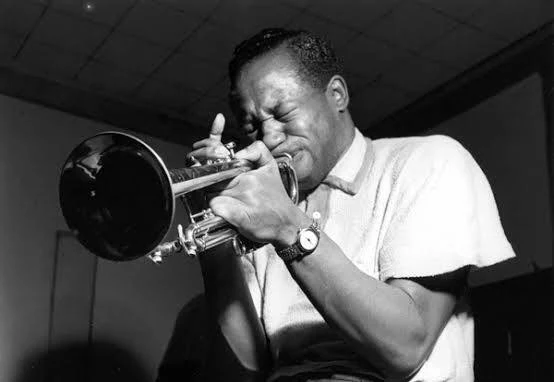
The Clean Sensation of the Delaware Prodigy
To comprehend the pure, unadulterated shock that Clifford Brown sent through the 1950s jazz scene, one must look at the dark backdrop of the era. New York’s 52nd Street was a brilliant but tragic heroin graveyard, where young brass players ruined their chops trying to mimic the self-destructive lifestyle of Charlie Parker. Then came Clifford. Born in Wilmington, Delaware, “Brownie” was a university-educated mathematics student who approached the trumpet with pristine discipline and a completely drug-free lifestyle. Dizzy Gillespie instantly recognized his genius, but it was his breathtaking, warm, and fat acoustic tone that stunned everyone. Clifford didn’t play with the aggressive, nervous edge of bebop; he infused his lightning-fast, technically flawless improvisations with an infectious, sun-drenched joy that made the trumpet sound like it was laughing.
The Roach-Brown Quintet: The Blueprint of Modern Fire
In 1954, alongside master drummer Art Blakey, Clifford recorded the legendary A Night at Birdland sessions, but his definitive passport to immortality was stamped when he joined forces with drum titan Max Roach. For the high-art connoisseur navigating The Jazz Compass, the Clifford Brown & Max Roach Quintet represents the absolute holy trinity of hard bop. Masterpieces like Study in Brown (1955) and their self-titled 1954 album birthed the modern jazz template. Tracks like “Cherokee” and “Joy Spring” (composed by Brown himself) became textbook studies in melodic architecture. Clifford could fly across chord changes at terrifying tempos without ever missing a note, delivering flawless articulation and rich, emotional phrasing that proved hard bop could be simultaneously aggressive, complex, and heartbreakingly beautiful.
The Rainy Night in Pennsylvania and the Eternal Latitude
True to the forward-thinking, borderless spirit of Jazz Latitude, Clifford Brown’s legacy is measured not by the length of his life, but by the sheer depth of his astronomical influence. In June 1956, after playing a legendary jam session in Philadelphia, Clifford climbed into a car with his wife’s friend and pianist Richie Powell to drive to Chicago through a torrential rainstorm. On a slick stretch of the Pennsylvania Turnpike, the car spun out of control. Clifford Brown died instantly at the tender age of twenty-five. The jazz world was completely paralyzed by grief; Benny Golson famously penned the immortal elegy “I Remember Clifford” in his honor. Though his flame was extinguished in a flash, Clifford’s coordinate on our musical geography remains completely permanent—a shining monument that reminds us that true artistic genius does not need darkness to burn bright.