A New Jazz Language Emerges in Sydney
In the history of Australian jazz, some of the most consequential groups were not built to last. They appeared at moments when the surrounding culture was changing, brought together musicians whose ideas could only briefly coexist in the same place, and disappeared before their importance could be measured properly. Jazz Co/op belongs to that history. Active in Sydney during the first half of the 1970s, the quartet of pianist and saxophonist Roger Frampton, American reed player Howie Smith, bassist Jack Thorncraft and drummer Phil Treloar occupied a remarkable position between several worlds. Its musicians understood the language of modern jazz, but they were not interested in reproducing American models indefinitely. They were attracted to free improvisation without abandoning composition, to rhythmic and harmonic structure without treating structure as a restriction, and to the possibility that Australian jazz might develop an identity through the experiences of musicians actually living and working there. Their music emerged alongside another transformation: Sydney was acquiring new institutions, venues and educational structures capable of supporting contemporary jazz. The Basement became a crucial performance space, while the Sydney Conservatorium of Music established the country’s first tertiary jazz program. Jazz Co/op stood directly inside both developments.
The story begins before the quartet existed.
Roger Frampton had already accumulated an unusually broad musical education by the early 1970s. Born in Portsmouth, England, in 1948, he began with tuba before moving toward saxophone and piano. His interests resisted specialization from an early stage. Jazz was central, but so were classical composition, experimental music and forms of improvisation that challenged the distinction between sound and conventional musical material.
After moving to Australia, first to Adelaide and then to Sydney in 1968, Frampton entered a jazz culture that was smaller than those of New York or London but by no means isolated from international developments. Australian musicians had long absorbed bebop, cool jazz, hard bop and other American innovations, while local clubs and touring circuits created opportunities for encounters with musicians from abroad. Yet by the end of the 1960s a younger generation faced a familiar question: how could those influences become something more than imitation?
Frampton’s answer was unusually open.
Rather than deciding what Australian modern jazz should sound like, he explored situations in which musicians could discover possibilities through playing.
That search led him toward experimental improvisation.
Before Jazz Co/op
In 1970 Frampton became associated with composer David Ahern and the experimental ensemble Teletopa. The group occupied territory far beyond conventional jazz performance. Standard instruments could be played in unconventional ways, electronic sounds entered the music, and found objects could become part of improvisation. Teletopa toured internationally before dissolving in 1972, exposing Frampton to an approach in which musical structure did not necessarily have to be established in advance.
The experience did not turn him away from jazz.
It widened his understanding of what improvisation could mean.
That distinction became important when Frampton began playing regularly with drummer Phil Treloar and bassist Jack Thorncraft. According to Treloar’s recollections, the three musicians initially had no formal group name. They simply met each week and played.
Sometimes they played songs.
Sometimes they improvised freely.
The simplicity of that arrangement concealed something important. There was no need to choose permanently between the jazz repertoire and open improvisation. A standard could provide structure on one occasion, while on another the musicians could begin with almost nothing and discover the music collectively.
Treloar had already shared experimental musical situations with Frampton and understood his appetite for freedom. Thorncraft provided a bassist capable of operating inside the same flexible environment. Together, the trio developed through repeated playing rather than through a predetermined manifesto.
This was the nucleus of Jazz Co/op.
The name would come later.
So would the fourth musician.
Howie Smith Arrives in Sydney
Howie Smith arrived from the United States at a particularly significant moment for Australian jazz education.
The Sydney Conservatorium of Music was preparing to establish a formal jazz studies program, an important institutional development in a country where jazz knowledge had traditionally circulated through performance, private study, records and relationships between musicians rather than through a major tertiary program devoted to the music.
Don Burrows had been an important advocate for the establishment of jazz studies at the Conservatorium. Director Rex Hobcroft supported the idea, and Smith was brought to Sydney to help establish the program.
He arrived in 1973.
Smith was not simply an administrator or teacher imported to formalize an academic curriculum. He was a working reed player, composer and improviser, and he quickly entered the musical life of Sydney.
That is where his path intersected with Frampton, Thorncraft and Treloar.
Treloar later remembered that the trio already had a concert arranged at the Sydney Opera House when they invited Smith to participate. The program included a tribute to Albert Ayler, a revealing choice in early-1970s Sydney. Ayler’s music represented one of the most radical expansions of the jazz vocabulary during the previous decade, combining raw emotional intensity, collective improvisation and melodic materials that could seem almost folk-like in their directness.
The decision to engage seriously with that music indicates how far the musicians were looking beyond conventional club jazz.
Smith fitted naturally into this environment.
With his arrival, the trio became a quartet.
And the quartet acquired a name that described not a style but a principle.
Why “Co/op” Mattered
Phil Treloar’s explanation of the name is strikingly straightforward.
They called themselves Jazz Co/op because they regarded the group as a cooperative.
Treloar, Frampton, Thorncraft and Smith contributed equally.
That idea may sound modest, but it carried consequences for the music. Jazz history is filled with ensembles named after a single leader, even when their identity depends heavily on collective interaction. Jazz Co/op deliberately suggested another arrangement.
The musicians could compose.
They could improvise.
They could shape the direction of the group.
Authority was distributed.
This did not mean every contribution had to occupy identical space or that individual personalities disappeared. Frampton and Smith were very different musicians, and the rhythm section brought its own character to the quartet. Equality did not require uniformity.
It required listening.
The cooperative structure allowed different musical histories to coexist. Smith brought his American background and experience as an educator. Frampton brought modern jazz together with experimental improvisation and an unusually broad compositional curiosity. Treloar’s approach to drums had been shaped by both jazz and freer forms of musical interaction. Thorncraft provided the bass foundation while participating in the group’s flexible conception of structure.
The resulting music could move between tightly coordinated composition and passages in which the boundaries loosened dramatically.
That range became one of the quartet’s strengths.
Jazz Co/op did not need to choose between being a modern jazz group and an improvising ensemble.
It could be both.
Sydney Was Changing Around Them
The group’s formation coincided with an unusually fertile period in Sydney.
Australian jazz had never lacked accomplished musicians, but the early 1970s created new spaces in which contemporary approaches could develop. One of the most important was The Basement.
The club opened in Circular Quay in 1973 and quickly became central to Sydney’s jazz culture. Its importance did not rest simply on presenting established styles. The venue created room for contemporary Australian musicians at a moment when the economics of experimental and modern jazz could make regular performance difficult.
Jazz Co/op found a natural home there.
The group began appearing at The Basement and developed a residency, particularly on Monday and Tuesday nights. Those performances mattered because music like theirs needed continuity. Improvisational relationships become deeper when musicians can test ideas repeatedly before an audience rather than assembling occasionally for isolated concerts.
The Basement provided that laboratory.
Frampton could bring compositions.
Smith could bring compositions.
The group could discover how written structures behaved under the pressure of repeated performance.
A piece might change as musicians learned where it could be opened.
Improvised sections could influence later interpretations of composed passages.
Audiences could become familiar with a musical language that might initially have seemed demanding.
This relationship between musicians, venue and listeners was essential to the development of the group.
Jazz Co/op was not creating its music in isolation.
It was creating it inside a scene.
The Conservatorium and the Club
The simultaneous presence of Howie Smith at the Sydney Conservatorium and Jazz Co/op at The Basement created an unusual connection between institutional jazz education and working musical practice.
Smith had been brought to Australia to help establish a jazz course, but the music he played outside the Conservatorium demonstrated that education did not have to mean stylistic conservatism.
The distinction is important.
When jazz enters an academic institution, there is always a danger that a living musical practice becomes codified into a sequence of techniques: scales, harmonic systems, repertoire, arranging methods and historical styles. Those tools can be valuable, but jazz cannot be reduced to them.
Jazz Co/op represented another side of the education.
The musicians were investigating what could happen after the vocabulary had been learned.
Frampton eventually joined the Conservatorium’s teaching staff as well, strengthening the connection between the new program and Sydney’s contemporary performance scene. Students could therefore encounter musicians whose professional work was not confined to reproducing established jazz conventions.
The relationship also worked in the opposite direction.
The establishment of formal jazz studies helped acknowledge that the music deserved serious institutional attention in Australia.
For decades, Australian jazz musicians had developed largely through informal networks. Now jazz could occupy space within one of the country’s major music institutions while continuing to evolve in clubs only a short distance away.
The Conservatorium and The Basement represented very different environments.
Jazz Co/op moved between them.
Frampton and Smith
At the center of the quartet was a particularly productive musical relationship between Roger Frampton and Howie Smith.
Their backgrounds were different enough to create tension in the best sense. Smith arrived from the United States with a deep understanding of American jazz traditions and a professional interest in education. Frampton had already moved through mainstream jazz, experimental improvisation and the radical environment surrounding Teletopa.
Neither musician needed the other to validate his own experience.
That allowed genuine exchange.
Smith later remembered Frampton as a musician with an unusual sense of freedom and playfulness regardless of the style being performed. This quality helps explain why Frampton could move between piano and saxophone and between highly organized and relatively open musical situations without treating them as contradictory identities.
Smith’s arrival also encouraged Frampton to compose more.
The effect can be heard in the repertoire that Jazz Co/op began developing. Composition did not close down improvisation. It gave the musicians new structures against which improvisation could push.
This balance would become crucial to the quartet’s recorded work.
Beyond Imported Modernism
It is tempting to describe Jazz Co/op primarily through its influences.
John Coltrane was clearly important.
So was Albert Ayler.
Frampton’s musical development had also involved figures as different as Thelonious Monk, Bill Evans, Keith Jarrett and Cecil Taylor. The group’s engagement with modal jazz, free improvisation and post-bop inevitably connected it to developments that had taken place in the United States and Europe.
But influence alone does not explain the quartet.
By the early 1970s, Australian jazz musicians had already spent decades negotiating the distance between an American-born art form and their own geographical and cultural circumstances. The question was no longer whether Australian musicians could play modern jazz convincingly.
They could.
The more interesting question was what happened when they stopped treating proximity to an American model as the principal measure of success.
Jazz Co/op offers one answer.
Its music developed from the specific conditions of Sydney: a small but increasingly adventurous community, a new club committed to contemporary music, a newly established tertiary jazz program, musicians arriving from abroad and Australian players whose experience included both jazz tradition and experimental practice.
The result did not need to advertise itself as “Australian” through obvious musical symbols.
Its Australianness was embedded in the circumstances that made it possible.
A Band Built Through Performance
Jazz Co/op quickly became active across Sydney.
The quartet’s performances extended beyond The Basement to venues including the Sydney Town Hall, the Sydney Opera House, the Musicians’ Club and the Conservatorium itself. The range is significant because it shows a band moving between intimate club culture, institutional settings and major public stages.
Yet The Basement remained especially important.
The club allowed the quartet to build a repertoire through repetition.
For contemporary jazz, that kind of regular employment can be as important as recording. Records preserve a version of the music, but residencies allow the music to become ready to preserve.
A composition may look complete on paper and still reveal its true proportions only after repeated performances. Musicians discover which passages need space, where transitions feel forced, how long an improvisation can remain open and how an audience responds to changes in density or intensity.
Jazz Co/op had that opportunity.
The quartet could refine without becoming rigid.
That balance helps explain why descriptions of the group emphasize its ability to move from completely free playing to tightly coordinated structures.
Freedom and organization were not opposite poles.
They were materials.
Toward the First Album
By 1974, the group had developed enough material and collective identity to enter the studio.
The resulting record would not be The Dynamic of Change.
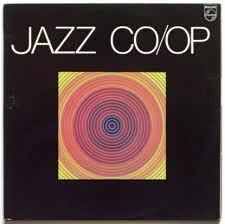
The documented album is simply titled Jazz Co/Op.
Released by Philips in Australia in 1974, it was an ambitious double LP — an unusually substantial recorded statement for a group that had existed for such a short period.
The format gave the quartet room to present more than one aspect of its music.
Pieces associated with Frampton and Smith could unfold beyond the limitations of a concise club set or conventional single-disc program. Modal language, freer improvisation, composed structures and rhythmic experimentation could coexist across a larger canvas.
Among the music preserved there were pieces that would become central to the group’s historical reputation: “A-La Coltrane,” “Pyramid Piece,” “Interim” and other original material.
Their titles already suggest different relationships with jazz history.
“A-La Coltrane” acknowledges a lineage openly.
“Pyramid Piece” would eventually become one of the recordings most frequently invoked when later listeners rediscovered Australian modal and experimental jazz from the period.
But the significance of the album lies beyond individual tracks.
For the first time, the musical conversation developed by Frampton, Smith, Thorncraft and Treloar at rehearsals, concerts and nights in The Basement had been fixed onto record.
A cooperative that had begun with three musicians meeting weekly to play songs or improvise freely had become one of the most distinctive modern jazz groups working in Australia.
Its history would be brief.
Its recorded catalogue would remain small.
But in 1974, none of that was the point.
Jazz Co/op had reached the moment when the ideas circulating through Sydney — between club and conservatorium, composition and improvisation, Australian experience and international jazz modernism — could finally be heard together.
The double album would capture that moment.
And it would reveal just how far the quartet was prepared to go.
Inside the 1974 Jazz Co-Op
When Jazz Co/op entered the studio in Sydney during August and September 1974, the quartet faced a problem familiar to improvising groups: how could music developed through repeated live interaction survive the transition to a record? The question was particularly important for Roger Frampton, Howie Smith, Jack Thorncraft and Phil Treloar because their identity depended on movement between composition and freedom. A conventional studio album could easily have emphasized one side at the expense of the other. Tightly organized pieces might make the quartet appear more conservative than it was onstage, while an exclusively free session would obscure the role composition had come to play in its development. The solution was unusually generous. Released by Philips as a double LP, Jazz Co-Op provided four sides on which the musicians could present contrasting aspects of the group without forcing them into a single stylistic definition. The result is not simply a historical curiosity from Australian jazz in the 1970s. It is evidence of a quartet discovering how American modern jazz, European experimentalism and the particular circumstances of Sydney could meet without any one of them becoming the dominant identity.
The personnel was remarkably economical for a record of such range. Howie Smith played tenor and soprano saxophones, Roger Frampton piano, Jack Thorncraft bass and Phil Treloar drums. There was no expanded horn section, no electric keyboard layer and no elaborate studio architecture surrounding them. Whatever variety the album achieved had to come from four musicians changing their relationship to the material.
That limitation became an advantage.
Without orchestration to provide contrast automatically, the quartet had to create contrast through interaction. Frampton could shift the harmonic density of the piano or withdraw entirely. Smith could move between tenor and soprano, changing the character of the melodic line. Thorncraft could function conventionally as the harmonic foundation or participate more freely in the conversation. Treloar could establish pulse, destabilize it or allow rhythm to become a field of accents rather than a fixed grid.
The album consequently feels less like a declaration of one new Australian jazz style than an investigation into several possible ones.
That openness is precisely what makes it valuable.
Four Sides, Several Directions
The original double album contained eleven pieces: “Interim,” “RF021273,” “In Your Quiet Place,” “Early Morning Trip,” “Pyramid Piece,” “Nefertiti,” “A La Coltrane,” “May Day,” “Int-a,” “Of Things Once Lost” and “Tribute.”
Even the titles reveal the range of the quartet’s thinking.
There are compositions whose names suggest personal or abstract ideas, explicit encounters with jazz history and pieces that appear to treat the recording itself as an opportunity for experimentation. Wayne Shorter’s “Nefertiti” sits alongside original material. “A La Coltrane” acknowledges one of the central figures in the group’s musical imagination. Elsewhere, Frampton and Smith develop their own compositional languages rather than organizing the record around standards.
The sequence therefore refuses a simple narrative.
This is not an album that begins in tradition and gradually moves toward freedom, nor one that presents the avant-garde as the inevitable destination of modern jazz. Different approaches coexist.
That coexistence reflected the musicians themselves.
Smith and Frampton were both composers and improvisers, but their backgrounds were not identical. Smith’s arrival from the United States brought another direct connection to American jazz practice into the Sydney scene. Frampton’s experience with Teletopa had already pushed him into experimental situations where the assumptions of jazz form could be suspended altogether.
Thorncraft and Treloar had to negotiate the space between them.
The rhythm section became the place where those approaches could meet.
“Pyramid Piece”
One of the recordings that later came to represent the album is Howie Smith’s “Pyramid Piece.”
Its subsequent history is revealing. Decades after Jazz Co/op had disappeared, the composition provided the title for Pyramid Pieces, a compilation devoted to Australian modal and modern jazz from 1969 to 1979. The choice reflects how strongly the quartet has come to symbolize a period of Australian jazz that was highly active locally yet received comparatively little international circulation at the time.
“Pyramid Piece” demonstrates why.
The music is grounded enough to retain direction while remaining open enough for the musicians to reshape its internal balance. Smith’s writing provides an identifiable framework, but the performance never gives the impression that the quartet is simply moving through predetermined sections.
The rhythm section is central to this effect.
Treloar does not merely mark the form. His drumming continually comments on it. Thorncraft provides weight without forcing every moment into a walking-bass conception of jazz time. Frampton’s piano can clarify harmony and then make the harmonic landscape less certain.
Smith’s soprano moves through this environment as both melodic voice and improvising participant.
The piece demonstrates the quartet’s preference for mobility.
Structure exists.
But structure is something the musicians inhabit rather than obey.
That principle separates Jazz Co/op from the idea of Australian musicians merely reproducing the modal jazz language developed in the United States during the previous decade. Modal harmony was part of the vocabulary, but the musicians were using it inside their own working environment, alongside freer improvisational practices and compositional ideas developed through repeated performances in Sydney.
“A La Coltrane”
If “Pyramid Piece” later became emblematic of the Australian modern-jazz scene, “A La Coltrane” makes the group’s historical debt explicit.
The title leaves no ambiguity.
John Coltrane mattered.
For musicians coming of age during the 1960s and early 1970s, his influence was almost impossible to avoid. Coltrane had expanded the technical language of the saxophone, transformed approaches to harmony and modality, and demonstrated how spiritual intensity and formal experimentation could coexist within jazz.
But homage creates a difficult problem.
How does a musician acknowledge a figure as powerful as Coltrane without disappearing inside his language?
Jazz Co/op’s answer is collective.
“A La Coltrane” does not succeed because one musician attempts to reproduce Coltrane’s sound. Its identity emerges from the quartet’s response to the implications of his music: sustained modal exploration, rhythmic momentum and the possibility of stretching a composition without losing emotional direction.
Frampton’s role is particularly significant.
The piano does not simply supply a harmonic bed beneath the saxophone. It participates in the movement of the performance, changing density and creating responses that prevent the music from becoming a saxophone feature with accompaniment.
Thorncraft and Treloar similarly resist passive roles.
The result is tribute without impersonation.
This distinction becomes important when considering the wider question of Australian jazz identity. American jazz inevitably provided much of the vocabulary. Pretending otherwise would create a false history. The achievement lay not in removing American influence but in reaching the point where influence could be absorbed without determining every outcome.
“A La Coltrane” acknowledges the source openly.
Then the quartet plays as itself.
“Nefertiti” and the Meaning of Repertoire
The inclusion of Wayne Shorter’s “Nefertiti” provides another illuminating connection to recent American jazz history.
The composition had become widely known through Miles Davis’s 1967 album of the same name, where its repeated melody and unusual relationship between foreground and background challenged conventional assumptions about theme and improvisation.
For Jazz Co/op, choosing “Nefertiti” made sense.
The composition already raised questions that interested the quartet: where does composition end and improvisation begin? Must a jazz performance always move from theme to solos and back again? Can repetition itself create development?
By placing the piece among originals, Jazz Co/op also avoided the conventional division between “standards” and experimental material.
Repertoire was simply another resource.
This attitude resembles the group’s broader relationship with jazz history. The quartet did not need to reject the tradition in order to explore freedom. Nor did it need to treat every inherited composition as something sacred.
A piece could be taken apart through performance.
The same was true of the group’s originals.
Frampton as Composer
The album also documents Roger Frampton at a crucial point in his development as a composer.
Howie Smith later recalled that his own writing encouraged Frampton to compose more actively during the Jazz Co/op period. This mutual stimulus helps explain the range of material appearing on the record.
Frampton’s musical personality resisted easy categorization. He was a pianist, saxophonist, improviser and composer whose previous experience had included both jazz and experimental music. That background allowed him to approach composition without treating the score as a complete definition of what the music should become.
For an improvising ensemble, this is a powerful distinction.
A composition can provide character without dictating every detail.
It can establish a harmonic environment, melodic identity or formal sequence while leaving musicians responsible for determining how those elements behave in performance.
Frampton’s writing for Jazz Co/op operates inside that space.
The pieces create situations.
The quartet completes them.
This is also why the cooperative nature of the band was more than a name. A composer could introduce material, but ownership shifted once the group began playing it. Thorncraft’s bass choices changed the character of the harmony. Treloar’s rhythmic decisions could alter the perceived form. Smith’s phrasing could redirect the emotional center of a passage.
Composition entered the room as information.
It left as collective music.
Howie Smith’s Other Voice
Smith’s contribution to Jazz Co-Op extended well beyond his role as the American saxophonist in an Australian ensemble.
His compositions helped give the record some of its most distinctive material. “Pyramid Piece” is the obvious example, but “Of Things Once Lost” reveals another side of his writing.
Where discussions of modern jazz often emphasize intensity, harmonic complexity or radical formal change, Smith could also work with restraint. “Of Things Once Lost” has a contemplative quality that complicates any attempt to characterize Jazz Co/op solely as an aggressive avant-garde ensemble.
That breadth matters.
Freedom does not always require volume.
Experimentation does not always require confrontation.
An improvising musician can challenge convention through space, patience and ambiguity just as effectively as through density.
The presence of both Frampton and Smith as writers allowed the quartet to explore these contrasts without losing coherence. Their compositions were different, but the same four musicians transformed them into a shared language.
Thorncraft and Treloar
The historical narrative around Jazz Co/op understandably gravitates toward Frampton and Smith. Both were composers, reed players, educators and highly visible figures in the development of Australian jazz.
But the quartet would not have functioned without Jack Thorncraft and Phil Treloar.
In music that moves between written form, modal improvisation and freer interaction, the conventional term “rhythm section” can become misleading. Bass and drums are not simply responsible for keeping the rest of the ensemble stable.
They determine what stability means.
Thorncraft’s role is therefore structural. The bass can anchor harmony, but it can also loosen its relationship with the piano and allow the music to become more horizontal. Treloar can establish recognizable jazz time but is equally capable of treating the drum kit as a collection of independent sounds and rhythmic possibilities.
Their experience together before Smith joined the group mattered.
Frampton, Thorncraft and Treloar had already developed a language through weekly sessions in which they could move between songs and free improvisation. When Smith entered the ensemble, he was joining musicians who already knew how to negotiate uncertainty together.
That prior relationship gave the quartet resilience.
The music could become open without becoming directionless.
The Importance of Space
Another striking aspect of Jazz Co-Op is how often the music allows individual voices to be heard clearly despite its improvisational density.
The quartet format helps.
There are only four musicians, and each occupies a distinct area of the sound. But clarity also results from restraint. Players do not need to fill every available space.
This makes the music feel conversational.
At times one musician proposes an idea and another responds.
Elsewhere several lines overlap without any one becoming the obvious center.
The hierarchy changes from moment to moment.
This quality is fundamentally different from a soloist-plus-accompaniment model. There are certainly solos and foregrounded voices, but the surrounding musicians continue shaping the direction of the performance.
Jazz Co/op’s cooperative principle can therefore be heard as much in its use of space as in its distribution of compositions.
Equality does not mean constant activity.
It means that silence can be as legitimate a contribution as sound.
An Australian Record Without an Australian Costume
One of the easiest mistakes in writing about nationally distinctive jazz is to search for obvious sonic markers of nationality.
Jazz Co/op does not require that approach.
The 1974 album does not need to quote Australian folk melodies or imitate the landscape in order to belong to Australian musical history. Its identity comes from the circumstances of its creation.
It was made by musicians working in Sydney.
It grew from performances at The Basement and other local venues.
It developed alongside Australia’s first tertiary jazz program.
It connected an American educator with Australian musicians whose experiences included modern jazz and experimental improvisation.
It was recorded for the Australian market at a time when local modern jazz had limited access to international distribution.
Those conditions shaped the music even when the musical vocabulary remained connected to international jazz.
This is a more convincing form of national identity than decorative symbolism.
The quartet was Australian because Sydney was where these particular musical relationships became possible.
Why the Double Album Matters
Releasing a double LP was an ambitious decision for a relatively young Australian modern-jazz group.
The format gave Jazz Co/op something increasingly rare: time.
Rather than compressing its identity into a few representative tracks, the quartet could show contradictions. Composed pieces could sit beside more open material. Coltrane and Shorter could appear alongside original writing. Quiet passages could coexist with more rhythmically forceful performances.
The album therefore documents a process rather than presenting a polished stylistic brand.
That quality has helped it age well.
Later listeners can hear musicians trying possibilities rather than musicians protecting an established formula.
The record also preserves a scene that might otherwise have remained largely dependent on memory. Jazz is particularly vulnerable to this problem. Clubs disappear. Ensembles dissolve. Musicians die. Performances that seemed important to those present can vanish almost completely if no recording survives.
Jazz Co-Op survived.
And over time, its meaning changed.
What had been a contemporary Australian jazz record in 1974 gradually became evidence of a broader period of musical experimentation that international listeners had barely encountered.
Rediscovery
That process of rediscovery became especially visible decades later.
When compilations devoted to Australian modern jazz began appearing, Jazz Co/op was no longer treated merely as a local historical footnote. “A La Coltrane” was selected to open Pyramid Pieces, a survey of Australian modal and modern jazz from 1969 to 1979, while the compilation itself borrowed its title from Smith’s “Pyramid Piece.”
The symbolism is difficult to miss.
A group that had once operated within a geographically distant scene now became one of the reference points through which that scene was introduced to new listeners.
This does not mean Jazz Co/op had secretly exercised enormous international influence in 1974.
There is little reason to make such a claim.
Its importance lies elsewhere.
The album demonstrates that ambitious modern jazz was being created in Australia at the same time that better-documented scenes were developing in the United States and Europe. Australian musicians were not simply waiting for ideas to arrive from overseas. They were absorbing those ideas, challenging them and creating their own working relationships around them.
The distinction matters.
Jazz history becomes more interesting when it stops behaving like a story with one center and many peripheries.
Beyond the Studio
The double album captured Jazz Co/op at an important moment, but it did not represent the end of the group’s development.
The quartet continued working.
The Basement remained central.
Performances continued to change the material.
And another recording would eventually preserve the band where much of its identity had been forged: in front of an audience at the Sydney club.
That later document, Live at the Basement, offers a complementary perspective on the quartet. The 1974 studio album demonstrates the range of its compositions and the breadth of its musical thinking. The live recording shows what happened when those ideas returned to the environment in which the musicians had learned to trust one another.
The distinction is important because Jazz Co/op was never only a recording project.
It was a working band.
Its significance grew from nights spent playing in Sydney, from the relationship between Frampton and Smith, from Thorncraft and Treloar’s responsiveness, from the developing Conservatorium program and from a club willing to give contemporary Australian jazz a room in which to evolve.
The double LP preserved the music.
The scene gave it meaning.
And before the decade was over, both the group and the Sydney jazz world around it would change considerably.
The Basement and the Emergence of Australian Modern Jazz
The studio album Jazz Co-Op preserved the quartet at an important moment in 1974, but records alone cannot explain why Roger Frampton, Howie Smith, Jack Thorncraft and Phil Treloar came to occupy such a distinctive position in Australian jazz. The real center of the group’s history was a room in Sydney. At The Basement, Jazz Co/op could do what an improvising ensemble needs most: play repeatedly. More than thirty engagements there allowed compositions to change, relationships to deepen and audiences to become familiar with music that moved freely between modal jazz, post-bop, open improvisation and carefully coordinated structures. The quartet also appeared at the Sydney Opera House, Sydney Town Hall, the Conservatorium and other venues, but The Basement provided something different from a prestigious concert engagement. It gave the musicians continuity. Jazz Co/op did not have to arrive, make a single statement and disappear. It could return the following week with the memory of what had happened before. For a band whose central principle was cooperation rather than fixed hierarchy, that continuity became part of the music itself.
The Basement had opened in 1973, at almost exactly the right moment for the emerging group. Sydney already possessed a substantial jazz history, but the club became an important meeting point for a generation interested in pushing beyond established stylistic divisions. It provided a space in which contemporary Australian musicians could develop alongside international visitors and where listeners could encounter music that might have struggled to find a regular home elsewhere.
Jazz Co/op belonged naturally in that environment.
Phil Treloar later remembered that the group secured a residency quickly. Frampton recalled playing Mondays and Tuesdays, while Smith’s position at the Conservatorium gave the quartet additional visibility. The arrangement connected two parts of Sydney’s changing jazz culture: an emerging academic infrastructure and a working club scene.
But what mattered most happened onstage.
A group like Jazz Co/op could not develop entirely through rehearsal. The compositions contained possibilities that had to be tested under performance conditions. How long could a structure remain open? When should the musicians return to written material? How much rhythmic information was necessary before pulse became implied rather than explicit? What happened when one musician abandoned an expected role and forced the others to reorganize?
Those questions did not have permanent answers.
Each performance could produce another one.
A Laboratory in Public
The Basement functioned as a laboratory, but importantly, it was a laboratory with listeners inside it.
This distinguishes improvisational development from private experimentation. The musicians were free to explore, but they were also responsible for sustaining attention. Freedom could not simply become an excuse for absence of direction.
Contemporary recollections of Jazz Co/op repeatedly emphasize the breadth of its performances. The quartet could move from complete freedom to tightly organized structures without treating either approach as more legitimate than the other.
That range was central to Roger Frampton’s musical personality.
Frampton resisted stylistic exclusivity. He had passed through conventional jazz settings, experimental improvisation with Teletopa, composition and classical study. He could approach Keith Jarrett, Cecil Taylor, Bill Evans and Thelonious Monk as sources without needing to reconcile them into a single pianistic ideology.
Jazz Co/op gave that openness a practical environment.
Howie Smith brought a different history into the room, but he shared Frampton’s willingness to treat composition and improvisation as complementary activities. Their relationship became one of the band’s defining conversations.
Behind them, Thorncraft and Treloar provided the continuity that allowed those conversations to remain flexible.
A rhythm section in this context could not behave mechanically. If Frampton abandoned conventional harmonic support or Smith moved outside the expected shape of a composition, bass and drums had to decide whether to reinforce the original structure, follow the new direction or create a third possibility.
Those decisions occurred in real time.
Repeated nights at The Basement made the quartet increasingly fluent in making them.
Live at the Basement
The logical second document of Jazz Co/op was therefore a live recording.
Live at the Basement, released on Horst Liepolt’s 44 Records label in 1976 and distributed by Philips, preserved the quartet in the environment most closely associated with its development. Where the self-titled double LP provided an expansive studio portrait, the live album returned the music to the social conditions in which much of its language had evolved.
The distinction matters.
A studio recording can capture improvisation, but the presence of an audience changes the scale of risk. There is no opportunity to restart the evening. Transitions happen once. Ideas succeed or fail in public. The musicians must accept whatever direction the performance takes.
For Jazz Co/op, that uncertainty was not an inconvenience.
It was part of the method.
The live recording also helps correct a misleading way of thinking about avant-garde or experimental jazz. Music that stretches form is sometimes described as though it exists primarily for musicians or specialist listeners, detached from ordinary club culture.
Jazz Co/op complicates that assumption.
This was adventurous music developed through regular public performance.
The Basement audiences were not incidental to the group’s history. Their presence helped create the circumstances in which the music could evolve.
The quartet’s experimentalism was therefore social rather than isolated.
It happened in a club.
Horst Liepolt and the Sydney Network
The group’s recorded history also intersects with one of the important figures in Australian jazz promotion during the period: Horst Liepolt.
Liepolt helped create opportunities for contemporary musicians not simply by recording them but by building environments in which they could perform. His involvement with The Basement and later the 44 Records label connected venue culture, live performance and documentation.
Jazz Co/op benefited directly from that network.
This matters because scenes are rarely built by musicians alone.
A vibrant jazz culture requires rooms, promoters, record labels, educators, journalists, broadcasters and audiences willing to sustain music that may not initially have a large commercial market.
Sydney in the 1970s possessed enough of those elements for a group such as Jazz Co/op to develop.
The quartet was therefore both an artistic achievement and evidence of an ecosystem.
The musicians made the music.
But the surrounding infrastructure allowed the music to acquire continuity.
That distinction becomes particularly important when looking back decades later. It is easy to encounter a rare record and imagine it as an isolated artifact created by four unusual musicians.
Jazz Co-Op and Live at the Basement were not isolated.
They were fragments preserved from a living scene.
The Conservatorium Connection
The same period also transformed Australian jazz education.
Howie Smith’s appointment at the New South Wales State Conservatorium of Music had established the country’s first tertiary-level jazz studies program. The historical significance is obvious, but Smith’s involvement with Jazz Co/op made the relationship between education and performance unusually direct.
Students were not simply learning jazz from someone describing it historically.
Their teacher was participating in one of Sydney’s most exploratory working ensembles.
Roger Frampton also joined the Conservatorium teaching staff, strengthening the connection further.
This created a productive contradiction.
Jazz was becoming institutionalized at the same moment these musicians were demonstrating how resistant it could be to rigid definition.
Scales, harmony, arranging and repertoire could be taught.
But the deeper lesson of Jazz Co/op was harder to codify.
Listen.
React.
Understand structure well enough to abandon parts of it intelligently.
Develop an individual voice without destroying the collective.
Know the tradition without becoming imprisoned by it.
These principles belong to jazz education as much as any theoretical curriculum, but they are learned most effectively through playing.
The proximity between the Conservatorium and The Basement allowed those worlds to overlap.
A Short Life
Jazz Co/op did not last long enough to become an institution itself.
Howie Smith’s Australian period was temporary. He had arrived through a Fulbright grant and remained in Sydney for three years, directing Jazz Studies at the Conservatorium through 1976 while participating actively in the local scene.
In 1976, Smith returned to the United States.
The quartet soon dissolved.
There is a temptation in music history to interpret the end of a promising group as a failure of continuity. In the case of Jazz Co/op, that would misunderstand its importance.
The band did not need decades of activity to change the musicians involved or the environment around them.
Its brief existence coincided with a formative period in Sydney jazz. The Basement was establishing itself. Formal jazz education was beginning at the Conservatorium. Australian musicians were developing new approaches to composition and improvisation. International exchange was increasing.
Jazz Co/op sat at the intersection of those developments.
When Smith left, the specific chemistry ended.
The ideas did not.
Roger Frampton After the Co/op
Roger Frampton’s subsequent career provides the clearest example of that continuity.
He remained deeply involved in Australian jazz as performer, composer and educator. His work continued to resist narrow stylistic categories, and the balance between composition and freedom explored in Jazz Co/op remained fundamental to his musical identity.
In the early 1980s, he formed Intersection, reconnecting with Phil Treloar. Guitarists Peter Boothman or Guy Strazzullo and bassists including Lloyd Swanton or Steve Elphick participated in different configurations of the group.
The personnel reveals something about Frampton’s position in Australian jazz.
Musicians from different generations continued finding their way into his orbit.
His influence therefore cannot be measured only through recordings under his own name. Teaching, collaboration and repeated participation in Sydney’s musical life created less visible forms of continuity.
Frampton eventually became an important figure at the Sydney Conservatorium as well, helping connect the experimental openness of his generation with musicians who came later.
He never became an international jazz celebrity.
That fact should not be confused with insignificance.
Jazz history contains many musicians whose greatest influence was concentrated geographically. Their ideas transformed scenes rather than markets.
Frampton was one of them.
Phil Treloar and the Continuing Search
Phil Treloar also carried the exploratory spirit of the period into later projects.
His relationship with Frampton continued beyond Jazz Co/op, but Treloar’s significance extends further. He became associated with musicians seeking forms of improvisation that did not depend on conventional jazz hierarchies, including saxophonist Mark Simmonds.
In 1979, Treloar formed the Australian Art Ensemble with Simmonds and pianist Bobby Gebert. The surviving recordings from that environment document another stage in the development of Australian improvised music.
The continuity is not stylistic in a simple sense.
The Australian Art Ensemble did not reproduce Jazz Co/op.
That is precisely the point.
The inheritance was an attitude toward musical possibility rather than a fixed sound.
This makes Jazz Co/op more useful historically than a group whose importance could be reduced to a recognizable formula.
Its members demonstrated that Australian jazz musicians could engage deeply with international modernism while remaining free to move elsewhere.
A Generation Becomes Visible
The quartet also belongs to a broader constellation of Australian musicians whose work from the late 1960s through the 1970s has gradually become more visible to listeners outside the country.
The historical imbalance is understandable.
Jazz documentation has long favored the United States, followed by certain European scenes. Recordings made in Australia often circulated locally, sometimes on small labels, and could become difficult to obtain once their original pressings disappeared.
This affected how history was written.
If a record cannot be found, heard or reissued, its absence can easily be mistaken for evidence that nothing significant was happening.
Jazz Co/op demonstrates the danger of that assumption.
Sydney was not waiting passively for modern jazz to arrive.
Musicians were already interpreting it, arguing with it and creating their own contexts around it.
The 1974 double album provides evidence.
Live at the Basement provides more.
Contemporary accounts and later recollections complete part of the picture.
Together, they reveal a scene considerably richer than the simplified idea of Australian jazz as a distant reflection of American developments.
Rediscovery Without Mythology
The later rediscovery of Jazz Co/op should nevertheless be handled carefully.
Rare jazz recordings often acquire exaggerated mythology when collectors encounter them decades after their release. Scarcity becomes confused with artistic greatness. Geographic distance becomes exoticism. An obscure record is described as a lost masterpiece before anyone explains what actually makes the music distinctive.
Jazz Co/op does not need that treatment.
Its importance is sufficiently interesting without exaggeration.
The quartet brought together four musicians whose backgrounds created an unusually open approach to modern jazz.
It operated at a formative moment for Sydney’s jazz infrastructure.
It produced two substantial recorded documents.
It helped demonstrate that composition and free improvisation could coexist within a working Australian club band.
And its members continued influencing Australian music after the quartet ended.
Those facts provide a stronger historical argument than mythology ever could.
The group was not a secret force that transformed jazz internationally.
It was something more specific.
It was one of the ensembles through which Australian modern jazz began defining itself on its own terms.
What “Australian” Meant
That phrase requires care.
Jazz Co/op did not create a national style.
There is no single Australian jazz language to identify in the group’s recordings.
Nor should there be.
What emerged instead was confidence that Australian musicians could participate in contemporary jazz without measuring every decision against New York, London or another established center.
Howie Smith’s presence makes the story particularly interesting because one quarter of the group was American.
Australian identity here was therefore not based on isolation.
It was created through exchange.
Smith brought experience from the United States and became part of Sydney’s musical life.
Frampton had been born in England, lived in Adelaide and Sydney, toured internationally with Teletopa and absorbed influences from jazz, classical and experimental music.
Treloar and Thorncraft brought their own experiences from the Australian scene.
The music emerged from those crossings.
This is a more useful way to understand national jazz cultures.
They are not sealed traditions.
They are places where international languages become local through repeated human relationships.
Jazz Co/op was one such relationship.
The Importance of a Small Catalogue
The quartet left only a small recorded legacy.
That scarcity has paradoxically made each surviving document more important.
There is no vast discography through which listeners can trace incremental changes year by year. Instead, the self-titled double LP and Live at the Basement provide concentrated evidence of a brief period.
The first shows the breadth of the quartet’s compositional and improvisational thinking.
The second places that language back inside the club environment that helped create it.
Together they preserve enough to understand why contemporary listeners remembered the group so strongly.
They also demonstrate why historical evaluation should not depend on productivity alone.
Some bands make dozens of albums without changing the musical environment around them.
Others exist for a few years and reveal possibilities that continue through the musicians who survive them.
Jazz Co/op belongs closer to the second category.
The Cooperative Idea
In the end, the most appropriate part of the group’s legacy may be contained in its name.
Co/op.
Four musicians contributing.
No need for one personality to become the permanent center.
No requirement that composition defeat improvisation or improvisation defeat composition.
No insistence that Australian jazz prove its identity through stylistic nationalism.
The cooperative idea allowed differences to remain visible.
Frampton did not need to become Smith.
Smith did not need to become Frampton.
Thorncraft and Treloar did not exist merely to support them.
The music depended on what happened between the four.
That principle can be heard in the recordings, but it was forged through performance — especially during those repeated nights at The Basement when the quartet could test how far its collective trust would stretch.
Howie Smith eventually returned to America.
Jazz Co/op ended.
The Basement continued.
The Conservatorium program continued.
Frampton and Treloar continued.
Other musicians entered the scene.
Australian jazz moved elsewhere.
But the quartet had already demonstrated something essential: a jazz culture becomes mature not when it successfully copies the music of another place, but when its musicians possess enough confidence to use the entire history of the music as material and still respond to the circumstances around them.
Jazz Co/op did exactly that.
For a few years in Sydney, four musicians built a cooperative around composition, improvisation and trust.
The records that remain do not document a peripheral imitation of somebody else’s modern jazz.
They document Australian musicians participating in modern jazz history from where they actually stood.