From Post-War Tokyo to the Pinnacle of Boston Bebop
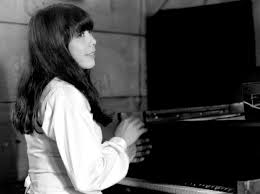
To truly chart the monumental trajectory of Toshiko Akiyoshi, you have to imagine a young woman navigating the male-dominated, post-WWII jazz scene of Tokyo and completely conquering it through sheer harmonic brilliance. Discovered in 1952 by piano titan Oscar Peterson during his Japanese tour, Akiyoshi’s fluid, fierce bebop phrasing—heavily inspired by Bud Powell—left the American jazz royalty in absolute awe. Recognizing her rare genius, Peterson urged producer Norman Granz to record her, paving the way for her to become the first Japanese student at the prestigious Berklee College of Music in Boston. Toshiko didn’t just assimilate the language of American jazz; she mastered its intricate anatomy, proving that the blues and the swing possessed a universal latitude that knew no geographic or cultural borders.
The Orchestral Revolution: Merging the Clarinets with Noh Theatre
For the high-art connoisseur searching for landmark avant-garde coordinates on The Jazz Compass, Toshiko Akiyoshi’s work as a big band leader is an absolute goldmine of structural innovation. In 1973, alongside her husband, saxophonist Lew Tabackin, she formed her legendary big band in Los Angeles. Toshiko used the traditional jazz orchestra format as a canvas for unprecedented cultural synthesis. Masterpieces like Long Yellow Road (1975) and the sweeping, historic suite Kogun (1974) introduced traditional Japanese instruments—like the tsuzumi (hourglass drum) and shakuhachi (bamboo flute)—into the roaring heat of American big band swing. Her writing for woodwinds and brass was so deeply nuanced, layered, and texturally complex that she single-handedly challenged the structural legacies of Duke Ellington and Gil Evans for a new era.
The National Endowment Monarch Across the Eternal Latitude
True to the forward-thinking, borderless latitudes of Jazz Latitude, Toshiko Akiyoshi’s musical geography represents a historic triumph against cultural and institutional barriers. Across a dazzling career spanning over seven decades, she secured 14 Grammy nominations and became the very first Asian jazz artist to be named an NEA Jazz Master, the highest honor in American jazz. Her music was never merely academic; it was a deeply emotional folklore, addressing profound human themes from the tragedy of Hiroshima to the celebration of immigrant roots. Toshiko Akiyoshi left an immovable, brilliant coordinate on our musical map—a monument that stands as an eternal reminder that the greatest form of artistic power is to take the roots of your heritage, fuse them with the freedom of improvisation, and make the whole world dance to your unique rhythm.