Three Instruments, Infinite Possibilities
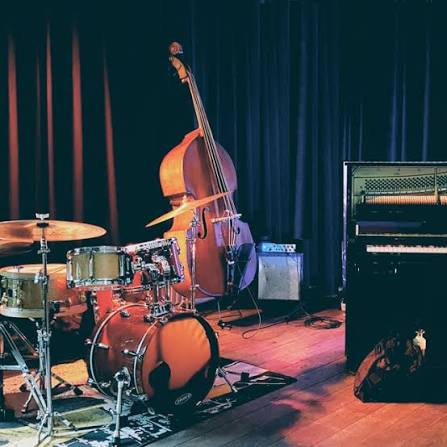
Few formats in music have proven as enduring—or as endlessly inventive—as the jazz piano trio. On paper, the concept appears almost impossibly simple: piano, double bass and drums. Yet within that minimalist framework, generations of musicians have reinvented harmony, rhythm, improvisation and ensemble interaction, producing some of the most influential recordings in the history of jazz.
The piano trio is jazz in its most exposed form.
There are no horns to carry melodies.
No guitar to fill harmonic space.
No orchestra to add dramatic weight.
Every musical decision becomes immediately audible.
Every silence matters.
Every note carries responsibility.
Perhaps that is why the greatest piano trios have rarely been collections of exceptional individual musicians. They became something greater than the sum of their parts. They developed collective personalities, creating musical conversations so intimate that listeners often forget they are hearing three independent performers.
Since the middle of the twentieth century, a handful of piano trios have permanently changed the direction of jazz. Some reinvented swing. Others expanded harmonic language. Some embraced electronics or contemporary classical influences. Others introduced rock, folk, Brazilian music or ambient textures into the trio format.
Together, they transformed one of jazz’s oldest ensembles into one of its most innovative.
These are the fifteen piano trios that changed music forever.
15. Jason Moran and The Bandwagon
When Jason Moran formed The Bandwagon with bassist Tarus Mateen and drummer Nasheet Waits, the trio immediately challenged conventional expectations of modern jazz.
Hip-hop rhythms.
Contemporary classical influences.
Stride piano.
Avant-garde improvisation.
Every performance felt unpredictable.
Rather than rejecting tradition, Moran continually placed it into dialogue with contemporary culture.
Essential Album
The Bandwagon
14. Vijay Iyer Trio
Mathematics, South Asian rhythmic concepts and post-bop improvisation converge in the extraordinary music of the Vijay Iyer Trio.
Together with bassist Stephan Crump and drummer Marcus Gilmore, Iyer created one of the most intellectually adventurous groups of the twenty-first century.
Despite remarkable rhythmic complexity, the music remains emotionally compelling.
Every performance balances precision with freedom.
Essential Album
Accelerando
13. Bobo Stenson Trio
Few trios embody the aesthetic philosophy of ECM Records more completely than the Bobo Stenson Trio.
Its music unfolds patiently.
Silence becomes structural.
Nordic folk melodies interact naturally with jazz harmony.
Improvisation resembles chamber music rather than conventional club performance.
For many listeners, the trio represents the definitive Scandinavian approach to modern jazz.
Essential Album
Serenity
12. Tord Gustavsen Trio
If Bill Evans introduced introspection into modern jazz, Tord Gustavsen carried that idea toward remarkable spiritual minimalism.
His trio favors whisper over proclamation.
Every melody develops slowly.
Every harmonic movement possesses extraordinary emotional weight.
Influenced equally by gospel, Norwegian hymn traditions and modern jazz, Gustavsen created one of Europe’s most distinctive contemporary piano trios.
Essential Album
Changing Places
11. Tommy Flanagan Trio
Tommy Flanagan rarely pursued musical spectacle.
Instead, he cultivated elegance.
His touch remained effortless.
His harmonic choices consistently tasteful.
His trio recordings reveal extraordinary maturity, demonstrating how restraint can produce greater emotional impact than technical excess.
Generations of pianists continue studying his remarkable balance between swing and lyricism.
Essential Album
Sea Changes
10. Herbie Hancock Trio
Long before becoming a global icon through fusion and funk, Herbie Hancock demonstrated that the traditional piano trio could remain a laboratory for harmonic innovation.
Working with legendary rhythm sections—including Ron Carter and Tony Williams—Hancock expanded rhythmic flexibility while preserving deep blues feeling.
The result anticipated countless developments in contemporary piano jazz.
Essential Album
Herbie Hancock Trio
9. McCoy Tyner Trio
After helping redefine jazz alongside John Coltrane, McCoy Tyner carried his monumental harmonic vision into the piano trio.
Massive left-hand chords.
Pentatonic power.
Relentless rhythmic energy.
His trios possess orchestral force despite consisting of only three musicians.
Every performance reminds listeners why Tyner remains one of jazz’s most influential pianists.
Essential Album
Reaching Fourth
8. The Bad Plus
Few groups divided jazz audiences as dramatically as The Bad Plus.
By performing music from Nirvana, Aphex Twin and Blondie alongside original compositions, the trio challenged assumptions about repertoire itself.
Behind the controversy lay extraordinary musicianship.
The Bad Plus demonstrated that jazz standards no longer required the Great American Songbook.
Contemporary popular music could become equally fertile improvisational material.
Essential Album
These Are the Vistas
Buy Amazon

The Seven Trios That Redefined the Piano Trio
Reaching the highest tier of jazz piano trios requires more than technical brilliance or commercial success. The ensembles that occupy this level fundamentally altered the way musicians think about interaction, improvisation and ensemble identity. Some revolutionized harmony. Others transformed rhythm. A few redefined the role of every instrument in the group. Together, they created the blueprint upon which nearly every modern piano trio continues to build.
7. Chick Corea Akoustic Band
When Chick Corea returned to the acoustic piano after years of pioneering jazz fusion with Return to Forever, many listeners expected a nostalgic return to tradition. Instead, the Akoustic Band became one of the most technically astonishing piano trios ever assembled.
With bassist John Patitucci and drummer Dave Weckl, Corea created a trio capable of breathtaking virtuosity without sacrificing melodic warmth.
Classical counterpoint.
Latin rhythms.
Bebop language.
Contemporary harmony.
Everything coexisted naturally.
Despite the dazzling technical level, the music always remained joyful.
Playful.
Curious.
The trio demonstrated that virtuosity becomes meaningful only when it serves imagination.
Essential Album
Akoustic Band (1989)
6. Esbjörn Svensson Trio (e.s.t.)
No European piano trio has reshaped modern jazz more profoundly than e.s.t.
Esbjörn Svensson, bassist Dan Berglund and drummer Magnus Öström dissolved the traditional boundaries separating jazz, rock, ambient music and electronic sound design.
Effects pedals.
Prepared piano.
Loop-inspired textures.
Arena-sized dynamics.
Yet beneath these contemporary elements remained extraordinary trio interaction rooted deeply in Bill Evans and Keith Jarrett.
Rather than modernizing jazz through technology alone, e.s.t. modernized the emotional language of the piano trio.
The influence of the group now extends across Europe, North America and Asia.
Essential Album
Viaticum (2005)
5. Ahmad Jamal Trio
Long before minimalism became fashionable, Ahmad Jamal understood the expressive power of space.
Miles Davis openly acknowledged Jamal’s influence.
Bill Evans admired him.
Countless pianists studied his remarkable sense of timing.
Working with bassist Israel Crosby and drummer Vernel Fournier, Jamal transformed silence into an active musical element.
Instead of filling every measure with notes, he created suspense.
Expectation.
Breathing room.
The trio’s famous recording of Poinciana remains one of the most influential performances in jazz history, proving that restraint can generate overwhelming intensity.
Essential Album
At the Pershing: But Not for Me (1958)
4. Brad Mehldau Trio
Few musicians have redefined the contemporary piano trio as completely as Brad Mehldau.
Together with bassist Larry Grenadier and drummer Jorge Rossy—later Jeff Ballard—Mehldau created a new model of collective interaction.
Counterpoint became conversational.
Rock songs became jazz standards.
Odd meters flowed naturally.
Improvisation developed almost symphonically.
Perhaps most remarkably, Mehldau proved that Radiohead, Nick Drake, The Beatles and contemporary classical music could inhabit the same artistic world as Cole Porter and Jerome Kern.
The result became the defining piano trio language of the twenty-first century.
Essential Album
Art of the Trio, Volume Three: Songs (1998)
3. Oscar Peterson Trio
If any trio represents absolute swing at its highest level, it is the Oscar Peterson Trio.
Peterson’s phenomenal technique remains legendary, but the true miracle lay in the interaction with bassist Ray Brown and drummer Ed Thigpen.
Every performance radiates joy.
The rhythmic drive feels almost unstoppable.
Blues, bebop and mainstream jazz unite effortlessly.
Even the fastest passages retain extraordinary clarity.
Peterson often sounded like an entire orchestra compressed into ten fingers, yet his trio never lost its conversational character.
Its recordings remain among the finest introductions to classic piano trio jazz.
Essential Album
Night Train (1963)
2. Keith Jarrett Standards Trio
For more than three decades, Keith Jarrett, Gary Peacock and Jack DeJohnette explored a single revolutionary idea.
Every performance should begin as though the music had never been played before.
Even the most familiar standards became opportunities for discovery.
No arrangement remained fixed.
Tempo evolved organically.
Improvisation unfolded collectively.
Jarrett’s lyrical imagination, Peacock’s melodic bass playing and DeJohnette’s limitless rhythmic vocabulary created perhaps the greatest example of telepathic interaction in jazz history.
The trio did not merely interpret standards.
It reinvented them every night.
Essential Album
Standards, Vol. 1 (1983)
JazzLatitude Insight
The greatest piano trios do not eliminate individual personalities. They make those personalities so deeply interconnected that listeners stop hearing three musicians and begin hearing a single musical consciousness.
1. Bill Evans Trio
No ensemble transformed the piano trio more completely than the original Bill Evans Trio with Scott LaFaro and Paul Motian.
Before Evans, most piano trios followed a relatively clear hierarchy.
The pianist led.
The bassist accompanied.
The drummer maintained time.
Evans rejected that model entirely.
Every musician became an equal participant.
LaFaro’s bass lines floated freely around the harmony.
Motian treated rhythm as texture rather than obligation.
Evans responded continuously rather than dictating musical direction.
The result was a completely new concept of jazz interaction.
Its fullest expression arrived during the legendary 1961 Village Vanguard recordings.
Listening today remains almost shocking.
The music still sounds modern.
Still sounds fearless.
Still sounds intimate.
Nearly every significant piano trio since then has, consciously or not, entered into dialogue with what Bill Evans, Scott LaFaro and Paul Motian created during those extraordinary sessions.
They did not simply become the greatest jazz piano trio.
They reinvented what a piano trio could be.
Essential Album
Sunday at the Village Vanguard (1961)
Why These Seven Matter
Although every ensemble on this list contributed something essential, these seven transformed the piano trio in particularly lasting ways:
- Bill Evans Trio — Redefined equality among piano, bass and drums.
- Keith Jarrett Standards Trio — Reinvented the interpretation of jazz standards.
- Oscar Peterson Trio — Perfected virtuosity without sacrificing swing.
- Brad Mehldau Trio — Introduced a contemporary harmonic and cultural vocabulary.
- Ahmad Jamal Trio — Revolutionized the use of space and dynamics.
- Esbjörn Svensson Trio — Brought the piano trio into the modern European era.
- Chick Corea Akoustic Band — Expanded the technical and rhythmic possibilities of the format.
Buy Amazon

Beyond the Rankings
Every ranking of the greatest jazz piano trios inevitably reflects a particular perspective. Jazz has never evolved through a single lineage but through countless parallel conversations taking place across continents, generations and artistic philosophies. Some listeners will argue for the elegance of Tommy Flanagan. Others will champion the Nordic lyricism of Bobo Stenson or Tord Gustavsen. Many will insist that Michel Petrucciani, Kenny Barron or Fred Hersch deserve places among the top fifteen.
Those arguments are not only understandable.
They are healthy.
Jazz has always thrived through passionate discussion.
What remains beyond debate is the extraordinary importance of the piano trio itself.
No other small ensemble has generated such a continuous stream of artistic reinvention for more than seventy years.
Honorable Mentions
Several remarkable piano trios narrowly missed inclusion in the main list but deserve recognition for their outstanding contributions to the evolution of modern jazz.
Michel Petrucciani Trio
A perfect combination of lyrical beauty, dazzling technique and infectious optimism, Petrucciani’s trio recordings remain among the finest examples of European mainstream jazz.
Essential Album: Trio in Tokyo
Kenny Barron Trio
Elegant, sophisticated and deeply rooted in bebop, Kenny Barron continues the tradition established by Tommy Flanagan and Hank Jones while adding his own unmistakable harmonic voice.
Essential Album: People Time
Fred Hersch Trio
One of the great storytellers of the modern piano, Fred Hersch combines classical refinement, emotional vulnerability and extraordinary trio interaction.
Essential Album: Whirl
Marcin Wasilewski Trio
Few contemporary European ensembles embody collective listening as completely as the Polish trio led by Marcin Wasilewski.
Their spacious, lyrical approach represents one of ECM’s defining modern sounds.
Essential Album: Faithful
Gonzalo Rubalcaba Trio
Rubalcaba’s astonishing virtuosity is matched by rhythmic imagination rooted in Afro-Cuban traditions.
His trio remains one of the most technically brilliant groups of the modern era.
Essential Album: Supernova
Hiromi Trio Project
By combining jazz, progressive rock, fusion and dazzling technical precision, Hiromi introduced a younger generation to the possibilities of the piano trio.
Essential Album: Move
Stefano Bollani Trio
Eclectic, humorous and endlessly inventive, Stefano Bollani’s trio effortlessly moves between Brazilian music, classical influences, Italian song traditions and modern jazz.
Essential Album: Stone in the Water
The Evolution of the Piano Trio
Looking across the history of jazz, the piano trio has evolved through several remarkable stages.
The Swing Era
Early trios established the format through elegance, rhythmic drive and song interpretation.
The Bebop Revolution
Pianists such as Bud Powell transformed the trio into a vehicle for virtuosic improvisation and harmonic innovation.
The Bill Evans Revolution
The concept of equal interaction between piano, bass and drums permanently changed ensemble dynamics.
Nearly every modern trio traces its lineage to this breakthrough.
The Standards Era
Keith Jarrett demonstrated that familiar repertoire could remain endlessly fresh through collective improvisation.
The European Expansion
Artists including Bobo Stenson, Tord Gustavsen and e.s.t. introduced Nordic lyricism, ambient textures and chamber music aesthetics.
The Contemporary Era
Brad Mehldau, Vijay Iyer, Jason Moran and The Bad Plus expanded the trio’s vocabulary through influences ranging from rock and hip-hop to minimalism, electronic music and global traditions.
The 15 Essential Albums Every Jazz Fan Should Hear
If someone wanted to understand the complete evolution of the jazz piano trio, these fifteen albums would form an ideal listening journey.
| Trio | Essential Album |
|---|---|
| Bill Evans Trio | Sunday at the Village Vanguard |
| Keith Jarrett Standards Trio | Standards, Vol. 1 |
| Oscar Peterson Trio | Night Train |
| Brad Mehldau Trio | Art of the Trio, Vol. 3 |
| Ahmad Jamal Trio | At the Pershing |
| Esbjörn Svensson Trio | Viaticum |
| Chick Corea Akoustic Band | Akoustic Band |
| The Bad Plus | These Are the Vistas |
| McCoy Tyner Trio | Reaching Fourth |
| Herbie Hancock Trio | Herbie Hancock Trio |
| Tommy Flanagan Trio | Sea Changes |
| Tord Gustavsen Trio | Changing Places |
| Bobo Stenson Trio | Serenity |
| Vijay Iyer Trio | Accelerando |
| Jason Moran and The Bandwagon | The Bandwagon |
Frequently Asked Questions
What is the greatest jazz piano trio of all time?
Most critics and musicians consider the original Bill Evans Trio with Scott LaFaro and Paul Motian the most influential piano trio in jazz history because it fundamentally redefined the interaction between piano, bass and drums.
Why is the Keith Jarrett Standards Trio so important?
Keith Jarrett, Gary Peacock and Jack DeJohnette transformed the interpretation of jazz standards by approaching every performance as a completely new musical conversation, making spontaneity the defining characteristic of the trio.
Which piano trio is best for beginners?
The Oscar Peterson Trio is often the ideal starting point thanks to its irresistible swing, melodic accessibility and extraordinary musicianship. Night Train remains one of the most approachable classic jazz albums ever recorded.
Which modern jazz piano trio is the most influential?
The Brad Mehldau Trio has had perhaps the greatest influence on contemporary jazz pianists by integrating modern harmony, classical counterpoint and popular music into the traditional trio format.
Which European jazz piano trio changed modern jazz?
The Esbjörn Svensson Trio (e.s.t.) revolutionized European jazz by incorporating rock energy, electronic textures and cinematic atmosphere while preserving the interactive spirit established by Bill Evans and Keith Jarrett.
JazzLatitude Rankings
| Category | Winner |
| Most Influential Trio | Bill Evans Trio |
| Greatest Live Trio | Keith Jarrett Standards Trio |
| Greatest Swing | Oscar Peterson Trio |
| Most Innovative Contemporary Trio | Brad Mehldau Trio |
| Greatest European Trio | Esbjörn Svensson Trio |
| Most Underrated Trio | Tommy Flanagan Trio |
| Most Original Modern Concept | The Bad Plus |
| Greatest Scandinavian Trio | Bobo Stenson Trio |
| Greatest Spiritual Minimalism | Tord Gustavsen Trio |
| Greatest Technical Virtuosity | Chick Corea Akoustic Band |
Final Thoughts
The history of the jazz piano trio is, in many ways, the history of modern jazz itself. Over the past seventy years, this deceptively simple format has served as a laboratory where some of the music’s most revolutionary ideas first took shape. Harmonic innovation, rhythmic transformation, collective improvisation and stylistic experimentation have all found a natural home within the intimate dialogue of piano, bass and drums.
What makes the greatest trios extraordinary is not merely the brilliance of their individual members, but the emergence of a shared musical identity. Bill Evans, Scott LaFaro and Paul Motian taught the world that three musicians could improvise as equals. Keith Jarrett, Gary Peacock and Jack DeJohnette proved that even the most familiar standards could become completely new with every performance. Brad Mehldau expanded the trio’s cultural vocabulary for a new century, while e.s.t. demonstrated that European jazz could chart its own bold and emotionally resonant course.
Across every era, one truth remains constant: the finest piano trios are built on listening rather than dominance. The piano does not command. The bass does not merely accompany. The drums do not simply keep time. Instead, each instrument contributes equally to an ongoing conversation in which every note shapes the next. This delicate balance is what has allowed the format to remain endlessly adaptable without losing its essential character.
Perhaps that is why the piano trio continues to captivate musicians and listeners alike. With only three instruments, there is nowhere to hide. Every phrase reveals personality. Every silence carries meaning. Every performance becomes an act of trust.
From the elegant swing of Ahmad Jamal to the fearless innovation of Bill Evans, from the boundless imagination of Keith Jarrett to the contemporary brilliance of Brad Mehldau, these fifteen ensembles did far more than produce unforgettable recordings.
They transformed one of jazz’s smallest ensembles into one of the greatest artistic forms in modern music—and in doing so, they changed the course of jazz forever.