The Trumpeter Who Refused to Stand Still
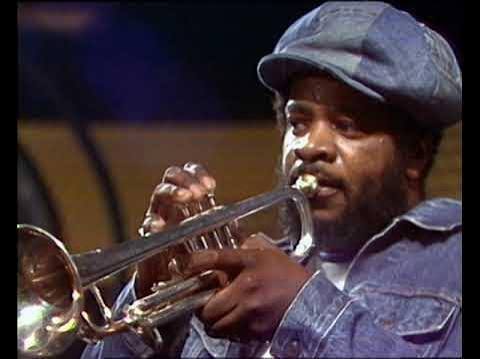
Few musicians in jazz history reinvented themselves as successfully—or as courageously—as Donald Byrd. Many artists spend an entire lifetime perfecting a single musical language. Byrd mastered several. During a career spanning more than five decades, he became one of the defining trumpet voices of hard bop, one of Blue Note Records’ most consistently innovative recording artists and, later, one of the architects of jazz-funk, creating music that would profoundly influence acid jazz, neo-soul, rare groove and hip-hop. Rather than resisting change, he embraced it as an essential part of artistic survival.
His story is not simply one of stylistic evolution.
It is one of intellectual curiosity.
Creative courage.
Musical discipline.
Donald Byrd believed that jazz should never become a museum.
It should remain alive.
Always learning.
Always listening.
Always changing.
That philosophy transformed him into one of the most influential musicians of the twentieth century.
Detroit: A City Built on Rhythm
Donaldson Toussaint L’Ouverture Byrd II was born on December 9, 1932, in Detroit, Michigan, a city whose extraordinary musical environment would shape countless future innovators.
Long before Motown became internationally famous, Detroit already possessed a thriving jazz community.
Church music flourished.
Swing orchestras remained active.
Nightclubs welcomed touring musicians from New York and Chicago.
Young instrumentalists grew up surrounded by exceptional talent.
Byrd entered this environment at exactly the right moment.
Music became part of daily life rather than distant aspiration.
His early education reflected both discipline and opportunity.
An unusual combination that would define his entire career.
Education Before Fame
Unlike many jazz musicians of his generation, Byrd placed enormous value on formal education.
After military service in the United States Air Force, he studied at Wayne State University before continuing at the prestigious Manhattan School of Music in New York.
This academic background never diminished his improvisational instincts.
Instead, it expanded them.
Harmony.
Composition.
Counterpoint.
Arranging.
Music history.
Each discipline strengthened his artistic vocabulary.
Throughout his life, Byrd would continue pursuing education with remarkable seriousness, eventually earning advanced academic degrees while maintaining one of the busiest performing careers in jazz.
Knowledge, for him, was inseparable from creativity.
Arriving in New York
The New York jazz scene of the mid-1950s represented the center of modern improvisation.
Charlie Parker’s revolution still echoed through every club.
Hard bop was rapidly emerging as the dominant new language.
Art Blakey.
Horace Silver.
Clifford Brown.
Sonny Rollins.
Miles Davis.
The city’s creative energy seemed limitless.
Byrd entered this extraordinary environment with impeccable preparation.
His technical command attracted immediate attention.
So did the remarkable clarity of his tone.
Warm.
Focused.
Elegant.
Confident without arrogance.
Within a remarkably short time, he became one of the most promising young trumpeters in American jazz.
JazzLatitude Insight
Donald Byrd understood something that many musicians discover only much later: technique creates possibilities, but curiosity creates longevity. His career flourished because he never allowed success to become an excuse for artistic comfort.
Art Blakey and the School of Hard Bop
One of the decisive turning points in Byrd’s career came when he joined Art Blakey’s Jazz Messengers.
Few ensembles functioned as more important training grounds.
Blakey demanded discipline.
Intensity.
Swing.
Individual voice.
Every musician entered the group knowing expectations would be extraordinarily high.
Byrd responded magnificently.
His trumpet combined the brilliance associated with Clifford Brown and the lyrical sophistication increasingly becoming his own trademark.
Within the Messengers, he developed not only greater technical confidence but also the leadership qualities that would later define his solo career.
The experience permanently shaped his understanding of ensemble interaction.
Horace Silver and the Language of Soul
Working with Horace Silver introduced another crucial dimension to Byrd’s musical identity.
Silver’s compositions united gospel feeling, blues expression and sophisticated harmony into what became one of hard bop’s defining sounds.
Byrd fit naturally within this musical world.
His melodic imagination complemented Silver’s rhythmic vitality.
His phrasing became increasingly conversational.
Every solo balanced technical fluency with emotional accessibility.
These collaborations reinforced a lesson that would remain central throughout Byrd’s career.
Complexity means little unless listeners can feel its emotional purpose.
Blue Note Records Finds a New Star
By the late 1950s, Blue Note Records had recognized Donald Byrd as one of its most promising artists.
The partnership would become one of the longest and most productive in the label’s distinguished history.
Blue Note offered something unusually valuable.
Creative freedom.
Outstanding producers.
Exceptional recording quality.
The finest studio musicians in jazz.
Within this remarkable artistic environment, Byrd evolved rapidly from gifted sideman to major bandleader.
Each new album revealed greater confidence.
More adventurous composition.
Increasingly personal musical ideas.
The relationship between artist and label became one of mutual growth.
As Byrd matured, Blue Note matured alongside him.
The Byrd–Pepper Adams Quintet
Among the most remarkable collaborations of Donald Byrd’s early career was his long partnership with baritone saxophonist Pepper Adams.
Their contrasting musical personalities created extraordinary balance.
Byrd’s elegant trumpet floated effortlessly above Adams’ robust baritone sound.
Neither musician dominated.
Instead, both challenged one another continuously.
The quintet quickly earned a reputation as one of the finest working bands of the late hard bop era.
Its recordings remain masterclasses in ensemble interaction.
Swing feels effortless.
Improvisation unfolds naturally.
Every arrangement demonstrates remarkable sophistication without sacrificing direct emotional appeal.
Many historians now regard the Byrd–Adams partnership as one of the defining small groups of the early 1960s.
A Leader Begins to Emerge
By the dawn of the 1960s, Donald Byrd had already accomplished more than many musicians achieve during an entire career.
He had become one of hard bop’s leading trumpeters.
An essential Blue Note artist.
A respected composer.
An admired collaborator.
Yet his greatest artistic transformation still lay ahead.
The coming decade would see him move beyond traditional hard bop toward modal experimentation, larger compositional ambitions and ultimately a musical revolution that would reshape both his own career and the future direction of jazz.
Buy Amazon
Beyond Hard Bop: Expanding the Language of Blue Note
By the early 1960s, Donald Byrd had little left to prove as a hard bop trumpeter. His technique was admired throughout the jazz world, his partnership with Blue Note Records had become one of the label’s greatest successes, and he was already recognized as an exceptional bandleader. Yet, unlike many musicians who found comfort in a successful formula, Byrd sensed that jazz itself was changing. Modal harmony, freer forms of improvisation and increasingly sophisticated compositions were reshaping the music. Rather than resisting these developments, he embraced them with remarkable intelligence.
The result was one of the most fascinating artistic evolutions in Blue Note history.
Byrd did not abandon hard bop.
He expanded it.
Every new recording revealed broader harmonic thinking.
Greater compositional ambition.
Increasing emotional depth.
The trumpet remained unmistakably Donald Byrd.
But the musical world surrounding it grew richer with every album.
Byrd in Flight
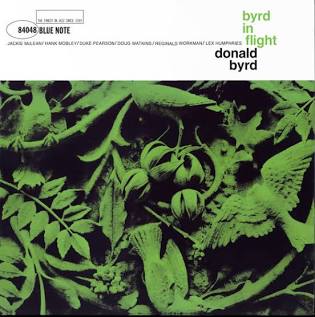
Released in 1960, Byrd in Flight captures an artist standing confidently between tradition and innovation.
The album retains the rhythmic drive and blues feeling of classic hard bop.
Yet its harmonic vocabulary points toward new possibilities.
The improvisations breathe more naturally.
The compositions unfold with greater patience.
Rather than relying exclusively on fiery virtuosity, Byrd increasingly emphasizes melodic architecture.
Each solo develops almost like a carefully constructed narrative.
Listening today, the album reveals an artist preparing for a much larger creative leap.
The Remarkable Partnership with Pepper Adams
Although Donald Byrd collaborated with many extraordinary musicians, few artistic relationships proved as enduring—or as productive—as his partnership with Pepper Adams.
Together, they formed one of the defining front lines of early-1960s jazz.
Adams’ powerful baritone saxophone provided dramatic contrast to Byrd’s lyrical trumpet.
Their phrasing complemented rather than imitated one another.
Improvisations became conversations.
Never competitions.
The group toured extensively, refining its musical language night after night.
This level of familiarity produced recordings remarkable for their balance, precision and effortless swing.
Many critics now regard the Byrd–Adams Quintet as one of the finest working bands of its generation.
JazzLatitude Insight
Donald Byrd’s greatest strength was not merely his ability to adapt to change. It was his ability to recognize change before most musicians realized it had already begun.
Royal Flush
With Royal Flush (1961), Byrd ventured even further into modern harmonic territory.
The album also introduced a young tenor saxophonist named Wayne Shorter, whose compositional imagination would soon redefine modern jazz.
The interaction between Byrd and Shorter feels remarkably fresh.
Both musicians balance intellectual sophistication with emotional immediacy.
The rhythm section provides subtle flexibility.
Themes expand naturally into improvisation.
Rather than sounding experimental for its own sake, the recording communicates quiet confidence.
It remains one of the hidden masterpieces of Byrd’s Blue Note years.
Herbie Hancock and a New Generation
Donald Byrd possessed an extraordinary ability to recognize young talent.
Among the musicians whose early careers he helped encourage was Herbie Hancock.
At a time when Hancock was still establishing his reputation, Byrd recognized his remarkable harmonic imagination.
Their collaborations became mutually beneficial.
Hancock found opportunities to develop.
Byrd gained an accompanist capable of supporting increasingly adventurous compositions.
Together they helped define the emerging post-bop language that would dominate much of the decade.
Their partnership also reflected Byrd’s generosity.
Unlike many established leaders, he welcomed younger musicians who challenged his own musical thinking.
Free Form
Perhaps no recording better illustrates Byrd’s artistic courage than Free Form (1961).
The title itself signals a willingness to move beyond conventional structures.
Although the album never abandons melody or swing, its harmonic openness marks a decisive turning point.
Modal ideas appear more frequently.
Rhythmic flexibility increases.
Improvisations unfold with greater freedom.
The music remains unmistakably accessible.
Yet listeners can clearly hear Byrd exploring possibilities that many of his hard bop contemporaries had not yet embraced.
The recording stands today as one of the most important transitional albums in his career.
A New Perspective
If one album announced Donald Byrd’s arrival as a truly visionary composer, it was A New Perspective (1963).
The recording remains unique within the Blue Note catalog.
Byrd combined modern jazz with gospel-inspired choral writing.
The result feels simultaneously sacred and contemporary.
The voices never function merely as decoration.
Instead, they become integral elements of the musical architecture.
Improvisation and spiritual expression coexist beautifully.
The album anticipated later developments in spiritual jazz while remaining entirely personal.
Many historians now regard it as one of Blue Note’s boldest artistic achievements.
Hard Bop Without Limits
Throughout the middle years of the decade, albums such as Mustang! and Slow Drag demonstrated Byrd’s remarkable consistency.
The music retained its rhythmic vitality.
Its blues foundation.
Its elegant trumpet language.
Yet every recording incorporated subtle innovations.
More sophisticated arrangements.
Unexpected harmonic movement.
Greater interaction among ensemble members.
Rather than repeating previous successes, Byrd continually refined his musical vocabulary.
This relentless curiosity explains why his Blue Note catalog remains one of the richest in modern jazz.
Beyond the Trumpet
By the mid-1960s, Donald Byrd had become much more than a virtuoso instrumentalist.
He had evolved into a thoughtful composer.
A perceptive arranger.
An inspiring bandleader.
An educator increasingly interested in the relationship between music and broader cultural change.
These expanding interests would soon influence every aspect of his artistic direction.
His next transformation would surprise critics, divide traditional jazz audiences and ultimately reshape modern popular music itself.
Essential Albums
For listeners exploring Donald Byrd’s remarkable Blue Note period, these recordings provide the clearest portrait of his artistic evolution before his groundbreaking move into jazz-funk.
- Byrd in Flight (1960) — A superb example of mature hard bop, balancing lyrical trumpet playing with increasingly sophisticated harmonic ideas.
- Royal Flush (1961) — A landmark collaboration featuring an emerging Wayne Shorter and one of Byrd’s most refined small-group performances.
- Free Form (1961) — A pivotal transitional album that embraces modal harmony and expanded improvisational freedom while remaining deeply rooted in hard bop.
- A New Perspective (1963) — One of Blue Note’s most original recordings, combining jazz improvisation with gospel-inspired vocal writing in a visionary synthesis.
- Mustang! (1966) and Slow Drag (1967) — Twin masterpieces that demonstrate Byrd’s ability to continually refresh hard bop through elegant composition, rhythmic sophistication and outstanding ensemble interplay.
Together, these recordings reveal why Donald Byrd became one of the defining artists of Blue Note’s golden era and one of the most forward-thinking trumpeters of the 1960s.
Buy Amazon

Reinvention Without Compromise
Few moments in jazz history have generated as much debate as Donald Byrd’s transformation during the 1970s. To some traditionalists, his embrace of electric instruments, funk rhythms and contemporary production represented a departure from the values of hard bop. To others, it was exactly what jazz had always demanded: the courage to evolve. Looking back with the benefit of history, the argument feels largely settled. Byrd did not abandon jazz. He expanded its audience, vocabulary and cultural relevance at a moment when many feared the music was becoming disconnected from younger listeners.
His reinvention was never accidental.
It was carefully considered.
Artistically ambitious.
Commercially intelligent.
Most importantly, it remained unmistakably Donald Byrd.
Fancy Free: The First Step
Released in 1969, Fancy Free marked the beginning of Byrd’s transition toward a broader musical language.
The album retained sophisticated improvisation.
Its harmonic foundation remained rooted in jazz.
Yet listeners immediately noticed important changes.
Electric piano entered the texture.
Grooves became more relaxed.
Soul influences appeared naturally.
Rather than presenting abrupt stylistic change, Fancy Free functions as a bridge between two remarkable phases of Byrd’s career.
Listening today, the album sounds less like a departure than an evolution.
JazzLatitude Insight
Donald Byrd understood that innovation is most convincing when it grows naturally from everything an artist has already learned. His move into jazz-funk succeeded because it never rejected his hard bop foundations—it simply allowed them to dance differently.
The Mizell Brothers and a New Sound
One of the defining partnerships of Byrd’s later career began with producers and composers Larry Mizell and Fonce Mizell.
The Mizell Brothers possessed an extraordinary gift for combining sophisticated harmony with irresistible grooves.
Their collaboration with Byrd produced a musical language unlike anything else in jazz at the time.
Orchestral arrangements.
Electric keyboards.
Soulful vocals.
Layered percussion.
Melodic bass lines.
Through it all, Byrd’s trumpet remained the emotional center.
Rather than being overwhelmed by contemporary production, his lyrical phrasing gained an entirely new context.
The partnership would become one of the most influential in the history of jazz-funk.
Black Byrd
Released in 1973, Black Byrd became the best-selling album in Blue Note Records’ history at the time.
Its success surprised much of the jazz establishment.
Audiences far beyond traditional jazz embraced the recording.
The grooves felt contemporary.
The melodies were memorable.
The improvisation remained sophisticated.
Tracks such as “Flight Time” and the title composition demonstrated that artistic integrity and broad popularity need not exist in opposition.
Today, Black Byrd is widely regarded as one of the defining recordings of jazz-funk and one of the most influential albums ever released by Blue Note.
Street Lady and Places and Spaces
Byrd continued refining this new musical direction with Street Lady (1973) and Places and Spaces (1975).
Both albums expanded the balance between jazz improvisation, funk rhythms and sophisticated studio production.
Street Lady deepened the partnership with the Mizell Brothers through lush arrangements and memorable melodic writing.
Places and Spaces elevated the formula even further.
Its grooves became warmer.
The ensemble interaction remained subtle.
Byrd’s trumpet floated effortlessly above richly textured orchestration.
Songs such as “Wind Parade” and “Dominoes” would later become favorites among DJs, collectors and hip-hop producers, ensuring Byrd’s music reached entirely new generations of listeners.
The Howard University Years
Donald Byrd’s importance extends far beyond performance and recording.
Throughout his life, he remained deeply committed to education.
After earning advanced academic degrees, he joined the faculty at Howard University, where he became one of jazz’s most influential educators.
Byrd believed young musicians should understand not only harmony and improvisation but also the music business, recording technology and cultural history.
His classroom reflected the same curiosity that defined his performing career.
Learning never stopped.
Neither did exploration.
The Blackbyrds
Perhaps Byrd’s greatest contribution as a mentor came through the formation of The Blackbyrds.
The ensemble emerged from students at Howard University whom Byrd encouraged to develop their own artistic identity.
Rather than simply serving as his backing band, The Blackbyrds became an enormously successful group in their own right.
Hits such as “Walking in Rhythm” introduced sophisticated jazz harmonies to mainstream audiences.
Byrd proved that education could extend beyond the classroom.
It could launch careers.
Build communities.
Shape the future of Black American music.
From Jazz to Hip-Hop
Few jazz musicians have influenced modern popular music as profoundly as Donald Byrd.
Beginning in the 1980s and accelerating during the golden age of hip-hop, producers repeatedly sampled his recordings.
Artists such as A Tribe Called Quest, Gang Starr, J Dilla, Madlib and countless others found inspiration in Byrd’s grooves, harmonic sophistication and beautifully recorded ensembles.
The acid jazz movement of the 1990s embraced him as one of its central pioneers.
Neo-soul musicians admired his seamless integration of jazz and contemporary Black music.
His recordings never disappeared.
They simply found new audiences.
Essential Collaborations and Artistic Connections
Donald Byrd’s remarkable career was defined by collaborations that spanned multiple generations and transformed several eras of jazz history.
Among the most significant are:
- Art Blakey — As a member of the Jazz Messengers, Byrd refined the discipline, intensity and ensemble awareness that became the foundation of his mature musical identity.
- Pepper Adams — Their long-running quintet remains one of the great partnerships of the hard bop era, combining Byrd’s lyrical trumpet with Adams’ powerful baritone saxophone in a model of collective improvisation.
- Herbie Hancock — Byrd recognized Hancock’s extraordinary talent early, creating opportunities that helped launch one of the greatest careers in modern jazz while enriching his own music with increasingly adventurous harmonic ideas.
- The Mizell Brothers — Larry and Fonce Mizell transformed Byrd’s sound during the 1970s, creating the sophisticated jazz-funk productions that would influence generations of musicians, DJs and producers.
- The Blackbyrds — Through his work as an educator at Howard University, Byrd mentored a new generation of musicians, demonstrating that artistic legacy is measured not only through recordings but through the people one inspires.
Together, these collaborations reveal an artist whose influence extends far beyond his own trumpet into the continuing evolution of jazz, soul, funk and modern Black music.
Technical Profile
Born:
- December 9, 1932
Died:
- February 4, 2013
Birthplace:
- Detroit, Michigan, USA
Primary Instrument:
- Trumpet
Professional Roles:
- Trumpeter
- Composer
- Bandleader
- Educator
- Producer
Primary Styles:
- Hard Bop
- Post-Bop
- Soul Jazz
- Jazz-Funk
- Jazz Fusion
Musical Characteristics:
- Warm, lyrical trumpet tone
- Elegant melodic phrasing
- Sophisticated harmonic language
- Strong blues feeling
- Innovative crossover arrangements
- Exceptional compositional balance
Essential Albums:
- Byrd in Flight
- Royal Flush
- Free Form
- A New Perspective
- Mustang!
- Slow Drag
- Fancy Free
- Black Byrd
- Street Lady
- Places and Spaces
Five Lesser-Known Facts About Donald Byrd
1. He earned multiple advanced academic degrees.
Byrd was one of the most highly educated major jazz musicians of his generation, believing that scholarship and creativity strengthened one another.
2. Black Byrd became Blue Note’s best-selling album.
Before later reissues and modern catalog successes, Black Byrd held the distinction of being the label’s biggest commercial success.
3. He launched the career of The Blackbyrds.
Rather than merely teaching students, Byrd helped them become successful recording artists, demonstrating his commitment to mentorship.
4. His music became a cornerstone of hip-hop sampling.
Producers across multiple generations have sampled Byrd’s recordings, ensuring that his influence extends well beyond traditional jazz audiences.
5. He successfully reinvented himself without abandoning his identity.
Few musicians have navigated dramatic stylistic changes so convincingly while preserving the unmistakable qualities that made them unique.
Frequently Asked Questions
Who was Donald Byrd?
Donald Byrd was an American trumpeter, composer, educator and bandleader whose career bridged hard bop, post-bop and jazz-funk, making him one of the most influential musicians in the history of Blue Note Records.
Why is Donald Byrd important?
He helped define the sound of hard bop during the 1950s and 1960s before pioneering jazz-funk in the 1970s, influencing acid jazz, neo-soul, hip-hop and modern jazz education.
What is Donald Byrd’s best album?
Many critics consider A New Perspective his greatest artistic achievement, while Black Byrd remains his most influential and commercially successful recording.
Was Donald Byrd a jazz-funk musician?
Yes, particularly during the 1970s. However, he first established himself as one of the leading hard bop trumpeters before expanding his musical language into jazz-funk through his collaborations with the Mizell Brothers.
Which artists are similar to Donald Byrd?
Listeners who appreciate Donald Byrd often explore Lee Morgan, Freddie Hubbard, Horace Silver, Grant Green, Herbie Hancock, Roy Ayers, Bobbi Humphrey, The Mizell Brothers, Lonnie Liston Smith and Gary Bartz, all of whom represent different aspects of hard bop, soul jazz, jazz-funk and sophisticated crossover composition.
JazzLatitude Rating
| Category | Rating |
|---|---|
| Trumpet Performance | ★★★★★ |
| Hard Bop Contribution | ★★★★★ |
| Jazz-Funk Innovation | ★★★★★ |
| Compositional Originality | ★★★★★ |
| Educational Legacy | ★★★★★ |
| Historical Importance | ★★★★★ |
| Replay Value | ★★★★★ |
| Cultural Influence | ★★★★★ |
| JazzLatitude Essential | ★★★★★ |
Final Thoughts
Donald Byrd’s career stands as one of the most remarkable examples of artistic reinvention in jazz history. Few musicians have remained at the forefront of the music through multiple eras, adapting not because fashion demanded it, but because curiosity compelled it. From the disciplined intensity of the Jazz Messengers to the elegant sophistication of his Blue Note masterpieces, and from the groundbreaking jazz-funk of the 1970s to his transformative work as an educator, Byrd consistently demonstrated that genuine innovation begins with a willingness to keep learning.
What distinguishes his legacy is the seamless connection between seemingly different chapters of his career. His hard bop recordings reveal a master improviser with impeccable technique and lyrical imagination. His modal explorations show a composer eager to expand jazz’s harmonic vocabulary. His collaborations with the Mizell Brothers prove that groove, accessibility and artistic depth can coexist without compromise. Rather than abandoning one identity for another, Byrd continually added new dimensions to an already extraordinary musical voice.
His influence reaches far beyond jazz itself. Hip-hop producers, acid jazz pioneers, neo-soul artists and contemporary musicians continue discovering inspiration in his recordings. Albums such as Black Byrd and Places and Spaces remain as fresh today as they were when first released, not simply because of their impeccable production but because they capture an artist who understood the importance of remaining connected to the evolving sounds of his own time. Few jazz musicians have shaped modern Black music so profoundly across multiple generations.
Perhaps Donald Byrd’s greatest achievement lies in his refusal to accept false choices. He never believed that popularity required artistic compromise, that education belonged outside performance or that tradition demanded resistance to change. His career demonstrates that jazz remains strongest when it welcomes new ideas while honoring its deepest values of creativity, dialogue and personal expression.
For anyone seeking to understand how jazz evolved from the hard bop revolution of the 1950s to the groove-driven innovations that continue influencing contemporary music, Donald Byrd is far more than an outstanding trumpeter.
He is one of the essential architects of modern jazz and one of the most visionary artists ever to record for Blue Note Records.