From Rio de Janeiro to the Kingdom of Quincy Jones
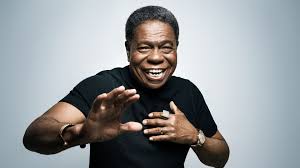
To truly grasp the staggering, almost mythical reach of Paulinho da Costa, you have to picture a young percussionist burning up the night in Rio de Janeiro, absorbing the dense, mathematical polyrhythms of samba schools like Portela. When he migrated to Los Angeles in 1973 alongside Sergio Mendes, the American recording industry suffered an immediate sonic shock. Paulinho brought a uniquely Brazilian flexibility to the rigid studio landscape—a fluid, dancing approach to rhythm that didn’t just add decoration, but altered the actual gravity of a song. Within years, he became the elite, secret weapon of legendary producer Quincy Jones. Paulinho’s rhythmic mastery became the bedrock of the biggest pop revolution in history, driving the unstoppable momentum behind Michael Jackson’s Off the Wall (1979) and Thriller (1982).
The Sonic Shape-Shifter: From Miles Davis to Earth, Wind & Fire
For the high-art connoisseur exploring the absolute outer parameters of The Jazz Compass, Paulinho da Costa’s discography represents a breathtaking masterclass in stylistic shape-shifting. He was a borderless rhythm machine. On one afternoon, he would be in the studio with Earth, Wind & Fire, laying down the infectious, joyous cowbell and conga tracks for “September”; the next day, he would be working with Dizzy Gillespie or blowing minds in Miles Davis’s electric jazz ensembles on albums like Tutu (1986). Paulinho possesses an uncanny, telepathic ability to listen to a rough track and instantly know exactly what micro-rhythm it needs. He turned the tambourine, the cuíca, the shaker, and even custom-made gourds into high-art lead instruments, creating acoustic friction that made synthesizers and drum machines sound deeply, vibrantly human.
The Invisible King Across the Infinite Latitude
True to the forward-thinking, borderless latitudes of Jazz Latitude, Paulinho da Costa’s musical geography bridges the historic roots of Afro-Brazilian folklore with the slick, multi-million-dollar apex of global pop and rock. His credits are a dizzying, endless scroll across genres: recording with jazz royalty like Ella Fitzgerald and Sarah Vaughan, rock icons like Queen and Rod Stewart, and contemporary titans like Daft Punk. He proved that percussion is not a secondary background element, but the very nervous system of a song. As the most recorded percussionist in human history, Paulinho mapped out an untouchable coordinate on our musical map—a monument that reminds us that no matter how much music changes, the world will always dance to the ancient, smiling, and brilliantly sophisticated heartbeat of Brazil.