Before Silence Became a Signature
A Different Kind of Intensity
There is an understandable temptation to describe Tord Gustavsen through silence. Few contemporary pianists have made restraint feel so central to their musical identity, and fewer still have built such a recognizable body of work from melodies that seem to resist urgency. Yet reducing Gustavsen to quietness misses what makes his music compelling. Silence, in his hands, is not the absence of intensity. It is one of the means by which intensity is created. A pause can increase the significance of a melody, a sustained chord can delay resolution until expectation becomes almost physical, and a simple phrase can acquire emotional weight precisely because the musicians refuse to hurry away from it.
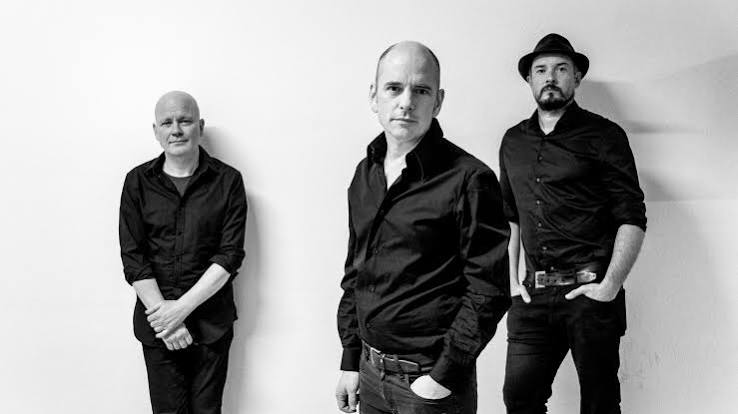
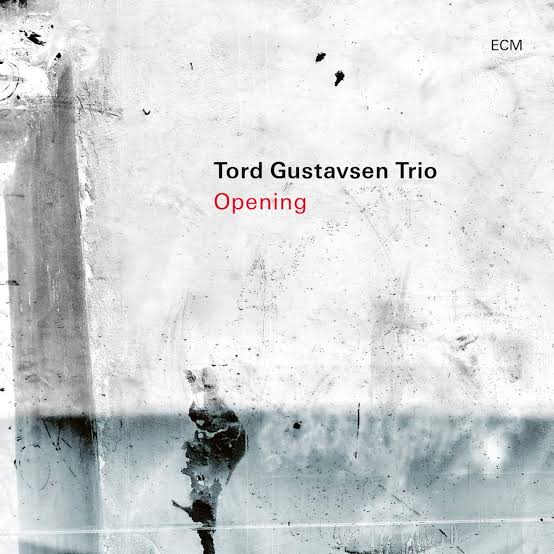
This approach became internationally visible with Changing Places, the 2003 ECM debut of the Tord Gustavsen Trio. Featuring bassist Harald Johnsen and drummer Jarle Vespestad, the album introduced a group whose music could initially seem modest in its materials. The tempos were often slow, the melodies clear, the dynamics controlled. There was little interest in virtuosity as public display. But underneath that apparent simplicity was a highly developed understanding of tension and release. Gustavsen’s trio was not reducing the language of jazz; it was concentrating it, asking how much could happen inside a melody when every musician treated timing, touch and space as structural decisions.
That distinction would define much of Gustavsen’s subsequent career. His music could be reflective without becoming passive, spiritual without requiring doctrinal explanation, and accessible without abandoning improvisational depth. It drew from gospel, blues, hymns, jazz, Scandinavian folk traditions and classical music, yet those influences rarely appeared as separate stylistic quotations. Gustavsen was interested in what connected them: melody, breath, repetition, longing and the possibility of transformation through small changes.
To understand why Changing Places sounded so assured, however, it is necessary to look beyond the familiar image of the contemplative Norwegian pianist. Gustavsen’s musical language grew from a background in which church music, improvisation, intellectual inquiry and jazz education were never entirely separate.
Hymns Before Categories
Born in Oslo in 1970 and raised in the Norwegian countryside, Gustavsen began playing piano at the age of four. Music entered his life before stylistic categories had much meaning. He has recalled improvising and composing before learning to read music and performing in churches and other local settings while combining classical training with gospel and his own songs. Those experiences would remain significant decades later, not because he would simply reproduce the music of his childhood, but because they established an early relationship between melody and emotional meaning.
Hymns are particularly important in understanding Gustavsen’s mature work. A hymn does not depend on complexity to create depth. Its melodic line must be strong enough to carry words, memory and communal participation, often through repetition. Gospel adds another dimension: harmony can become movement, and apparently simple material can accumulate emotional force through subtle changes in rhythm, voicing and emphasis. These principles would eventually enter Gustavsen’s jazz writing without requiring him to quote religious music directly.
His development was not exclusively musical. At nineteen, Gustavsen began studying at the University of Oslo, pursuing sociology, psychology and comparative religion. The subjects may appear distant from jazz performance, but they correspond closely to questions that would continue to occupy him: how people communicate, how emotion operates, how ritual and repetition acquire meaning, and how creativity relates to deeper psychological processes. Eventually the need to devote himself fully to music became stronger, and in 1993 he entered the jazz department at the Conservatory of Music in Trondheim.
By then, Norwegian jazz already possessed a substantial history and international presence. Gustavsen was entering an environment shaped by decades of interaction among American jazz traditions, European improvisation, Norwegian folk materials and the distinctive recording culture associated with ECM. But his eventual voice would not come from reproducing a generalized “Nordic sound.” Indeed, the blues, gospel and early jazz connections in his music complicate any attempt to explain him through geography alone. What emerged was much more personal: an approach in which restraint and sensuality, structure and improvisation, sacred associations and secular expression could occupy the same musical space.
The Trio Takes Shape
The formation of the trio with Harald Johnsen and Jarle Vespestad gave Gustavsen the ideal environment in which to develop these ideas. Both musicians possessed backgrounds broad enough to make restraint a choice rather than a limitation. Johnsen could provide the fundamental stability expected of a double bassist while responding closely to Gustavsen’s melodic and harmonic movements. Vespestad had worked in experimental settings and would become one of Gustavsen’s most important long-term collaborators, yet in this trio his drumming frequently operated at remarkably low dynamic levels.
Their significance lies in what they did with that restraint. A quiet drummer can still control the direction of a performance, and Vespestad repeatedly demonstrates that volume and rhythmic authority are different things. The smallest cymbal articulation can alter the emotional temperature of a passage; a brush pattern can establish forward movement without forcing the music into a conventional groove. Johnsen works with similar sensitivity. Rather than filling every opening beneath the piano, he allows bass notes to arrive with enough space around them that their placement becomes part of the composition.
This creates a different relationship among the three instruments. Gustavsen remains clearly the composer and central melodic voice, but Changing Places does not operate as a sequence of piano solos supported by discreet accompaniment. The bass and drums determine how the melodies breathe. They can make a repeated piano figure feel settled or uncertain, deepen a harmonic implication without stating it explicitly, or preserve tension simply by refusing to resolve it too quickly.
The trio’s virtuosity therefore appears primarily through judgment. All three musicians are capable of playing more notes than they usually choose to play. Their achievement is knowing which notes the music actually requires.
Deep as Love
The opening of Changing Places makes that philosophy immediately audible. “Deep as Love” begins the album at a pace that refuses conventional expectations about how a debut should announce itself. There is no attempt to establish authority through speed or density. Gustavsen allows the melody to emerge gradually, with Johnsen and Vespestad creating a framework spacious enough for each phrase to register before the next one arrives.
The title is revealing. Gustavsen does not avoid emotionally explicit language, and his compositions frequently carry names involving love, yearning, grace, mercy or presence. In another context such titles might risk sentimentality, but the music is too disciplined to collapse into easy emotion. “Deep as Love” does not tell the listener what to feel through exaggerated gestures. Instead, it creates conditions in which feeling can develop through repetition and delay.
This is where Gustavsen’s interest in psychology becomes musically relevant without requiring theoretical explanation. Desire often depends on postponement. A resolution has greater emotional effect when it has been delayed; a melodic return matters more when the listener has been made to wait for it. Gustavsen’s music repeatedly explores that territory. The drama is often located not in what happens but in when it happens.
“Graceful Touch” continues the process while revealing another characteristic of his writing: the ability to construct melodies that feel almost vocal. Gustavsen frequently approaches the piano as though a phrase must breathe before it can continue. Notes are not simply connected according to harmonic logic; they seem shaped by an imagined voice. This connection to song helps explain why his compositions can remain memorable despite their understatement.
Improvising Inside the Song
One of the most important aspects of Changing Places is the relationship between composition and improvisation. Gustavsen’s pieces are not neutral vehicles designed merely to provide chord sequences for solos. Their melodic identities matter too much for that. Yet neither are they closed compositions in which improvisation functions as decoration. The trio improvises from inside the character of each piece, preserving its emotional logic even while changing its details.
“IGN” introduces greater rhythmic movement and shows that the group’s language is not dependent on extremely slow tempos. The essential qualities remain: attention to touch, close interaction and an unwillingness to use complexity merely as evidence of sophistication. “Melted Matter” and “At a Glance” further demonstrate how the trio can create variation without abandoning its central aesthetic. A phrase may expand, a rhythm become more insistent or the piano momentarily acquire greater density, but the music continues to value proportion.
This is also why comparisons with Bill Evans or Keith Jarrett, while understandable, can only take us so far. Gustavsen belongs to the history of the piano trio those musicians helped transform, and certain aspects of lyricism and collective interaction inevitably invite comparison. But his relationship with gospel, hymns and blues, combined with his particular understanding of repetition and psychological tension, leads somewhere different. The objective is not to reproduce the conversational model of an earlier trio or the expansive improvisational architecture of another pianist. Gustavsen is searching for a form in which the song itself remains present throughout the improvisation.
That search reaches one of its clearest early expressions in “Song of Yearning.” The title again makes no attempt to disguise the emotional territory, and the composition becomes almost a statement of method. Yearning implies distance between desire and fulfillment, and Gustavsen translates that distance into musical time. Melodic phrases approach resolution without exhausting their possibilities, while Johnsen and Vespestad protect the space necessary for tension to remain alive.
What emerges is not minimalism in the simplistic sense of doing less. It is concentration. Every gesture becomes more exposed when the surrounding music is uncluttered, which means that each decision carries greater responsibility. A misplaced accent or unnecessary flourish would be immediately visible. The trio’s apparent serenity therefore requires extraordinary attention.
Changing Places
The title Changing Places describes more than a collection of compositions. It suggests the subtle exchange of functions that occurs throughout the trio. Foreground and background are never entirely fixed. The piano may carry the melody while the bass quietly changes its meaning; the drums may appear almost absent before a small rhythmic intervention redirects the entire passage. Leadership exists, but it remains flexible enough for interaction to alter the course of the music.
That flexibility is one reason the album became such an important beginning for Gustavsen’s ECM career. It introduced an aesthetic that was already remarkably coherent while leaving substantial room for development. The essential vocabulary was present: gospel-inflected harmony, songlike melody, patient improvisation, carefully controlled dynamics and an unusually strong awareness of silence. Yet Changing Places was not the final statement of those ideas.
The trio would soon discover how much further they could go. Touring would deepen the interaction among Gustavsen, Johnsen and Vespestad, and when they returned to the studio for The Ground, restraint would no longer sound primarily like an aesthetic choice. It would become the foundation for an even more concentrated form of collective improvisation.
Changing Places had established the language. The next challenge was discovering how deeply three musicians could inhabit it.
Buy Amazon
The Ground Beneath the Silence
From Changing Places to The Ground
The success of Changing Places gave Tord Gustavsen, Harald Johnsen and Jarle Vespestad something more valuable than a recognizable aesthetic: it gave them time to discover what that aesthetic could become through performance. Touring changes a trio in ways that rehearsal and recording cannot reproduce. Compositions that initially possess relatively clear structures begin to acquire alternative routes; musicians learn how long a transition can remain unresolved, which gestures can be removed without weakening the music, and how small changes in timing can redirect an entire performance. For a group already committed to restraint, these discoveries were especially significant. The challenge was not to add increasingly elaborate material but to deepen the interaction within what was already there.
When the trio recorded The Ground at Rainbow Studio in Oslo in 2004, for release the following year, the fundamental language introduced on Changing Places remained recognizable. Gustavsen still favored strong melodic shapes, gospel- and blues-inflected harmony and an approach to improvisation in which emotional continuity mattered as much as harmonic exploration. Johnsen and Vespestad continued to resist conventional distinctions between soloist and accompaniment. Yet the music feels increasingly inhabited. The trio no longer seems to be demonstrating the possibilities of its approach; the musicians move within it with the confidence of people who understand that a small gesture will be heard and answered.
The title itself is useful. “Ground” suggests foundation, but in Gustavsen’s music a foundation is not something static beneath the interesting activity. It is the condition that allows the activity to acquire meaning. Pulse, harmonic gravity and melodic identity remain present even when the musicians move away from explicit statements of them. This helps explain why the trio can play with considerable freedom without creating the impression that the compositions have disappeared. The song remains underneath the improvisation, sometimes audible as a melody and sometimes present only as memory.
The Ground and the Art of Staying
The opening “Tears Transforming” demonstrates how much emotional movement Gustavsen can create without abandoning restraint. The title might encourage an overly literal reading, but the composition works because it does not dictate a specific narrative. Gustavsen establishes a melodic world in which repetition becomes gradual transformation, while Johnsen and Vespestad allow the piece to develop without forcing its direction. The emotional effect comes from accumulation. A phrase heard several times is not necessarily the same phrase because the surrounding context has changed.
That principle becomes increasingly central to Gustavsen’s writing. Many improvisers build intensity by moving away from the original material, seeking new harmonic territory or increasing rhythmic complexity. Gustavsen is often interested in the opposite possibility: what happens if the musicians remain close to an idea long enough for its internal possibilities to become audible? Repetition then becomes a form of investigation. A chord can be voiced differently, a bass note delayed, a cymbal articulation shifted, and suddenly a familiar passage acquires another emotional implication.
The title track, “The Ground,” makes this relationship between simplicity and depth especially clear. Its melodic language is direct, yet the trio avoids making directness synonymous with predictability. Gustavsen’s touch is important here because his control of attack and decay allows individual notes to carry different degrees of weight. Johnsen’s bass gives the harmony physical presence without enclosing it, and Vespestad continually adjusts the rhythmic atmosphere at a level where even a small accent matters. The music can appear calm while remaining intensely active in its internal relationships.
This is the paradox at the center of Gustavsen’s early trio. The less crowded the surface becomes, the more exposed the musicians are. There is nowhere for an unnecessary gesture to hide. Silence does not reduce the demand placed on the performers; it increases it. Every note must justify its position because the listener has enough space to hear exactly where it lands.
Harald Johnsen: Weight Without Excess
Harald Johnsen’s importance to the trilogy can easily be underestimated because his playing so rarely demands attention through conventional soloistic display. His contribution is better understood through placement and weight. Johnsen knows when a bass note should stabilize Gustavsen’s harmony and when it should leave that harmony slightly unresolved. He can support a melodic line without simply doubling its emotional message, and his ability to sustain the trio’s center allows the piano to become more spacious.
That quality is particularly important in Gustavsen’s blues- and gospel-related harmonic language. The bass can make a seemingly simple progression feel inevitable or ambiguous depending on how it approaches the root, how long a note is sustained and whether the expected movement is delayed. Johnsen’s playing repeatedly demonstrates that harmonic sophistication does not require density. Sometimes the most consequential decision is to withhold the note a listener expects.
His partnership with Vespestad also gives the trio an unusual rhythmic elasticity. Bass and drums do not behave as a single accompaniment unit permanently separated from the piano. At times Johnsen aligns closely with Gustavsen’s melodic phrasing while Vespestad provides the underlying movement; elsewhere the bass becomes the anchor and the drums interact more freely with the piano. These shifting relationships explain the title of the first album better than any stylistic label could. The musicians are continually changing places while preserving the identity of the composition.
Being There
By the time the trio recorded Being There in 2006, the musicians had developed this approach across years of concerts and two successful ECM albums. Released in 2007, the record completed what can now be heard as a remarkably coherent trilogy. Yet coherence should not be mistaken for repetition. If Changing Places introduced the language and The Ground deepened it, Being There explores what happens when the trio trusts that language enough to make even fewer explanatory gestures.
The album’s title points toward presence, another idea that fits Gustavsen’s musical thinking without requiring a philosophical manifesto. Improvisation depends on presence in the most practical sense: musicians must respond to what is actually happening rather than to what they expected to happen. In this trio, where changes can be extremely subtle, that responsiveness becomes particularly audible. A delayed bass entrance, a shift in the piano’s articulation or a nearly imperceptible change in cymbal texture can become the event around which the next passage develops.
“At Home” begins the album with the kind of intimacy the trio had learned to sustain without allowing intimacy to become decorative. Gustavsen’s melodies still possess a vocal quality, but the surrounding space has become even more integral to their meaning. “Vicar Street” introduces another aspect of the group’s personality, reminding us that Gustavsen’s music is not confined to one emotional temperature. Rhythmic movement, blues feeling and understated groove remain essential components of the trio’s language, preventing its quieter surfaces from becoming a formula.
This variety matters because the popularity of Gustavsen’s early recordings encouraged a simplified image of his music as meditative Scandinavian jazz. The description captures something real but loses too much. The blues is present not merely as a historical reference but as an approach to inflection and tension. Gospel appears through harmonic movement and the emotional directness of melody. Jazz remains fundamental through improvisational interaction. Norwegian hymn traditions contribute another understanding of melodic economy. The resulting music is not best understood by choosing one of these sources; its identity lies in the way Gustavsen allows them to overlap.
Jarle Vespestad and the Sound of Attention
Across all three albums, Jarle Vespestad becomes an increasingly compelling example of how a drummer can shape music without constantly asserting the beat. His playing is sometimes so restrained that a casual listener might initially perceive it as background. Closer attention reveals the opposite. Vespestad is continually organizing the music through dynamics, texture and timing.
A cymbal can extend the decay of a piano chord rather than merely mark time. Brushes can introduce forward movement without breaking the atmosphere established by the melody. A bass drum accent can give physical weight to a harmonic change precisely because it has not been used continuously. Vespestad’s contribution depends on understanding the difference between silence and inactivity. He can leave large areas of sonic space open while remaining fully engaged with the direction of the performance.
This was not an entirely new conception of jazz drumming, and it would be misleading to claim that Vespestad reinvented the drummer’s role in the piano trio. Jazz history contains numerous examples of drummers who expanded beyond straightforward timekeeping, from Paul Motian’s extraordinary sensitivity to texture and space to many developments in European improvisation. Vespestad’s achievement is more specific: he found an approach perfectly suited to Gustavsen’s compositional world and developed it through sustained collaboration. His restraint is not a generalized aesthetic imported into the trio. It is a response to these melodies, these harmonies and these musicians.
The End of the First Trio
Heard together, Changing Places, The Ground and Being There form one of the clearest chapters in Gustavsen’s career. The trilogy established his international reputation and demonstrated how much expressive range could be extracted from a carefully concentrated musical vocabulary. It also depended on the specific chemistry among Gustavsen, Johnsen and Vespestad, which makes what followed impossible to separate from personal history.
Harald Johnsen’s health deteriorated, and he would die in 2011 at only forty-one. His absence changed more than the personnel available to Gustavsen. A trio built around intimate interaction cannot simply replace one voice and pretend the conversation is unchanged. Rather than attempting to reproduce the exact balance of the first three albums, Gustavsen began opening his music toward different configurations and toward one of the elements that had always been implicit in his piano writing: the human voice.
That transition would lead to projects with singers, expanded ensembles and a broader exploration of sacred texts, poetry and song. It would also clarify something that had been present from the beginning. Gustavsen’s interest was never fundamentally in quiet piano-trio music as a fixed style. His deeper subject was the relationship between melody, desire, improvisation and presence. The original trio had provided one remarkably complete way of exploring those ideas, but it was not the only one.
With the first chapter closing, Gustavsen was ready to discover what would happen when the song at the center of his music finally acquired words.
Buy Amazon

When the Song Found a Voice
Beyond the Original Trio
The end of the first Tord Gustavsen Trio did not require Gustavsen to abandon the principles developed across Changing Places, The Ground and Being There. It required him to discover whether those principles could survive outside the particular chemistry that had created them. The question was more significant than a change of personnel. The early trio had become so closely associated with Gustavsen’s identity that continuing along exactly the same path risked turning a living musical language into a recognizable formula. Instead, he began expanding the context around his compositions, bringing the implicit vocal quality of his melodies increasingly toward the foreground.
This transition made sense because song had always been present in Gustavsen’s playing. His piano phrases often behaved like vocal lines, shaped by breath and by an awareness of where a phrase needs to rest before continuing. Gospel and hymns had taught him that melodic directness could carry profound emotional meaning without elaborate construction, while jazz had given him the tools to alter that meaning through improvisation. Working more explicitly with singers therefore did not represent a departure from the early trio so much as the exposure of something that had been inside the music from the beginning.
The expanded projects that followed allowed Gustavsen to reconsider the relationship between written melody and improvisation. A human voice changes the balance of an ensemble because words introduce meanings that instrumental music can leave ambiguous. The pianist’s responsibility becomes different: harmony can illuminate or complicate a lyric, silence can give a phrase greater weight, and improvisation must remain attentive to the emotional logic established by the singer. Gustavsen was particularly well prepared for this environment because accompaniment, in the deepest sense, had always been central to his musical thinking. Even when leading his own trio, he rarely treated the piano as an instrument entitled to dominate every moment.
The Rest Is Beauty
The transition became audible on Restored, Returned, released in 2009, where Gustavsen worked with a larger ensemble that included saxophonist Tore Brunborg and vocalist Kristin Asbjørnsen. The instrumentation widened the available palette, but the fundamental priorities remained recognizable. Melodies still needed space, improvisation still emerged from close listening, and emotional intensity continued to depend more on timing than on density. Brunborg’s saxophone added another lyrical voice capable of moving between foreground and atmosphere, while Asbjørnsen brought words directly into a musical world that had long seemed to imply them.
The presence of poetry by W. H. Auden on parts of the project made the connection between music and language explicit. Gustavsen did not treat text as material to be surrounded by elaborate arrangements. His restraint became even more useful when words entered the music because it allowed the singer’s phrasing to remain central. The instrumentalists could respond without competing for attention, creating an ensemble in which silence retained the structural importance it had possessed in the trio.
Subsequent projects continued to alter the configuration. The Well, released in 2012, placed Gustavsen in a quartet with Brunborg, bassist Mats Eilertsen and Jarle Vespestad. The return of Vespestad maintained a connection to the pianist’s earlier work, but the saxophone changed the geometry of the ensemble. Gustavsen no longer carried primary responsibility for melodic exposition. Brunborg could state or extend a line while the piano shifted toward harmonic shading, counterpoint or silence. The quartet format demonstrated that Gustavsen’s musical identity did not depend on occupying the center of every composition. His presence could be recognized in the pacing, harmonic atmosphere and treatment of melody even when another instrument held the foreground.
This is an important distinction in understanding his development. Some musicians possess a recognizable sound primarily because of instrumental technique: a particular attack, tone or vocabulary identifies them almost immediately. Gustavsen certainly has an identifiable touch, but his authorship extends beyond the piano itself. It can be heard in the organization of time. A performance becomes recognizably his through the way tension is allowed to accumulate, through the refusal to resolve a phrase prematurely and through the trust placed in melodic material.
What Was Said
The collaboration with Afghan-German vocalist Simin Tander on What Was Said, released in 2016, took these concerns into another territory. Tander sang in English and Pashto, and the project drew on Norwegian hymns and spiritual material while reconsidering them through new linguistic and musical contexts. Jarle Vespestad again completed the core ensemble, creating an unusually open configuration of voice, piano and drums.
The absence of bass was significant. Without a bassist continually defining the harmonic foundation, Gustavsen could imply rather than state movement, leaving additional space around Tander’s voice. Vespestad’s ability to create rhythmic direction without filling that space became even more valuable. The ensemble could feel complete despite its unusual instrumentation because each musician understood how much information the others were already providing.
The project also illuminates Gustavsen’s relationship with spirituality. His music is often described as spiritual, sometimes so casually that the term becomes little more than a synonym for quietness. What Was Said makes clear that the subject is more complicated. Gustavsen’s engagement with sacred material emerges from personal history, theological curiosity and musical practice, but he does not require the listener to share a particular belief system. Hymns can be approached as repositories of melody, communal memory and longing as well as religious statements. Translating and reframing them further separates the musical experience from any assumption that tradition must remain fixed.
For Gustavsen, spirituality is therefore most interesting when understood as inquiry rather than certainty. His music repeatedly creates spaces in which expectation is suspended. A harmony approaches resolution but waits; a melody returns altered; silence interrupts the impulse to continue. These are musical techniques, but they also correspond to the larger questions that have followed him since his studies in psychology and religion. What happens when desire is not immediately satisfied? How does repetition transform experience? What becomes audible when habitual responses are interrupted?
Returning to the Trio
After years of expanded ensembles and vocal projects, Gustavsen eventually returned to the piano trio format. The return did not mean an attempt to reconstruct the original group with Harald Johnsen. Too much time and experience had passed, and Johnsen’s contribution belonged to a specific relationship that could not be reproduced. Instead, Gustavsen approached the trio as a familiar form capable of containing what he had learned elsewhere.
The Other Side, released in 2018, brought bassist Sigurd Hole together with Gustavsen and Vespestad. The album reconnected the pianist with the intimacy of piano, bass and drums while incorporating chorales and traditional material alongside original compositions. The result demonstrated continuity without nostalgia. Gustavsen remained recognizable, but the experience of working with singers and larger ensembles had further strengthened his attention to melodic contour and the relationship between improvisation and song.
Later, bassist Steinar Raknes joined Gustavsen and Vespestad, bringing a different physical and rhythmic character to the trio. Opening in 2022 and Seeing in 2024 showed that Gustavsen’s aesthetic had not become static simply because many of its fundamental concerns remained consistent. Raknes could provide a more pronounced pulse and a different bass presence, while Vespestad continued to function as one of the pianist’s most sensitive collaborators. The trio could revisit chorales, blues-inflected material, original compositions and collective improvisation without needing to reproduce the exact atmosphere of the early ECM trilogy.
This continuity is one of the most persuasive aspects of Gustavsen’s career. He has not depended on dramatic stylistic reinvention to create a sense of development. Changes in personnel, instrumentation and repertoire alter the music from within. The central questions remain sufficiently deep that returning to them does not necessarily mean repeating the same answers.
Beyond the Nordic Label
Gustavsen is frequently placed within a broad category of Nordic or Scandinavian jazz, and the description has historical usefulness. Norway possesses a remarkable improvisational tradition, ECM has played an important role in bringing many of its musicians to international audiences, and Gustavsen clearly belongs to that environment. Problems arise only when geography is transformed into musical destiny. Words such as cold, glacial, austere and wintry have become convenient shortcuts for describing an enormous range of Scandinavian musicians whose actual approaches may have little in common.
Gustavsen’s music resists those clichés particularly strongly. Its harmonic language contains warmth derived from gospel and blues; its melodies often seek intimacy rather than distance; its rhythmic life can be sensual and grounded. Norwegian hymn traditions matter, but so do African American musical forms that Gustavsen has studied and absorbed throughout his career. The resulting language is not a sonic illustration of northern geography. It is the product of specific musical relationships and a lifetime of listening.
The same caution should be applied to claims that Gustavsen single-handedly redefined the contemporary piano trio. By the time Changing Places appeared, the format had already undergone decades of transformation, and Gustavsen’s contemporaries were pursuing their own solutions. Esbjörn Svensson, Dan Berglund and Magnus Öström were developing a dramatically different vision through e.s.t.; Brad Mehldau had already expanded the relationship between jazz improvisation and contemporary popular repertoire; European musicians including Bobo Stenson had established distinctive trio traditions; and many other groups were questioning conventional hierarchies among piano, bass and drums.
Gustavsen’s importance does not require diminishing any of them. His achievement was to establish one of the period’s most coherent individual approaches: a trio language in which gospel feeling, hymnlike melody, blues inflection, improvisational patience and an unusually developed awareness of silence could coexist. He did not define the future of the piano trio. He expanded its vocabulary in a way that listeners around the world could recognize as unmistakably his own.
The Weight of a Single Note
Across more than two decades of ECM recordings, Gustavsen has demonstrated that restraint can remain fertile when it is treated as a discipline rather than a style. The distinction is essential. A style can be reproduced through recognizable surfaces: slow tempos, sparse piano chords, soft cymbals, spacious recording. A discipline is more demanding. It requires musicians to listen continuously, to resist automatic gestures and to decide whether each musical event actually contributes to the performance.
This is why imitation of Gustavsen’s surface qualities rarely captures the substance of his work. Playing quietly is easy; making quietness generate tension is not. Leaving space is easy; understanding what that space is doing to the surrounding melody requires greater sensitivity. Writing a simple theme is easy; creating one strong enough to withstand repetition, variation and improvisation demands unusual melodic judgment.
The best of Gustavsen’s music makes those distinctions audible. A single piano note can feel important because of what preceded it and because the musicians allow its resonance to complete its course. A bass movement can transform harmony without announcing itself as an event. A cymbal stroke can alter the direction of a passage precisely because Vespestad has created enough space for the listener to notice it. None of these gestures is spectacular in isolation. Their meaning exists in relationship.
That may ultimately be Gustavsen’s most durable contribution to the piano trio tradition. He reminds us that musical intensity is not proportional to the amount of sound being produced. Complexity can exist in timing, touch and expectation as profoundly as it exists in harmony or speed. Improvisation does not always need to move outward in search of new material; sometimes it can move inward, returning to a melody until previously hidden possibilities begin to emerge.
From Changing Places through The Ground and Being There, from vocal collaborations and quartets to later returns to the trio, Gustavsen has continued to explore that principle without turning it into doctrine. His music remains open to gospel, hymns, blues, poetry, improvisation and the personalities of the musicians around him. Silence is part of that world, but silence alone is not the subject.
The subject is attention: to melody, to time, to desire, to another musician and to the moment when one note becomes more meaningful because nobody rushed to play the next one.