Before and After Birth of the Cool
Cool jazz is one of those terms that seems clearer from a distance than it does when the musicians themselves come into focus. In the broadest histories of jazz, the story is often presented as a reaction: bebop arrived in the 1940s with fast tempos, angular melodies and extraordinary harmonic intensity; a younger group of musicians then responded by lowering the temperature, emphasizing arrangement, lighter tone and greater restraint. Miles Davis’s sessions later collected as Birth of the Cool become the decisive turning point, after which the style supposedly migrated to California and became West Coast Jazz. It is an elegant narrative. It is also too neat. The music eventually described as cool emerged from several overlapping developments, some predating the Davis nonet and others occurring independently of it. Lester Young’s relaxed rhythmic placement, Claude Thornhill’s unusual orchestral colors, Gil Evans’s arranging ideas, Lennie Tristano’s linear experiments, Lee Konitz’s distinctive alto sound and the compositional interests of Gerry Mulligan and John Lewis all belong somewhere in the story. None alone created cool jazz, and together they do not form a single school. What they reveal instead is a period in which musicians were searching for alternatives within modern jazz without necessarily rejecting bebop.
That distinction matters because cool jazz was not simply bebop played more quietly. Many musicians associated with the term admired Charlie Parker and Dizzy Gillespie, had absorbed bebop’s harmonic innovations and continued improvising within a modern jazz vocabulary. The differences often concerned ensemble balance, tone, rhythmic density and the relationship between written composition and improvisation. A solo did not need to occupy the entire foreground. Inner voices could matter. Unusual instrumental combinations could create colors unavailable to the standard trumpet-saxophone-piano-bass-drums format. Space itself could become an arranging tool.
Some of those possibilities can be heard before Birth of the Cool. Lester Young had demonstrated years earlier that a jazz soloist did not need a large, aggressive tone to create rhythmic authority. His tenor saxophone floated across the beat with a lightness that influenced generations of musicians, including players later associated with cool jazz. Young did not belong to the movement historically labeled “cool” in the same sense as Mulligan or Konitz, but his example weakened the assumption that intensity required volume or density.
Claude Thornhill’s orchestra provided another important antecedent. Its instrumentation and carefully blended sonorities offered an alternative to the brighter attack associated with many swing-era big bands. French horns and tuba could become integral colors rather than novelty additions, while arrangements emphasized unusual voicings and subtle internal movement. Gil Evans worked with Thornhill and absorbed lessons from that environment that would become crucial to his later thinking.
By the late 1940s, Evans’s New York apartment had become an informal meeting place for musicians and arrangers interested in extending the possibilities of modern jazz. Miles Davis, Gerry Mulligan, John Lewis and others moved through this circle. The importance of the apartment has sometimes been romanticized into a single laboratory where cool jazz was invented, but the reality is more useful: musicians with different backgrounds were exchanging ideas at a moment when bebop had already transformed the language of jazz and the question was what could be built from it.
Miles Davis and the Nonet
The ensemble that emerged around Miles Davis became the most famous answer.
The instrumentation itself was unusual. Davis’s trumpet was joined by alto saxophone, baritone saxophone, trombone, French horn and tuba, supported by piano, bass and drums. The combination allowed arrangers to create a surprisingly broad range of colors without using a full big band. It could sound intimate while retaining orchestral depth.
The group performed at New York’s Royal Roost and entered the studio for Capitol Records across sessions in 1949 and 1950. The musicians and arrangers involved changed somewhat across the dates, but the project brought together figures including Davis, Gerry Mulligan, Lee Konitz, John Lewis, Gil Evans, Gunther Schuller, Max Roach, Kenny Clarke and others.
What united the recordings was not a rejection of improvisation but a different balance between individual and ensemble. Arrangements mattered intensely. Horns could move in carefully voiced blocks or independent internal lines, creating textures that allowed a soloist to emerge from the ensemble rather than simply stand in front of it.
Gerry Mulligan was particularly important. He wrote or arranged six of the eleven pieces eventually associated with the project, including original compositions such as “Jeru,” “Venus de Milo” and “Rocker.” His experience with arranging and his interest in contrapuntal ensemble writing became central to the sound.
Gil Evans contributed another dimension. His understanding of instrumental color had been shaped partly through the Thornhill orchestra, and the larger circle around his apartment encouraged the exchange of ideas that fed the project. John Lewis brought a compositional sensibility that would later become central to the Modern Jazz Quartet. Lee Konitz’s alto provided an alternative to the pervasive influence of Charlie Parker without denying Parker’s importance.
Even Max Roach complicates the idea that the project represented an escape from bebop. Roach was one of bebop’s foundational drummers. His participation demonstrates how porous the supposed boundary was. Mulligan later remembered Roach as especially effective because he approached the arrangements with a composer’s awareness, listening to the ensemble rather than merely supplying rhythmic propulsion.
The musicians were not abandoning modern jazz.
They were reorganizing it.
The Album That Did Not Yet Exist
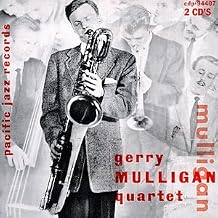
One of the most important facts about Birth of the Cool is that the famous album did not exist when the sessions were recorded. The music appeared initially on individual Capitol releases. The eleven-track LP titled Birth of the Cool was assembled and issued later, in 1957.
That chronology changes the historical narrative.
It is easy to imagine a revolutionary 1949 album immediately appearing, acquiring a name and launching a movement called cool jazz. Instead, the sessions gradually accumulated significance. By the time Capitol packaged them under the retrospective title Birth of the Cool, several musicians associated with the project had already developed important careers elsewhere, and the idea of cool jazz had become much more familiar.
The title itself therefore participates in the history it describes. “Birth” suggests a clean beginning, but musical movements rarely possess one. The recordings became foundational partly because later listeners could hear in them a concentration of ideas that had subsequently spread in several directions.
Miles Davis himself did not remain inside the style.
During the 1950s he moved through small-group jazz associated with hard bop, collaborations with Gil Evans, modal experimentation and other approaches. The very musician whose name became attached to the “birth” of cool jazz refused to behave like the founder of a fixed school.
This is characteristic of Davis’s entire career. Categories tended to form around musical moments he had already begun leaving.
Lennie Tristano and Another Kind of Cool
At roughly the same historical moment, Lennie Tristano was developing music in New York that would also become associated with cool jazz, although his methods differed substantially from the Davis nonet.
Tristano’s work with Lee Konitz and Warne Marsh emphasized linear improvisation, rhythmic displacement and contrapuntal thinking. The surface could sound emotionally restrained compared with the dramatic gestures associated with some bebop performances, but the music was not simple or relaxed in any ordinary sense. Its long melodic lines and rhythmic independence could be intellectually and technically demanding.
Konitz provides a direct link between these histories because he participated in the Miles Davis nonet while remaining closely associated with Tristano. But the connection should not be mistaken for proof that both approaches represented one coherent style.
The Davis nonet was deeply concerned with orchestration and ensemble color. Tristano’s innovations centered more strongly on improvisational line, rhythm and contrapuntal independence. They overlapped in personnel and in the broad critical category of cool, but their musical priorities were different.
This is the first major warning against treating cool jazz as a formula.
The term came to describe several ways musicians could move beyond certain expectations of bebop without abandoning modern jazz itself.
Gerry Mulligan Takes the Ideas West
Gerry Mulligan’s move to California in the early 1950s provides the historical connection most responsible for the later confusion between cool jazz and West Coast Jazz.
In Los Angeles, Mulligan formed the pianoless quartet with trumpeter Chet Baker, bassist Bob Whitlock and drummer Chico Hamilton. Their recordings and performances in 1952 produced one of the most distinctive small-group sounds of the decade.
Without piano, Mulligan and Baker had unusual harmonic freedom. The baritone saxophone and trumpet could weave independent lines around each other while bass and drums maintained the foundation. The texture was transparent enough for listeners to hear the internal movement clearly, and the conversational relationship between the two horns became central to the quartet’s appeal.
The group soon became one of the defining images of cool jazz.
But Mulligan had not discovered these ideas because he arrived in California.
His experience with the Davis nonet, Thornhill-related arranging concepts and New York’s modern jazz community preceded the quartet. What changed in Los Angeles was the environment in which those interests developed.
The distinction is essential.
Cool jazz did not originate on the West Coast. A musician who had participated in one of its foundational New York projects moved west and became central to a highly visible California scene.
The history is one of transmission, not geographic invention.
When “Cool” Became “West Coast”
As Mulligan and Baker attracted attention, other California musicians were being recorded by labels such as Pacific Jazz and Contemporary. Shorty Rogers, Shelly Manne, Jimmy Giuffre, Bud Shank, Bob Cooper and many others contributed to a scene that journalists increasingly described as West Coast Jazz.
Some of this music shared characteristics commonly associated with cool jazz: lighter ensemble textures, extensive arranging, restrained dynamics and an interest in unusual instrumentation. The overlap was real.
But the terms were never interchangeable.
West Coast Jazz was partly a geographic and professional category. Cool jazz was a stylistic label broad enough to include musicians working in New York and elsewhere. California itself contained bebop, blues, hard bop and other approaches that did not conform to the cool stereotype.
Hampton Hawes played piano with deep connections to Bud Powell and the blues. Art Pepper’s alto could be intensely emotional and rhythmically forceful. Curtis Counce led a group whose music shared substantial ground with hard bop. Harold Land brought direct experience from the Clifford Brown–Max Roach quintet into the California scene.
Even Chico Hamilton, who had played in Mulligan’s famous quartet, would develop ensembles whose unusual instrumentation and rhythmic concepts established an identity different from the standard West Coast image.
The scene was too diverse for one adjective.
Brubeck, Desmond and the Problem of Categories
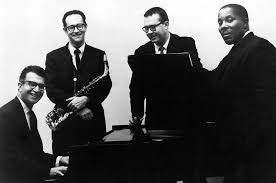
Dave Brubeck and Paul Desmond create another difficulty. Their quartet became enormously popular during the 1950s and is frequently included within broad histories of cool jazz and West Coast Jazz. Desmond’s dry, lyrical alto tone certainly contributed to the association, while Brubeck’s California background made the geography appear straightforward.
But the quartet developed its own musical priorities.
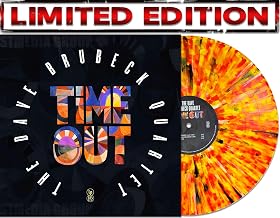
Brubeck’s interest in unusual meters, formal structures and the relationship between improvisation and composition eventually produced Time Out in 1959. Those experiments should not be treated as characteristics of West Coast Jazz generally. They belonged to Brubeck’s musical development and to the particular chemistry of his quartet.
The tendency to make representative musicians define an entire region is one reason jazz categories become distorted. Brubeck was a California musician. That does not mean every important feature of his music was a California characteristic.
The same is true of Mulligan, Baker, Pepper and Manne.
A scene contains musicians.
It does not manufacture identical aesthetics.
Cool as a Set of Possibilities
By the middle of the 1950s, cool jazz had become recognizable enough to function as a historical category, but the music underneath the term remained heterogeneous. The Davis nonet had explored orchestral balance in a compact ensemble. Tristano and his associates pursued linear and contrapuntal improvisation. Mulligan and Baker created a transparent pianoless conversation. Brubeck and Desmond developed another approach around quartet interplay and increasingly ambitious formal ideas. The Modern Jazz Quartet brought John Lewis’s compositional sensibility into an ensemble whose relationship with European concert traditions would soon become important to discussions of jazz and classical music.
These developments were connected, but they were not stages of one evolutionary process.
That distinction becomes crucial when Third Stream enters the story.
It is tempting to draw a straight line from the orchestral colors of Birth of the Cool through the Modern Jazz Quartet and then into Gunther Schuller’s attempt to define a new relationship between jazz and European concert music. There are genuine historical connections: Schuller participated in the Davis nonet sessions, John Lewis moved between several of these environments, and musicians interested in composition repeatedly encountered one another.
But Third Stream was not simply cool jazz becoming more classical.
It emerged from a different question.
Cool jazz had demonstrated that modern jazz could accommodate unusual ensemble colors, controlled dynamics and a greater balance between writing and improvisation. Third Stream would ask whether jazz and Western concert music could interact at the level of composition itself without one becoming merely decorative material for the other.
The musicians sometimes overlapped.
The ambitions did not completely.
Understanding that difference is what allows the evolution of cool jazz to become a richer story than the old sequence of labels suggests.
And it is where the next chapter begins.
Buy Amazon
California, New York and the Many Meanings of Cool
By the middle of the 1950s, cool jazz had acquired a public image that was much more coherent than the music itself. Photographs of Chet Baker, Gerry Mulligan and other California musicians helped give the style a visual identity; record labels found that West Coast Jazz could be presented as a recognizable movement; and critics increasingly used “cool” to describe performances characterized by lighter tone, controlled dynamics and an emphasis on arrangement. Yet underneath that apparent clarity were several different musical histories. Lennie Tristano’s New York experiments had little in common structurally with much of the music being recorded in Los Angeles. Dave Brubeck and Paul Desmond developed another language around quartet interaction and formal experimentation. The Modern Jazz Quartet brought John Lewis’s interest in composition and European concert traditions into a setting that remained firmly grounded in jazz improvisation. Jimmy Giuffre pursued increasingly sparse and unconventional ensembles. Gerry Mulligan himself continued moving between coasts and contexts. What looked from outside like a unified movement was actually a collection of musicians exploring different answers to a similar question: how much could the balance of modern jazz change without sacrificing improvisation?
The California scene remains central because it gave cool jazz its most powerful regional identity. Mulligan’s quartet with Chet Baker provided the perfect example. The absence of piano created transparency, allowing baritone saxophone and trumpet to imply harmony through moving lines rather than relying continuously on a chordal instrument. Baker’s trumpet could sound restrained beside Mulligan’s lighter approach to the baritone, while bass and drums maintained enough flexibility for the horns to interact conversationally. Their 1952 recording of “My Funny Valentine,” later recognized by the Library of Congress through the National Recording Registry, became one of the performances most closely associated with West Coast cool. Yet even here the music resists caricature. The quartet could generate considerable rhythmic intensity, and Baker’s apparently fragile tone did not mean an absence of improvisational risk. “Cool” described the surface imperfectly; beneath it was a highly responsive small group.
The enormous visibility of Mulligan and Baker helped establish a model that other California musicians were often expected to fit. But Los Angeles contained a far broader range of approaches. Some players did share an interest in arranging, lighter ensemble colors and controlled dynamics. Others were deeply rooted in bebop and blues. The danger of treating West Coast Jazz as a synonym for cool jazz becomes obvious as soon as musicians such as Hampton Hawes, Art Pepper, Curtis Counce and Harold Land enter the picture. They belonged to the same regional ecosystem without sharing a single aesthetic.
What California offered was not a style machine but a professional environment. Clubs, record companies and the film and television industries created overlapping forms of employment. Musicians who worked in studios often possessed formidable reading abilities, and some arrangers could experiment with instrumental combinations partly because they had access to players capable of realizing complex written material quickly. That environment encouraged certain possibilities without determining the results. The same musician might perform an intricate studio score during the day and play bebop in a club at night.
Shorty Rogers, Shelly Manne and the California Workshop
Shorty Rogers became one of the musicians most strongly identified with the arranged side of West Coast Jazz. His experience in large ensembles, including Stan Kenton’s orchestra, gave him a sophisticated understanding of instrumental color, while his smaller groups demonstrated how those arranging instincts could be compressed into more flexible settings. Rogers could write music that sounded organized without becoming rigid, and his work contributed substantially to the idea that California jazz placed unusual emphasis on composition.
Shelly Manne embodied another part of the scene. An exceptionally adaptable drummer, Manne could move through small-group jazz, large ensembles and studio work without reducing his playing to a single recognizable formula. His versatility is precisely why the stereotype of West Coast drumming as merely restrained or polished is inadequate. Manne could play with subtlety because he listened closely, not because California required him to avoid intensity.
The professional breadth of musicians like Manne became one of the defining characteristics of Los Angeles jazz. Their careers challenge the romantic idea that artistic authenticity depends upon separation from commercial work. Film and television studios provided income and demanded skills that could also become useful in jazz: reading, adaptability, precision and sensitivity to arrangement. The important question is not whether studio work made the music more controlled, but how individual musicians transformed those experiences when they returned to their own ensembles.
This distinction becomes particularly important with Jimmy Giuffre.
Jimmy Giuffre and the Quiet Radicalism of Space
Giuffre is often placed comfortably within West Coast Jazz because of his work as a composer, arranger and reed player in California during the 1950s. Yet his career eventually demonstrates how quickly the label becomes insufficient. He was increasingly interested in reducing conventional jazz structures, experimenting with unusual instrumentation and creating spaces in which improvisation did not depend upon the familiar propulsion of piano, bass and drums.
The famous “Four Brothers,” written earlier for Woody Herman, had already demonstrated Giuffre’s ability to think compositionally about saxophone texture. But his later small groups moved toward something more radical. Rather than treating arrangement as a framework around solos, he began exploring ensembles in which written and improvised material could become difficult to distinguish.
His trio with Jim Hall and Ralph Peña, for example, operated without drums, altering the listener’s sense of rhythmic gravity. Later groups would move still further toward chamber-like improvisation and eventually toward music that anticipated aspects of free jazz.
Calling this “cool” is not entirely wrong, particularly if the word refers to reduced volume, spacious texture and resistance to overt dramatic gestures. But it tells us very little about what Giuffre was actually trying to accomplish. His importance lies not in sounding relaxed but in reconsidering how an improvising ensemble could function.
That difference becomes essential when we approach Third Stream. Quietness, unusual instrumentation and careful composition do not automatically make music a bridge between jazz and European concert traditions. Giuffre’s experiments were part of a larger mid-century reconsideration of jazz form, but they followed their own path.
New York Never Stopped Being Cool
While California was acquiring the public image of cool jazz, New York continued producing music that fit many of the same broad descriptions. Lennie Tristano remains the clearest example.
Tristano’s approach centered on improvisational line, harmonic discipline and rhythmic independence. With Lee Konitz and Warne Marsh, he developed music in which long melodic lines could cross bar lines and interact contrapuntally. The tone was often controlled, but the intellectual and technical demands were considerable. There was nothing casual about it.
The significance of Tristano’s circle is partly geographical. If cool jazz were genuinely a California style, one of its most important branches would not have developed in New York. The contradiction disappears once cool is understood as a broad critical category rather than a regional school.
Lee Konitz makes the overlap impossible to ignore. His participation in the Miles Davis nonet connected him directly to Birth of the Cool, while his work with Tristano belonged to a different conception of modern jazz. Konitz’s alto sound — lighter than Charlie Parker’s and resistant to simply reproducing Parker’s vocabulary — became one of the tones most readily identified as “cool.” Yet his music emerged within the same New York environment that also produced bebop, hard bop and increasingly experimental approaches.
The city contained all of them simultaneously.
Even the clubs refused stylistic segregation. The Royal Roost, for example, presented musicians associated with bebop and cool alike, including Davis, Parker, Tristano and Lester Young. The historical evidence is a useful reminder that audiences in the late 1940s did not experience these developments as neatly separated chapters in a textbook.
They heard musicians sharing venues while critics were still inventing the categories that would later divide them.
John Lewis and the Modern Jazz Quartet
John Lewis provides another route through the history. His involvement in the Miles Davis nonet connected him to one of the foundational cool-jazz projects, but his later work with the Modern Jazz Quartet opened questions that extended beyond the usual meaning of cool.
The MJQ — Lewis on piano, Milt Jackson on vibraphone, Percy Heath on bass and, from 1955 onward, Connie Kay on drums — developed an ensemble identity in which composition and improvisation were unusually balanced. Lewis’s writing could draw upon fugue, counterpoint and formal ideas associated with European concert music, while Jackson’s blues-rooted improvisation ensured that the group never became simply a chamber ensemble borrowing jazz rhythms.
That tension was productive.
Lewis did not need Jackson to suppress the blues in order to make the ensemble more “classical,” and Jackson did not need Lewis to abandon formal composition in order to preserve jazz authenticity. The Modern Jazz Quartet worked because the musicians maintained distinct identities inside a carefully constructed group language.
Their presentation reinforced the impression of chamber music. Formal concert attire, disciplined stage behavior and performances in concert halls distinguished the MJQ visually from many contemporary small groups. But reducing that presentation to an attempt to make jazz respectable misses the artistic argument. Lewis believed jazz could sustain extended composition and formal structure without losing improvisational vitality.
The MJQ therefore becomes important to the story leading toward Third Stream, but not because it represents an evolutionary step beyond cool jazz. Its significance lies in the questions Lewis was already asking about the relationship between improvisation and written form.
Those questions would soon intersect directly with Gunther Schuller’s thinking.
Cool Was Never the Absence of Blues
One of the most persistent misunderstandings surrounding cool jazz is that emotional restraint implied distance from African American musical traditions. The stereotype becomes particularly misleading when the Modern Jazz Quartet is considered. Milt Jackson was among the great blues improvisers of his generation, and the contrast between his vibraphone and Lewis’s compositional structures was fundamental to the group’s identity.
Miles Davis likewise never abandoned the blues because he participated in Birth of the Cool. His subsequent recordings demonstrate how easily his restrained trumpet sound could inhabit blues, hard bop, standards and modal settings. Tone and stylistic identity are not the same thing.
This distinction matters because histories of the 1950s sometimes create an artificial moral conflict between cool jazz and hard bop. Cool becomes intellectual, European-influenced and emotionally detached; hard bop becomes Black, blues-based and authentic. Real musicians repeatedly violate that division.
The racial history surrounding the categories is important, particularly because the national visibility of West Coast Jazz often centered white musicians while Black California musicians received less attention. But that history should be analyzed through institutions, publicity and opportunity rather than converted into a claim that certain musical techniques belonged inherently to one racial group.
Jazz was already too interconnected for that.
Brubeck, Desmond and a Different Modernism
Dave Brubeck and Paul Desmond demonstrate yet another meaning of cool. Desmond’s alto sound was light, dry and exceptionally melodic, making him an obvious candidate for the category. Brubeck’s piano, however, could be percussive and harmonically dense, often sounding far less “cool” according to the stereotype.
The quartet’s identity came from the contrast.
Desmond could float above the rhythm section while Brubeck supplied heavy chords and unexpected accents. Eugene Wright and Joe Morello eventually created a rhythmic foundation capable of supporting increasingly elaborate experiments. By the time of Time Out in 1959, meter had become one of the quartet’s most visible areas of investigation.
But unusual meter was not an evolution of cool jazz. Nor was it a defining feature of West Coast Jazz. It was one avenue Brubeck pursued within his own compositional development.
This distinction is crucial because the history of jazz becomes distorted whenever innovation is attributed to a style rather than to musicians. “Cool jazz experimented with odd meters” is much less precise than saying that Brubeck became deeply interested in rhythmic structures and, with his quartet, created recordings that brought those experiments to an unusually large audience.
Paul Desmond’s “Take Five,” built around 5/4 meter, became the most famous example. Its success did not turn 5/4 into a West Coast characteristic.
It demonstrated what one ensemble could accomplish with it.
The Problem with “Chamber Jazz”
As cool jazz diversified, another term began appearing around music that emphasized small ensembles, detailed composition and quieter interaction: chamber jazz.
The phrase can be useful descriptively. It captures something about the intimacy of the Modern Jazz Quartet, certain Giuffre ensembles and later groups that rely less on conventional rhythmic propulsion. But it becomes problematic when treated as a distinct evolutionary stage between cool jazz and Third Stream.
“Chamber jazz” has never possessed the same historical specificity as bebop or hard bop. It can describe instrumentation, scale, dynamics or compositional attitude depending on the context. Two ensembles called chamber jazz may share little beyond playing quietly in small configurations.
The term therefore works best as an adjective rather than a genealogy.
This matters because the old narrative often suggests that cool jazz gradually became more arranged, then became chamber jazz, and finally crossed into Third Stream once classical composition entered strongly enough.
History did not unfold that way.
Third Stream was not created because cool jazz accumulated strings and counterpoint until it became something else.
Gunther Schuller Enters the Story
Gunther Schuller had an unusual position from which to reconsider these questions. A classically trained French horn player and composer, he also participated directly in modern jazz. He played on the Miles Davis nonet sessions, giving him firsthand experience with the ensemble whose recordings would later become Birth of the Cool.
That connection is historically important.
But it does not mean Schuller simply extended the nonet concept into Third Stream.
By the later 1950s, his concern had become more explicit: could jazz and Western concert music meet without either functioning as decoration for the other? Could improvisation and compositional structures drawn from both traditions coexist in music that belonged completely to neither?
This was a different ambition from creating a cooler form of bebop.
John Lewis became an essential collaborator because his work with the Modern Jazz Quartet had already demonstrated how composed form and jazz improvisation could share responsibility. Other musicians and composers were also investigating related questions, but Schuller supplied the terminology that would give the movement its historical name.
In 1957, he introduced the phrase “Third Stream.”
The metaphor mattered. A third stream was not supposed to replace the two streams feeding it. Jazz would remain jazz. European concert music would remain concert music. The new possibility existed in the space where musicians and composers fluent in both traditions could create something genuinely integrated.
That idea would soon generate ambitious and sometimes controversial music.
But it did not represent the final stage of cool jazz.
It represented another branch of the same extraordinarily fertile mid-century argument about how much jazz could contain.
Buy Amazon
Gunther Schuller and the Birth of Third Stream
When Gunther Schuller introduced the term “Third Stream” in 1957, he was not attempting to rename cool jazz. Nor was he announcing that jazz had reached a more advanced stage by moving closer to European concert music. His metaphor proposed something more specific. If jazz represented one stream and Western concert music another, a third might emerge when musicians and composers understood both traditions deeply enough to create music that could not be reduced to either one. The idea sounds straightforward in retrospect, but it entered a cultural environment filled with arguments about authenticity, race, artistic hierarchy and the boundaries of jazz itself. For some listeners, bringing concert-music techniques into jazz risked weakening the qualities that made jazz distinctive. For others, the very suggestion that jazz needed classical procedures to become compositionally serious reproduced an old hierarchy in which European traditions automatically occupied the higher cultural position. Schuller’s concept therefore mattered not because it solved the relationship between the traditions, but because it gave a name to a set of experiments already forcing musicians to reconsider where composition ended and improvisation began.
Schuller was unusually positioned to participate in that debate. Born in New York in 1925, he had developed as a French horn player within classical institutions while simultaneously becoming deeply engaged with jazz. His presence on the Miles Davis nonet sessions later collected as Birth of the Cool gave him direct experience with one of the projects that had already challenged conventional boundaries between small-group improvisation and orchestral thinking. But Schuller’s later Third Stream work should not be understood simply as an enlargement of the Davis nonet. The nonet had remained fundamentally a jazz ensemble whose arrangers used unusual instrumentation and carefully balanced written material. Third Stream would ask a more deliberate question about whether compositional principles from jazz and European concert traditions could interact on equal terms.
John Lewis became one of the essential figures in turning that question into music. His work with the Modern Jazz Quartet had already demonstrated how composition could shape an improvising ensemble without eliminating the individuality of its musicians. Lewis was deeply interested in counterpoint and extended form, but the presence of Milt Jackson ensured that the MJQ’s music retained an unmistakable connection to blues and swing. The productive tension between Lewis’s formal structures and Jackson’s improvisational personality made the group difficult to categorize neatly as either chamber music or conventional small-group jazz.
This was precisely the kind of tension Third Stream could explore.
A Third Stream, Not a Higher One
The metaphor of three streams was crucial because it did not require either of the original traditions to disappear. Schuller repeatedly clarified the idea in later years because the term was quickly misunderstood. Third Stream was not supposed to mean jazz musicians playing classical compositions, classical musicians attempting to swing, or a jazz ensemble decorated with orchestral strings. It required genuine integration.
That requirement made the project more demanding than superficial crossover.
A composer could not simply place a fugue beside a blues and declare the result Third Stream. Improvisation needed to have structural significance rather than functioning as an exotic interruption inside an otherwise predetermined score. Likewise, techniques from European composition needed to affect the architecture of the music rather than appear as markers of sophistication.
The challenge was cultural as much as technical. Jazz improvisers possessed traditions of rhythmic phrasing, interaction and spontaneous development that could not be reproduced merely by writing jazz-like rhythms into a score. Classical musicians possessed other traditions of ensemble discipline, notation, instrumental technique and formal interpretation. Bringing the two together required musicians capable of understanding what each tradition valued.
Schuller’s insistence on integration distinguished Third Stream from the looser category of “jazz with classical influences.” Jazz musicians had engaged European concert music long before 1957. Duke Ellington had written extended compositions. Art Tatum drew from an enormous harmonic vocabulary. Charlie Parker recorded with strings. Dave Brubeck studied with Darius Milhaud. The Modern Jazz Quartet had already incorporated formal procedures associated with European composition.
Third Stream did not retroactively absorb all of those experiments.
It described a more conscious attempt to create music at the intersection.
Music for Brass
One important step came with Music for Brass, commissioned for the 1956 Brandeis Festival of the Arts and recorded the following year. The project brought together composers and musicians from jazz and concert backgrounds, including Schuller and John Lewis, and used an ensemble whose instrumentation itself resisted conventional categories.
The significance of the project lies less in identifying it as the first Third Stream recording — claims of absolute beginnings are rarely useful — than in hearing musicians grapple with the practical problem Schuller would soon name. How could written complexity coexist with improvisational freedom? How could jazz rhythm function within compositions whose formal organization extended beyond familiar song structures?
Lewis’s “Three Little Feelings” became particularly important within this environment. Rather than using composition merely to introduce a series of solos, Lewis created an extended structure in which written material and improvisation remained connected. The work demonstrated how his experience in jazz could coexist with an interest in larger formal architecture without requiring one to become subordinate to the other.
Schuller’s own compositions approached the problem differently, revealing why Third Stream never developed a single recognizable sound. The term described an ambition, not an instrumentation. A piece did not become Third Stream simply because it contained French horn, strings or counterpoint.
That distinction would become even more important as Schuller and Lewis continued collaborating.
Modern Jazz Concert and the Expansion of the Idea
Projects associated with the late 1950s pushed the concept further. Schuller, Lewis and musicians around them experimented with larger ensembles, increasingly elaborate notation and different balances between predetermined form and improvisation. Records such as Modern Jazz Concert documented some of this work, while concerts and educational activities helped establish Third Stream as a recognizable term.
The movement nevertheless remained much smaller and less stylistically unified than bebop, cool jazz or hard bop. There was no network of Third Stream clubs and no standardized ensemble format. Musicians did not suddenly begin identifying themselves as Third Stream players in the way critics could identify a hard-bop scene.
This is one reason the concept is better understood as a compositional field than as a conventional jazz style.
It created permission to ask certain questions.
Could improvisation operate inside structures derived from twentieth-century concert composition? Could written counterpoint coexist with swing? Could musicians trained primarily through jazz interact meaningfully with musicians whose professional lives centered on written scores? Could composers use the resources of both traditions without reducing either one to an effect?
The answers differed from project to project.
That inconsistency was not necessarily a weakness. It was evidence that Third Stream was a problem to be explored rather than a formula to be reproduced.
Jazz Abstractions and the Edge of the Concept
By 1960, Jazz Abstractions demonstrated how far Schuller’s experiments could move from the accessible image of cool jazz. The album included compositions and arrangements involving musicians such as Ornette Coleman, Eric Dolphy, Bill Evans, Scott LaFaro and Jim Hall, among others, placing Third Stream thinking in contact with some of the most adventurous improvisers of the period.
The presence of Coleman and Dolphy alone should make the idea of a simple cool-jazz-to-Third-Stream evolution impossible to sustain. Their music was participating in a broader transformation of improvisation that would soon challenge assumptions about harmony, form and ensemble interaction far beyond the questions associated with cool jazz.
Schuller’s interest in these musicians demonstrates that Third Stream was not primarily an attempt to make jazz quieter, more elegant or more respectable. At its most adventurous, the project could move toward abstraction and structural uncertainty.
This is where the distinction from chamber jazz becomes particularly important. A small ensemble playing quietly with detailed arrangements might be described as chamber jazz without participating in Third Stream at all. Conversely, Third Stream music could be large, rhythmically forceful or highly dissonant.
The concepts overlap only in certain contexts.
They are not successive stages of the same style.
What John Lewis Brought to the Argument
John Lewis remained essential because his music prevented Third Stream from becoming solely an intellectual proposition. His understanding of jazz came from lived experience as a pianist, arranger and musical director working with major improvisers. He knew that written structure could not simply surround improvisation; it had to leave meaningful space for musicians to shape the music.
The Modern Jazz Quartet provided an ongoing demonstration.
Milt Jackson’s vibraphone repeatedly disrupted any attempt to interpret the group as classical chamber music performed by jazz musicians. His blues language, rhythmic phrasing and improvisational authority remained too central. Percy Heath and Connie Kay likewise ensured that the ensemble’s rhythmic life could not be reduced to written design.
Lewis’s compositions gained meaning from those personalities.
That relationship is one of the most enduring lessons of the Third Stream period. Successful integration does not require musicians to erase the qualities that distinguish their traditions. It requires structures flexible enough for those qualities to interact.
The point sounds obvious now partly because decades of genre-crossing music have made stylistic boundaries appear more porous. In the late 1950s, however, the institutional separation between jazz and classical music was substantial. They occupied different educational systems, concert spaces, critical traditions and cultural hierarchies.
Third Stream challenged those boundaries even when individual experiments failed to resolve them.
The Criticism Third Stream Needed
The movement also deserves to be understood through its criticisms.
The idea of combining jazz with European concert music inevitably raised questions about cultural hierarchy. Jazz had spent decades fighting for recognition as a sophisticated art form on its own terms. Presenting classical techniques as a route toward greater compositional seriousness could imply that jazz required validation from European tradition.
Schuller himself argued against that interpretation, insisting that the two streams should meet as equals. But terminology cannot completely control how cultural institutions use an idea. In practice, some Third Stream projects could appear more comfortable in concert halls and academic settings than in the social environments from which jazz had developed.
That tension became part of the movement’s history.
It also explains why Third Stream should not be celebrated simply as the moment jazz “grew up” compositionally. Jazz had already produced extraordinary compositional thinkers: Jelly Roll Morton, Duke Ellington, Mary Lou Williams, Thelonious Monk and many others had demonstrated that improvisation and sophisticated composition were never opposites.
The value of Third Stream was not that it introduced seriousness into jazz.
Its value was that it created another space in which musicians could investigate form.
That is a much narrower claim, but a more defensible one.
What Happened to Cool Jazz?
While Schuller and Lewis were pursuing these experiments, cool jazz did not transform into Third Stream and disappear.
Musicians associated with cool continued along very different paths. Gerry Mulligan developed larger ensembles and continued performing for decades. Chet Baker’s career moved through jazz standards, vocal recordings and long periods in Europe. Lee Konitz remained one of the great improvisational individualists, continually reexamining familiar songs rather than committing himself to a Third Stream program. Dave Brubeck pursued large-scale compositions, unusual meters and sacred works according to his own interests. Jimmy Giuffre moved toward increasingly open improvisation.
The divergence is the history.
A movement that had never been completely unified produced musicians who became even less alike as they matured.
By the early 1960s, hard bop remained powerful, modal jazz had opened new harmonic possibilities, Ornette Coleman and other musicians were transforming approaches to free improvisation, and soul jazz was developing another relationship with blues, gospel and rhythm and blues. The vocabulary of the 1950s was being reorganized rapidly.
Cool jazz became part of that history rather than its destination.
Third Stream After the 1950s
Third Stream also survived, though not primarily as a mass movement. Schuller’s educational work became especially important. In 1967 he became president of the New England Conservatory, where his commitment to crossing institutional boundaries helped create an environment in which improvisation and composition could be studied without treating jazz as an inferior addition to classical training.
The institutional legacy matters because many ideas that seemed radical in the 1950s eventually became ordinary features of contemporary music education. Musicians now routinely study jazz and classical composition, improvisation and orchestration, electronic production and global traditions within the same career.
That does not mean all such music is Third Stream.
In fact, the normalization of stylistic crossing makes the term less necessary than it once was.
The questions survived more strongly than the label.
ECM Is Not the Next Chapter
This is where the old evolutionary narrative becomes particularly misleading.
ECM Records, founded by Manfred Eicher in Munich in 1969, would eventually become associated with spacious recording aesthetics, European jazz, chamber-like ensembles and musicians whose work sometimes moved between improvisation and composition. It is therefore tempting to describe ECM as the heir to cool jazz and Third Stream.
There are affinities.
They are not a direct lineage.
ECM’s catalog developed from a different historical, geographical and cultural environment. Its artists included musicians with roots in American jazz, European folk traditions, free improvisation, contemporary composition and numerous other practices. Some projects can reasonably be compared with Third Stream ideas; others have little connection to them.
The shared presence of space, restrained dynamics or unusual instrumentation does not establish genealogy.
Nor does the appearance of classical instruments.
A Jan Garbarek recording, a Keith Jarrett solo concert, an Art Ensemble of Chicago album and a collaboration involving contemporary classical composition can all appear on ECM while representing radically different artistic histories.
Treating them as descendants of cool jazz simply because some sound spacious would reproduce exactly the mistake that made the original cool category too broad.
Influence is rarely a straight line.
What Cool Jazz Actually Left Behind
The most durable legacy of cool jazz is therefore not a specific tone or tempo. It is a widening of possibilities within modern jazz.
The Miles Davis nonet demonstrated how a relatively small ensemble could possess orchestral color. Gerry Mulligan showed how removing piano could create new forms of harmonic conversation. Lennie Tristano, Lee Konitz and Warne Marsh developed another approach to line and contrapuntal improvisation. Dave Brubeck and Paul Desmond explored formal and rhythmic possibilities within a highly popular quartet. Jimmy Giuffre investigated increasingly sparse and unconventional ensembles. John Lewis used the Modern Jazz Quartet to examine the relationship between composition, improvisation and formal structure.
These musicians did not agree on what jazz should become.
That disagreement was productive.
Cool jazz matters because it names a period in which several alternatives to prevailing modern-jazz conventions became unusually visible. Some were quiet, some carefully arranged, some linear, some orchestral, some rhythmically experimental.
The label was never large enough to contain all of them.
From Birth of the Cool to the Birth of a Question
The title Birth of the Cool has encouraged generations of listeners to imagine a beginning. Third Stream encourages another kind of origin story: the moment jazz and classical music supposedly discovered each other.
Both stories become more interesting when the beginnings are made less absolute.
The Miles Davis nonet emerged from earlier influences and a network of musicians already exchanging ideas in New York. Cool jazz developed simultaneously through several approaches and later became strongly, but never exclusively, associated with California. West Coast Jazz overlapped with cool without becoming identical to it. Chamber jazz described certain ensemble qualities without forming a necessary bridge to anything else. Third Stream grew from a deliberate attempt to integrate jazz and concert composition, involving some musicians connected to cool but pursuing a different problem.
There is no straight evolutionary line.
There is a network.
That network is what makes the period so important. Musicians were reconsidering instrumentation, arrangement, rhythm, improvisation, composition and the social boundaries surrounding jazz at the same time. Their answers sometimes converged and sometimes contradicted one another.
Gunther Schuller’s Third Stream was one answer.
It was never meant to be the final one.
More than half a century later, musicians move among jazz, classical composition, hip-hop, electronic music, folk traditions and countless other languages with a freedom that makes mid-century genre debates seem distant. Yet the fundamental question remains recognizable: how can different musical traditions meet without one becoming merely decorative material for the other?
Cool jazz did not answer that question.
Third Stream did not answer it either.
Their importance lies in having asked it so persistently — and in leaving enough space for later musicians to answer differently.