
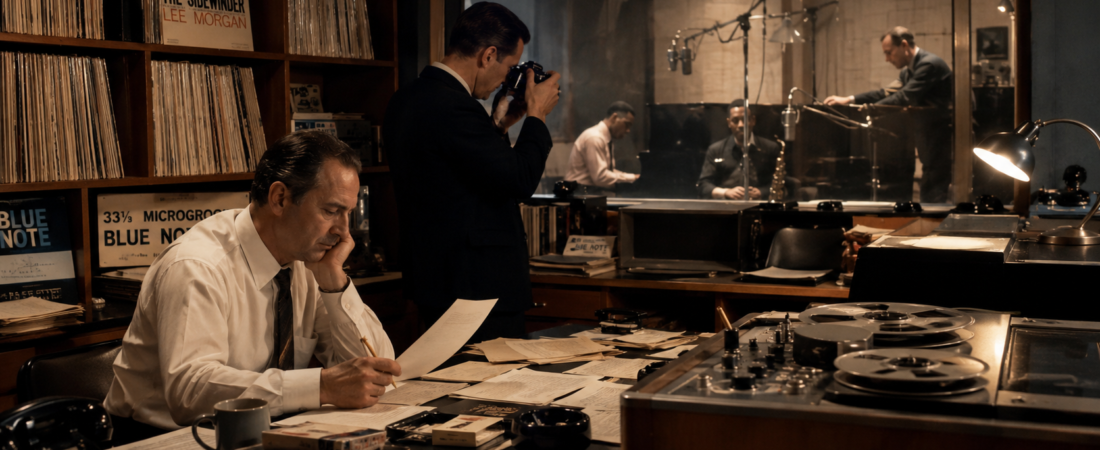
The Day Jazz Lost Its Greatest Home
Every great artistic institution eventually reaches a moment when its future seems uncertain. For Blue Note Records, that moment did not arrive with a dramatic announcement or a final recording session. Instead, it unfolded gradually, almost imperceptibly, as the people who had shaped the label’s extraordinary identity began stepping away one by one. By the early 1980s, many jazz fans believed the story was over. The company that had defined modern jazz for nearly half a century appeared destined to become little more than a glorious chapter in music history.
The possibility seemed almost unimaginable. Blue Note had introduced generations of listeners to revolutionary musicians, established the visual language of modern jazz albums, elevated recording quality to unprecedented levels and become synonymous with artistic integrity. For countless fans, the familiar blue-and-white logo represented something far greater than a record company. It was a promise that every release had been created with respect for the music and the musicians. Yet even legendary institutions are not immune to time. The question was no longer whether Blue Note had changed jazz. The question was whether Blue Note itself could survive.
Two Friends, One Extraordinary Vision
The story began in 1939, when two German Jewish refugees, Alfred Lion and Francis Wolff, founded Blue Note Records in New York City after escaping Nazi Germany. They entered the music business not because they saw a commercial opportunity, but because they loved jazz with extraordinary passion. They admired the musicians who were transforming American music and believed those artists deserved an environment where creativity would never be compromised by commercial pressure.
From its earliest days, Blue Note operated according to principles that distinguished it from almost every other independent label of the period. Musicians were paid for rehearsal time before entering the studio, an almost unheard-of practice in the recording industry. Sessions were carefully planned, artists were encouraged to present original compositions, and producers never rushed performances simply to reduce costs. Alfred Lion believed that great records emerged when musicians felt respected, trusted and free to explore their own ideas. That philosophy would become the foundation of one of the most extraordinary catalogs in the history of recorded music.
Building the Blue Note Sound
By the 1950s, Blue Note had evolved into far more than a successful independent label. It had become the creative home of modern jazz itself. Hard bop found its definitive recorded expression through artists such as Art Blakey, Horace Silver, Lee Morgan, Hank Mobley and Sonny Clark, while the following decade introduced equally transformative recordings by Herbie Hancock, Wayne Shorter, Andrew Hill, Joe Henderson, McCoy Tyner and many others.
What made Blue Note remarkable was not simply the quality of its roster but the consistency of its artistic identity. Although each musician possessed a unique voice, listeners quickly recognized something unmistakably “Blue Note” about the recordings. The piano sounded warm without becoming distant. Horns possessed remarkable presence without overwhelming the rhythm section. Drums retained their natural dynamics. Every instrument occupied its own space while contributing to a perfectly balanced ensemble sound. Long before branding became a marketing concept, Blue Note had developed one of the most recognizable sonic identities in recorded music.
Rudy Van Gelder: The Invisible Genius
A significant part of that identity belonged to recording engineer Rudy Van Gelder, whose influence on jazz is difficult to overstate. Working first from his parents’ home in Hackensack, New Jersey, and later from the now legendary Englewood Cliffs studio, Van Gelder approached recording with an obsessive commitment to detail. Microphone placement, room acoustics, equipment selection and performance balance became artistic decisions every bit as important as the notes themselves.
His engineering achieved something few others could consistently reproduce. Recordings possessed extraordinary clarity while remaining warm and deeply human. Instruments sounded immediate without feeling artificially close, and ensembles retained their natural interaction even under studio conditions. Although audiences rarely saw Van Gelder’s name in large print, generations of musicians regarded him as an essential collaborator. In many respects, he became the invisible member of nearly every classic Blue Note session.
JazzLatitude Insight
Blue Note’s greatest innovation was never simply discovering extraordinary musicians. It created an environment where extraordinary musicians consistently produced the finest work of their careers.
The Albums That Looked Like Jazz
Blue Note’s influence extended far beyond sound. Through the remarkable partnership between photographer Francis Wolff and graphic designer Reid Miles, the label created one of the most recognizable visual identities in modern design history. Wolff’s candid photographs captured musicians in moments of intense concentration, revealing the creative process with unusual intimacy. Miles transformed those images into album covers defined by bold typography, striking asymmetrical layouts and sophisticated use of negative space.
Together they produced designs that perfectly reflected the music inside the sleeves. Modern, confident and effortlessly elegant, Blue Note covers became icons not only within jazz but throughout graphic design, architecture, fashion and advertising. Even today, countless designers continue drawing inspiration from visual concepts first introduced by Reid Miles more than half a century ago.
The Beginning of the End
Ironically, Blue Note reached its artistic peak just as the economics of the recording industry were beginning to change dramatically. Independent labels faced increasing financial pressure as larger corporations consolidated the market and rock music came to dominate commercial attention. Remaining independent became progressively more difficult, regardless of artistic success.
In 1965, Blue Note was sold to Liberty Records. Although Alfred Lion initially remained involved and many familiar faces continued working with the label, the sale marked a fundamental turning point. Blue Note was no longer guided exclusively by the ideals of its founders. Corporate priorities gradually replaced the intimate, musician-centered atmosphere that had defined the company since 1939. The transition happened slowly, but its long-term consequences would prove impossible to avoid.
Alfred Lion Walks Away
When Alfred Lion retired in 1967, Blue Note lost far more than its founder. For nearly three decades, he had served as the label’s artistic conscience, selecting projects, supervising sessions and developing relationships with musicians based on trust rather than contracts alone. Many artists later recalled that recording for Blue Note felt fundamentally different because Lion genuinely believed in their music before a single note had been played.
His departure created a void that no executive could easily fill. The philosophy he embodied—patient preparation, artistic freedom and unwavering respect for musicians—had become inseparable from Blue Note itself. Without Lion guiding the label, preserving that unique culture became increasingly difficult.
The Final Goodbye
The emotional conclusion of Blue Note’s original story came with the death of Francis Wolff in 1971. With both founders gone, the company entered a long period of uncertainty marked by changing ownership, shifting priorities and increasingly sporadic recording activity. Although the extraordinary catalog remained available, Blue Note gradually ceased functioning as the creative force that had shaped modern jazz throughout the 1940s, 1950s and 1960s.
By the beginning of the 1980s, many listeners quietly accepted what seemed inevitable. Blue Note Records had become one of the greatest names in jazz history—but history nonetheless. Its albums continued inspiring new generations, yet few believed the label itself would ever again stand at the center of contemporary jazz. As far as the musical world was concerned, one of the most extraordinary chapters in the history of recorded music had reached its conclusion.
Or so it seemed.
Buy Amazon

The Revival Nobody Expected
When Blue Note Records effectively disappeared as an active creative force during the early 1980s, few people imagined it could ever return to its former stature. Its historic catalog remained one of the richest in jazz, but preserving the past and creating the future are very different challenges. The label that had once introduced groundbreaking recordings by Art Blakey, Herbie Hancock and Wayne Shorter now seemed destined to exist primarily through reissues and collector editions. Jazz itself had changed dramatically. Independent labels such as ECM, Soul Note and Black Saint had become the new homes for adventurous musicians, while commercial attention shifted increasingly toward pop, rock and fusion. To many observers, Blue Note had become a glorious memory rather than a living institution.
Yet history has a remarkable habit of rewarding organizations that remain faithful to their founding principles. Blue Note’s revival would not begin with nostalgia or aggressive marketing campaigns. It would begin with a simple but revolutionary belief: the label should once again become a place where great musicians could make great records.
Bruce Lundvall and the Second Beginning
That belief belonged to Bruce Lundvall, whose arrival marked one of the most important turning points in the modern history of jazz. When EMI decided to reactivate Blue Note in 1984, Lundvall understood that the easiest strategy—living exclusively from the label’s legendary past—would ultimately guarantee its irrelevance. A record company built entirely on nostalgia eventually becomes a museum. Alfred Lion had never intended Blue Note to preserve jazz. He wanted it to participate in its evolution.
Lundvall embraced exactly the same philosophy.
Rather than searching for musicians who sounded like Horace Silver or Lee Morgan, he looked for artists who possessed the same qualities Blue Note had always valued: originality, integrity and unmistakable personal voices. His goal was not to recreate the 1960s. It was to ensure that, decades later, Blue Note would once again represent the present and future of jazz.
That decision required courage. Jazz had become a smaller commercial market, and the safest financial path would have been endless reissues of classic albums. Instead, Lundvall invested in living artists whose greatest work still lay ahead. In doing so, he restored the very spirit that had made Blue Note exceptional from the beginning.
JazzLatitude Insight
The true revival of Blue Note was never about bringing back the past. It was about rediscovering Alfred Lion’s original philosophy: every generation deserves a label willing to believe in musicians before the rest of the world does.
A New Generation Finds a Home
The revitalized Blue Note quickly assembled one of the strongest jazz rosters of the late twentieth century. Rather than following a single stylistic direction, the label embraced remarkable diversity while maintaining an uncompromising commitment to artistic quality.
Among its defining voices was Joe Lovano, whose richly expressive tenor saxophone became one of the signature sounds of modern Blue Note. Lovano’s recordings demonstrated that the label remained committed to sophisticated improvisation rooted in the jazz tradition while remaining entirely contemporary.
Another landmark arrival was Cuban pianist Gonzalo Rubalcaba, whose astonishing technical command and harmonic imagination introduced many international listeners to one of the most gifted pianists of his generation. His recordings reaffirmed that Blue Note had once again become a destination for world-class musicians rather than merely a custodian of historic recordings.
The label also welcomed artists who challenged conventional boundaries. Cassandra Wilson reimagined jazz singing through blues, folk, country and American roots music, while Jason Moran brought a bold new vision that combined stride piano, avant-garde improvisation, hip-hop culture and contemporary composition. Each artist sounded completely different from the others, yet together they reflected the same artistic openness that had characterized Blue Note since its earliest years.
The Album That Changed Everything
If Bruce Lundvall restored Blue Note’s artistic credibility, Norah Jones transformed its commercial future.
When Come Away With Me appeared in 2002, expectations were modest. The album’s understated blend of jazz, folk, country and pop hardly resembled the hard bop classics most listeners associated with Blue Note. Yet what followed became one of the most remarkable success stories in modern recording history.
The album sold millions of copies worldwide.
It won multiple Grammy Awards.
More importantly, it introduced an entirely new audience to the Blue Note name.
For many younger listeners, Norah Jones became their first encounter with the label that had once recorded John Coltrane, Herbie Hancock and Wayne Shorter. Some traditionalists questioned whether such success belonged within Blue Note’s identity, but history suggests otherwise. Alfred Lion had always valued individuality over stylistic orthodoxy. Jones represented precisely that tradition.
Ironically, one of the label’s greatest commercial triumphs strengthened its ability to continue supporting adventurous jazz artists whose audiences were naturally much smaller.
Robert Glasper and the Future of Jazz
If Norah Jones broadened Blue Note’s audience, Robert Glasper redefined its relationship with contemporary culture.
Glasper belonged to a generation of musicians for whom the boundaries separating jazz, hip-hop, R&B, gospel and electronic music had largely disappeared. Rather than treating those influences as occasional experiments, he integrated them into a coherent artistic language that reflected twenty-first-century musical reality.
His landmark album Black Radio demonstrated that jazz could engage naturally with modern popular music without sacrificing sophistication or improvisational depth. The recording attracted listeners who might never have explored traditional jazz while earning widespread respect from longtime jazz audiences. Much as Herbie Hancock had expanded Blue Note’s musical vocabulary during the 1960s, Glasper accomplished something equally significant for a new century.
His success also confirmed that Blue Note’s revival had matured. The label was no longer simply surviving. It was once again influencing the direction of jazz itself.
Preserving the Crown Jewels
Reviving Blue Note required more than signing outstanding contemporary musicians. The label’s historic catalog demanded equally thoughtful stewardship. Over the following decades, Blue Note invested heavily in restoring original master tapes, improving archival preservation and producing carefully researched reissues that respected the integrity of the original recordings.
Collectors and audiophiles quickly recognized the results.
Albums that had shaped the history of jazz returned with extraordinary sound quality, faithful artwork and meticulous attention to historical detail. Rather than treating its catalog as a commercial asset alone, Blue Note approached these reissues as cultural preservation. Every restored recording strengthened the connection between the label’s remarkable past and its increasingly vibrant present.
The Return of Audiophile Excellence
That commitment reached new heights with projects such as the Tone Poet Audiophile Vinyl Series and the Blue Note Classic Vinyl Series. Using original analog master tapes whenever possible, these releases became benchmarks for modern vinyl production.
Pressing quality.
Packaging.
Historical accuracy.
Sound.
Everything reflected the standards that Alfred Lion and Rudy Van Gelder had pursued decades earlier.
The success of these series demonstrated something remarkable. Even in the age of digital streaming, listeners continued valuing carefully produced physical recordings when they were created with genuine respect for both music and craftsmanship.
Blue Note had once again become synonymous with excellence—not simply because of its history, but because of the quality of the work it continued producing.
More Than a Revival
By the beginning of the twenty-first century, it had become clear that Blue Note’s return represented something far greater than a successful business strategy. The label had accomplished an extraordinarily rare feat within the recording industry. It had become simultaneously a guardian of one of the greatest catalogs in music history and an active creative force shaping contemporary jazz.
Very few record companies have managed such a balance.
Most either live entirely in the past or abandon their heritage in pursuit of commercial trends.
Blue Note found another path.
It rediscovered the philosophy upon which it had been founded and proved that artistic integrity, when combined with openness to new voices, can remain relevant across generations.
The remarkable story of Blue Note was no longer simply one of survival.
It had become one of renewal.

More Than a Comeback
History is filled with legendary record labels that failed to survive the passing of their golden years. Some became archival brands, preserving extraordinary catalogs but contributing little to the future of music. Others disappeared entirely, remembered only through the albums they once released. Blue Note Records followed a far more remarkable path. Its greatest achievement was not simply surviving the end of its classic era—it was proving that a label founded in 1939 could still influence the direction of jazz well into the twenty-first century.
That distinction matters.
Blue Note did not become a museum.
It remained a creative home.
For more than eighty years, the company’s greatest strength has never been a particular style of jazz or a specific generation of musicians. It has been an enduring philosophy: discover original artists, give them the freedom to create and trust that lasting music will ultimately outlive commercial trends.
That philosophy survived Alfred Lion.
It survived Francis Wolff.
It survived corporate ownership.
And remarkably, it survived the disappearance of the very era that had made Blue Note legendary.
Don Was and the Responsibility of History
When legendary producer Don Was became president of Blue Note Records in 2012, he inherited far more than one of the most respected names in jazz.
He inherited expectations.
Every decision would inevitably be compared with Alfred Lion’s extraordinary legacy.
Rather than attempting to recreate the past, Was chose a different approach. He viewed Blue Note’s history not as a template to copy but as a standard to uphold.
Having spent decades producing artists across jazz, rock, blues and soul, Was understood that the healthiest musical traditions never stand still. The greatest tribute to Blue Note’s founders would not be endless nostalgia but the continued discovery of musicians capable of pushing jazz forward.
Under his leadership, the label maintained its balance between historical preservation and artistic exploration, strengthening both sides of its identity without allowing either to overshadow the other.
JazzLatitude Insight
Blue Note has never been defined by a particular sound. It has been defined by a particular attitude: trust great musicians before the rest of the world realizes how great they are.
From Record Label to Global Cultural Institution
One of the most remarkable transformations in Blue Note’s modern history is that the company gradually evolved beyond its original role as a record label.
Today, Blue Note represents an international cultural network.
The legendary Blue Note Jazz Club in New York remains one of the world’s premier jazz venues, welcoming icons and emerging artists alike while preserving the intimate atmosphere that has always characterized great jazz performance.
The opening of Blue Note Tokyo in 1988 marked another decisive step in the brand’s global evolution. Widely regarded as one of the finest jazz clubs anywhere in the world, it combines impeccable acoustics, exceptional production standards and adventurous programming. For countless international musicians, performing at Blue Note Tokyo has become a career milestone comparable to appearing at the Village Vanguard or the Montreux Jazz Festival.
The Blue Note name has since expanded through festivals, touring productions and additional venues around the world, reinforcing an identity that extends well beyond recorded music.
What Alfred Lion and Francis Wolff began as a small independent label has become one of jazz’s most recognizable cultural institutions.
Very few record companies have ever achieved that transformation.
The Artists Who Defined the New Blue Note
The true measure of Blue Note’s revival can be found not in its history but in the musicians it continued to champion.
Bruce Lundvall began this process during the 1980s by rebuilding a roster capable of carrying the label into a new era. Under Don Was, that philosophy continued to flourish.
Rather than searching for artists who sounded like the heroes of the 1960s, Blue Note invested in musicians with unmistakably individual voices.
Robert Glasper became one of the defining figures of twenty-first-century jazz by dissolving the traditional boundaries separating jazz, hip-hop, R&B and gospel. His recordings attracted entirely new audiences while remaining deeply rooted in improvisation.
Trumpeter Ambrose Akinmusire introduced a deeply personal compositional language that combines contemporary classical music, social reflection and fearless improvisation.
Saxophonist Immanuel Wilkins emerged as one of the leading voices of his generation, creating music that balances spiritual searching with extraordinary compositional sophistication.
Vibraphonist Joel Ross has expanded the expressive possibilities of his instrument through compositions that unite rhythmic complexity, melodic beauty and modern ensemble interaction.
The label has also continued supporting established masters. Charles Lloyd, after decades of extraordinary creativity, entered one of the richest periods of his career through a remarkable series of Blue Note recordings. Artists such as Melissa Aldana, Kandace Springs and numerous others further demonstrate that stylistic diversity remains one of the label’s defining strengths.
Together, these musicians prove that Blue Note is not simply documenting contemporary jazz.
It continues helping shape it.
Preserving the Past Without Living in It
Few labels possess a catalog comparable to Blue Note’s.
Even fewer have managed to preserve it with such care.
Rather than treating historic recordings as commercial products alone, Blue Note approached its archive as an essential part of jazz history.
Original master tapes were carefully restored.
Historical documentation expanded.
Previously overlooked sessions returned to circulation.
The objective was never simply to sell classic albums again.
It was to ensure that future generations could experience them with a fidelity as close as possible to the original recording sessions.
This commitment became especially visible through projects such as the Tone Poet Audiophile Vinyl Series and the Blue Note Classic Vinyl Series, both of which established new standards for archival reissues.
These releases reminded listeners that Blue Note’s reputation had always depended upon more than remarkable musicians.
It also rested upon extraordinary craftsmanship.
Why Blue Note Remains Different
The modern recording industry moves quickly.
Streaming platforms encourage constant releases.
Algorithms reward immediacy.
Attention spans grow shorter.
Against this backdrop, Blue Note continues operating according to principles that often seem almost old-fashioned.
Artists receive time to develop.
Albums remain central artistic statements.
Long-term relationships matter.
Originality receives greater value than imitation.
Ironically, these traditional values have become one of Blue Note’s greatest competitive advantages.
In a rapidly changing musical landscape, authenticity has become increasingly rare.
Blue Note continues offering exactly that.
Five Lesser-Known Facts About Blue Note Records
1. Blue Note has successfully reinvented itself twice.
The label experienced two defining creative eras: the legendary Alfred Lion period and the remarkable revival initiated by Bruce Lundvall in the 1980s, later strengthened under Don Was.
2. The Blue Note name now represents far more than recorded music.
Through internationally respected clubs, festivals and live events, the brand has become one of jazz’s most recognizable cultural institutions.
3. The label continues introducing major new artists.
Rather than relying exclusively on its historic catalog, Blue Note remains committed to discovering musicians whose careers are still unfolding.
4. Audiophile collectors consider modern Blue Note reissues among the finest vinyl releases available.
The Tone Poet and Classic Vinyl series have become international reference points for archival quality and analog sound reproduction.
5. Blue Note’s philosophy has changed remarkably little since 1939.
Although ownership, technology and musical styles have evolved dramatically, the label’s commitment to artistic individuality remains essentially the same as it was under Alfred Lion.
Frequently Asked Questions
Why is Blue Note Records still important today?
Because it continues discovering influential contemporary musicians while preserving one of the greatest catalogs in jazz history. Few labels have remained creatively relevant for more than eight decades.
Who brought Blue Note back to life?
Bruce Lundvall led the label’s revival beginning in 1984, rebuilding its roster and restoring its reputation as a home for contemporary jazz. Don Was later expanded that vision while maintaining Blue Note’s historic commitment to artistic excellence.
Does Blue Note still release new jazz albums?
Yes. Blue Note remains one of the world’s leading jazz labels, releasing acclaimed recordings by established masters and emerging artists while continuing its internationally respected archival reissue programs.
What makes Blue Note different from other jazz labels?
Rather than defining itself through a single musical style, Blue Note has always focused on artistic individuality. Throughout its history, the label has consistently supported musicians with distinctive creative voices instead of following commercial trends.
Is Blue Note only important because of its classic recordings?
No. While its historic catalog is unmatched, the label’s continued success with artists such as Robert Glasper, Ambrose Akinmusire, Immanuel Wilkins and Joel Ross demonstrates that Blue Note remains an active force in shaping the future of jazz.
JazzLatitude Rating
| Category | Rating |
|---|---|
| Historical Importance | ★★★★★ |
| Artist Development | ★★★★★ |
| Cultural Influence | ★★★★★ |
| Modern Relevance | ★★★★★ |
| Catalog Strength | ★★★★★ |
| Audiophile Legacy | ★★★★★ |
| Innovation Across Eras | ★★★★★ |
| Global Impact | ★★★★★ |
| JazzLatitude Essential | ★★★★★ |
Final Thoughts
Blue Note Records has accomplished something that very few cultural institutions ever achieve. It has remained faithful to its founding ideals while continuously adapting to a changing musical world. Most legendary record labels eventually become custodians of their own history, celebrated for what they once accomplished but increasingly disconnected from the present. Blue Note chose a far more difficult path. It accepted the responsibility of honoring its extraordinary past while continuing to invest in artists whose greatest work still lies ahead.
That commitment explains why the label’s story did not end with Alfred Lion’s retirement or Francis Wolff’s passing. It also explains why the revival led by Bruce Lundvall proved so successful. Neither man attempted to recreate a vanished era. Instead, they recognized that Blue Note’s true identity had never been tied to a particular decade, recording studio or musical style. It was rooted in an unwavering belief that original voices deserve patience, trust and complete artistic freedom.
Today, the Blue Note name represents far more than an iconic catalog of classic albums. It encompasses internationally respected jazz clubs, acclaimed festivals, audiophile-quality reissues and one of the most adventurous rosters in contemporary jazz. From New York to Tokyo, from emerging composers to internationally celebrated veterans, Blue Note continues serving as a meeting place where tradition and innovation coexist naturally.
Perhaps that is the label’s greatest lesson. The healthiest artistic traditions are not preserved by standing still. They survive because each generation is willing to imagine what comes next.
More than eighty years after two refugees founded a tiny independent record company in New York, Blue Note remains exactly what Alfred Lion hoped it would become.
Not simply a record label.
But one of the enduring homes of jazz itself.