The Prodigy from Geneva and the Technical Breakthrough
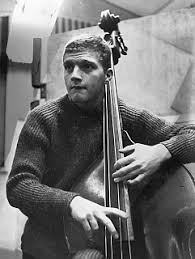
To comprehend the breathtaking, weightless brilliance of Scott LaFaro, one must first look at a young clarinet and saxophone player from Geneva, New York, who only picked up the double bass at age eighteen to satisfy a college requirement. It turned out to be a date with destiny. LaFaro possessed a fierce, obsessive work ethic; he practiced until his fingers bled, developing a radical, revolutionary technique. Instead of using the traditional one- or two-finger pulling method on his right hand, Scott began using his index and middle fingers independently—much like a classical classical guitarist—allowing him to achieve a blistering, horn-like speed and a pristine, upper-register clarity. By the late 1950s, while touring with Chet Baker and Stan Getz, he wasn’t just keeping time; he was completely rewriting the physics of the double bass.
The Bill Evans Trio: The Architecture of Telepathic Dialogue
In 1959, LaFaro joined forces with lyric piano icon Bill Evans and master drummer Paul Motian, forming what is universally regarded as the most influential piano trio in jazz history. For the high-art connoisseur exploring the absolute pinnacles of The Jazz Compass, their 1961 Riverside Records live sessions—immortalized on the twin monuments Sunday at the Village Vanguard and Waltz for Debby—are sacred, foundational texts. LaFaro shattered the traditional, rigid tyranny of the walking bass. Instead of anchoring the rhythm from behind, Scott engaged in a dazzling, three-way telepathic conversation with Evans and Motian. He introduced fluid contrapuntal melodies, brilliant rhythmic displacement, and heartbreakingly beautiful solo flights, proving that a bass player could function as a co-equal lead voice without losing an ounce of the harmonic foundation.
The Tragic Shooting Star and the Eternal Latitude
True to the borderless, forward-thinking spirit of Jazz Latitude, Scott LaFaro’s innovative philosophy expanded far beyond the cool, modal corridors of the Bill Evans Trio. In 1960, he simultaneously anchored Ornette Coleman’s radical double-quartet masterpiece, Free Jazz, showcasing an astonishing ability to navigate absolute avant-garde chaos with the same intellectual rigor he applied to delicate ballads. Tragically, just ten days after recording the legendary Village Vanguard sessions, LaFaro’s brilliant flame was brutally extinguished. He fell asleep at the wheel of his car on a New York highway and died instantly at the tender age of twenty-five. Though his life was brief, his coordinate on our musical map is permanent and monumental. Scott LaFaro taught the world that the double bass didn’t just have to be the heavy heartbeat of a band—it could be its deepest soul, its sharpest intellect, and its most beautiful poet.