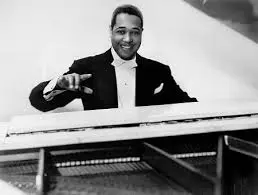
Edward Kennedy ‘Duke’ Ellington was not merely a pianist or a bandleader; he was the man who provided jazz with a grammar of sophistication and a symphonic structure. While his contemporaries focused on dance-floor entertainment, Duke understood that the orchestra itself was an instrument of infinite possibilities. His approach, often called the ‘Ellington Effect,’ was based on writing custom arrangements for the virtues—and even the limitations—of each musician in his band, turning individual soloists into a unique and unmistakable collective voice.
Over five decades, Ellington elevated jazz from Harlem to the world’s most prestigious concert stages. He pioneered extended suites, such as the monumental Black, Brown and Beige, which chronicled the history of the Black experience in the United States through a harmonic complexity that rivaled European classical music. To Duke, jazz was not ‘genre music’ but something he called ‘Beyond Category.’ He proved that blues and swing could carry the same dignity and intellectual depth as a Beethoven symphony.
At Jazz Latitude, Duke Ellington stands as the pillar supporting the idea of jazz as America’s classical music. His ability to be both prolific (with over a thousand registered compositions) and innovative until the end of his life makes him the central figure in understanding the evolution of modern sound. From smoky cabarets to cathedrals, Duke remained the ultimate symbol of elegance, pride, and genius.