The Oklahoma Prophet and the Gibson Revolution
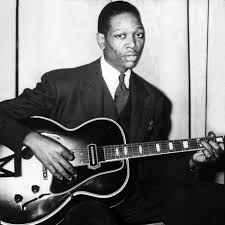
To grasp the tectonic shift that Charlie Christian brought to modern music, you have to picture the jazz landscape of 1939. The guitar was essentially an acoustic timekeeper, a glorified metronome buried deep within the rhythm sections of roaring swing orchestras. Enter Charlie Christian. Born in Texas and raised in the vibrant, blues-soaked streets of Oklahoma City, Charlie was discovered by legendary talent scout John Hammond, who practically forced a skeptical Benny Goodman to audition him. The moment Charlie plugged his Gibson ES-150 into a primitive tube amplifier, the acoustic ceiling shattered. He didn’t just strum chords; he unleashed a torrent of horn-like, single-note solo lines that carried the harmonic sophistication of a tenor saxophone and the raw, driving bite of the Southwestern blues.
The Minton’s Laboratory and the Blueprint of Bebop
For the high-art connoisseur tracing the evolutionary lines of The Jazz Compass, Charlie Christian’s brief, volcanic tenure with the Benny Goodman Sextet and his late-night jams at Minton’s Playhouse are holy, foundational texts. Between 1939 and 1941, recordings like “Seven Come Eleven” and “Solo Flight” showcased a radical harmonic vocabulary. Charlie pioneered the use of extended chords—9ths, 11ths, and passing diminished structures—that completely bypassed the polite constraints of the swing era. At Minton’s, alongside a young Thelonious Monk and Kenny Clarke, Charlie used his electric amplifier to sustain notes like a horn player, framing the exact rhythmic and melodic language that would birth bebop. He proved that the guitar could not only stand shoulder-to-shoulder with the brass section but could actually dictate the future direction of jazz intellect.
The Immortal Coordinates of a Shooting Star
True to the borderless, forward-thinking spirit of Jazz Latitude, Charlie Christian’s artistic geography expands across decades, acting as the definitive genetic link between early swing, avant-garde jazz, and the eventual birth of rock ‘n’ roll. His fluid phrasing and overdriven tube tone directly informed everyone from T-Bone Walker and B.B. King to Wes Montgomery and Jimi Hendrix. Tragically, Charlie’s brilliant flame was extinguished far too soon; he succumbed to tuberculosis in 1942 at the tender age of 25. Yet, in less than three years in the global spotlight, he transformed a rhythmic stepchild into the most dominant instrument on Earth. Charlie Christian mapped a permanent, shimmering coordinate on our musical map—a monument built on the absolute courage to turn up the volume and let the soul speak in single, electric sparks.