The Midnight Metamorphosis
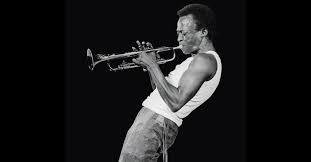
By the late 1960s, Miles Davis was already jazz royalty, an untouchable icon tailored in Italian suits who had already birthed Cool Jazz and Modal Jazz. He could have easily spent the rest of his days playing the beautiful, melancholic acoustic ballads that made him rich. But Miles had a visceral horror of the past. He looked at the charts and saw Jimi Hendrix, Sly and the Family Stone, and James Brown commanding the youth. To Miles, acoustic jazz was beginning to smell like a museum—stuffy, polite, and safe. His response? He fired his legendary acoustic quintet, bought electric pianos, plugged his trumpet into a wah-wah pedal, and invited a wild crew of young, hungry musicians into Columbia’s Studio B. He didn’t just change his repertoire; he set fire to the traditional jazz handbook.
The Voodoo Brew: The Shockwaves of Bitches Brew
The definitive explosion occurred over three sweltering days in August 1969. The result was Bitches Brew, a double album that functioned as a sonic earthquake. For the high-art collector browsing The Jazz Compass, this record is a holy grail of controlled chaos. Miles didn’t give his musicians sheet music; he gave them moods, sketches, and visual cues. He had two bassists, three electric pianists, and three drummers all playing at once, weaving a dense, hypnotic, psychedelic groove that sounded like a futuristic African ritual in the middle of Manhattan. Purists were absolutely horrified. They claimed Miles had sold out to rock and roll. But the truth was far more radical: he had created a brand-new avant-garde latitude, proving that jazz could possess the raw, sexual electricity of rock while retaining its supreme intellectual complexity.
The Aesthetic of the Dark Magus
To watch Miles on stage during the early 1970s—decked out in oversized sunglasses, leather fringe, and African beads—was to witness a shaman of modern music. He no longer announced songs; the band played continuously, a non-stop wall of funk-inflected rhythm where Miles would slice through the density with sharp, distorted trumpet blasts. He taught a generation that stagnation was the ultimate artistic death. By crossing the borders between jazz, rock, and funk, he permanently expanded the geographical and cultural coordinates of the music. At Jazz Latitude, we celebrate this electric Miles because he embodies our core philosophy: tradition is not a cage to look back on, but a powerful launching pad to propel us into the absolute unknown.