Before Soul Jazz Became a Label
Pittsburgh, the Blues and the Making of a Voice
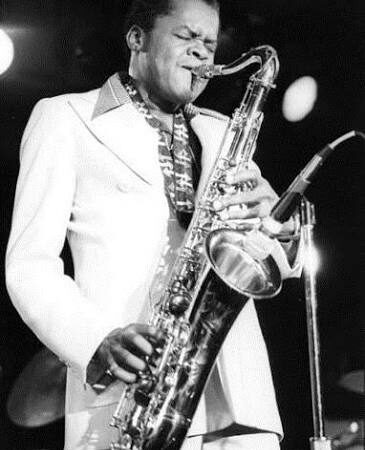
Stanley Turrentine never needed many notes to establish his presence. A phrase could begin with a broad, slightly roughened tenor sound, lean into the blues without announcing that intention, and then open into a melodic line whose warmth made even sophisticated harmonic movement feel conversational. That combination became one of the defining qualities of his career, but it was not the product of a carefully constructed style assembled after he became a recording artist. It grew from Pittsburgh, rhythm and blues, bebop, touring bands, church-inflected musical culture and years spent learning how a saxophonist could communicate directly without sacrificing musical depth.
Born in Pittsburgh on April 5, 1934, Turrentine entered a city with an extraordinary jazz history. Pittsburgh produced or nurtured musicians including Earl Hines, Roy Eldridge, Billy Strayhorn, Mary Lou Williams, Erroll Garner and Ahmad Jamal, and its musical environment connected jazz with the blues, popular entertainment and the practical demands of working musicians. Turrentine’s family was itself musical. His father played saxophone, and his older brother Tommy became a formidable trumpeter whose career would repeatedly intersect with Stanley’s during the hard-bop era. Music was therefore not an abstract cultural destination waiting somewhere beyond childhood. It was part of the environment from which the brothers emerged.
For Stanley, the tenor saxophone became a way of joining several musical worlds that were already overlapping. Jazz in the late 1940s and early 1950s was undergoing enormous changes, but the boundaries between jazz and rhythm and blues were more permeable in working life than later historical categories sometimes suggest. A young saxophonist could absorb Charlie Parker and Coleman Hawkins while also learning from musicians whose power depended on reaching dancers in crowded clubs. The ability to improvise mattered, but so did projection, timing, personality and the capacity to make a phrase register immediately.
Turrentine learned those lessons early. As a teenager he worked in blues and rhythm-and-blues settings, including a period with Lowell Fulson’s band, where Ray Charles was also present. Experiences like these placed him close to music in which the blues was not a stylistic reference to be quoted but a working language. The relationship between voice and instrument, repetition and variation, tension and release became practical knowledge. Years later, when Turrentine was improvising over sophisticated compositions for Blue Note or surrounded by polished arrangements at CTI, that early grounding remained audible.
It explains why the blues in his playing rarely feels added to the music. It is already inside the sentence.
Learning from Earl Bostic
One of the most important stages of Turrentine’s early development came when he joined Earl Bostic’s band in 1953, replacing John Coltrane. The historical detail is irresistible because of what Coltrane would later become, but concentrating on the succession can obscure the more important point: Bostic’s organization was an extraordinary school for saxophonists.
Bostic was a technically commanding alto player capable of moving between jazz, rhythm and blues and popular entertainment. His bands demanded precision and stamina. They also taught younger musicians how to communicate with audiences night after night. The job required more than improvisational ambition. A player had to understand dynamics, pacing, repertoire and the physical force of a saxophone sound in a live room.
For Turrentine, those lessons complemented rather than contradicted the increasingly sophisticated jazz language of the 1950s. His playing would never depend on virtuosity as spectacle. Even when he moved quickly through changes, the emotional contour of a phrase remained important. Bostic’s world reinforced the idea that instrumental command mattered most when listeners could feel what the musician was saying.
The tenor tradition surrounding Turrentine was broad. Illinois Jacquet’s muscular directness was an important early influence, while the warmth and rhythmic authority associated with players such as Gene Ammons belonged to a larger language in which the tenor could carry the expressive weight of a human voice. Bebop had expanded the harmonic and rhythmic possibilities available to saxophonists, but Turrentine never accepted the idea that complexity required emotional distance. He absorbed modern jazz vocabulary while retaining the communicative force of rhythm and blues.
This would later distinguish him from many contemporaries without requiring him to oppose them. Turrentine was not an anti-intellectual alternative to more harmonically adventurous saxophonists, nor was he simply a blues player operating inside jazz. His achievement came from refusing that division. He could make sophisticated improvisation feel physically grounded.
Max Roach and the Hard-Bop Crucible
After serving in the military during the middle of the decade, Turrentine returned to a jazz world transformed by hard bop. The new language had grown from bebop but increasingly foregrounded elements of blues, gospel and rhythm and blues, particularly in the work being documented by labels such as Blue Note and Prestige. For Turrentine, this was fertile territory. The music required harmonic fluency and rhythmic confidence while leaving room for exactly the kind of emotional directness he had developed on the road.
His next major apprenticeship came with Max Roach. Joining Roach’s group near the end of the 1950s placed Turrentine alongside one of modern jazz’s foundational musicians. Roach was far more than a drummer who maintained tempo; his playing had helped redefine the role of the drum set in bebop, and his groups demanded musicians who could respond to rhythm as an active structural force. Working in that environment required Turrentine to sharpen the jazz dimension of a language that had already been tested in blues and R&B bands.
His brother Tommy was also associated with Roach during this period, bringing the two Pittsburgh musicians together in a setting considerably different from the world in which Stanley had first developed. Tommy’s trumpet language leaned naturally toward hard bop, and the brothers would soon appear together on several important recordings. Yet Stanley’s individuality was becoming increasingly clear. The tenor sound was broad without becoming cumbersome, blues-inflected without being predictable, and capable of making a ballad feel as personal as a medium-tempo groove.
The Roach period also intersected with another relationship that would profoundly shape Turrentine’s career. He met organist Shirley Scott, one of the most important Hammond B-3 players of her generation. They married in 1960 and subsequently recorded together frequently. Their musical partnership would become central to Turrentine’s relationship with soul jazz, but even before that collaboration fully developed, another door was opening.
Blue Note was ready for him.
The Blue Note Door Opens
By 1960, Blue Note Records had become one of the crucial homes of hard bop. Alfred Lion and Francis Wolff were documenting a generation of musicians who combined bebop sophistication with blues, gospel, Latin rhythm and a renewed emphasis on composition and groove. Art Blakey, Horace Silver, Hank Mobley, Lee Morgan, Donald Byrd and many others were creating music that could be intricate without becoming detached from the physical experience of rhythm.
Turrentine fit naturally into this environment, but his relationship with the label did not begin in isolation. One of his important early Blue Note connections came through organist Jimmy Smith. In April 1960, Turrentine participated in sessions that produced material for Smith’s Back at the Chicken Shack and Midnight Special, albums that became landmarks of the organ-and-tenor tradition. The combination was almost ideal for him. Smith’s Hammond B-3 could provide harmonic density, bass movement and gospel-charged energy simultaneously, while Turrentine’s tenor entered the music with a voice substantial enough to stand beside the organ without fighting it.
The sessions demonstrated how effectively his playing could function in the territory that would soon be called soul jazz, but they also showed why the label should hear him as a leader. Alfred Lion brought Turrentine back to Rudy Van Gelder’s studio in June 1960 to record his first Blue Note album under his own name.
The title was appropriately direct: Look Out!
Look Out!: The Arrival
The quartet on Look Out! was Stanley Turrentine on tenor saxophone, Horace Parlan on piano, George Tucker on bass and Al Harewood on drums. It was an exceptionally coherent rhythm section. Parlan, Tucker and Harewood had already developed a strong collective identity, and their playing gave Turrentine something more valuable than conspicuous accompaniment: a framework flexible enough to swing hard while leaving his tenor room to shape the music.
The album is especially revealing because it complicates the image of Turrentine as primarily a soul-jazz saxophonist. Look Out! is firmly rooted in hard bop. The blues is present, but the session does not rely on organ-combo conventions or an overtly commercial groove. Turrentine’s debut instead presents a musician who already understands how to balance composition, improvisation and accessibility within a classic acoustic quartet.
The opening title track makes the point immediately. “Look Out” carries forward momentum without forcing the tenor into constant intensity. Turrentine can play with weight and authority, but he also understands how to build a solo through pacing. His phrases do not arrive as an uninterrupted stream. He leaves room for the rhythm section, repeats ideas when repetition strengthens them, and uses the grain of his sound as part of the improvisation itself.
Parlan is an ideal partner. His piano style has its own distinctive economy, partly shaped by a childhood injury that affected his right hand and encouraged an unusually personal approach to voicing and rhythm. Rather than crowding Turrentine, he gives the tenor firm harmonic ground while creating rhythmic figures that keep the music moving. Tucker and Harewood complete a rhythm section that understands the difference between energy and density.
“Journey Into Melody” reveals another dimension. Turrentine’s reputation would always be connected to groove, but ballads were equally important to understanding his artistry. On slower material, the qualities that could be disguised by rhythmic excitement become exposed: control of tone, patience, melodic judgment and the ability to make a familiar line sound personally inhabited. Turrentine does not need to decorate every space. He allows the melody to retain its identity, then changes its emotional weight through inflection.
That capacity would remain one of his greatest strengths. He could play standards without treating the written melody as an obstacle that had to be escaped before improvisation began. Melody was material.
Hard Bop with a Human Voice
The rest of Look Out! strengthens the portrait. Horace Parlan’s “Return Engagement” gives the quartet another opportunity to demonstrate its collective ease, while Turrentine originals such as “Little Sheri” and “Minor Chant” show that his musical identity was already broader than the stereotype that would later attach itself to soul jazz. Clifford Brown’s “Tiny Capers” also carries a meaningful historical resonance. Brown had been Max Roach’s brilliant partner before his death in 1956, and Turrentine’s own period with Roach placed him within the continuing network of musicians shaped by that lineage.
What makes the album compelling more than six decades later is not that it predicts every direction Turrentine would eventually take. It does the opposite. Look Out! captures him before the public image became fixed. The essential ingredients are already present — the thick tenor tone, blues feeling, melodic directness and rhythmic confidence — but they operate inside a hard-bop session whose discipline prevents any single characteristic from becoming a formula.
That distinction matters when looking at the rest of his career. Turrentine would soon become closely associated with organ groups, particularly through Shirley Scott. He would record live at Minton’s, work with Grant Green, explore larger ensembles and eventually enter the more polished production environment of Creed Taylor’s CTI label. Some listeners would embrace those changes, while others would measure them against an idea of what serious jazz was supposed to be.
But Look Out! already suggests why such arguments would never fully explain him. Turrentine’s identity did not depend on a particular instrumentation or level of commercial accessibility. It depended on the way he phrased.
The Brothers from Pittsburgh
The period also brought Stanley and Tommy Turrentine together on record. Tommy had developed into a strong hard-bop trumpeter and appeared with Stanley in several settings around the beginning of the 1960s. The brothers’ contrasting instruments created a classic trumpet-tenor frontline, and their shared background gave the partnership a biographical dimension without requiring it to become a family novelty.
They were part of a broader Pittsburgh tradition whose significance extended far beyond individual careers. The city had produced musicians with radically different styles, yet a recurring characteristic among many of them was the combination of technical command and strong personal identity. Stanley belonged to that tradition while sounding like no one else within it.
His career was also beginning to demonstrate something that would become increasingly important during the 1960s: jazz musicians did not have to choose between communication and sophistication. Turrentine could reach listeners who might not follow every harmonic substitution in a solo because the architecture of the performance remained emotionally legible. He could make the blues function as a foundation without turning it into a cliché.
That quality would become even more apparent when he entered the organ-combo world.
Before the Groove Became an Identity
By the end of 1960, Turrentine had moved through several musical educations in remarkably little time. Pittsburgh gave him a community and a family connection to music. Rhythm-and-blues bands taught him projection and communication. Earl Bostic demonstrated the discipline required of a working saxophonist. Max Roach placed him inside the demanding rhythmic environment of modern jazz. Jimmy Smith showed how naturally his tenor could inhabit the organ tradition. Blue Note finally gave him the opportunity to define himself as a leader.
None of those experiences alone created Stanley Turrentine. Their convergence did.
This is why reducing him to “soul jazz” misses something essential. The term is useful historically, and Turrentine would become one of the music’s great practitioners, but his relationship with the blues and groove existed before the category became central to his reputation. He could bring those qualities into hard bop because they were already embedded in his musical thinking.
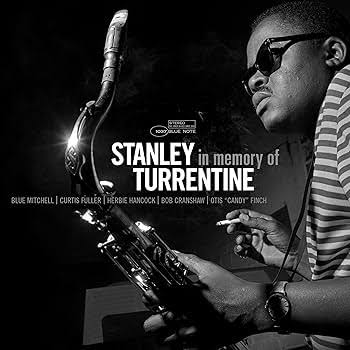
The next years would make that connection impossible to ignore. Shirley Scott would become both his partner in life and one of his most important musical collaborators. The Hammond organ would provide a different environment for the tenor, live recordings would capture the physical energy of his working bands, and albums such as Up at Minton’s, That’s Where It’s At and Never Let Me Go would demonstrate how many variations Turrentine could find inside music built from apparently simple materials.
The groove was about to become deeper. But the musician entering it had already learned that soul was not a substitute for musical intelligence. It was one of the ways intelligence could speak.
Buy Amazon
When the Groove Became a Language
Shirley Scott and the Organ Room
If Look Out! introduced Stanley Turrentine as a hard-bop leader with an unusually deep relationship to the blues, his work with Shirley Scott placed that relationship in an environment where it could expand naturally. Scott was already an important figure in the Hammond-organ tradition when she and Turrentine married in 1960, and their musical partnership became one of the most productive associations of his career. Together they inhabited a territory where jazz improvisation, gospel feeling, blues phrasing and the physical pull of rhythm could coexist without requiring anyone to decide which element was dominant.
The Hammond B-3 changed the architecture surrounding Turrentine’s tenor. In a piano quartet, bass, harmony and melodic accompaniment are distributed among separate instruments. The organ can absorb several of those functions at once. A player such as Scott could establish bass movement, provide harmonic color, answer a saxophone phrase and increase rhythmic intensity without making the ensemble feel crowded. For Turrentine, whose improvisational language depended heavily on pacing and response, that flexibility created an ideal conversational partner. His broad tenor sound could sit above the organ’s sustained harmonies, cut through its denser moments or retreat into quieter phrases when Scott reduced the texture.
Their partnership also challenges the tendency to treat soul jazz as a simplified branch of modern jazz. The music could be immediately inviting because its rhythmic foundation was strong and its connection to blues and gospel was audible, but accessibility did not eliminate complexity. Scott was a sophisticated improviser, and Turrentine’s apparently direct phrases were supported by an increasingly refined understanding of harmony, rhythm and melodic development. The best performances work because the musicians know exactly how much information a groove can carry without losing its physical momentum.
This balance became fundamental to Turrentine’s identity during the early 1960s. He could play music that connected instantly with club audiences while remaining firmly inside the improvisational language of modern jazz. Rather than seeing those objectives as contradictory, he treated communication as part of musicianship itself.
Minton’s and the Energy of the Room
The Up at Minton’s recordings provide one of the clearest documents of Turrentine in a live environment during this period. Recorded at Minton’s Playhouse in Harlem in 1961, the sessions placed him with Grant Green on guitar, Horace Parlan on piano, George Tucker on bass and Al Harewood on drums. The historical location carried enormous weight. Minton’s had played a central role in the development of bebop during the 1940s, when musicians including Thelonious Monk, Kenny Clarke, Charlie Christian, Dizzy Gillespie and others participated in the late-night exchanges that helped transform jazz language.
By the time Turrentine recorded there, the club represented both history and a living working environment. His performances do not treat Minton’s as a shrine. The music is immediate, audience-facing and shaped by the circumstances of a club set. Longer performances allow ideas to develop differently from tightly organized studio sessions, and Turrentine responds naturally to that freedom. His solos can build through repeated motifs, blues inflections and changes in register rather than depending on a constant stream of new harmonic information.
Grant Green’s presence is particularly important. Green and Turrentine shared an ability to make sophisticated improvisation feel direct. Their instrumental voices were unmistakably different: Turrentine’s tenor was substantial and vocal, while Green’s guitar language often emphasized single-note lines with remarkable rhythmic clarity. Yet both musicians understood how to construct solos from memorable phrases rather than sheer density. When they appear together, the conversation feels less like a contest between soloists than a shared investigation of groove.
Parlan, Tucker and Harewood again provide a rhythm section capable of moving between firmness and flexibility. The continuity with Look Out! helps demonstrate how Turrentine’s music was evolving without abandoning its foundation. A live club simply changes the scale. Phrases can stretch, audience energy becomes part of the performance, and the blues dimension of his playing becomes even more physically apparent.
Grant Green: Two Ways of Saying More with Less
The connection between Turrentine and Grant Green deserves more than a passing mention because it reveals something central to the Blue Note aesthetic of the period. Both musicians possessed immediately identifiable sounds, but neither depended on eccentricity for individuality. Their identities emerged through touch, timing and phrasing.
Green often built improvisations from concise melodic units, repeating and modifying them until rhythmic placement became as important as the notes themselves. Turrentine worked differently but shared the underlying principle. A short blues phrase could become the foundation of a longer statement if its accents, timing and emotional direction continued changing. Neither musician treated repetition as a failure of imagination. Repetition could create expectation, tension and release.
This made their interaction particularly effective in groove-oriented material. A rhythm section did not need to constantly change beneath them because both musicians could discover movement inside stability. That skill would become essential to soul jazz, where the harmonic framework might sometimes be less elaborate than in bebop but the rhythmic possibilities remained enormous.
Turrentine’s ability to thrive in this environment did not mean he was becoming less of a hard-bop musician. The distinction between the categories was porous. Blue Note sessions routinely brought together musicians who could move from blues-heavy organ dates to harmonically demanding compositions without treating the change as a crisis of identity. Turrentine belonged comfortably to that generation.
That’s Where It’s At
One of the finest examples of his early Blue Note work came with That’s Where It’s At, recorded in 1962. The album paired Turrentine with pianist Les McCann, bassist Herbie Lewis and drummer Otis Finch. McCann’s presence shifts the musical environment considerably. Known for his gospel-inflected piano language, rhythmic force and ability to communicate directly with audiences, he was an exceptionally compatible partner for Turrentine.
The album’s title itself suggests informality, but the performances reveal careful musical judgment. Turrentine and McCann understand how to build intensity without allowing every track to occupy the same emotional register. The blues is central, yet the record does not become a sequence of interchangeable blues performances. Tempo, melodic shape and ensemble interaction continually change the character of the music.
“Smile, Stacey” captures the warmth that listeners often associate with Turrentine, but warmth should not be confused with softness. His tenor retains weight and attack. What makes the performance inviting is the shape of the phrasing: he creates lines that feel as though they are being spoken to someone rather than displayed before them. McCann responds with a piano language rooted in similarly communicative instincts, making the session feel unusually conversational.
“Soft Pedal Blues” provides an even clearer example of how much Turrentine could accomplish without elaborate structural machinery. The blues form is among the most familiar frameworks in jazz, which means individuality cannot depend on novelty of form. Everything rests on how the musician inhabits it. Turrentine bends notes, delays resolutions and allows the sound itself to carry expressive information. His tone is not merely the vehicle delivering the improvisation. It is part of the composition occurring in real time.
The record demonstrates why descriptions of Turrentine as simply accessible are inadequate. Accessibility was an outcome of clarity, not simplification. Listeners could follow the emotional direction of his solos because he made musical decisions audible.
The Ballad Player
The emphasis on blues and groove can also obscure Turrentine’s gifts as a ballad interpreter. Slow tempos remove many of the devices a musician can use to generate excitement quickly. There is less rhythmic momentum to lean on, more space between events and greater exposure of tone and melodic judgment. Turrentine consistently excelled under those conditions.
His ballad playing belongs to a long tenor tradition in which the instrument approaches the expressive flexibility of the human voice. Coleman Hawkins had established how much harmonic authority and emotional weight a tenor could bring to slower material, while Ben Webster developed an intensely personal language of breath, softness and grain. Turrentine belonged to a later generation, and his tone was different, but he understood the same fundamental principle: a melody becomes meaningful through inflection.
This helps explain why standards remained important throughout his career. Turrentine did not need to disguise a familiar composition in order to make it his own. He could preserve enough of the melody for listeners to recognize its shape while gradually introducing the rhythmic and tonal characteristics that identified him. The process resembles conversation with a known text rather than replacement of it.
His 1963 album Never Let Me Go offers an especially useful portrait of this side of his work. The session includes Shirley Scott and demonstrates how effectively their musical relationship could move beyond straightforward organ-driven groove. The title song allows Turrentine to linger over melody while Scott supports him with harmonic warmth rather than unnecessary density. Elsewhere, the ensemble can increase rhythmic pressure, but the album’s range reinforces the idea that Turrentine’s emotional directness was not tied to a single tempo or format.
Shirley Scott as an Equal Voice
It is important not to reduce Shirley Scott to a supporting role in Turrentine’s story. She had her own substantial career, her own sound and her own place in the history of jazz organ. Their marriage made the partnership biographically interesting, but the recordings endure because the musical relationship was one of equals.
Scott’s approach could be forceful without losing elegance. She understood the Hammond’s enormous capacity for sustained sound but did not need to use that capacity constantly. Her accompaniments could leave space around Turrentine, while her solos revealed a strong sense of blues language and rhythmic architecture. The organ also allowed her to shape the ensemble from several directions simultaneously, making small changes in registration or bass movement that could alter the entire atmosphere of a performance.
For Turrentine, this created a partner who understood the same basic tension that animated his playing: sophistication and directness did not have to cancel each other out. Their recordings could appeal to listeners drawn by groove while offering improvisational depth to anyone listening more closely.
The commercial popularity of organ-based jazz during this period should not obscure its artistic significance. Hammond groups were working ensembles playing clubs where music had to function socially as well as aesthetically. Musicians learned to read rooms, pace sets and maintain energy over long evenings. Those practical skills became part of the music. Turrentine’s ability to communicate so effectively was strengthened by environments where communication was not optional.
Soul Jazz Without the Box
By the middle of the 1960s, Turrentine had become one of the musicians most closely associated with what would be called soul jazz. The description makes sense. Blues language, gospel feeling, strong grooves and organ-based ensembles all occupy major places in his discography. Yet genre labels become limiting when they begin to imply that musicians remained inside fixed stylistic boundaries.
Turrentine did not.
He continued recording in multiple settings, sometimes with organ, sometimes with piano, sometimes in larger arrangements. His Blue Note catalog includes sessions whose emotional center is clearly blues-based alongside projects that emphasize hard bop, standards, ballads or more elaborate production. What remains consistent is not instrumentation but the way he organizes a phrase.
This flexibility explains why Turrentine could later move into the very different environment of CTI without losing his identity. The arrangements would become larger, production more polished and repertoire more explicitly connected to the changing popular landscape of the late 1960s and 1970s. For some jazz listeners, that transition would raise familiar anxieties about crossover and commercialism. But Turrentine had never constructed his career around the idea that popularity and artistic seriousness were opposites.
His earliest professional experiences had already taught him otherwise.
Blue Note and the Space Between Categories
Blue Note was particularly well suited to documenting this period because the label itself operated across the supposedly firm divisions between hard bop and soul jazz. Alfred Lion could record an adventurous composer one day and an organ session built around a deep groove another without treating the latter as artistically inferior. Musicians circulated between these dates, carrying ideas with them.
Turrentine’s career demonstrates how productive that circulation could be. Working with Jimmy Smith connected him to the organ tradition. Recording with Horace Parlan placed him inside hard bop. Playing with Grant Green emphasized melodic economy and groove. Shirley Scott provided a long-term musical partnership grounded in the Hammond sound. Les McCann brought another relationship between jazz, gospel and blues. None of these contexts required Turrentine to reinvent himself.
Instead, each setting revealed another dimension of the same musical intelligence.
That is a more useful way to understand his Blue Note years than as a progression toward increasingly soulful music. Turrentine did not gradually discover the blues; he had carried it from the beginning. What changed was the architecture around him.
A Wider Stage Ahead
As the 1960s progressed, the jazz industry itself was changing. Rock and soul increasingly dominated popular attention, record companies searched for new audiences, and the economics that had supported small-group jazz became more difficult. Musicians responded in radically different ways. Some pursued greater abstraction and freedom, others moved toward electric instruments and funk, while still others explored orchestral arrangements or connections with popular repertoire.
Turrentine was unusually well prepared for this unstable environment because stylistic purity had never been central to his identity. He had already played blues, rhythm and blues, hard bop, organ jazz, standards and ballads. He understood both the discipline of modern improvisation and the practical necessity of reaching listeners.
The question was not whether he could cross into another musical environment. He had been crossing boundaries for his entire career.
What happened next would nevertheless alter the scale of his music. Under producer Creed Taylor, Turrentine would enter the carefully constructed world of CTI Records, where jazz improvisers worked inside lush arrangements and meticulously organized studio productions. The change would bring new audiences, new collaborators and some of the most recognizable recordings of his career.
At the center of that period would be Sugar.
For a saxophonist whose musical language had been shaped by Pittsburgh, Earl Bostic, Max Roach, Jimmy Smith, Shirley Scott, Grant Green and the Blue Note studios, CTI might have appeared to be a dramatic departure. In practice, it revealed how durable his identity had become. Surroundings could change radically. Stanley Turrentine still sounded like Stanley Turrentine.
Buy Amazon

Sugar, Crossover and the Durability of a Voice
When Jazz Entered a Different Marketplace
By the end of the 1960s, the environment surrounding jazz had changed dramatically from the one Stanley Turrentine had entered at Blue Note at the beginning of the decade. Rock had become the dominant language of youth culture, soul and funk were transforming popular music, electric instruments were reshaping jazz itself, and the small acoustic groups that had defined much of hard bop no longer occupied the same commercial position. Musicians responded in different ways because there was no single path through the transition. Some pursued greater abstraction, others embraced amplification and rhythm, and many began working within production environments that treated the recording studio as an increasingly important part of the music.
For Turrentine, adaptation was not a new concept. Long before debates about jazz crossover became unavoidable, he had moved between rhythm and blues, hard bop, organ groups, standards and blues-heavy club music without treating those environments as incompatible. His connection with listeners had always been central to his work. What changed around 1970 was the scale on which that connection could operate.
Creed Taylor offered a particularly ambitious version of the new possibilities. Having worked with major jazz artists at labels including Verve and A&M, Taylor established CTI Records as an independent operation at the beginning of the 1970s and developed an immediately recognizable approach. The label brought leading improvisers into carefully produced studio settings, often surrounding them with sophisticated arrangements, prominent rhythm sections and repertoire capable of reaching beyond the established jazz audience. Rudy Van Gelder remained an important engineering presence, while arrangers such as Don Sebesky helped create the broader orchestral palette associated with many CTI releases.
The label’s visual presentation was equally distinctive, with Pete Turner’s photography helping give CTI albums an identity that extended beyond the music itself. Yet the polished surfaces should not obscure what made the best records successful: Taylor assembled musicians with sufficiently strong personalities to remain recognizable inside elaborate productions.
Stanley Turrentine was one of them.
Sugar
Recorded in 1970, Sugar became the defining album of Turrentine’s CTI period and one of the most enduring recordings of his career. The core personnel alone explain part of its appeal: Freddie Hubbard on trumpet, George Benson on guitar, Ron Carter on bass, Butch Cornell on organ and Lonnie Liston Smith on electric piano, with Billy Kaye on drums and percussion contributions from Richard “Pablo” Landrum. These were musicians capable of considerable complexity, but Sugar does not use them to create an overcrowded display of virtuosity.
The title track establishes the album’s logic. Turrentine’s composition unfolds over an extended groove that allows the ensemble to settle deeply into the material before and during the improvisations. The structure gives him room to use one of his greatest strengths: pacing. He does not need to establish authority through immediate density. The tenor can enter with a compact phrase, allow the rhythm section to answer, extend the idea and gradually increase the emotional temperature.
Freddie Hubbard provides an illuminating contrast. His trumpet language could be brilliant, agile and dramatically expansive, representing a different kind of instrumental personality from Turrentine’s earthier tenor. Their coexistence demonstrates why the session works. The musicians do not need to imitate one another in order to sound coherent. Hubbard can bring fire and harmonic mobility while Turrentine remains rooted in the blues-inflected phrasing that had defined him since Pittsburgh.
George Benson occupies another important position. Like Turrentine, Benson understood the supposed border between jazz sophistication and popular communication from the inside. His guitar playing combined formidable technical command with rhythmic clarity, blues feeling and a natural instinct for melody. He had also emerged from Pittsburgh, giving the session an additional connection to the musical culture that had shaped Turrentine.
Ron Carter’s bass provides a foundation capable of supporting all of these personalities without making the groove rigid. By 1970, Carter had already established himself as one of the defining bassists of modern jazz through his work with Miles Davis and countless recording sessions. On Sugar, his precision and flexibility allow the music to remain spacious even when the ensemble is large.
The result is neither a Blue Note hard-bop session disguised by studio polish nor an abandonment of jazz for commercial accessibility. It is a different kind of record, built for a different moment.
More Than the Title Track
The enduring reputation of Sugar can sometimes reduce the album to its famous title composition, but the rest of the record reveals how broadly Turrentine could operate within the CTI framework. “Sunshine Alley,” composed by Butch Cornell, shifts the character of the session while maintaining its rhythmic appeal, and Turrentine’s interpretation of John Coltrane’s “Impressions” creates an especially revealing historical connection.
Coltrane and Turrentine are rarely treated as parallel figures because their careers came to symbolize different trajectories in 1960s jazz. Coltrane became associated with relentless harmonic investigation, modal expansion and eventually the spiritual and formal intensity of the avant-garde, while Turrentine remained more closely connected to blues, groove and soul jazz. Yet both had passed through Earl Bostic’s organization, and both understood the physical power of the tenor saxophone.
Turrentine does not approach “Impressions” by attempting to reproduce Coltrane’s intensity. Doing so would miss the point. He brings the composition into his own language, demonstrating that repertoire does not belong permanently to the style of the musician who made it famous. The modal framework gives Turrentine room to stretch rhythmically while retaining the broad tone and melodic logic that identify him immediately.
This capacity to inhabit another musician’s material without losing himself was something he had demonstrated with standards for years. On Sugar, it becomes part of a larger argument about identity. Turrentine could enter the changing musical landscape of the 1970s because his voice was already secure enough to survive the transition.
Creed Taylor and the Question of Crossover
Few words in jazz criticism have carried as much suspicion as “crossover.” The term can describe a practical reality — music reaching listeners beyond an established genre audience — but it has often been used as an accusation, implying that accessibility must have been purchased through artistic compromise.
Turrentine’s CTI years complicate that assumption. There is no question that the production environment changed. Arrangements became larger, album presentation more polished and the relationship with contemporary popular music more visible. Creed Taylor was interested in expanding audiences, and CTI was not pretending otherwise. But commercial intention does not automatically determine musical quality.
The more useful question is what happened to Turrentine’s playing inside that environment.
His fundamental characteristics remained remarkably stable. The tenor still carried the blues. His phrasing still depended on rhythmic placement more than sheer density. Ballads still revealed his patience with melody. Faster passages still retained a sense of physical articulation. The surrounding architecture had changed, but the musician at the center remained identifiable.
This does not mean every crossover project in Turrentine’s later discography was equally successful, nor does it require treating every commercial decision as artistically inspired. His long career inevitably included uneven records. What matters is that the move toward a broader audience cannot be described as a simple moment when a serious jazz musician abandoned his earlier identity. The history does not support such a clean division.
Turrentine had always communicated directly. CTI simply gave that communication a different frame.
Don’t Mess with Mister T.
His subsequent CTI recordings continued exploring the possibilities established by Sugar. Salt Song, Cherry and Don’t Mess with Mister T. placed Turrentine in changing combinations of arrangements and collaborators while maintaining the emphasis on groove and melody. The albums belong unmistakably to the early-1970s CTI world, yet Turrentine’s tenor prevents them from becoming anonymous products of a label aesthetic.
Don’t Mess with Mister T., recorded in 1973, is particularly representative of the period. Its title track, written by Marvin Gaye, places Turrentine directly in conversation with contemporary soul music. For a musician whose earliest professional education included rhythm and blues, this was less a departure than a reconnection with a musical world that jazz historiography sometimes separates too neatly from the rest of his career.
The relationship between jazz and Black popular music had never been static. Bebop itself emerged from musicians who worked inside entertainment industries even as they developed increasingly sophisticated improvisational languages. Hard bop openly reintroduced gospel and blues elements into modern jazz. Soul jazz drew energy from R&B while retaining improvisation as a central practice. By the 1970s, funk and soul were changing the rhythmic vocabulary available to jazz musicians again.
Turrentine did not stand outside this history. He had lived through it.
This perspective helps explain why his engagement with popular repertoire often sounds more natural than opportunistic. He understood that a memorable melody or deep groove was not automatically the enemy of improvisation. The challenge was to maintain personality within the material, and personality was something he possessed in abundance.
Beyond CTI
Turrentine eventually moved beyond CTI and continued recording through subsequent decades, including periods with Fantasy and later a return to Blue Note. The musical marketplace kept changing, and his recordings reflected some of those changes. Funk, contemporary R&B production and increasingly polished studio aesthetics entered parts of his discography, while other projects placed greater emphasis on straight-ahead jazz.
What remained striking was how little his basic instrumental identity depended on fashion.
This durability became increasingly important as jazz entered the 1980s and 1990s. Younger musicians revisited hard bop and acoustic traditions, while the historical reputation of Blue Note’s 1950s and 1960s catalog expanded enormously. Records that had once been working documents of contemporary jazz became canonical objects. Turrentine could therefore be heard simultaneously as an active musician and as a representative of a supposedly classic era.
He resisted becoming a museum piece because his tenor had never been based on stylistic novelty. A musical personality rooted in phrasing, tone and blues feeling could function in different decades without requiring constant reinvention. Turrentine did not need to adopt each new development in jazz in order to remain himself.
His later work also offered opportunities to hear that voice in settings less associated with the lush CTI image. The return to Blue Note reinforced the continuity connecting the younger musician of Look Out! with the veteran saxophonist who had survived several transformations of the jazz industry. The years between them had changed production methods, audiences and repertoire, but they had not erased the essential grammar of his playing.
The Meaning of a Recognizable Sound
Turrentine is frequently praised for possessing an immediately recognizable tenor sound, but recognizability alone is not an achievement. Many musicians have distinctive tones. What matters is what a musician can do with that identity over time.
For Turrentine, sound was inseparable from phrasing. The fullness of the tenor could make a note feel substantial before the melodic line had even developed, but he rarely relied on tone alone. His improvisations were constructed through rhythm, repetition, melodic variation and carefully judged increases in intensity. He understood when to push a phrase and when to leave space after it.
The blues gave that language a deep structural foundation. Again, this does not mean that every Turrentine solo consisted of obvious blues vocabulary. The influence operates at a more fundamental level: the importance of inflection, the expressive manipulation of pitch, call and response, repetition with variation and the idea that emotional meaning can reside in how a note is played rather than simply which note has been selected.
That is why his music could remain accessible even when the harmonic environment was sophisticated. Listeners did not need to analyze the changes to understand the direction of the performance. Turrentine made structure audible through feeling.
Pittsburgh to the World
His career also belongs to the remarkable history of Pittsburgh jazz. Stanley and Tommy Turrentine emerged from the same city that produced or nurtured generations of major musicians, and Stanley carried something of that environment into every stage of his professional life. Yet reducing his style to geography would be as limiting as reducing it to soul jazz. Pittsburgh provided foundations, not boundaries.
From Lowell Fulson and Earl Bostic to Max Roach, Jimmy Smith and Shirley Scott, Turrentine’s education crossed the artificial lines separating popular entertainment from modern jazz. Blue Note gave him a setting in which those experiences could become a coherent identity. Grant Green, Horace Parlan and Les McCann revealed different dimensions of that identity. CTI placed it inside larger productions alongside musicians such as Freddie Hubbard, George Benson and Ron Carter.
The remarkable fact is not that Turrentine changed across these environments. Of course he did. Every responsive musician changes according to context.
The remarkable fact is how much remained.
A Different Kind of Modernism
Jazz history is often organized around revolutionaries: musicians who changed harmony, rhythm, form or instrumental technique so dramatically that the language could not return to what it had been before them. That model is indispensable for understanding figures such as Charlie Parker, Thelonious Monk, Ornette Coleman and John Coltrane, but it can distort our understanding when it becomes the only measure of importance.
Stanley Turrentine represents another kind of achievement.
He did not spend his career attempting to overthrow the grammar of jazz. He deepened a language whose fundamental materials — blues, song, swing, groove and improvisation — were already available to him. His originality came from the degree to which he personalized those materials. After only a few measures, the music no longer sounded like a generic blues phrase played on tenor saxophone. It sounded like Stanley Turrentine.
That kind of individuality is no less difficult to achieve because it does not arrive with a manifesto.
It also helps explain his unusual position across different jazz audiences. Listeners devoted to hard bop can find essential Turrentine in his early Blue Note recordings. Organ-jazz listeners know the importance of his work with Jimmy Smith and Shirley Scott. Those drawn to the sophisticated production and groove of 1970s CTI encounter another major chapter. Guitar enthusiasts arrive through Grant Green or George Benson; admirers of Freddie Hubbard or Ron Carter find him inside their musical networks. Across those contexts, the tenor provides continuity.
What the Blues Made Possible
Stanley Turrentine died in September 2000 at the age of sixty-six, leaving behind four decades of recordings that resist the neat hierarchy sometimes imposed on jazz careers. There is no single moment when the authentic Turrentine disappears and a commercial substitute takes his place. Nor is there one album capable of containing everything he represented.
Look Out! shows the hard-bop leader. The Jimmy Smith sessions reveal how naturally his tenor could inhabit the Hammond tradition. Up at Minton’s captures the club musician. That’s Where It’s At demonstrates the depth of his rapport with blues and gospel-inflected piano. The recordings with Shirley Scott document a sustained musical partnership central to soul jazz. Sugar shows how effectively his identity could survive a radically different production environment.
Taken together, these records describe a musician whose consistency was not sameness.
Turrentine understood that the blues could be a foundation without becoming a cage. He could carry it into hard bop, ballads, organ jazz, soul, larger arrangements and crossover recordings because the blues in his playing was never merely a set of familiar licks. It was a way of organizing musical thought around voice, rhythm and communication.
That may be the simplest explanation for why his tenor remains so easy to recognize. Turrentine did not play as though he were trying to prove that he belonged in jazz history. He played as though a phrase had something specific to say and needed to reach someone.
The settings changed. The audiences changed. Jazz changed around him.
The voice remained.