The Double Life of a Medical Maverick
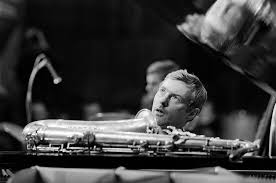
To understand the profound, haunting depths of The Jazz Compass, one must look behind the Iron Curtain in 1950s Poland. It was here that a young otolaryngologist named Krzysztof Trzciński lived a dangerous double life. By day, he wore a white coat; by night, under the protective pseudonym Krzysztof Komeda, he led a musical revolution. At a time when the communist regime banned jazz as a toxic Western product, Komeda and his underground ensembles transformed the music into an anthem of intellectual resistance. He didn’t just copy American bebop; he injected it with a deep, brooding Slavic melancholy and a sweeping romantic lyricism, single-handedly laying the architectural foundation for what the world would soon celebrate as the Polish School of Jazz.
The Astigmatic Paradigm and the Polanski Alliance
For the high-art connoisseur tracking the absolute monuments of European music, Komeda’s 1966 masterpiece, Astigmatic, is the ultimate holy grail. It stripped jazz of its standard blues structures and replaced them with open-ended, modal, and deeply dramatic soundscapes that felt like avant-garde classical tone poems. This hyper-visual, atmospheric genius made Komeda the definitive sonic alter-ego for legendary film director Roman Polanski. Together, they forged one of the most brilliant partnerships in cinema history, with Komeda composing the brilliant, nerve-wracking soundtracks for Knife in the Water (1962), The Fearless Vampire Killers (1967), and the Hollywood psychological horror masterpiece, Rosemary’s Baby (1968). His chilling, beautiful “Rosemary’s Lullaby” remains an untouchable benchmark of cinematic composition.
The Eternal Lullaby Across the Infinite Latitude
True to the forward-thinking, borderless spirit of Jazz Latitude, Krzysztof Komeda’s musical geography is a beautiful, tragic monument to artistic immortality. In late 1968, a freak accidental fall at a party in Los Angeles led to a tragic brain injury. Flown back to Warsaw in a coma, Komeda passed away in April 1969 at the young age of 37. Though his life was cut short, his cultural footprint remains colossal. He left an immovable, deeply evocative coordinate on our map—proving to generations of musicians that jazz does not need to roar with American swing to be powerful; it can whisper with the cold, poetic winds of Eastern Europe and still shake the entire world to its core.