Two Modern Jazz Worlds, One Decade
A Connection More Complicated Than It Appears
The title suggests a simple story. Blue Note Records was one of the defining institutions of modern American jazz, Brazilian musicians were increasingly interested in jazz during the 1960s, and therefore the two worlds must have developed through a direct exchange of musicians, records and ideas. The reality is more interesting precisely because it is less convenient.
Blue Note did not create the international bossa nova phenomenon. It was not the principal American label documenting Brazilian musicians during the first explosion of interest in the music, nor did the Brazilian instrumental groups emerging in Rio de Janeiro and São Paulo simply reproduce the hard bop being recorded in New York. The relationship between Blue Note and Brazilian jazz was indirect, uneven and constantly changing. There were genuine points of contact, but they existed inside a much larger network involving musicians, nightclubs, record companies, touring ensembles, arrangers and listeners on both sides of the equator.
Understanding that distinction changes the story. Instead of searching for Brazilian traces in every Blue Note recording with spacious harmony or assuming that every Brazilian piano trio was modeled on Horace Silver, we can examine how two extraordinary jazz cultures developed during the same decade. New York musicians were pushing hard bop toward post-bop, modal composition, soul jazz and increasingly open forms. Brazilian musicians were moving from bossa nova toward samba-jazz and a broader instrumental language that drew on samba, modern harmony and improvisation without surrendering its local rhythmic identity.
The connection was not imitation.
It was participation in the same expanding modern jazz world.
Blue Note at the Beginning of the 1960s
By 1960, Blue Note had already developed one of the most recognizable identities in jazz. Alfred Lion and Francis Wolff had built a catalog around musicians whose work combined the technical language of bebop with blues, gospel, rhythm and blues and the increasingly forceful rhythmic character associated with hard bop. Art Blakey and the Jazz Messengers, Horace Silver, Hank Mobley, Lee Morgan and other musicians connected with the label helped establish a language that was sophisticated without becoming detached from the social energy of African American music.
Yet Blue Note was never as stylistically uniform as its mythology can suggest. The label’s identity was strong, but the musicians within it were moving in different directions. Jimmy Smith’s organ recordings expanded the relationship between jazz, blues and popular audiences. Andrew Hill would pursue highly individual compositional structures. Herbie Hancock and Wayne Shorter would reshape the possibilities of small-group writing. Eric Dolphy, Cecil Taylor and Ornette Coleman represented even more radical conceptions of improvisation and form.
The important point is that Blue Note entered the 1960s as a label in motion.
Hard bop was not a destination. It was part of an evolving language.
This matters when considering Brazil because the music circulating internationally under the broad name of “jazz” was itself changing rapidly. Brazilian musicians were not encountering a fixed American style. They were hearing bebop, cool jazz, hard bop, modal developments, big-band writing and countless individual approaches at the same time.
The influence could therefore never be reduced to a single Blue Note sound.
Brazil Was Changing Just as Quickly
The Brazilian side of the story was equally dynamic. Bossa nova had transformed popular music through a new relationship among samba rhythm, sophisticated harmony, intimate singing and economical instrumentation. João Gilberto, Antônio Carlos Jobim and the musicians surrounding that movement created a language whose apparent restraint concealed considerable rhythmic and harmonic complexity.
But Brazilian instrumentalists did not stop there.
In Rio’s clubs and recording studios, musicians began exploring forms that gave improvisation a more central role while retaining the rhythmic intelligence of samba. Piano, bass and drums became an especially important formation. Horns could be added, percussion could expand the rhythmic field, and arrangements increasingly reflected the influence of modern jazz without simply abandoning Brazilian structures.
The term samba-jazz would eventually provide a convenient name for much of this activity, but the musicians themselves were not necessarily working from a fixed manifesto. They were responding to what they heard around them.
American jazz was part of that environment.
So were samba, nightclub music, bossa nova, radio orchestras, dance traditions and the rapidly changing Brazilian recording industry.
The Piano Trio Becomes a Brazilian Laboratory
One of the most striking developments of early-1960s Brazilian instrumental music was the proliferation of piano trios. The format was familiar from American jazz, but Brazilian musicians transformed its internal mechanics.
The piano could carry melody, harmony and rhythmic punctuation simultaneously. The bass no longer had to function only as a walking foundation. Most importantly, the drummer approached the ensemble from a rhythmic tradition in which samba could not be reduced to an imported pattern beneath jazz harmony.
This distinction is essential.
A Brazilian trio playing modern harmony over samba-derived rhythm was not simply an American jazz trio with different percussion. The placement of accents, interaction with the bass and relationship between ride cymbal, snare and bass drum created another kind of forward motion. Improvisation occurred inside that rhythmic environment rather than floating above it.
Groups such as Tamba Trio, Bossa Três, Zimbo Trio and Milton Banana Trio demonstrated how many different musical personalities could emerge from similar instrumentation. Their existence alone makes it difficult to speak of a single Brazilian response to American jazz.
The piano trio had become a laboratory.
Edison Machado and the Reinvention of the Drum Set
Few musicians demonstrate the independence of Brazilian jazz development more clearly than Edison Machado. His importance lies not simply in having combined jazz drumming with samba. Machado participated in a broader transformation of how samba could be articulated on the modern drum set.
The rhythmic power associated with his playing gave instrumental samba a propulsion very different from the understated image that international audiences often associated with Brazilian music after the success of bossa nova. This was music capable of force, velocity and dramatic interaction.
Machado’s work also reminds us why the phrase “Brazilian jazz” can be misleading when it implies that jazz is the primary language and Brazilian rhythm an additional color. In the strongest samba-jazz performances, samba is not decoration. It organizes the ensemble.
His 1964 album É Samba Novo stands as one of the crucial documents of that moment. The title itself suggests the ambition: not the rejection of samba, but the possibility of making it new. The ensemble included musicians capable of moving comfortably through modern harmonic language while the rhythmic conception remained decisively Brazilian.
There is no need to claim that Blue Note directly produced this development.
The more important fact is that it occurred at the same historical moment when Blue Note musicians were also asking how a small jazz ensemble could be reorganized.
Horace Silver and the Danger of Easy Comparisons
Horace Silver inevitably appears in discussions of Brazilian piano jazz because his music was widely influential and because his rhythmic approach made him especially attractive to musicians interested in combining modern harmony with strong groove. His compositions could be concise, memorable and harmonically sophisticated while remaining deeply connected to blues and gospel.
It is tempting, therefore, to place a Brazilian pianist beside Silver and declare a direct lineage.
Sometimes influence may indeed have existed. American jazz records circulated in Brazil, musicians listened closely to them, and bebop and hard bop became important reference points. But resemblance does not automatically establish influence, and influence does not mean reproduction.
Brazilian pianists brought their own rhythmic education to the instrument. Samba created different expectations about subdivision, accent and interaction. Even when an American harmonic vocabulary was present, the rhythmic organization could transform its meaning.
The more useful question is not whether Brazilian musicians became versions of Horace Silver.
It is what happened when modern jazz vocabulary entered a musical culture that already possessed an extraordinarily sophisticated rhythmic language of its own.
Tamba Trio and the Art of Refinement
Tamba Trio provides one answer.
With Luiz Eça at the piano, Bebeto Castilho on bass and other instruments, and Hélcio Milito on drums and percussion, the group developed a highly refined approach in which instrumental virtuosity, vocal arrangement and Brazilian rhythm could coexist. Their recordings demonstrate that samba-jazz did not have to choose between rhythmic intensity and carefully constructed form.
Eça’s pianism could reflect knowledge of modern jazz harmony, but the group’s identity cannot be explained by American influence alone. Vocal textures, rhythmic organization and the treatment of Brazilian repertoire created a musical world with its own internal logic.
This is where comparisons with Blue Note become useful only if they remain comparisons rather than claims of direct causation.
A Blue Note ensemble and Tamba Trio might both value improvisation, harmonic sophistication and strong interaction. Yet those shared priorities could produce radically different results because the musicians were working from different histories.
Modernity does not require sameness.
Two musical cultures can confront similar artistic questions and arrive at different answers.
São Paulo Builds Another Center
The history of Brazilian instrumental jazz in the 1960s cannot be confined to Rio de Janeiro. São Paulo developed its own powerful scene, and Zimbo Trio became one of its defining ensembles.
Formed by pianist Amilton Godoy, bassist Luiz Chaves and drummer Rubinho Barsotti, Zimbo Trio combined technical precision with a deep engagement in Brazilian repertoire. The group’s association with O Fino da Bossa, the influential television program hosted by Elis Regina and Jair Rodrigues, placed sophisticated instrumental music inside a much broader popular culture.
That context differed significantly from the New York jazz-club and record-label ecosystem associated with Blue Note. Brazilian instrumentalists often moved between television, accompaniment, studio sessions, festivals and their own groups. The boundaries between instrumental jazz and popular song could therefore be unusually permeable.
This environment would become crucial as MPB developed later in the decade.
Again, the Blue Note comparison reveals difference as much as similarity. Alfred Lion could build albums around individual leaders and carefully selected sessions. Brazilian musicians frequently operated within a professional world where the same instrumentalist might accompany a singer on television, play samba-jazz in a club and enter a studio for an instrumental recording within a short period.
Both systems produced sophisticated modern music.
They did not produce it in the same way.
Hard Bop Crosses Borders Without a Passport
The international circulation of American jazz recordings ensured that hard bop became part of the listening environment for musicians far beyond the United States. Art Blakey, Miles Davis, Horace Silver, Sonny Rollins, John Coltrane and countless others became reference points for instrumentalists learning how modern improvisation could function.
Blue Note was an important part of that circulation because its catalog documented so many central figures. But it would be inaccurate to imagine Brazilian musicians listening exclusively, or even primarily, to one label. Records arrived as music, not as a neatly separated history of corporate catalogs.
A musician could absorb an idea from a Blue Note session, another from a Riverside record, another from Miles Davis on Columbia and another from an imported European release. Live performances, radio broadcasts and conversations among musicians added further layers.
Influence operated through accumulation.
That makes the historical relationship harder to summarize, but far more believable.
Two Different Ways of Modernizing the Small Group
Place early-1960s Blue Note beside Brazilian samba-jazz and one striking parallel emerges. Both scenes were intensely interested in what a relatively small ensemble could accomplish.
In New York, hard bop groups used compact instrumentation to create music capable of enormous expressive range. Trumpet and tenor saxophone over piano, bass and drums became one of the era’s defining configurations, but composers continually found ways to make the format sound new. Rhythmic structures changed, harmonic movement became more ambiguous, and compositions increasingly challenged the familiar distinction between written theme and improvised solo.
Brazilian musicians were conducting their own experiments, particularly through the piano trio. The question was not identical because samba changed the rhythmic foundation. Yet the artistic challenge was comparable: how much identity could be generated with a limited number of musicians?
The answers were different.
That is precisely why listening across the two scenes can be so illuminating.
Bossa Nova Changes the International Map
While samba-jazz was developing inside Brazil, bossa nova was beginning to transform the international perception of Brazilian music. American musicians had encountered Brazilian rhythms before the 1960s, but the new wave of recordings and collaborations gave the exchange unprecedented visibility.
The American jazz industry suddenly had commercial reasons to pay attention to Brazil. Record companies searched for repertoire, musicians recorded bossa nova albums, and Brazilian composers entered the standard vocabulary of jazz with remarkable speed.
This boom would generate brilliant collaborations and opportunistic imitations alike.
Blue Note could not remain completely outside such a large cultural movement. The label’s musicians traveled, listened and worked within the same professional networks through which Brazilian music was circulating.
But the strongest Blue Note-Brazil connection would not begin with an abstract similarity between Herbie Hancock and bossa nova.
It would begin with something much more concrete.
A musician traveled to Brazil.
He heard the country for himself.
Duke Pearson Goes to Brazil
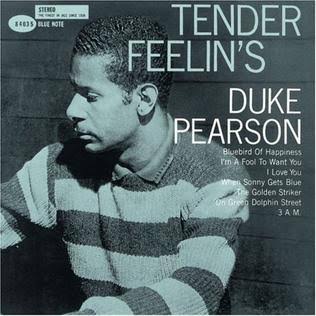
In 1961, pianist and arranger Duke Pearson toured Brazil with singer Nancy Wilson. The experience became important enough to leave a direct trace in his music. Pearson would later connect his encounter with Brazil to his interest in bossa nova, and the trip helped inspire “Cristo Redentor,” the composition that became the centerpiece of Donald Byrd’s A New Perspective.
This is a different kind of evidence.
We no longer need to infer Brazilian influence from a chord voicing or a feeling of spaciousness. There is a journey, a musician, an experience and a composition.
Pearson would subsequently become an important figure inside Blue Note, working not only as a pianist and composer but in arranging and A&R roles. His presence therefore provides a genuine bridge between the label and the Brazilian musical world.
And it points toward the next phase of the story.
By the early 1960s, Blue Note and Brazilian jazz had developed largely along their own paths. American jazz influenced Brazilian musicians, but that influence belonged to a much wider network than one record label. Samba-jazz, meanwhile, had become an independent modern language rather than a Brazilian imitation of hard bop.
Now musicians were beginning to travel between the worlds.
The connection was about to become less theoretical.
And much more audible.
When Brazil Entered American Jazz
From Parallel Development to Direct Contact
At the beginning of the 1960s, Blue Note and Brazilian instrumental music could be understood largely as parallel expressions of a rapidly modernizing jazz culture. American recordings circulated in Brazil, Brazilian musicians listened closely to developments in bebop and hard bop, and the small-group language of jazz offered useful possibilities for instrumentalists interested in expanding samba. Yet influence remained diffuse. It passed through records, radio, touring musicians and a much broader American jazz world than any single label could represent.
The situation changed as musicians began traveling more frequently between the United States and Brazil. Direct experience replaced some of the abstraction. American musicians could encounter Brazilian rhythm in the country where it functioned as a living musical language rather than as an imported stylistic device, while Brazilian musicians increasingly found themselves participating in international recording and performance networks. The bossa nova boom accelerated this process dramatically, but the most revealing connections were not always the most commercially visible ones. In the case of Blue Note, Duke Pearson provides an unusually clear example because Brazil affected not only his listening but his composition, and Pearson would later become an important creative presence within the label itself.
Duke Pearson Hears Brazil
Duke Pearson traveled to South America in 1961 as part of the musical organization accompanying singer Nancy Wilson. Brazil left a strong impression. This was just before bossa nova became a major American commercial phenomenon, which makes the timing important. Pearson encountered Brazilian music before the United States recording industry had fully transformed it into a marketable style.
The difference between hearing a rhythm on an imported record and experiencing a musical culture in its own environment can be profound. In Brazil, samba was not a specialist genre or an exotic rhythmic alternative. It was part of a vast cultural system extending across popular song, dance, carnival traditions, radio, clubs and everyday musical life. Bossa nova represented one contemporary transformation of that system rather than the totality of Brazilian music.
For an arranger and pianist such as Pearson, the encounter offered more than a collection of rhythms to imitate. Brazilian music demonstrated another way of balancing harmonic sophistication, melodic directness and rhythmic identity. These were questions already central to modern jazz, but Brazil organized them differently.
Pearson returned to the United States with more than an impression.
The experience entered his writing.
“Cristo Redentor” and the View From Corcovado
One of the clearest consequences of Pearson’s Brazilian experience was “Cristo Redentor,” named for the monumental statue overlooking Rio de Janeiro from Corcovado. The composition became widely known through Donald Byrd’s A New Perspective, recorded for Blue Note in 1963.
The piece is important to this history precisely because its Brazilian connection does not depend on stylistic speculation. Pearson had traveled to Brazil. The landscape and experience remained with him. He wrote a composition explicitly connected to Rio, and that composition entered one of Blue Note’s significant recordings of the decade.
Yet “Cristo Redentor” is not a bossa nova composition in any simple sense. Its identity is shaped by the larger conception of A New Perspective, an album famous for integrating jazz ensemble writing with voices. The effect is spiritual, spacious and dramatic. The Brazilian connection resides in inspiration and memory rather than in the reproduction of a samba pattern.
This distinction tells us something important about cultural exchange. Influence does not always announce itself through obvious stylistic markers. A musician can travel somewhere, encounter a culture and carry away an image, atmosphere or compositional idea that later enters another musical language.
Brazil became part of Pearson’s imagination.
Blue Note preserved the result.
Donald Byrd and a Label Already in Transition
A New Perspective also reveals how much Blue Note itself was changing. Donald Byrd had emerged from the hard-bop world, but the album was designed around a concept larger than the conventional trumpet-led quintet session. Pearson’s arrangements and the use of voices created a sound that retained improvisation while expanding the scale of the compositions.
This is precisely why the record belongs in a discussion of Blue Note and Brazil without needing to be described as Brazilian jazz. Its importance lies in the movement of ideas across contexts.
The early 1960s were filled with such movement. Jazz musicians were increasingly interested in modal structures, non-American rhythmic traditions, gospel, orchestration and forms that extended beyond familiar song structures. Brazilian music entered this environment at exactly the moment when many American musicians were already searching for new organizational possibilities.
That timing helps explain the extraordinary speed with which bossa nova moved through American jazz.
The ground was ready for exchange.
Before “The Girl From Ipanema” Became Everywhere
The international bossa nova explosion is often compressed into a few famous names: João Gilberto, Antônio Carlos Jobim, Stan Getz and Astrud Gilberto. Their importance is undeniable, but the American encounter with Brazilian music had been developing before the enormous success of Getz/Gilberto.
Guitarist Charlie Byrd had encountered Brazilian music during a South American tour and subsequently helped stimulate Stan Getz’s interest in the repertoire. Their 1962 album Jazz Samba became a major American success, demonstrating that Brazilian material could reach a large audience without being presented simply as novelty music.
The commercial consequences were immediate.
Once record companies recognized that bossa nova could sell, albums appeared rapidly. Some represented serious engagement with Brazilian repertoire and musicians; others treated the style as a fashionable rhythmic surface. “Bossa nova” became a marketing phrase capable of being attached to music whose relationship with Brazil could be extremely thin.
The distinction between cultural exchange and commercial fashion became difficult to maintain.
For Blue Note, this created an interesting situation. The label was deeply embedded in the same American jazz culture responding to Brazil, but its identity was not reorganized around the bossa nova boom.
That relative distance would prove significant.
Why Blue Note Did Not Become a Bossa Nova Label
It would have been commercially understandable for Blue Note to flood the market with bossa nova projects. Other companies recognized the opportunity, and Brazilian repertoire was becoming familiar to American listeners. Yet Blue Note’s central identity remained connected to the musicians Alfred Lion was already documenting.
This does not mean the label rejected Brazilian influence. It means that Brazilian music entered Blue Note through individual musicians and particular projects rather than through a wholesale change in catalog strategy.
That distinction helps protect the history from exaggeration.
There was no Blue Note Brazilian school comparable to the label’s association with hard bop. There was no sustained roster of Brazilian artists defining the company during the decade. Blue Note was not the principal institutional bridge through which bossa nova reached the United States.
But Blue Note musicians lived in a world where Brazilian music had suddenly become impossible to ignore.
The influence would therefore appear irregularly — through repertoire, compositions, arrangements and personal encounters.
Kenny Dorham Looks South
Trumpeter Kenny Dorham offers another useful perspective on the broader relationship between modern jazz and Brazilian music. Dorham had deep roots in bebop and hard bop, but his musical curiosity extended well beyond those categories. His interest in Afro-Latin and Brazilian rhythmic possibilities reflected a generation of American musicians for whom jazz was becoming increasingly international in its references.
Dorham’s presence in the Blue Note world matters because it reminds us that labels do not determine the complete musical imagination of the artists who record for them. Musicians carried interests from one session to another and from one company to another. A trumpeter could record for Blue Note while exploring Latin or Brazilian ideas elsewhere; a pianist could encounter Brazil on tour and later bring the experience into a Blue Note project.
The exchange therefore operated through musicians more than corporate strategy.
This is a recurring pattern.
Following labels alone produces only part of the map.
Following musicians reveals the routes connecting it.
Brazilian Repertoire Becomes Jazz Repertoire
Perhaps the most consequential effect of bossa nova’s international success was the rapid incorporation of Brazilian compositions into the repertoire of jazz musicians. Jobim’s songs in particular became standards with astonishing speed.
This mattered beyond commercial fashion because repertoire is one of the most powerful mechanisms through which musical cultures interact. When a jazz musician repeatedly performs a composition, the encounter becomes deeper than borrowing a rhythm. The player must negotiate the harmony, phrasing, melodic structure and emotional character of the song.
Brazilian compositions posed fascinating questions. Their harmonic movement could feel familiar to musicians trained in modern jazz while still behaving differently from standard American repertoire. The relationship between melody and rhythm could resist conventional swing interpretation. Performers had to decide how much of the Brazilian rhythmic identity to preserve and how much to transform.
Some American jazz versions flattened these distinctions.
Others discovered new possibilities within them.
Either way, Brazilian composition had entered the working vocabulary of jazz.
What American Musicians Heard in Jobim
Antônio Carlos Jobim became central to this process because his compositions could survive radical changes of instrumentation while retaining strong identities. Songs such as “Desafinado,” “Corcovado,” “Wave” and “The Girl From Ipanema” offered harmonies sophisticated enough to interest improvisers but melodies memorable enough to reach listeners far outside jazz.
American musicians often responded to the harmonic dimension first. The chord progressions seemed compatible with the modern jazz language they already understood. But Jobim’s music also presented a challenge because harmony alone could not reproduce its character.
The rhythmic placement of the melody mattered.
Silence mattered.
The understated relationship between accompaniment and voice mattered.
This is one reason the most successful encounters with Brazilian repertoire tend to avoid treating bossa nova as merely a beat. Brazilian music was not a rhythmic effect applied to an American song form. Its components were interdependent.
Musicians who recognized that fact could transform the repertoire without trivializing it.
Meanwhile, Brazilian Jazz Was Moving Beyond Bossa Nova
The American fascination with bossa nova created an irony. At the same moment international audiences were discovering one particular image of Brazilian modernity, musicians inside Brazil were already moving beyond it.
Samba-jazz became more assertive. Instrumental ensembles emphasized improvisation and rhythmic intensity. Television festivals helped create a new public arena for songwriting. MPB emerged as a broad and contested field. Political tensions following the 1964 military coup increasingly affected cultural life, while musicians searched for forms capable of expressing a Brazil far more complicated than the beachside elegance associated with the international bossa nova image.
For instrumentalists, jazz remained part of this development, but it was absorbed into a changing Brazilian context. Hard bop could provide harmonic and improvisational ideas without determining the music’s entire identity. Samba remained a fundamental rhythmic source, while regional traditions and new popular styles expanded the available vocabulary.
The Brazil that American jazz musicians had begun to encounter was therefore itself moving.
Cultural exchange never occurs between stationary objects.
Blue Note Moves Beyond Hard Bop
Blue Note was undergoing an equally significant transformation. By the middle of the decade, albums by Herbie Hancock, Wayne Shorter, Andrew Hill, Bobby Hutcherson, Grachan Moncur III and others were demonstrating how far the label had moved beyond a narrow hard-bop definition.
This is where the old temptation to claim aesthetic similarity with Brazil becomes particularly dangerous. Herbie Hancock’s use of space does not become Brazilian simply because bossa nova also valued space. Wayne Shorter’s compositional ambiguity does not demonstrate Brazilian influence merely because Brazilian composers used sophisticated harmony. Bobby Hutcherson’s rhythmic openness cannot be treated as evidence of samba simply because both musical worlds were interested in rhythm.
These developments are more meaningful when allowed to remain distinct.
What Blue Note and Brazilian instrumental music shared was not necessarily a vocabulary.
They shared a historical condition: both were modern jazz cultures refusing to remain where they had been at the beginning of the decade.
Duke Pearson Returns to the Center
As Blue Note expanded stylistically, Duke Pearson became increasingly important behind the scenes. His abilities as pianist, composer and arranger made him valuable in a label that was broadening its musical palette. He understood hard bop but was not confined by it. He could write for larger ensembles, support singers and instrumentalists, and create arrangements whose sophistication did not depend on constant density.
His Brazilian experience therefore became one element inside a much larger musical identity.
That is exactly why Pearson represents such a strong bridge for this story. He was not a musician who visited Brazil, adopted bossa nova and spent the rest of his career reproducing it. He absorbed an experience and allowed it to enter a broader compositional language.
This is cultural exchange without caricature.
And Pearson’s role at Blue Note gave that exchange institutional significance even when the label itself never developed a formal Brazilian program.
The Difference Between Influence and Evidence
The history of jazz is filled with plausible connections that become repeated until they appear factual. Two musicians use similar chords, therefore one influenced the other. Two recordings share an atmosphere, therefore one must respond to the other. A musician once expressed admiration for a country, therefore every later rhythmic gesture becomes evidence of that country’s influence.
This method creates attractive narratives but weak history.
The relationship between Blue Note and Brazil becomes stronger when we demand more evidence, not less. Duke Pearson’s Brazilian journey matters because it is documented and because it produced identifiable creative consequences. The widespread adoption of Jobim’s repertoire matters because recordings and performances demonstrate it. American tours in South America matter because musicians actually encountered the culture.
Once these connections are established, we no longer need to invent others.
The real history is sufficiently interesting.
A Network Larger Than Blue Note
By the middle of the 1960s, it becomes increasingly difficult to speak about a Blue Note-Brazil relationship without acknowledging that both belonged to a much larger network. Verve was crucial to the international success of bossa nova. Stan Getz became one of the most visible American figures associated with Brazilian music. Creed Taylor played a major role in shaping how that music was recorded and marketed internationally. Brazilian musicians traveled, American musicians toured, and compositions crossed borders faster than many of the artists who wrote them.
Blue Note occupied one important position inside that network.
Its contribution was not domination.
It was participation.
That distinction is historically healthier because it allows the label’s genuine points of contact with Brazil to remain visible without transforming them into a corporate mythology that never existed.
What Changed After the Encounter
By the end of the decade’s first half, neither side of the story looked the way it had in 1960. Brazilian music had become internationally visible on an unprecedented scale, but samba-jazz and MPB were already demonstrating how inadequate the global bossa nova stereotype could be. Blue Note still carried the identity created during the hard-bop era, but its catalog increasingly included music that challenged the very categories through which the label had become famous.
The two worlds had not merged.
They did not need to.
Musicians had traveled between them. Brazilian songs had entered American jazz repertoire. American jazz continued circulating among Brazilian instrumentalists. Duke Pearson had brought an experience of Rio into a composition recorded for Blue Note. The international jazz map had become more complicated.
That complexity is the real connection.
And during the second half of the 1960s, it would become even harder to describe jazz as a conversation taking place primarily inside the United States. Brazilian musicians were developing new forms at home while a generation increasingly prepared to work abroad. American jazz was absorbing international repertoire and rhythmic ideas without abandoning its own internal transformations.
The next chapter therefore belongs neither entirely to Blue Note nor entirely to bossa nova.
It belongs to the internationalization of modern jazz itself.
Buy Amazon
What Blue Note and Brazil Actually Shared
By the End of the Decade, the Map Had Changed
Jazz entered the 1960s with New York still occupying an extraordinary position in its international imagination. The city’s clubs, musicians and record labels helped determine what listeners around the world understood as modern jazz, and Blue Note was one of the institutions most closely associated with that authority. Yet by the end of the decade, the geography had become harder to describe from a single center. European scenes were developing distinct identities, African musicians were participating in new forms of exchange, Caribbean and Latin American traditions continued reshaping rhythm inside American jazz, and Brazilian music had moved from regional modernism to international cultural force.
Brazil’s transformation was particularly striking because international success did not produce stylistic stability. Bossa nova became a worldwide symbol of Brazilian sophistication just as musicians inside the country were pushing beyond its familiar vocabulary. Samba-jazz grew more assertive, MPB expanded the possibilities of songwriting, television festivals created new public stages, and artists responded to increasingly difficult political circumstances after the 1964 military coup. The country that American listeners imagined through bossa nova was only one version of the Brazil its musicians actually inhabited.
Blue Note was changing just as dramatically. The label that had become synonymous with hard bop increasingly documented music that made the category insufficient. By the late 1960s, neither “the Blue Note sound” nor “Brazilian jazz” could comfortably describe everything occurring within the worlds those phrases supposedly contained.
The connection between them therefore becomes clearer once we stop looking for a single shared style.
What they shared was movement.
Blue Note After the Hard-Bop Center
Hard bop remained fundamental to Blue Note’s identity throughout the decade, but the label’s catalog increasingly demonstrated how many directions could grow from that foundation. Wayne Shorter developed compositions whose structures seemed to shift beneath the improvisers. Herbie Hancock explored rhythm and harmony in ways that challenged familiar relationships between accompaniment and solo. Andrew Hill created a highly personal compositional language. Bobby Hutcherson expanded the expressive possibilities of the vibraphone within increasingly open forms. Larry Young approached the organ from a perspective far removed from the instrument’s most conventional soul-jazz associations.
These musicians were not participating in one movement with a single manifesto. Their importance lies partly in how differently they responded to the same historical moment.
That observation is useful when considering Brazilian instrumental music because it prevents superficial comparison. There is little value in claiming that an ambiguous Wayne Shorter composition is Brazilian because Brazilian composers also used complex harmony, or that Herbie Hancock’s rhythmic experiments somehow demonstrate a hidden samba connection. Such claims make both traditions less interesting by reducing musical complexity to resemblance.
A better comparison asks what musicians do when inherited forms no longer seem sufficient.
Blue Note’s post-bop generation answered one way.
Brazilian musicians answered another.
Samba-Jazz Refuses to Remain a Hybrid
The term samba-jazz can sound as though two complete styles were combined: samba on one side, jazz on the other. But by the middle and late 1960s, the strongest Brazilian instrumental music made such arithmetic increasingly inadequate. Musicians had absorbed enough modern jazz language that improvisation and extended harmony no longer felt imported, while samba remained too deeply embedded in rhythmic practice to function merely as local flavor.
The result was not a compromise between two traditions.
It was a language shaped by their interaction.
Edison Machado’s rhythmic innovations had already demonstrated how aggressively samba could function inside a modern instrumental ensemble. Tamba Trio showed how arrangement, voices, improvisation and rhythmic refinement could coexist. Zimbo Trio developed a highly disciplined approach that linked instrumental sophistication to Brazil’s broader popular culture. Other musicians expanded the field through horn-led ensembles, larger arrangements and increasingly adventurous repertoire.
What mattered was not how closely any of them resembled Blue Note.
What mattered was that Brazilian musicians had become active participants in the evolution of modern jazz while remaining rooted in musical structures that could not be reduced to American models.
Records Travel Differently From Musicians
The circulation of records played an enormous role in this development. Imported jazz albums could reach musicians who had never visited New York and might never meet the players they admired. A recorded solo could be studied repeatedly. A pianist could absorb voicings, a drummer could analyze cymbal phrasing, and an arranger could hear how horns were distributed across an ensemble.
Blue Note belonged to this circulation because its recordings contained so many important musicians. But the records did not arrive carrying instructions about how their influence should be classified. A Brazilian musician could hear Art Blakey on Blue Note, Miles Davis on Columbia, Bill Evans on Riverside and Stan Getz on Verve without treating the labels themselves as stylistic borders.
This is why the concept of a direct “Blue Note influence” on Brazilian jazz must be used carefully. The label was certainly part of the listening culture. Its musicians mattered enormously. But Brazilian instrumentalists were absorbing a much broader spectrum of American jazz.
Influence followed ears, not corporate catalogs.
The reverse process worked similarly. Brazilian compositions entered American jazz through recordings, sheet music, touring musicians and personal relationships. Once a Jobim song became part of the repertoire, its movement no longer depended on one company.
Music was traveling faster than institutional histories could contain it.
The Album Cover Can Distort the Network
One reason label histories become so powerful is that record covers give music a visible identity. Blue Note understood this extraordinarily well. Francis Wolff’s photography and Reid Miles’s graphic design helped create an aesthetic so coherent that decades later the label can appear almost like a self-contained artistic universe.
But musicians did not live inside album covers.
They played with artists signed to other labels. They toured internationally. They heard records released by competitors. They accompanied singers, participated in jam sessions and moved through clubs and studios where corporate identities mattered far less than musical relationships.
The same was true in Brazil. A musician associated with one ensemble might appear on another artist’s recording, accompany a singer on television and participate in an instrumental session elsewhere. The professional ecosystem was interconnected.
Following only Blue Note therefore creates an artificially narrow history.
The real connection between the label and Brazil becomes visible when Blue Note is treated as one node inside a larger network.
Duke Pearson’s journey to Brazil matters within that network.
So does the international success of Jobim’s repertoire.
So do the Brazilian musicians listening to American jazz recordings without caring which company issued them.
MPB Makes the Story Larger
As the decade progressed, MPB made any simple definition of Brazilian jazz even more difficult. The category brought together musicians whose work could engage samba, bossa nova, regional traditions, rock, orchestral composition, jazz and political songwriting in dramatically different proportions.
For instrumentalists and arrangers, this widening field created new possibilities. Jazz harmony could appear inside songs that were not jazz compositions. Improvising musicians could participate in studio recordings centered on singers and songwriters. Arrangements could draw on large orchestras without abandoning rhythmic ideas developed through samba.
The careers of musicians such as Eumir Deodato demonstrate how porous these boundaries had become. Deodato’s Brazilian experience included jazz, popular song, orchestration and bossa nova-related contexts long before his international work made stylistic hybridity part of his reputation. His career does not prove a Blue Note-Brazil lineage. It proves something larger: by the late 1960s, Brazilian musicians could possess musical identities that were already international in vocabulary before they left Brazil.
This distinction becomes increasingly important as the story approaches the 1970s.
Brazil Begins Exporting Musicians, Not Just Songs
The first American bossa nova boom had made Brazilian compositions internationally famous. But another phase of exchange became increasingly important as Brazilian musicians themselves established careers abroad.
The difference was substantial.
A composition can be adapted to another musical culture while its creator remains distant. A musician carries habits of rhythm, interaction, phrasing and listening into every ensemble in which he or she participates. When Brazilian instrumentalists entered American jazz and fusion groups, the exchange became embodied.
Airto Moreira would become one of the most visible examples. His percussion work contributed to a rapidly changing jazz landscape in which rhythm was being reconsidered across multiple traditions. Flora Purim would develop an international career in which the voice functioned with remarkable instrumental freedom. Deodato would bring years of Brazilian arranging experience into American studios before becoming internationally famous under his own name.
Their importance belongs primarily to the next decade.
But the conditions that made their careers possible were created during the 1960s.
The 1970s Should Not Be Projected Backward
Historical narratives often use later success to explain earlier events. Because Brazilian musicians became highly visible within jazz fusion during the 1970s, it becomes tempting to search the previous decade for an inevitable path toward that outcome.
History rarely works so neatly.
Airto’s later presence in major American jazz groups does not mean Brazilian instrumental music of 1963 was already “fusion.” Deodato’s later success does not transform every Brazilian arrangement he made in the 1960s into preparation for CTI. Flora Purim’s international career does not mean bossa nova was naturally evolving toward jazz-rock.
The musicians were responding to changing circumstances rather than following a predetermined trajectory.
Recognizing this uncertainty makes the 1960s more interesting. Brazilian jazz was developing on its own terms while becoming increasingly connected to an international network. Blue Note was expanding beyond hard bop without knowing what categories later historians would use for its music.
The decade was open.
What About Herbie Hancock?
Herbie Hancock provides a useful test of how carefully this history should be handled. His Blue Note recordings are filled with harmonic sophistication, rhythmic imagination and an extraordinary use of space. These qualities can make comparisons with Brazilian music attractive, especially because Hancock would later participate in an increasingly international jazz culture.
But space is not Brazilian.
Sophisticated harmony is not Brazilian.
Rhythmic subtlety is not Brazilian.
Treating these general musical characteristics as evidence of Brazilian influence would tell us almost nothing about Hancock and very little about Brazil. It would replace history with atmosphere.
A more productive approach is to listen to Maiden Voyage and a Brazilian instrumental record from the same period as two independent statements about what a modern small ensemble could become. Both might reject predictable harmonic movement. Both might treat rhythm as more than accompaniment. Both might create unusual amounts of space.
The similarities can stimulate listening without being converted into claims of causation.
Comparison is valuable.
Invented lineage is not.
And What About Wayne Shorter?
The same principle applies to Wayne Shorter. His compositions during the Blue Note years expanded the structural possibilities of post-bop through melodies, harmonies and forms that often resist simple resolution. Brazilian composers of the period were also expanding harmonic and formal language.
That does not establish a direct connection.
Shorter’s significance is greater when his compositional world is allowed to remain his own. Brazilian music becomes more significant when it is not used as a vague adjective for every form of lyrical or harmonically adventurous jazz.
The real internationalism of the 1960s does not require every musician to influence every other musician.
It requires us to understand that multiple centers of innovation existed simultaneously.
Duke Pearson Remains the Strongest Bridge
This is why Duke Pearson deserves such importance in the story. His connection with Brazil does not depend on interpretation alone. He traveled there. The experience affected him. “Cristo Redentor” gave that encounter compositional form, and his subsequent importance within Blue Note placed someone with direct Brazilian experience near the creative center of the label.
Pearson demonstrates what genuine cultural connection can look like.
It can be specific without being total.
Brazil did not determine his entire musical identity, and Pearson did not transform Blue Note into a Brazilian-oriented label. An experience entered his imagination, became part of his writing and existed beside numerous other influences.
This modest claim is historically more convincing than a grand theory.
It is also more human.
Musicians travel.
They hear something.
They remember it.
Sometimes the memory becomes music.
Blue Note, Brazil and the Question of Modernity
If Blue Note and Brazilian jazz shared anything fundamental during the 1960s, it was not a particular chord progression or rhythmic pattern. It was a commitment to modernity understood as movement rather than style.
Blue Note musicians repeatedly questioned the structures they inherited. Hard bop remained powerful, but it could open toward modal writing, freer improvisation, unusual meters, orchestral experiments and new relationships between rhythm and form.
Brazilian musicians were engaged in their own process of transformation. Bossa nova had already reimagined samba and popular song. Samba-jazz created another relationship between Brazilian rhythm and improvisation. MPB widened the field further, making stylistic boundaries increasingly unstable.
Neither culture needed the other in order to become modern.
Their interaction mattered because each was already moving.
What Blue Note and Brazil Did Not Share
The distinctions are equally important.
Blue Note did not create samba-jazz.
Brazilian instrumental music was not a South American version of hard bop.
There was no systematic Blue Note program devoted to Brazilian jazz during the 1960s comparable to the bossa nova activity associated with other American labels and producers.
Herbie Hancock’s use of space is not evidence of Brazilian influence.
Wayne Shorter’s harmonic language should not be explained through speculative Brazilian parallels.
And the later success of Brazilian musicians in American fusion cannot be projected backward as proof that the relationship had always been direct.
Removing these claims does not weaken the connection.
It reveals its actual shape.
What They Did Share
Musicians listened across borders. American jazz records circulated in Brazil. Brazilian compositions entered the American jazz repertoire. Touring created direct encounters. Bossa nova changed American awareness of Brazilian music. Samba-jazz demonstrated that Brazilian instrumentalists could absorb jazz vocabulary without surrendering their rhythmic identity. Duke Pearson carried an experience of Brazil into music recorded for Blue Note. The label’s artists and Brazilian musicians participated, from different positions, in an increasingly international conversation about what modern jazz could become.
That is enough.
In fact, it is more interesting than the myth.
Two Worlds Inside a Larger History
The connection between Blue Note Records and Brazilian jazz in the 1960s ultimately cannot be represented by a straight line. It resembles a network.
New York connects to Rio and São Paulo through records, musicians, repertoire and travel. Brazil connects back through songs, rhythms and musicians who would increasingly enter the international jazz circuit. Blue Note sits inside the network alongside Verve, Riverside, Columbia, Atlantic and numerous other institutions. Brazilian labels, clubs, television programs and studios form another set of nodes. Musicians move among them.
Seen this way, the absence of a formal Blue Note-Brazil partnership becomes less important.
The decade itself was the connection.
Both musical cultures were asking how inherited traditions could remain alive without remaining unchanged. Both produced musicians unwilling to treat genre as a permanent boundary. Both developed languages whose influence would become even more visible during the following decade.
They did not arrive at the same answers.
That was never necessary.
The history becomes richer when we stop trying to make them sound alike.
Blue Note tells one extraordinary story about jazz in the 1960s.
Brazilian jazz tells another.
For a few crucial moments, those stories crossed.
And the crossings matter precisely because the roads remained distinct.