Every generation of jazz produces artists who look backward in order to move forward.
They do not imitate the past.
They converse with it.
The greatest among them understand that jazz has never been a museum piece. It is a living language—one that grows richer every time a new voice enters the conversation.
In recent years, one of those voices has emerged from a place few listeners traditionally associate with the center of the jazz world.
New Zealand.
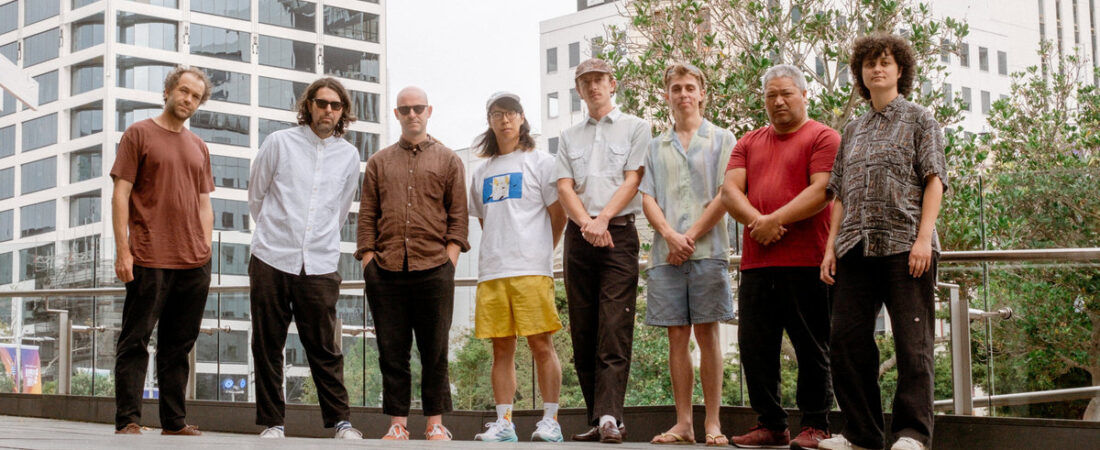
From Auckland comes The Circling Sun, a collective whose music feels simultaneously timeless and unmistakably contemporary.
Their recordings echo the spiritual intensity of John Coltrane, the expansive modal landscapes of Pharoah Sanders and the meditative lyricism of Alice Coltrane, yet they never sound like a tribute act.
Instead, they transform those influences into something distinctly their own.
Listening to The Circling Sun can feel strangely familiar.
Long, patient melodies unfold over hypnotic grooves.
The rhythm section creates movement without urgency.
Improvisations develop naturally, never rushing toward climactic displays of virtuosity.
The music breathes.
It expands.
It invites rather than demands.
In an era dominated by short attention spans and algorithm-driven playlists, The Circling Sun reminds listeners of one of jazz’s oldest virtues:
Patience.
Their compositions are not designed to impress within the first thirty seconds.
They reveal themselves gradually, rewarding careful listening with ever-deeper emotional and musical detail.
That approach places them within a remarkable lineage.
Not because they seek to recreate the sound of the 1960s, but because they share the same artistic philosophy.
Music can be exploratory without becoming inaccessible.
It can be spiritual without becoming dogmatic.
It can be sophisticated without sacrificing beauty.
That balance has made The Circling Sun one of the most compelling contemporary ensembles to emerge from the Southern Hemisphere.
A Collective Rather Than a Conventional Band
One of the first things that distinguishes The Circling Sun is its identity as a collective.
Rather than revolving around a single star performer, the ensemble emphasizes collaboration.
Ideas move freely between musicians.
Individual personalities remain important, yet every performance serves the music before the individual.
This philosophy recalls some of jazz’s greatest ensembles, where the strength of the group consistently outweighed the pursuit of individual recognition.
The result is a sound remarkably unified despite its many influences.
Listeners hear not isolated solos stitched together, but complete musical narratives shaped collectively from beginning to end.
That sense of shared purpose gives the music unusual depth.
Every instrument contributes to the emotional architecture.
No voice dominates unnecessarily.
The ensemble functions as a single creative organism.
Spiritual Jazz for a New Generation
The phrase “spiritual jazz” is often used loosely.
For some listeners, it simply describes atmospheric music.
For others, it refers specifically to the revolutionary recordings of the late 1960s and early 1970s.
The Circling Sun approaches the tradition differently.
Rather than reproducing familiar sounds, the group embraces the underlying ideals that defined spiritual jazz in the first place.
Curiosity.
Openness.
Community.
Improvisation as discovery.
Their music avoids nostalgia.
Instead, it asks a timeless question:
How can jazz express contemplation in the twenty-first century?
The answer lies not in imitation but in evolution.
The harmonic language is modern.
The production is spacious and contemporary.
The rhythmic vocabulary reflects decades of musical development.
Yet the emotional intention remains deeply connected to the work of artists such as John Coltrane, Alice Coltrane, Pharaoh Sanders and Don Cherry.
The result feels less like revival than continuation.
JazzLatitude Insight
One of the greatest strengths of The Circling Sun is that the ensemble treats spiritual jazz as a creative philosophy rather than a fixed style. Instead of reproducing the sound of the past, the musicians embrace its values—collective improvisation, patience, openness and emotional honesty—allowing those ideas to evolve naturally within a contemporary musical landscape.
Why The Circling Sun Matters Today
Modern jazz is more geographically diverse than ever before.
Great recordings no longer emerge exclusively from New York, London or Paris.
Artists from Tokyo, Melbourne, São Paulo, Cape Town and Auckland are contributing fresh perspectives that continue expanding the language of jazz.
The Circling Sun represents this new reality beautifully.
Their music demonstrates that innovation is no longer tied to geography.
What matters is imagination.
Commitment.
And the willingness to listen deeply.
In doing so, the collective has become one of the most exciting voices in contemporary spiritual jazz—not because it seeks to reinvent the genre overnight, but because it understands how enduring musical traditions continue to grow.
Quietly.
Patiently.
One inspired performance at a time.
The Sound of The Circling Sun
Where Modal Jazz Meets Modern Spiritual Expression
Listening to The Circling Sun for the first time can be a surprising experience.
The music immediately feels expansive.
There is space.
There is movement.
There is silence.
Instead of rushing toward dramatic climaxes, the ensemble allows each composition to unfold naturally, inviting the listener into an evolving musical landscape.
This patience has become one of the collective’s defining characteristics.
While many contemporary jazz recordings emphasize technical brilliance or rhythmic complexity from the outset, The Circling Sun chooses a different path.
Its performances grow organically.
Themes emerge slowly.
Textures accumulate almost imperceptibly.
Improvisation becomes less about individual display and more about collective discovery.
In many ways, their music resembles a conversation that never feels scripted.
Every voice matters.
Every contribution reshapes the direction of the journey.
The Influence of Spiritual Jazz
Although The Circling Sun has developed a distinctive identity, listeners will immediately recognize echoes of some of jazz’s greatest innovators.
John Coltrane’s search for transcendence.
Alice Coltrane’s luminous harmonic worlds.
Pharoah Sanders’ emotional intensity.
Don Cherry’s openness to global musical traditions.
Even the meditative patience of Charles Lloyd occasionally seems to hover in the background.
Yet none of these influences overwhelms the group’s own personality.
The collective avoids imitation.
Instead, it embraces the artistic philosophy that united many of those legendary musicians.
Music should remain open.
Curious.
Fearless.
Every performance should create space for discovery.
That philosophy connects The Circling Sun far more deeply to the spiritual jazz tradition than any stylistic resemblance alone ever could.
Building Atmosphere Instead of Virtuosity
One of the most striking aspects of The Circling Sun’s music is its relationship with atmosphere.
Many jazz ensembles build excitement through increasingly complex improvisation.
The Circling Sun often achieves the same emotional intensity through gradual development.
A repeating bass figure.
A gently evolving piano voicing.
Subtle cymbal textures.
A melody that slowly expands across the ensemble.
Each element appears modest on its own.
Together, they create remarkable emotional depth.
The music rarely feels crowded.
Instead, listeners experience an unusual sense of openness.
This architectural approach reflects extraordinary discipline.
Every musician understands that restraint can be just as expressive as technical brilliance.
The result is music that rewards complete attention.
JazzLatitude Insight
One reason The Circling Sun’s performances feel so immersive is that the ensemble treats dynamics as an essential compositional tool. Rather than maintaining a constant level of intensity, the musicians carefully shape each piece through gradual shifts in volume, texture and density, creating the sensation of a living, breathing musical landscape.
Improvisation as Collective Storytelling
Jazz has always celebrated improvisation.
What distinguishes The Circling Sun is the way improvisation functions within the ensemble.
Rather than presenting a sequence of isolated solos, the musicians develop ideas together.
A phrase introduced by one instrument may quietly reappear elsewhere moments later.
Rhythmic patterns evolve collectively.
Harmony shifts almost imperceptibly.
No performer appears interested in dominating the performance.
Instead, every musician contributes to a shared narrative.
This approach recalls some of the finest moments of the John Coltrane Classic Quartet and the exploratory recordings produced by ECM Records during the 1970s and 1980s.
Yet The Circling Sun maintains its own identity throughout.
Its music feels contemporary.
Accessible.
Patient.
Deeply human.
Recording with Space
Another defining characteristic of the collective is its production aesthetic.
Many modern jazz recordings favor dense arrangements and highly compressed mixes.
The Circling Sun embraces clarity.
Every instrument occupies its own acoustic space.
The listener can easily follow the interaction between rhythm section and melodic voices.
Silence remains an active musical element rather than empty background.
This spacious production perfectly complements the ensemble’s artistic vision.
Nothing feels rushed.
Nothing feels artificial.
Instead, the recording itself becomes part of the listening experience, encouraging careful attention to subtle details that reveal themselves over repeated plays.
A Growing Presence in Contemporary Jazz
Although still relatively new compared with many established jazz artists, The Circling Sun has attracted increasing attention from critics and adventurous listeners seeking contemporary music rooted in genuine artistic exploration.
Part of that appeal comes from authenticity.
The collective never appears to chase trends.
Its music feels guided by artistic conviction rather than commercial calculation.
That sincerity has earned the respect of listeners who appreciate modern jazz capable of honoring tradition while remaining unmistakably current.
In an increasingly global jazz landscape, The Circling Sun stands as an example of how compelling new voices continue to emerge far beyond the genre’s traditional centers.
A New Chapter in Spiritual Jazz
Every generation inherits the history of jazz.
Only a few artists succeed in adding something meaningful to it.
The Circling Sun belongs to that second group.
Rather than attempting to recreate the past, the collective understands that jazz has always evolved by absorbing new ideas while remaining faithful to its core values: listening, interaction, curiosity and emotional honesty.
That philosophy explains why their music resonates so strongly with contemporary audiences.
It feels rooted without becoming nostalgic.
Modern without becoming fashionable.
Accessible without sacrificing artistic ambition.
In an age of instant gratification, The Circling Sun reminds listeners that some musical experiences reveal their greatest rewards only through patience.
Essential Listening
Although the ensemble’s catalog is still growing, several recordings already offer an excellent introduction to its musical world.
The Circling Sun
The group’s self-titled debut immediately established its artistic identity.
Expansive compositions, modal harmony and collective improvisation define an album that feels remarkably confident for a first release.
Rather than relying on individual virtuosity, every composition emphasizes ensemble interaction and gradual musical development.
It is the ideal starting point for new listeners.
Standout Compositions
Several pieces from the debut album illustrate the collective’s strengths particularly well.
Long-form compositions reveal the ensemble’s remarkable patience, allowing melodies to evolve naturally instead of rushing toward dramatic conclusions.
The rhythm section creates subtle but persistent momentum.
The horns and keyboards move freely above that foundation, building emotional intensity through interaction rather than volume.
Each composition rewards repeated listening.
Details that initially seem almost invisible gradually become central to the musical experience.
JazzLatitude Insight
One of the most impressive qualities of The Circling Sun is their confidence in slow musical development. Many contemporary recordings strive to capture attention immediately. The Circling Sun allows listeners to enter the music gradually, trusting that genuine emotional connection is more valuable than instant impact.
A Global Future for Jazz
For decades, the international jazz conversation revolved around a handful of major cities.
New York.
Chicago.
London.
Paris.
Today, that landscape has changed dramatically.
The internet, independent record labels and global festivals have created opportunities for remarkable artists to emerge from virtually anywhere.
The Circling Sun represents this new reality.
Their music demonstrates that geographical distance no longer limits artistic influence.
A collective from Auckland can participate naturally in the worldwide evolution of spiritual jazz while contributing a voice that is distinctly its own.
That diversity has become one of modern jazz’s greatest strengths.
Every new cultural perspective enriches the music.
Every new ensemble expands its vocabulary.
The Circling Sun stands among the most compelling examples of that continuing evolution.
Technical Profile
Artist: The Circling Sun
Origin: Auckland, New Zealand
Genre:
- Spiritual Jazz
- Modal Jazz
- Contemporary Jazz
- Post-Bop
Musical Characteristics:
- Long-form compositions
- Collective improvisation
- Modal harmony
- Spacious production
- Meditative rhythmic development
Primary Influences:
- John Coltrane
- Alice Coltrane
- Pharoah Sanders
- Don Cherry
- Charles Lloyd
Five Lesser-Known Facts About The Circling Sun
1. The ensemble was conceived as a collective.
Rather than centering its identity around a single star performer, The Circling Sun embraces collaboration, allowing every musician to shape the direction of each performance.
2. Patience is part of the composition.
Many of the group’s pieces deliberately avoid immediate climaxes, encouraging listeners to experience gradual emotional and musical development.
3. Their music draws inspiration from philosophy as much as style.
The influence of spiritual jazz appears less in imitation of classic recordings than in a shared commitment to openness, listening and artistic exploration.
4. New Zealand’s jazz scene is gaining international attention.
The Circling Sun is part of a growing movement of musicians demonstrating that some of today’s most exciting jazz no longer comes exclusively from traditional cultural centers.
5. Every performance emphasizes interaction.
Rather than treating improvisation as a series of individual solos, the ensemble favors continuous dialogue in which every instrument contributes to the evolving narrative.
Frequently Asked Questions
Who are The Circling Sun?
The Circling Sun is a contemporary jazz collective from Auckland, New Zealand, known for blending spiritual jazz, modal improvisation and modern production into an immersive ensemble sound.
What style of jazz do they play?
Their music combines elements of spiritual jazz, modal jazz, post-bop and contemporary improvisation, emphasizing atmosphere, collective interaction and gradual musical development.
Which artists influenced The Circling Sun?
Their work reflects the enduring influence of musicians such as John Coltrane, Alice Coltrane, Pharoah Sanders, Don Cherry and Charles Lloyd, while maintaining a distinctive contemporary identity.
Where should new listeners begin?
The self-titled debut album is the ideal introduction, offering a complete picture of the collective’s musical philosophy and ensemble chemistry.
Why is The Circling Sun attracting attention?
Because the collective demonstrates that spiritual jazz remains a living, evolving art form. Their music honors the genre’s traditions while presenting a fresh voice that feels unmistakably contemporary.
JazzLatitude Rating
| Category | Rating |
|---|---|
| Musical Originality | ★★★★★ |
| Ensemble Interaction | ★★★★★ |
| Atmospheric Depth | ★★★★★ |
| Compositional Quality | ★★★★☆ |
| Recording Quality | ★★★★★ |
| Spiritual Expression | ★★★★★ |
| Replay Value | ★★★★★ |
| Contemporary Relevance | ★★★★★ |
| JazzLatitude Essential | ★★★★★ |
Final Thoughts
The history of jazz is often told through its greatest cities, its legendary clubs and its iconic recordings.
Yet the music has never truly belonged to one place.
It belongs wherever musicians gather with curiosity, humility and a willingness to listen.
The Circling Sun embodies that idea beautifully.
Their music acknowledges the profound legacy of spiritual jazz without becoming confined by it.
Instead of recreating the past, they continue its conversation.
Every composition reflects a belief that improvisation remains a path toward discovery.
Every performance reminds us that silence can be as expressive as sound.
Every recording demonstrates that patience still has a place in contemporary music.
For listeners searching for modern jazz that values atmosphere as much as virtuosity, emotional honesty as much as technical brilliance, and collective expression above individual display, The Circling Sun offers one of the most rewarding experiences in today’s international jazz scene.
Their journey is still in its early chapters.
If the music released so far is any indication, the story is only beginning.
And it is one well worth following.