The Prodigy of Carnegie Hall and the Birth of a Movement
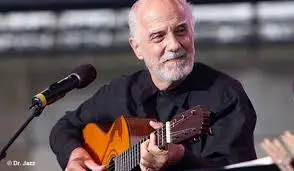
To fully map the global explosion of Bossa Nova, you have to look at a sixteen-year-old Oscar Castro-Neves in Rio de Janeiro, rearranging the geometric chords of his early masterpiece “Chora Tua Tristeza” (1957). Oscar wasn’t just a witness to the golden age of the Copacabana apartments; he was its musical engine. In 1962, at the tender age of twenty-two, he was chosen as the musical director for the historic Bossa Nova Concert at Carnegie Hall in New York. While American critics and jazz legends sat in the audience completely mesmerized by this new, whispered revolution, it was Oscar on stage, leading a frantic, brilliant group of young Brazilians, proving that this tropical syncopation possessed an intellectual rigor capable of standing shoulder-to-shoulder with the finest modern jazz.
The Hollywood Catalyst: Ella, Sinatra, and the L.A. Connection
Following the Carnegie Hall earthquake, Oscar permanently relocated to the United States, settling in Los Angeles, where he quickly became the ultimate secret weapon for Hollywood studios and jazz royalty. For the high-art connoisseur exploring The Jazz Compass, Oscar’s presence on seminal recordings throughout the late 1960s and 70s is a testament to his absolute harmonic authority. He became the premier guitarist, arranger, and producer for icons like Stan Getz, Ella Fitzgerald, Frank Sinatra, and Herbie Hancock. Oscar’s guitar style was the absolute epitome of minimalism: he stripped away any aggressive strumming, replacing it with a flawless, clockwork-like placement of chords that floated just behind the beat, delivering that untranslatable Brazilian saudade with a cool, West Coast jazz sophistication.
The Universal Latitude: A Lifetime of Global Dialogue
True to the borderless, forward-thinking spirit of Jazz Latitude, Oscar Castro-Neves spent decades proving that Bossa Nova was not a temporary mid-century fad, but a permanent, universal classical language. His legendary tenure as the musical director for Sérgio Mendes & Brasil ’66 helped bridge the gap between complex jazz arrangements and international pop charts. Later in life, through solo masterpieces like Maracujá (2003), he continued to weave elegant sonic tapestries, collaborating with classical masters like Yo-Yo Ma and modern vocalists like Diana Krall. When Oscar touched his nylon strings, he wasn’t just playing a rhythm; he was mapping a continuous, sunny, and highly sophisticated coordinate where Rio de Janeiro and Los Angeles became the exact same place, unified by the power of a single, perfect chord.