
The Foundations of Miles and the Iconic Awakening of “So What”
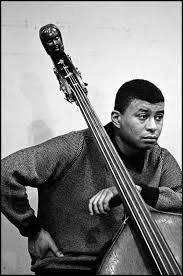
To understand the very DNA of modern jazz rhythm, one must study the foundational stance of Paul Chambers. Arriving in New York from Detroit in the mid-1950s, Chambers possessed a time-keeping ability so structurally flawless and a beat so deeply anchored that he became an instant legend. At just 20 years old, Miles Davis recruited him for his historic First Great Quintet. Chambers became the unbreakable spine of the band, navigating the tectonic shifts between hard bop and modal jazz. His immortality was permanently sealed in 1959 with the opening notes of Kind of Blue. It is Chambers’s solitary, deeply resonant, and instantly recognizable bass line that introduces “So What”, setting the atmospheric, cool temperature for the best-selling jazz album of all time.
The Master of the Bow: Singing Solos and the Coltrane Bond
For the high-art connoisseur tracking the definitive structural revolutions on The Jazz Compass, Paul Chambers represents the ultimate liberation of the double bass. Before his arrival, bass solos were often treated as brief, rhythmic pauses in a song. Chambers turned them into high-art melodic statements. He popularized the rare and demanding technique of arco playing—using the bow in jazz improvisation. When Chambers drew the bow across his strings, his bass didn’t just keep time; it sang with a warm, horn-like fluidity and a rich, classical depth. This profound lyricism made him the ultimate musical brother to John Coltrane. Their explosive chemistry on tracks like “Giant Steps” was so profound that Coltrane dedicated his legendary, lightning-fast minor blues composition, “Mr. P.C.”, as an eternal tribute to Chambers’s fierce, driving swing.
The Ubiquitous Icon Across the Infinite Latitude
True to the forward-thinking, borderless spirit of Jazz Latitude, Paul Chambers’s creative geography is a staggering map of presence and influence. He was the most ubiquitous sideman of the post-bop landscape; to look at the back covers of the greatest albums on Blue Note, Prestige, and Riverside is to see the name Paul Chambers anchoring the low-end for Kenny Burrell, Sonny Rollins, Wes Montgomery, and Wynton Kelly. Tragically, a grueling touring lifestyle and severe health battles cut his journey short when he passed away from tuberculosis in 1969 at the young age of 33. Yet, his coordinate on our musical map remains an immovable, golden monument—a brilliant architecture of time that continues to teach every generations of bassists that the ultimate power lies in being the steady, elegant heartbeat of the song.