
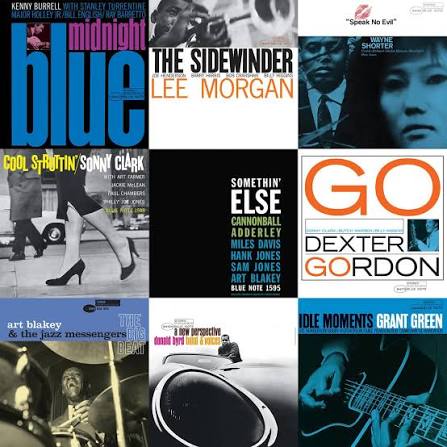
By the late 1950s, Blue Note Records had become instantly recognizable—not only for the music pressed into its vinyl grooves, but also for the artwork wrapped around it.
Long before listeners heard the first trumpet note or piano chord, they encountered something equally distinctive: the album cover.
In an era when many record sleeves relied on generic illustrations or uninspired typography, Blue Note embraced modernism.
The label’s visual identity emerged through the collaboration of photographer Francis Wolff and graphic designer Reid Miles, whose partnership would produce one of the most recognizable aesthetics in twentieth-century design.
Ironically, Miles was not a jazz enthusiast.
He reportedly preferred classical music.
Yet that distance from the jazz world may have worked in his favor.
Rather than following visual clichés, he approached each cover as a design problem. Using Wolff’s black-and-white photographs as raw material, Miles experimented with bold typography, dramatic cropping, geometric layouts, and carefully chosen colors.
The results were striking.
Minimal.
Elegant.
Timeless.
Albums like Blue Train, Moanin’, The Sidewinder, Idle Moments, and Speak No Evil became masterpieces of graphic communication long before “branding” became a common business term. Today, Blue Note covers hang in museums, inspire graphic designers around the world, and continue to influence everything from book covers to fashion and advertising.
The label had unknowingly created something rare:
A visual language that sounded like jazz before the needle even touched the record.
The Golden Years of Blue Note
The decade between the mid-1950s and the late 1960s is often described as Blue Note’s golden age.
Jazz itself was evolving at an astonishing pace.
Hard bop matured into one of the genre’s defining movements.
Modal jazz expanded improvisational possibilities.
Avant-garde musicians challenged traditional structures.
Soul jazz brought gospel energy back into the music.
Throughout these transformations, Blue Note remained remarkably consistent.
Rather than chasing commercial success, Alfred Lion continued searching for artists with distinctive voices.
Some became household names.
Others found recognition only decades later.
But all shared one characteristic.
They sounded unmistakably like themselves.
This philosophy helped create an extraordinary catalog whose depth remains almost unmatched.
It is difficult to find another record label that simultaneously documented so many of jazz’s defining figures during their most creative years.
Albums That Defined a Label
Certain Blue Note recordings have become more than successful albums.
They have become milestones in the history of modern music.

Moanin’ (1958) – Art Blakey and the Jazz Messengers
If one record captures the spirit of hard bop, it is Moanin’.
The opening piano phrase by Bobby Timmons has become one of jazz’s most recognizable introductions.
Behind it stands Art Blakey’s explosive drumming, driving the music forward with irresistible energy.
The album perfectly balances sophistication with accessibility, making it an ideal entry point for listeners discovering jazz.
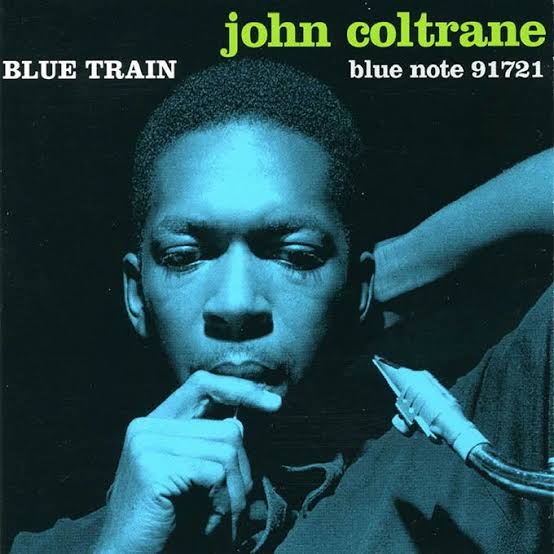
Blue Train (1957) – John Coltrane
Although John Coltrane would later achieve worldwide fame through Atlantic and Impulse!, Blue Train remains his only session as a leader for Blue Note.
The recording captures Coltrane at a fascinating moment in his artistic development.
His unmistakable intensity is already present, yet the lyrical elegance that would define his later masterpieces is beginning to emerge.
For many listeners, Blue Train represents the bridge between bebop tradition and Coltrane’s revolutionary future.
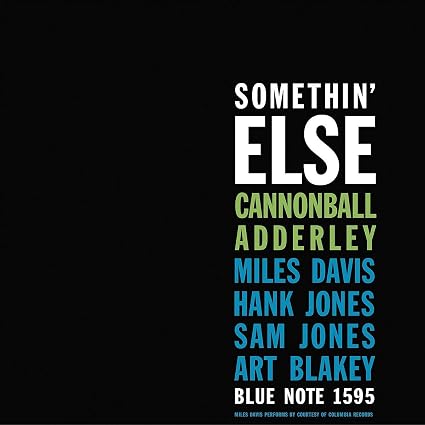
Somethin’ Else (1958) – Cannonball Adderley
Officially released under Cannonball Adderley’s name, Somethin’ Else is equally remembered for Miles Davis’ unforgettable presence.
Unlike many all-star collaborations, the chemistry feels effortless.
The performances are relaxed yet deeply expressive.
The recording also illustrates Blue Note’s remarkable ability to capture intimacy without sacrificing sonic clarity.

Speak No Evil (1964) – Wayne Shorter
Dark, mysterious, and endlessly rewarding, Speak No Evil reveals Wayne Shorter as one of jazz’s greatest composers.
Rather than relying on familiar song structures, Shorter creates musical landscapes filled with ambiguity and emotional depth.
Supported by Freddie Hubbard, Herbie Hancock, Ron Carter, and Elvin Jones, the album represents one of Blue Note’s most sophisticated artistic achievements.
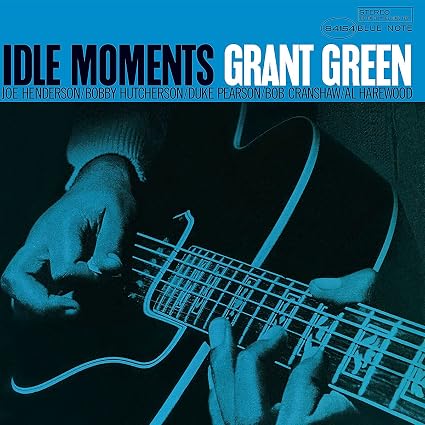
Idle Moments (1963) – Grant Green
Few albums demonstrate the beauty of restraint better than Idle Moments.
Grant Green’s warm guitar tone unfolds patiently across spacious arrangements that invite careful listening.
The title track, stretching beyond fourteen minutes, never feels indulgent.
Instead, it becomes an exercise in collective storytelling.
Why Blue Note Sounded Different
Blue Note’s reputation was never built solely upon great musicians.
Many labels recorded exceptional artists.
What separated Blue Note was its relentless commitment to excellence at every stage of production.
Alfred Lion believed preparation mattered.
Unlike many companies, Blue Note paid musicians for rehearsal time before entering the studio.
This seemingly simple decision transformed the recording process.
Artists arrived confident.
They experimented more freely.
Mistakes became opportunities rather than failures.
Then there was Rudy Van Gelder.
His engineering philosophy treated jazz not as background entertainment but as serious art.
Every instrument occupied its own space.
Bass lines remained warm and articulate.
Ride cymbals shimmered naturally.
Horn sections retained remarkable clarity without becoming harsh.
Listeners often describe Blue Note recordings as “alive.”
That sensation was no accident.
It resulted from hundreds of small decisions made by people who genuinely cared about preserving musical truth.
More Than a Record Label
As the 1960s progressed, Blue Note quietly evolved into something larger than a business.
It became a creative community.
Musicians trusted Alfred Lion.
Engineers respected Rudy Van Gelder.
Photographers admired Francis Wolff.
Designers celebrated Reid Miles.
Artists knew they could take risks.
That atmosphere cannot easily be measured in financial statements.
Yet it explains why so many legendary recordings emerged from the label.
Innovation flourishes where trust exists.
Blue Note understood this decades before modern companies began speaking about creativity and collaboration.
Its greatest product was never vinyl.
It was confidence.
Confidence that extraordinary musicians, given respect and freedom, would create extraordinary art.
Why Blue Note Still Matters Today
More than eight decades after its founding, Blue Note Records continues to shape the global jazz landscape.
Its classic recordings are constantly rediscovered by new generations through streaming platforms, vinyl reissues, documentaries, and educational programs.
Yet its influence reaches far beyond jazz.
Graphic designers continue studying Reid Miles’ layouts.
Photographers analyze Francis Wolff’s intimate studio portraits.
Recording engineers still reference Rudy Van Gelder’s productions when pursuing warmth and realism.
Even entrepreneurs find inspiration in Alfred Lion’s philosophy.
He proved that long-term artistic integrity could become a sustainable business model.
Blue Note reminds us that success does not necessarily come from following trends.
Sometimes it comes from believing in quality before the rest of the world recognizes it.
That lesson feels just as relevant in the twenty-first century as it did in 1939.