
Every great jazz album tells two stories.
The first belongs to the musicians.
The second belongs to the person who captured their performance.
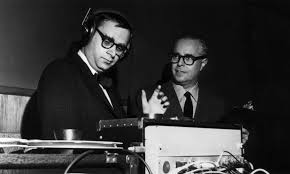
Few listeners think about recording engineers while listening to John Coltrane, Miles Davis, Thelonious Monk or Art Blakey. Yet without one remarkable engineer, many of the greatest albums in jazz history would not sound the way generations of listeners have come to know them.
His name was Rudy Van Gelder.
For more than fifty years, Van Gelder recorded thousands of sessions that defined the sonic identity of modern jazz. His work with Blue Note Records, Prestige Records, Impulse! Records, CTI Records and many independent labels established a recording standard that continues to influence engineers today.
His contribution went far beyond technical excellence.
He transformed the recording studio into an instrument.
The room itself became part of the music.
Microphone placement became an artistic decision.
Sound quality became inseparable from musical expression.
Today, the initials RVG engraved in the runout groove of a vinyl record remain one of the most respected signatures in the history of recorded music.
From Optometry to Audio Engineering
Rudolph Van Gelder was born on November 2, 1924, in Jersey City, New Jersey.
His fascination with electronics began at an early age.
Like many technically gifted young people of his generation, he built equipment himself, experimenting with radio circuits, amplifiers and audio components long before he entered the recording business.
Professionally, however, he chose another path.
He studied optometry and worked as an eye doctor during the early years of his career.
Recording was initially a passion pursued after office hours.
That unusual combination of professions shaped his personality.
Precision.
Patience.
Meticulous attention to detail.
Those qualities became trademarks of both his medical practice and his recording philosophy.
As demand for his recordings increased, the studio gradually became his full-time vocation.
Jazz had found its engineer.
The Hackensack Studio
Van Gelder’s first famous studio was unlike anything musicians expected.
It was located inside his parents’ home in Hackensack, New Jersey.
The living room became the recording room.
Bedrooms stored equipment.
The basement housed additional electronics.
From the outside, nothing suggested that some of the greatest jazz sessions ever recorded were taking place inside.
Yet musicians quickly realized something extraordinary happened there.
The recordings possessed exceptional clarity.
Pianos sounded full without becoming muddy.
Horn sections retained warmth while remaining brilliantly defined.
Drums carried remarkable presence.
Bass lines remained articulate even on modest playback systems.
In an era when recording technology was still developing rapidly, Van Gelder consistently achieved results that seemed years ahead of his contemporaries.
Artists began requesting his studio specifically.
Record labels followed.
JazzLatitude Insight
Rudy Van Gelder rarely spoke publicly about his recording techniques. Even visiting engineers were often prevented from seeing microphone placements or equipment settings. His methods became one of the best-kept secrets in the recording industry, contributing to the legendary mystique surrounding the “Van Gelder sound.”
Alfred Lion and Blue Note
One partnership changed jazz history forever.
When Alfred Lion, founder of Blue Note Records, began working regularly with Rudy Van Gelder, the label discovered a recording engineer whose artistic standards matched its own.
Both men believed that excellence required patience.
Sessions were carefully planned.
Musicians received time to prepare.
Sound quality was never treated as an afterthought.
This shared philosophy produced an extraordinary series of recordings featuring artists such as:
- Art Blakey
- Horace Silver
- Sonny Rollins
- Hank Mobley
- Lee Morgan
- Jackie McLean
- Grant Green
- Herbie Hancock
- Wayne Shorter
Each album possessed its own musical identity.
Yet together they shared a recognizable sonic character.
Warm.
Immediate.
Dynamic.
Intimate.
The “Blue Note sound” was becoming inseparable from Rudy Van Gelder’s engineering.
More Than Technical Perfection
Van Gelder never considered himself merely a technician.
He listened like a musician.
He understood that every artist required a different sonic approach.
A tenor saxophone should not be recorded like a trumpet.
A piano trio demanded different balance than a hard bop sextet.
Even the placement of a drummer within the room could influence the emotional impact of a performance.
Rather than applying identical techniques to every session, Van Gelder adapted continuously.
His goal was never simply to document music.
It was to reveal it.
That philosophy transformed recording engineering into a creative art form.
It also established the foundation for one of the most influential careers in the history of jazz.
Buy Amazon

The Sound That Changed Jazz Forever
Inside the Van Gelder Studio
By the late 1950s, Rudy Van Gelder had outgrown the modest studio in his parents’ home in Hackensack.
The growing ambitions of Blue Note, Prestige and the expanding jazz scene demanded a recording environment unlike any other.
Van Gelder responded by designing his dream studio.
In 1959, he opened the legendary Van Gelder Studio in Englewood Cliffs, New Jersey.
The building looked unlike a conventional recording facility.
Inspired in part by the soaring architecture of Frank Lloyd Wright, the studio featured a dramatic wooden ceiling rising more than thirty feet above the recording floor. The spacious interior created a natural acoustic environment that became one of the defining characteristics of countless classic jazz recordings.
Unlike artificial reverberation added during mixing, the room itself contributed warmth, depth and extraordinary clarity.
Musicians immediately noticed the difference.
Many later described Englewood Cliffs as an instrument in its own right.
Blue Note, Prestige and Impulse!
Although Rudy Van Gelder is most closely associated with Blue Note Records, his influence extended far beyond a single label.
During the 1950s and 1960s, he became the preferred recording engineer for many of the most important independent jazz companies in America.
Among them were:
- Blue Note Records
- Prestige Records
- Impulse! Records
- New Jazz
- Savoy Records
- CTI Records (later years)
Each label possessed its own artistic identity.
Blue Note emphasized meticulous preparation and hard bop innovation.
Prestige often favored spontaneous sessions with minimal rehearsal.
Impulse! explored increasingly adventurous territory, particularly through the work of John Coltrane.
Van Gelder adapted naturally to each environment.
Rather than imposing a single sonic formula, he preserved the unique personality of every recording while maintaining the remarkable technical consistency for which he had become famous.
Recording the Giants
Few engineers have worked with a comparable list of musicians.
Inside Van Gelder’s studios, history unfolded almost daily.
John Coltrane recorded A Love Supreme, one of the most influential spiritual jazz albums ever made.
Sonny Rollins, Cannonball Adderley, Dexter Gordon, Freddie Hubbard, Joe Henderson, Wayne Shorter, Grant Green, Lee Morgan and countless others trusted Van Gelder to capture performances that would define their careers.
Even Miles Davis—although primarily associated with Columbia Records and engineer Fred Plaut—benefited indirectly from the recording standards Van Gelder established throughout the independent jazz world.
For musicians, recording at Van Gelder’s studio became a mark of artistic prestige.
His name inspired confidence.
Artists knew they would be heard at their very best.
JazzLatitude Insight
Rudy Van Gelder rarely allowed visitors inside the control room during recording sessions. Even famous producers and fellow engineers often found themselves excluded while he adjusted microphones, equalization and recording levels in complete privacy. His methods remained among the music industry’s most carefully guarded secrets.
The Mystery of the “Van Gelder Sound”
For decades, engineers have attempted to explain why Van Gelder’s recordings possess such a distinctive character.
The answer lies not in one revolutionary technique, but in the combination of many carefully controlled variables.
Microphone Placement
Van Gelder positioned microphones unusually close to instruments compared with many engineers of his era.
This approach increased presence while preserving remarkable detail.
Custom Equipment
Rather than relying exclusively on commercially available gear, he designed and modified much of his own recording equipment.
Preamplifiers.
Mixing consoles.
Signal paths.
Every component reflected his pursuit of absolute fidelity.
Room Acoustics
The architecture of both Hackensack and Englewood Cliffs played an essential role.
Instead of treating room reflections as problems to eliminate, Van Gelder learned how to make them enhance musical realism.
Constant Experimentation
Perhaps most importantly, Van Gelder never stopped refining his methods.
Every session became an opportunity to improve.
Every recording taught another lesson.
This relentless pursuit of perfection explains why recordings made decades apart continue to display such extraordinary consistency.
RVG and VAN GELDER in the Deadwax
Collectors know Rudy Van Gelder not only through the sound of his recordings but also through the tiny inscriptions found between the final groove and the record label.
Early masterings often feature the hand-etched initials:
RVG
Beginning in the late 1950s and early 1960s, many lacquers instead carry the machine-stamped inscription:
VAN GELDER
These markings identify records mastered by Rudy Van Gelder himself.
They have become among the most respected signatures in vinyl collecting.
However, an important distinction must be made.
An RVG or VAN GELDER stamp confirms who mastered the lacquer.
It does not automatically indicate a first pressing.
Many later Blue Note, Prestige and Liberty editions continued using Van Gelder’s original metal parts.
Serious collectors therefore examine additional evidence, including:
- Plastylite “Ear”
- Label address
- Matrix numbers
- Jacket construction
- Pressing plant
Authentication always depends on the complete picture.
Beyond Recording
Van Gelder’s influence extends far beyond the sessions he personally engineered.
Modern recording philosophy continues to reflect many of his principles.
Respect the musicians.
Capture performance rather than manufacture it.
Treat sound quality as part of artistic expression.
Pursue clarity without sacrificing warmth.
Those ideas remain central to high-quality acoustic recording today.
Long after analog tape gave way to digital technology, engineers throughout the world continue studying his work in search of the qualities that made the “Van Gelder sound” so enduring.
The Enduring Legacy of Rudy Van Gelder
Few people have influenced jazz without ever standing on stage.
Rudy Van Gelder never led a quartet.
He never recorded as a soloist.
He never toured the world as a performer.
Yet his work can be heard on thousands of recordings that define the very sound of modern jazz.
His greatest achievement was not simply documenting history.
He shaped the way history would be remembered.
Generations of listeners associate the warmth of Blue Note, the intimacy of Prestige and the grandeur of Impulse! with Van Gelder’s unmistakable sonic aesthetic. His recordings possess a clarity and presence that continue to sound remarkably modern, even in an age of digital production.
For musicians, recording at Van Gelder’s studio was an honor.
For collectors, the initials RVG remain a symbol of authenticity.
For recording engineers, his career represents the highest standard of technical excellence combined with artistic sensitivity.
That combination has made Rudy Van Gelder arguably the most influential recording engineer in the history of jazz.
Essential Rudy Van Gelder Recordings
No engineer has been responsible for as many landmark jazz albums as Rudy Van Gelder. Rather than highlighting every classic session—which would require an entire book—the following recordings illustrate the extraordinary breadth of his work.
John Coltrane – A Love Supreme (1965)
Perhaps the defining achievement of Van Gelder’s career.
Recorded at Englewood Cliffs, A Love Supreme captures every nuance of Coltrane’s quartet with extraordinary warmth, depth and dynamic range. More than sixty years later, it remains one of the finest examples of acoustic jazz recording.
Art Blakey & The Jazz Messengers – Moanin’ (1958)
The powerful brass sound, driving rhythm section and exceptional balance of Moanin’ helped establish the sonic identity of Blue Note Records. Van Gelder’s engineering gives every instrument clarity without sacrificing the ensemble’s collective energy.
Horace Silver – Song for My Father (1964)
One of the most recognizable piano recordings in jazz history, this album demonstrates Van Gelder’s remarkable ability to balance piano, horns and percussion while preserving the rhythmic character of Silver’s compositions.
Herbie Hancock – Maiden Voyage (1965)
The spacious atmosphere of Maiden Voyage owes much to Van Gelder’s understanding of room acoustics. Every instrument occupies a distinct place within the stereo image while contributing to the album’s immersive sense of space.
Wayne Shorter – Speak No Evil (1966)
Widely considered one of Blue Note’s greatest artistic achievements, Speak No Evil showcases Van Gelder’s mature engineering style. The recording combines exceptional detail with remarkable warmth, allowing Shorter’s compositions to unfold with extraordinary clarity.
Oliver Nelson – The Blues and the Abstract Truth (1961)
Recorded for Impulse!, this landmark session demonstrates Van Gelder’s mastery of larger ensembles. Despite the complexity of the arrangements, every instrument remains beautifully defined, illustrating his gift for balancing orchestral textures without losing intimacy.
JazzLatitude Insight
Many listeners describe a “Blue Note sound,” but the phrase applies equally to Prestige, Impulse! and numerous other labels that recorded with Rudy Van Gelder. More accurately, what we hear is the Van Gelder sound—a combination of meticulous microphone placement, exceptional room acoustics, custom-built equipment and an unwavering commitment to capturing musical truth.
Technical Profile
Full Name: Rudolph Van Gelder
Born: November 2, 1924
Birthplace: Jersey City, New Jersey, USA
Died: August 25, 2016
Profession:
- Recording Engineer
- Mastering Engineer
- Studio Designer
Primary Studios:
- Hackensack Studio (1946–1959)
- Van Gelder Studio, Englewood Cliffs (1959–2016)
Associated Labels:
- Blue Note Records
- Prestige Records
- Impulse! Records
- Savoy Records
- New Jazz
- CTI Records
Associated Artists:
- John Coltrane
- Art Blakey
- Miles Davis
- Horace Silver
- Wayne Shorter
- Herbie Hancock
- Joe Henderson
- Lee Morgan
- Freddie Hubbard
- Sonny Rollins
- Cannonball Adderley
- Grant Green
Five Lesser-Known Facts About Rudy Van Gelder
1. He was a licensed optometrist.
For several years, Van Gelder balanced two careers, seeing patients during the day while recording jazz sessions during evenings and weekends. Only after his recording work became overwhelming did he leave optometry to devote himself entirely to music.
2. He designed much of his own equipment.
Rather than relying exclusively on commercial recording gear, Van Gelder modified and built components to meet his exact standards, giving his studios a unique sonic identity.
3. His studio architecture was intentional.
The dramatic wooden ceiling of the Englewood Cliffs studio was not merely an aesthetic choice. It was designed to produce natural acoustics that complemented jazz ensembles without excessive artificial reverberation.
4. He guarded his techniques with extraordinary secrecy.
Visitors were often prohibited from entering the control room during sessions. Microphone placement, signal chains and equipment settings remained closely protected throughout his career.
5. His initials became a collector’s icon.
The tiny RVG and later VAN GELDER markings found in the deadwax of countless jazz LPs have become among the most recognizable signatures in vinyl collecting, instantly signaling that Rudy Van Gelder mastered the lacquer.
Frequently Asked Questions
Who was Rudy Van Gelder?
Rudy Van Gelder was an American recording and mastering engineer whose work for Blue Note, Prestige, Impulse! and other labels helped define the sound of modern jazz.
What does RVG mean on a vinyl record?
RVG refers to Rudy Van Gelder and indicates that he mastered the lacquer used to produce the record. It is one of the most respected markings in jazz vinyl collecting.
Is an RVG record always a first pressing?
No.
Many later pressings continued using Van Gelder’s original lacquers or metal parts. To identify a true first pressing, collectors must also examine the label address, pressing plant, matrix numbers and other manufacturing details.
Why is the Van Gelder Studio so famous?
Its exceptional acoustics, custom-built equipment and Van Gelder’s meticulous engineering produced some of the finest jazz recordings ever made, including A Love Supreme, Moanin’ and Maiden Voyage.
Why is Rudy Van Gelder considered so important?
Because he transformed recording engineering into an artistic discipline. His work established new standards for clarity, warmth and realism that continue to influence recording engineers around the world.
JazzLatitude Rating
| Category | Rating |
|---|---|
| Historical Importance | ★★★★★ |
| Recording Innovation | ★★★★★ |
| Technical Excellence | ★★★★★ |
| Influence on Jazz | ★★★★★ |
| Mastering Legacy | ★★★★★ |
| Audiophile Significance | ★★★★★ |
| Collector Relevance | ★★★★★ |
| Lasting Cultural Impact | ★★★★★ |
| JazzLatitude Essential | ★★★★★ |
Final Thoughts
The history of jazz is often told through its performers.
Louis Armstrong changed the trumpet.
Charlie Parker transformed improvisation.
Miles Davis reinvented modern jazz again and again.
John Coltrane expanded the spiritual possibilities of the music.
Rudy Van Gelder changed something equally fundamental.
He transformed the way jazz sounds.
His recordings possess an intimacy that places listeners inside the performance rather than outside it. Every cymbal shimmer, every breath through a saxophone, every resonance of a piano seems preserved with extraordinary honesty. That achievement required more than technical knowledge. It demanded patience, discipline and a profound respect for the musicians who trusted him with their art.
Perhaps that is why his work continues to feel so timeless.
Recording technology has advanced dramatically since the 1950s.
Digital workstations offer tools Van Gelder could scarcely have imagined.
Yet engineers still study his sessions.
Audiophiles continue searching for his masterings.
Collectors still celebrate the tiny initials engraved into the deadwax.
The equipment has changed.
The standards have not.
More than any other recording engineer, Rudy Van Gelder demonstrated that capturing music is itself an act of musicianship.
And in doing so, he ensured that the greatest moments in jazz history would not simply survive.
They would continue to sound alive.