The Coastal Crucible and the Architecture of Modern Big Bands
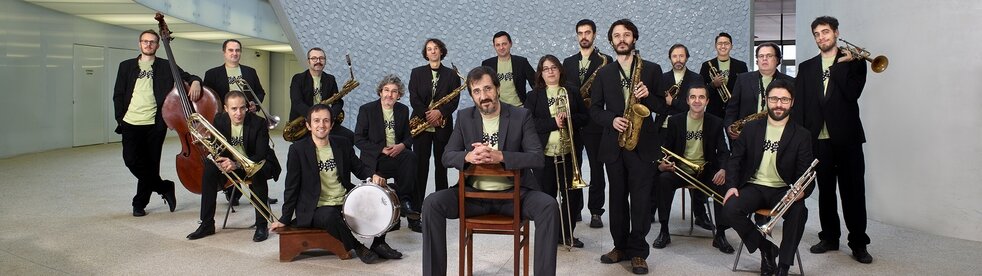
To chart the absolute gravity center of large-ensemble jazz in Southern Europe on The Jazz Compass, all roads lead inevitably to the Portuguese coast. Founded in 1999 under the visionary co-direction of pianists and composers Pedro Guedes and Carlos Azevedo, the Orquestra de Jazz de Matosinhos (OJM) grew from a regional dream into an internationally revered musical institution. Based in the city of Matosinhos, near Porto, the OJM operates as a highly sophisticated, living laboratory. Rather than acting as a mere museum for mid-century swing, Gismonti-style fusion, or traditional bop, this 17-piece powerhouse reshaped the very concept of the modern big band, balancing a deep respect for historical arrangements with a fierce commitment to commissioning new, boundary-pushing contemporary music.
The Transatlantic Alliance: From New York Studios to Global Stages
For the high-art connoisseur tracking landmark moments where European precision meets American improvisational grit, the OJM’s collaborative resume is an astonishing golden catalog of jazz royalty. They have spent over two decades serving as the premier, telepathic canvas for international giants, including Maria Schneider, Carla Bley, Lee Konitz, Chris Cheek, and Kurt Rosenwinkel (resulting in the superb album Our Secret World). Their transatlantic brilliance reached a historic peak when they conquered New York City, performing to standing ovations at the legendary Birdland, the Blue Note, and Carnegie Hall. Their recording sessions—such as the magnificent, poetic collaboration with piano master Fred Hersch on Porto de Mágoas—solidified the OJM as a global standard-bearer capable of navigating labyrinthine harmonies with a breathtaking collective warmth.
The Living Institution Across the Eternal Latitude
True to the forward-thinking, borderless spirit of Jazz Latitude, the Orquestra de Jazz de Matosinhos’ geography is a beautiful map of cultural preservation, continuous education, and future-forward architecture. Anchored at the state-of-the-art CARA (Centro de Alto Rendimento Artístico), the orchestra serves as a crucial incubator for the next generation of Portuguese and European improvisers, bridging classical notation with multimedia experimentation and high-tech acoustic research. They have left an immovable, monumental coordinate on our map—a beautiful, swinging reminder to the world that a big band can be a magnificent, thundering wave of brass and woodwinds that doesn’t just repeat history, but fearlessly writes the next chapters of contemporary sound.