The Alchemist of the Left Hand
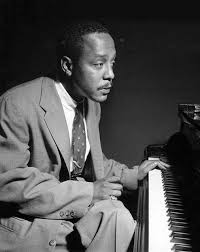
To understand the tectonic shift that Bud Powell brought to the keyboard, you have to realize that before him, the piano was treated almost like a mini-orchestra, trapped in the rigid, rhythmic syncopation of ragtime and stride. Bud walked into the smoky New York clubs of the 1940s and practically cut the piano’s history in half. Influenced by his close friend Thelonious Monk and the frantic lines of Charlie Parker, Bud made a radical choice: he completely stripped his left hand of its time-keeping duties. Instead, his left hand would drop sudden, sharp, dissonant chordal punctuation—like an unpredictable drummer—freeing his right hand to fly at breakneck speeds, weaving intricate, complex bebop lines that sounded exactly like a virtuoso saxophone or trumpet blast. He didn’t just play the piano; he liberated it.
The Blue Note Masterpieces and the Toll of Genius
The tragedy of Bud Powell is as immense as his artistry. A victim of brutal police violence in 1945 that left him with permanent mental scars and severe headaches, Bud spent his life drifting between psychiatric institutions and moments of absolute musical transcendence. Yet, when he was locked in with the muse, his playing was an unmatched force of nature. For the high-art collector diving into The Jazz Compass, his sessions for Blue Note Records—specifically The Amazing Bud Powell, Vol. 1 (1951)—are essential sacred texts. Masterpieces like “Un Poco Loco” showcase a staggering polyrhythmic drive and a frantic, beautiful, and almost terrifying intellectual depth that set the blueprint for every modern pianist who followed, from McCoy Tyner to Chick Corea.
The European Sanctuary
True to the borderless coordinates of Jazz Latitude, Bud Powell eventually found a temporary haven away from the suffocating pressures of America. In 1959, he moved to Paris, joining the legendary circle of jazz exiles. In France, surrounded by a community that treated him like the cultural royalty he was, Bud experienced a magnificent late-career Indian summer, forming the famous trio “The Three Bosses” with drummer Kenny Clarke. Though his flame burned out early—he passed away in 1966—his legacy remains fixed as a permanent north star on our jazz map. Bud Powell proved that even when the mind fractures, the music, if driven by pure, uncompromising genius, can build an architecture that stands forever eternal.