The Watts Outcast and the Ellingtonian Destiny
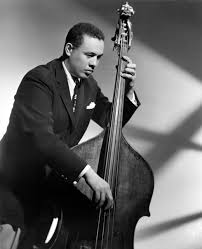
To step into the world of Charles Mingus is to enter a state of magnificent, high-voltage turbulence. Born on an army base in Arizona and raised in the volatile Watts neighborhood of Los Angeles, Mingus was a man trapped between worlds—too light-skinned to feel fully accepted by the Black community, yet deeply scarred by the brutal reality of American racism. Initially trained on the cello, he switched to the double bass when a teacher told him a Black man would never sit in a classical symphony orchestra. That rejection birthed a titan. Mingus developed an untouchable, ferocious technique on the bass, turning the instrument into a heavy, roaring engine of rhythm. But his true calling was composition; he looked at the sprawling, elegant canvas of Duke Ellington and decided to superimpose onto it the dangerous, modern speed of bebop.
The Jazz Workshop: Composition through Chaos and Fire
For the high-art connoisseur exploring the absolute outer limits of The Jazz Compass, Mingus’s late-1950s output represents a total, bone-rattling revolution. On monumental albums like Mingus Ah Um (1959) and The Clown (1957), he abandoned traditional sheet music for his band, The Jazz Workshop. Instead, Mingus would dictate complex, multi-sectional arrangements by ear to his musicians, forcing them to internalize the melodies and rely on raw, blues-drenched intuition. The results were electrifying. Masterpieces like “Fables of Faubus” were direct, weaponized sonic attacks against segregationist politicians, while “Goodbye Pork Pie Hat” stood as a heartbreaking, modal elegy for Lester Young. Mingus’s music was a theater of sweat and fire: shouting cues on stage, shifting tempos on a dime, and blending gospel church hollers with avant-garde dissonance.
The Underdog’s Triumph and the Eternal Latitude
True to the borderless, forward-thinking spirit of Jazz Latitude, Charles Mingus’s creative geography refused to be tamed by the music industry. He founded his own artist-run record label to fight commercial exploitation and orchestrated a legendary counter-festival in Newport to protest the corporate watering down of jazz. Even when amyotrophic lateral sclerosis (ALS) paralyzed his hands in the late 1970s, preventing him from playing his bass, his mind remained an unstoppable laboratory, composing his final epic works by singing them into a tape recorder. When he passed away in Mexico in 1979 at the age of 56, his ashes were scattered in the sacred waters of the Ganges River. Charles Mingus left a permanent, towering coordinate on our map—a monument built on the absolute courage to turn anger into art, and chaos into the most honest, swinging, and brilliant music the world has ever known.