The Man Who Claimed to Come from Saturn
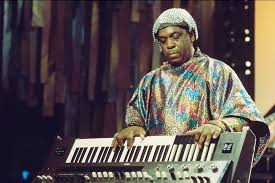
Few figures in the history of music have inspired as much fascination, debate and admiration as Sun Ra. Composer, pianist, poet, philosopher, bandleader and self-proclaimed visitor from Saturn, he transformed jazz into something far greater than a musical style. Through an extraordinary combination of improvisation, mythology, science fiction, African history and spiritual philosophy, Sun Ra created an artistic universe unlike anything that had existed before.
To some listeners, he was an eccentric visionary.
To others, he was one of the greatest composers of the twentieth century.
Both descriptions contain elements of truth.
Yet neither fully captures the breadth of his achievement.
Sun Ra did not simply expand the language of jazz.
He challenged the very idea of what music—and identity—could become.
Herman Blount Becomes Sun Ra
Sun Ra was born Herman Poole Blount on May 22, 1914, in Birmingham, Alabama, during a period marked by racial segregation and profound social inequality in the United States.
A gifted pianist from an early age, Blount displayed extraordinary musical ability while still a child. He absorbed classical music, blues, gospel and the emerging language of swing with remarkable speed, quickly becoming one of Birmingham’s most respected young musicians.
Yet even in those early years, he displayed an imagination that extended far beyond conventional musical education.
He read widely.
Studied philosophy.
Explored mythology.
Became fascinated by astronomy, ancient Egypt and metaphysical thought.
These interests would eventually merge into the extraordinary artistic identity the world would come to know as Sun Ra.
Music as Cosmic Philosophy
Unlike most jazz musicians, Sun Ra never separated music from philosophy.
For him, composition, performance and spiritual exploration formed a single creative practice.
He developed a complex cosmology that blended Egyptian symbolism, space travel, Black history, science fiction and personal mythology into what later scholars would recognize as one of the earliest expressions of Afrofuturism.
Central to this philosophy was a radical act of self-definition.
Sun Ra rejected the identity imposed upon him by society.
He declared himself an otherworldly being sent to guide humanity toward higher consciousness through music.
Whether interpreted literally, symbolically or artistically, this narrative became inseparable from his work.
The Birth of the Arkestra
During the 1950s, Sun Ra founded the ensemble that would become his life’s greatest artistic project: the Sun Ra Arkestra.
More than a conventional jazz orchestra, the Arkestra functioned as a musical community.
Its members lived together.
Rehearsed constantly.
Performed elaborate concerts combining music, costume, dance, poetry and theatrical ritual.
The ensemble’s performances challenged every expectation audiences held about jazz.
Swing rhythms coexisted with free improvisation.
Electronic keyboards blended with traditional horns.
Ancient mythology merged with futuristic imagery.
Every concert became a journey into an entirely different artistic universe.
JazzLatitude Insight
Sun Ra believed that music could transform consciousness. Rather than viewing jazz simply as entertainment, he treated every performance as an opportunity to imagine new futures, challenge accepted realities and expand the listener’s sense of possibility.
A Vision Beyond Earth
Long before electronic music, multimedia performance art and Afrofuturism became widely recognized, Sun Ra had already integrated these ideas into a coherent artistic vision.
His concerts featured shimmering costumes, cosmic symbolism, experimental electronics and fearless improvisation decades before such concepts entered mainstream culture.
Many critics initially dismissed these performances as eccentric.
History has proven otherwise.
Today, Sun Ra is recognized not merely as a remarkable jazz musician but as one of the most original artistic visionaries of the modern era.
Buy Amazon
The Arkestra: A Universe Without Limits
By the late 1950s and early 1960s, the Sun Ra Arkestra had evolved into something far beyond a traditional jazz orchestra. While most big bands were shrinking as economic realities changed, Sun Ra expanded his ensemble into a constantly evolving collective of musicians, composers, philosophers and performers united by a shared artistic vision.
Life inside the Arkestra was unlike that of any other jazz group.
Members often lived together.
They rehearsed daily for hours.
Discipline was uncompromising.
Musical curiosity was limitless.
Sun Ra expected complete commitment, believing that every rehearsal was part of a larger spiritual and artistic mission.
This extraordinary dedication produced one of the most distinctive ensembles in jazz history.
Leaving Swing Behind
Although Sun Ra possessed a deep knowledge of swing and bebop, he refused to remain confined by existing traditions.
His music constantly evolved.
Early compositions reflected the influence of Duke Ellington, Fletcher Henderson and Count Basie.
Soon afterward, increasingly adventurous harmonies appeared.
Then came free improvisation.
Electronic experimentation.
Collective composition.
African percussion.
Space-age soundscapes.
Rather than abandoning earlier jazz traditions, Sun Ra absorbed them into an ever-expanding musical universe where every possibility remained open.
Space Is the Place
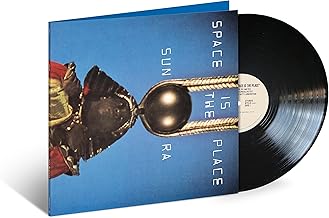
Among Sun Ra’s vast discography, Space Is the Place (1973) stands as one of his defining artistic statements.
Part album, part philosophy and later part feature film, the project crystallized many of the ideas he had been developing for decades.
The music combines hypnotic grooves, cosmic chants, explosive free improvisation and powerful ensemble writing into an experience that feels more like a ritual than a conventional jazz recording.
Its message extends beyond music.
Space becomes a metaphor.
Freedom becomes possibility.
The future becomes something that can be imagined—and therefore created.
Few jazz albums have united artistic experimentation and philosophical vision so completely.
JazzLatitude Insight
Sun Ra never viewed the future as a destination. For him, the future was a creative act. Every performance invited audiences to imagine realities beyond the limitations of history, prejudice and convention.
A Pioneer of Electronic Jazz
Long before synthesizers became common in jazz, Sun Ra embraced electronic keyboards as legitimate improvisational instruments.
He experimented with electric piano, the Minimoog, the Clavinet and a wide variety of early electronic devices, often producing sounds audiences had never before encountered in a jazz performance.
Unlike many musicians who used electronics simply for novelty, Sun Ra integrated them into his compositional language.
Electronic timbres became extensions of his cosmic imagination.
They represented unknown worlds.
Unexplored futures.
Alternative realities.
This pioneering work profoundly influenced later generations of electronic jazz artists, ambient composers and experimental musicians.
New York and Artistic Freedom
Sun Ra’s relocation to New York during the 1960s placed him at the center of one of the most creative periods in modern jazz.
The city’s thriving avant-garde community included artists such as John Coltrane, Cecil Taylor, Albert Ayler, Archie Shepp and Pharoah Sanders, all of whom were expanding the possibilities of improvisation.
Although Sun Ra remained artistically independent, he shared with these musicians a commitment to fearless exploration.
Yet his work always retained a distinctive identity.
Where others pursued abstraction, Sun Ra built complete mythologies.
Where others challenged harmony, he challenged reality itself.
This broader artistic vision set him apart even within the avant-garde.
Afrofuturism Before the Name Existed
Today, Sun Ra is widely recognized as one of the founding figures of Afrofuturism, the cultural movement that combines Black history, speculative fiction, technology and visions of alternative futures.
Remarkably, he developed these ideas decades before the term itself entered academic or cultural discussion.
His costumes, poetry, lectures, album artwork and performances all presented African heritage not as something confined to the past but as the foundation for limitless future possibilities.
This philosophical perspective has influenced generations of musicians, filmmakers, writers and visual artists.
Its impact extends far beyond jazz.
Marshall Allen and the Continuing Arkestra
Among the many extraordinary musicians who joined the Arkestra, Marshall Allen became one of Sun Ra’s closest collaborators.
A brilliant alto saxophonist and one of the ensemble’s most adventurous improvisers, Allen absorbed Sun Ra’s musical philosophy over decades of performance.
Following Sun Ra’s passing in 1993, Marshall Allen assumed leadership of the Sun Ra Arkestra, ensuring that the ensemble’s remarkable legacy would continue into the twenty-first century.
Under his direction, the Arkestra remains an active touring ensemble, introducing new generations to Sun Ra’s extraordinary musical universe.
Few artistic legacies have remained so vibrant for so long.
Essential Albums
For listeners beginning their exploration of Sun Ra’s immense discography, these recordings provide an outstanding introduction.
- Jazz in Silhouette (1959) — A lyrical and surprisingly accessible masterpiece that bridges swing traditions and Sun Ra’s emerging cosmic vision.
- The Heliocentric Worlds of Sun Ra, Vol. I (1965) — One of the defining recordings of avant-garde jazz and orchestral experimentation.
- Atlantis (1969) — A powerful exploration of electronic keyboards, mythology and large-scale improvisation.
- Space Is the Place (1973) — Sun Ra’s most iconic artistic statement, combining philosophy, free jazz and Afrofuturist imagination.
- Lanquidity (1978) — A hypnotic fusion of jazz, funk, groove and cosmic atmosphere that has become one of his most widely admired recordings.
Together, these albums reveal an artist whose musical universe continually expanded without ever losing its unmistakable identity.
The Legacy of Sun Ra
Few artists have expanded the possibilities of jazz as radically as Sun Ra. More than three decades after his passing, his influence continues to grow across music, visual art, philosophy and popular culture. Once dismissed by some critics as an eccentric outsider, he is now recognized as one of the most visionary creative figures of the twentieth century.
His legacy cannot be measured solely through recordings.
It lives in ideas.
In artistic freedom.
In the belief that imagination itself can become an instrument of liberation.
For Sun Ra, jazz was never merely a style of music.
It was a method of inventing new realities.
The Father of Afrofuturism in Music
Although the term Afrofuturism would not become widely used until decades later, Sun Ra embodied its central principles long before the movement acquired a name.
Through music, poetry, philosophy and visual imagery, he proposed alternative futures in which Black history, science, mythology and technology coexisted as sources of empowerment rather than limitation.
His cosmic narratives challenged conventional understandings of identity and history.
Instead of accepting the past as an unavoidable destiny, Sun Ra imagined entirely new possibilities.
This philosophy has profoundly influenced artists including George Clinton, Janelle Monáe, Flying Lotus, Moor Mother, Shabaka Hutchings and countless others working across music, literature and visual art.
JazzLatitude Insight
Sun Ra’s greatest innovation was not simply changing jazz—it was expanding the role of the artist. He demonstrated that a musician could also be a philosopher, educator, storyteller and visionary, using sound to imagine entirely new ways of understanding the world.
A Lasting Influence on Jazz
Sun Ra’s musical innovations continue shaping contemporary jazz in countless ways.
His fearless use of collective improvisation inspired generations of avant-garde ensembles.
His early embrace of electronic keyboards anticipated modern jazz fusion and electronic improvisation.
His theatrical performances influenced artists who now view concerts as complete multimedia experiences rather than purely musical events.
His compositional approach demonstrated that jazz could incorporate virtually any cultural or sonic influence without losing its identity.
Today, musicians working in spiritual jazz, experimental improvisation, electronic jazz and orchestral composition continue drawing inspiration from his remarkable body of work.
The Arkestra Lives On
One of the most extraordinary aspects of Sun Ra’s legacy is that his artistic vision remains a living tradition.
Following his death in 1993, the Sun Ra Arkestra continued under the leadership of Marshall Allen, one of the ensemble’s longest-serving members. Even after reaching the age of 100, Allen has continued performing and recording, preserving the spirit of the Arkestra while introducing Sun Ra’s music to entirely new audiences.
This continuity is almost without parallel in jazz history.
Rather than becoming a museum piece, the Arkestra remains an active creative force.
Each performance demonstrates that Sun Ra’s philosophy was never intended to remain fixed.
It was always meant to evolve.
Essential Collaborations
Although Sun Ra remained fiercely independent throughout his career, many extraordinary musicians helped shape the remarkable history of the Arkestra.
Among the most significant are:
- Marshall Allen — The alto saxophonist who became Sun Ra’s closest musical collaborator and the longtime leader of the Arkestra after Sun Ra’s passing.
- John Gilmore — One of the greatest tenor saxophonists in jazz history, whose powerful improvisations became central to the Arkestra’s sound and influenced generations of players, including John Coltrane.
- June Tyson — The vocalist whose ethereal performances added a spiritual and theatrical dimension to many of Sun Ra’s most celebrated recordings.
- Pat Patrick — A founding member of the Arkestra whose baritone saxophone and flute helped define the ensemble’s orchestral richness.
- Danny Thompson — The trumpeter whose contributions strengthened the Arkestra’s distinctive brass sound during important periods of its evolution.
Together, these musicians transformed the Arkestra into one of the most enduring and influential ensembles in the history of jazz.
Technical Profile
Birth Name:
- Herman Poole Blount
Professional Name:
- Sun Ra
Born:
- May 22, 1914
Died:
- May 30, 1993
Birthplace:
- Birmingham, Alabama, USA
Primary Instruments:
- Piano
- Electric Piano
- Synthesizers
Professional Roles:
- Composer
- Pianist
- Bandleader
- Poet
- Philosopher
Primary Styles:
- Avant-Garde Jazz
- Free Jazz
- Spiritual Jazz
- Cosmic Jazz
- Big Band Jazz
- Experimental Music
Associated Ensemble:
- Sun Ra Arkestra
Essential Albums:
- Jazz in Silhouette (1959)
- The Heliocentric Worlds of Sun Ra, Vol. I (1965)
- Atlantis (1969)
- Space Is the Place (1973)
- Lanquidity (1978)
Five Lesser-Known Facts About Sun Ra
1. He released an astonishing number of recordings.
Sun Ra’s discography includes well over one hundred albums, making it one of the largest and most adventurous catalogs in jazz history.
2. He founded his own record label.
Through Saturn Records, Sun Ra independently produced and distributed many of his recordings decades before independent music became common practice.
3. He embraced synthesizers earlier than most jazz musicians.
His pioneering use of electronic keyboards helped establish new possibilities for experimental jazz and electronic improvisation.
4. John Coltrane admired members of the Arkestra.
Tenor saxophonist John Gilmore, a cornerstone of the Arkestra, was so respected that John Coltrane reportedly regarded him as one of his favorite saxophonists.
5. His philosophy influenced far beyond music.
Sun Ra’s ideas became foundational to Afrofuturism, inspiring writers, filmmakers, scholars and visual artists as much as musicians.
Frequently Asked Questions
Who was Sun Ra?
Sun Ra was an American composer, pianist, philosopher and bandleader whose visionary approach to jazz combined improvisation, electronic music, mythology, science fiction and Afrofuturist philosophy into one of the most original artistic bodies of work in modern music.
Why is Sun Ra important?
He transformed jazz through groundbreaking experimentation, pioneered the use of electronic keyboards, created the Sun Ra Arkestra and laid many of the philosophical foundations for Afrofuturism decades before the term became widely recognized.
What is Space Is the Place?
Released in 1973, Space Is the Place is Sun Ra’s most iconic album and multimedia project, combining free jazz, cosmic philosophy and Afrofuturist imagery into one of the defining works of avant-garde music.
What is the Sun Ra Arkestra?
The Sun Ra Arkestra is the legendary ensemble founded by Sun Ra during the 1950s. Following his death, the group continued under the leadership of Marshall Allen and remains active today, performing Sun Ra’s music around the world.
Which artists are similar to Sun Ra?
Listeners who appreciate Sun Ra often explore Alice Coltrane, Pharoah Sanders, Cecil Taylor, Anthony Braxton, The Art Ensemble of Chicago, Shabaka Hutchings, Flying Lotus and Marshall Allen, all of whom share aspects of his adventurous musical and philosophical approach.
JazzLatitude Rating
| Category | Rating |
|---|---|
| Compositional Originality | ★★★★★ |
| Philosophical Vision | ★★★★★ |
| Harmonic Innovation | ★★★★★ |
| Ensemble Leadership | ★★★★★ |
| Historical Importance | ★★★★★ |
| Influence on Avant-Garde Jazz | ★★★★★ |
| Cultural Impact | ★★★★★ |
| Replay Value | ★★★★★ |
| JazzLatitude Essential | ★★★★★ |
Final Thoughts
Sun Ra occupies a place unlike any other in the history of jazz. He was simultaneously a composer, pianist, philosopher, educator and visionary whose work challenged audiences to think beyond accepted musical, cultural and social boundaries. His recordings remain extraordinary not because they attempted to predict the future, but because they imagined entirely new ways of understanding creativity itself.
Listening to Sun Ra today can still feel astonishing. A single album may move effortlessly from swing to free improvisation, from electronic experimentation to choral chanting, from orchestral grandeur to intimate piano passages. What initially appears chaotic gradually reveals remarkable internal logic, guided by a belief that music should continually expand the listener’s imagination.
His influence now reaches far beyond jazz. Contemporary artists working in electronic music, experimental composition, hip-hop, visual art and speculative fiction continue drawing inspiration from the universe he created. The rise of Afrofuturism as a major cultural movement has only reinforced the importance of ideas that Sun Ra began expressing decades earlier through sound, symbolism and performance.
Perhaps his greatest achievement, however, was demonstrating that artistic freedom is itself a creative discipline. Every rehearsal, every concert and every recording reflected a lifelong commitment to curiosity, collective exploration and fearless originality.
More than thirty years after his passing, the Sun Ra Arkestra continues carrying that vision forward, proving that his music was never intended to belong to a single era.
It was meant for the future.
And in many ways, the future is still catching up.