
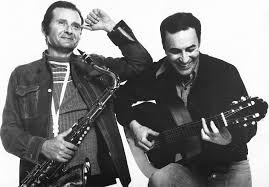
Before Getz/Gilberto: A Revolution Had Already Begun in Brazil
When Stan Getz entered a New York studio with João Gilberto and Antônio Carlos Jobim in March 1963, bossa nova did not need to be invented, discovered or rescued by American jazz. One of the most persistent simplifications surrounding Getz/Gilberto is the idea that the album somehow created bossa nova by bringing Brazilian rhythm together with American jazz. The real history is richer. By the time Getz heard João Gilberto’s guitar beside him, Brazilian musicians had already spent years developing a radically different relationship between samba, harmony, voice and rhythm. João’s 1958 recording of “Chega de Saudade,” written by Jobim and Vinicius de Moraes, had become one of the foundational statements of that new aesthetic, while Jobim, João and a broader generation of Brazilian composers and performers were transforming the musical environment of Rio de Janeiro. What happened with Getz/Gilberto was not the birth of bossa nova. It was the moment when a mature Brazilian language encountered one of jazz’s most lyrical saxophonists and found an extraordinary route into the international mainstream.
That distinction matters because the album’s beauty can otherwise conceal the imbalance in the way its story has often been told. Stan Getz was essential, but he was entering a musical world whose grammar had already been established. João Gilberto’s guitar had reorganized samba rhythm into something intimate enough to fit beneath a nearly whispered voice. Jobim had developed a harmonic and melodic language of remarkable sophistication. Vinicius had supplied poetry capable of making everyday Rio—love, absence, beaches, longing—feel universal. Getz brought something different: a tenor sound so naturally melodic and restrained that it could enter this Brazilian architecture without overwhelming it. The success of Getz/Gilberto would depend not on one tradition conquering another but on musicians recognizing the value of leaving one another room.
João Gilberto and the Reinvention of Samba
To understand the album, we have to begin with João Gilberto.
The word “quiet” appears constantly in descriptions of his music, but quietness alone does not explain his revolution. João’s great innovation was rhythmic. His guitar condensed elements of samba percussion into a highly controlled pattern in which the thumb suggested the bass pulse while the fingers articulated syncopated chords. The result could sound effortless, yet its internal balance was extraordinarily precise.
Above that guitar, João placed a voice that rejected much of the dramatic projection associated with popular singing. He did not need to push toward the listener. He could sing almost conversationally, allowing microscopic changes in timing to interact with the guitar.
Voice and instrument did not simply accompany one another.
They created a rhythmic system.
This changed what Brazilian popular music could sound like. Samba’s energy remained, but its scale became intimate. The music did not lose rhythm when the percussion grew quieter. Rhythm became concentrated.
That concentration would prove ideal for recording.
And eventually for Stan Getz.
“Chega de Saudade”
The transformation became impossible to ignore with “Chega de Saudade.” Jobim composed the music, Vinicius de Moraes wrote the lyrics, and João Gilberto’s 1958 recording became a decisive statement in the emergence of bossa nova.
The performance contained many of the elements that would define João’s art: understated singing, rhythmic guitar, sophisticated harmony and an almost radical refusal of excess.
Nothing sounds hurried.
But everything moves.
This paradox is fundamental to bossa nova. A listener unfamiliar with Brazilian rhythm might initially hear calmness and assume rhythmic simplicity. Listen more closely and the opposite emerges. Accents continually shift between voice and guitar. Phrases lean across the beat. The pulse is stable, but the surfaces surrounding it are constantly alive.
João had found a way to make complexity feel weightless.
That achievement predates Stan Getz’s involvement by years.
Jobim: The Architect Behind the Songs
If João transformed performance, Antônio Carlos Jobim provided much of the compositional architecture.
Jobim’s music brought together Brazilian rhythmic traditions, popular song, jazz harmony and his knowledge of European concert music without becoming reducible to any of them. His melodies could appear inevitable even when the harmonies beneath them moved through unexpectedly sophisticated relationships.
That combination was crucial to bossa nova’s international reach.
The songs were harmonically interesting enough to attract jazz musicians, yet melodically direct enough to survive translation into very different contexts.
“Desafinado.”
“Corcovado.”
“Samba de Uma Nota Só.”
“Garota de Ipanema.”
These were not merely vehicles waiting for American improvisers.
They were complete compositions.
Jazz musicians recognized something inside them that invited reinterpretation.
The relationship would become one of exchange, though not always an equal one in commercial terms.
Vinicius de Moraes: Poetry Inside the Architecture
The importance of Vinicius de Moraes can disappear when bossa nova is discussed primarily as a harmonic or rhythmic revolution. But the songs were also verbal worlds.
Vinicius brought poetry into Jobim’s melodic architecture with an unusual combination of sophistication and apparent simplicity. Love could be temporary. Beauty could already contain the sadness of its disappearance. A street, a beach or a passing woman could become a meditation on desire.
This emotional ambiguity was perfectly suited to bossa nova.
The music rarely needed to scream heartbreak.
Saudade could exist inside elegance.
This would become particularly important with “Garota de Ipanema.” Before it became an English-language international standard, it belonged to a specific Brazilian cultural and linguistic context, created by Jobim and Vinicius and rooted in Rio de Janeiro.
The global hit came later.
The song existed first.
Bossa Nova Travels North
By the beginning of the 1960s, American musicians were increasingly aware of the Brazilian movement. Connections between jazz and Brazilian music were not entirely new, and the history should not be reduced to a single discovery narrative. But a particularly important bridge came through guitarist Charlie Byrd, who traveled to Brazil during a U.S. State Department-sponsored tour and returned fascinated by the music he had heard there. He approached Stan Getz with the idea of recording Brazilian material.
The result was Jazz Samba, recorded by Getz and Byrd in 1962.
It became a major commercial success.
Its version of “Desafinado” was particularly important in introducing a large American audience to Jobim’s music. The Library of Congress likewise traces the American bossa-nova boom through Byrd’s encounter with Brazilian music and his subsequent collaboration with Getz.
So by the time Getz/Gilberto was recorded, Stan Getz was already strongly associated with bossa nova in the United States.
That creates an important historical irony.
The American saxophonist had become commercially identified with a Brazilian movement before he recorded an album with two of the musicians most responsible for creating its language.
Stan Getz Before Brazil
Getz’s suitability for bossa nova was not accidental.
His tenor saxophone had long been distinguished by a light, lyrical tone and an approach to improvisation in which melody remained central. Emerging from the late-1940s world surrounding Woody Herman’s Second Herd, Getz became one of the defining tenor voices associated with cool jazz, although his music was always broader than the label suggests.
His sound could float.
His articulation could be soft without becoming weak.
He possessed formidable technique but rarely needed virtuosity to announce itself through force.
This is why the earlier West Coast Jazz period matters to the larger story. The 1955 album does not anticipate bossa nova stylistically, but it reveals qualities that later made the encounter feel natural: melodic economy, tonal beauty, rhythmic flexibility and an ability to create intensity without increasing volume.
Getz did not need to become another musician to play bossa nova.
He needed to listen.
Why Getz Fit the Music
Many saxophonists could have played Jobim’s chord changes.
Far fewer could have entered João Gilberto’s sonic space without destroying its proportions.
A large tenor sound could easily have overwhelmed the guitar and voice. Aggressive bebop phrasing could have filled every opening João created. A player determined to demonstrate harmonic sophistication could have turned the music into jazz with Brazilian accompaniment.
Getz generally avoided that mistake.
His tone possessed enough warmth to become a second voice, and his melodic instincts allowed him to treat Jobim’s compositions as songs rather than merely progressions.
This distinction is essential.
Getz improvises.
But he continues singing through the instrument.
The Library of Congress describes his adaptation to bossa nova in essentially these terms, emphasizing the compatibility between his understated, lyrical jazz conception and João Gilberto’s vocal approach.
That compatibility would become the center of Getz/Gilberto.
Creed Taylor and the Next Step
Producer Creed Taylor understood that Jazz Samba had opened a commercial door, but the next project could move closer to the Brazilian source. Instead of another American interpretation of bossa nova repertoire, Getz could record with João Gilberto and Antônio Carlos Jobim themselves.
This was a fundamentally different proposition.
João was not simply a guitarist providing authentic rhythm.
He was one of the architects of the style.
Jobim was not an arranger hired to give Brazilian color to a jazz session.
He had composed much of the repertoire.
The collaboration therefore placed Getz inside an already functioning musical language.
Taylor’s role would prove important not only in assembling and producing the recording but later in shaping how it reached the American market. The Library of Congress credits him as producer of “The Girl from Ipanema,” while the Grammy history of the album also identifies Taylor as producer and Phil Ramone as engineer.
The commercial story would eventually become enormous.
But first they had to make the record.
March 1963
The sessions took place in New York in March 1963.
At their center were Stan Getz on tenor saxophone, João Gilberto on guitar and vocals, and Antônio Carlos Jobim on piano. Brazilian bassist Sebastião Neto and drummer Milton Banana completed the rhythmic foundation generally associated with the sessions.
This instrumentation is crucial to understanding the album’s scale.
There is no large orchestra.
No wall of percussion.
No attempt to make Brazilian music sound more spectacular for the American market.
Instead, the ensemble remains remarkably transparent.
João’s guitar can be heard.
Jobim does not overcrowd the harmony.
The bass supports rather than dominates.
Milton Banana’s drums preserve rhythmic movement without turning the music into a percussion showcase.
And Getz occupies the remaining air.
The recording works because everyone cannot be large simultaneously.
Two Different Concepts of Time
The meeting between Getz and João was not simply a combination of tenor saxophone and Brazilian guitar. It brought together different rhythmic instincts.
Jazz swing and João’s bossa nova pulse organize time differently.
Getz had spent decades learning how to place phrases against a swinging rhythm section. João’s guitar created another grid: stable but internally syncopated, with the voice often moving around it in subtle ways.
The challenge was not for one musician to abandon his rhythmic identity.
It was to find the overlap.
This is where Getz/Gilberto becomes more interesting than the word “fusion” suggests.
The musicians do not melt into a single neutral language.
João still sounds unmistakably Brazilian.
Getz still sounds unmistakably like Getz.
The beauty comes from the distance that remains between them.
João’s Authority
Accounts of the sessions sometimes emphasize tension between João and Getz, including stories about communication difficulties and disagreements over how the music should be approached. Some of those anecdotes have grown through repetition and should be treated cautiously.
But the larger musical truth is audible.
João had very precise ideas about rhythm, balance and phrasing.
His apparent softness should never be mistaken for passivity.
He was famously exacting about sound.
The guitar pattern had to sit correctly.
The voice had to relate properly to it.
Tempo mattered.
Dynamics mattered.
A musician entering that environment had to respect its proportions.
This helps correct another misleading image: the idea that João simply supplied delicate Brazilian accompaniment while Getz provided the important improvisational content.
Listen to the record from the guitar outward and the hierarchy changes.
João is organizing the world in which the saxophone moves.
Jobim Between the Two
Jobim occupies a fascinating position inside the ensemble because he is simultaneously composer, pianist and cultural bridge.
His piano playing is economical.
That economy is partly practical: João’s guitar already contains substantial harmonic information. A pianist filling every possible space would make the arrangement heavier.
Jobim instead contributes color.
A chord here.
A response there.
A subtle harmonic reinforcement.
The approach reflects the larger discipline of the album.
Musicians do not prove their importance by occupying more space.
They become important by understanding which space belongs to them.
Jobim’s greatest presence is therefore sometimes invisible.
The compositions themselves are his architecture.
Everyone else is already moving inside it.
Enter Astrud Gilberto
And then one of the most consequential voices in the history of bossa nova enters the story.
Astrud Gilberto, João’s wife at the time, was present during the sessions and had not established a professional recording career. She would sing in English on “The Girl from Ipanema” and “Corcovado.”
The circumstances surrounding that decision have been retold in multiple ways. Simplified accounts often make the moment sound almost accidental: Astrud happened to be in the room, someone suddenly realized she spoke English, and a star was born.
The basic fact that she was not yet a professional singer is well documented, including in the Library of Congress’s history of the recording.
But it is better not to force the session into a perfectly cinematic anecdote.
What matters is what happened when the microphone was turned toward her.
A Voice With Almost No Weight
Astrud’s voice was unlike the conventional American pop singing that surrounded it.
There was little vibrato.
Little theatrical projection.
Little sense that she was trying to overpower the microphone.
Her English carried a Brazilian accent.
And the apparent fragility of the performance became part of its identity.
What might have been considered limitations in another context became strengths here because the voice fit the scale of João’s conception.
Astrud does not sing “The Girl from Ipanema” as though delivering a grand romantic declaration.
She almost observes it.
That emotional distance creates intimacy.
The listener moves closer because the singer refuses to push outward.
It is one of the great examples of recording technology changing what a successful popular voice could be.
The microphone makes understatement enormous.
“Garota de Ipanema” Before “The Girl from Ipanema”
Before discussing the hit, however, it is important to restore the song’s Brazilian identity.
“Garota de Ipanema” was written by Jobim and Vinicius de Moraes before the Getz/Gilberto sessions. Its imagery emerged from Rio, and its Portuguese lyric possessed a poetic character that cannot simply be reduced to the later English adaptation.
For the international version, Norman Gimbel supplied English lyrics.
The album performance would make a brilliant structural choice: João begins in Portuguese, Astrud follows in English, and Getz’s tenor becomes another melodic voice within the conversation.
Brazilian song.
International translation.
Jazz improvisation.
Three different forms of communication occupy the same performance.
The Library of Congress lists Jobim, Vinicius, Gimbel, João, Astrud and Getz among the creators and performers associated with the historic recording.
The Opening That Changed Everything
The performance begins without announcing that history is about to happen.
João’s guitar establishes the pulse.
His voice enters.
The delivery is intimate enough that the listener might feel the performance is taking place across a small room rather than inside a commercial recording studio.
Then Astrud sings in English.
The sonic world barely changes in volume, but culturally the recording crosses a border.
Her voice gives English-speaking listeners an immediate entrance into the song without erasing the Portuguese that preceded it.
And then Getz arrives.
His tenor does not shatter the intimacy.
It extends it.
This is the moment when the entire concept of Getz/Gilberto becomes audible.
The saxophone does not need to dominate the Brazilian material to make jazz relevant.
It can enter the conversation.
Nobody Knew What It Would Become
The sessions were completed in 1963, but Getz/Gilberto would not be released until 1964. That delay is one of the ironies of the album’s history. The recording that would become almost synonymous with the international image of bossa nova spent months waiting while the commercial wave Getz had already helped create continued around it.
When the record finally appeared, the response exceeded the normal boundaries of jazz.
“The Girl from Ipanema” crossed into mainstream popular culture and helped bring Getz to an audience far larger than the jazz public. The Library of Congress later selected the recording for the National Recording Registry, noting its role in popularizing Brazilian bossa nova in the United States.
The Grammy recognition would be equally extraordinary: Getz/Gilberto won Album of the Year, while “The Girl from Ipanema” received Record of the Year.
But those awards belong to the story after the music.
Before the Grammys, before the radio success and before Astrud became an international star, there was a small ensemble trying to solve a much more interesting problem:
How little could they play and still make the music feel complete?
Buy Amazon
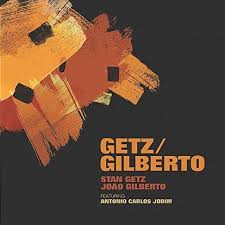
Getz/Gilberto: The Art of Leaving Space
The extraordinary quality of Getz/Gilberto becomes clearer when the album is heard not simply as a meeting between jazz and bossa nova but as an exercise in proportion. Almost every musician involved possesses the ability to contribute more than he actually plays. Stan Getz could fill the harmonic space with long tenor lines. Antônio Carlos Jobim could make the arrangements considerably denser. João Gilberto could emphasize the rhythmic complexity hidden inside his guitar technique. The rhythm section could make the Brazilian pulse more overt. Instead, the record depends on continuous acts of restraint. Each musician seems to understand that the smallest gesture becomes more significant when the surrounding space remains open. This is not minimalism for its own sake. It is an ensemble discovering that intimacy can create intensity without volume.
That balance also prevents the record from becoming a simple American jazz session decorated with Brazilian rhythm. João’s guitar remains the structural center of much of the music. Jobim’s compositions determine its melodic and harmonic character, while the Brazilian rhythm section preserves a pulse fundamentally different from conventional swing. Getz enters that environment as an improviser whose greatest contribution is his ability to retain his own identity without demanding that the music reorganize itself around him. The album’s famous softness is therefore the product of discipline. Everyone listens. Everyone leaves something unsaid.
“The Girl from Ipanema”: Before the Hit
Today it is almost impossible to hear “The Girl from Ipanema” without the weight of its cultural history. The melody has circulated through elevators, films, television, restaurants, advertisements and countless cover versions. Familiarity can make it seem lighter than it actually is.
Return to the album performance and listen before the mythology begins.
João’s guitar establishes the rhythmic architecture with extraordinary precision. His Portuguese vocal enters without dramatic announcement. The melody moves naturally across Jobim’s harmony, and the guitar maintains the characteristic tension between stable pulse and syncopated chord placement.
Then Astrud Gilberto enters in English.
The transition is one of the most consequential moments in twentieth-century popular recording, yet nothing about it sounds designed to be monumental. Her delivery is almost neutral compared with the dominant traditions of American popular singing at the time. There is no attempt to demonstrate vocal power.
The microphone does the work that projection once had to do.
Intimacy becomes scale.
João and Astrud: Two Kinds of Understatement
The contrast between João and Astrud is subtle but essential.
João’s apparent simplicity is the result of extraordinary rhythmic control. His voice moves around the guitar pulse with microscopic precision, creating tension between where a phrase might conventionally land and where he chooses to place it.
Astrud’s understatement is different.
Her performance has less rhythmic complexity, but its directness gives the English lyric an almost conversational quality. She sounds neither theatrical nor self-consciously “jazzy.” That absence of stylistic display helped make the song accessible to listeners who might otherwise have regarded Brazilian music as unfamiliar.
The two voices therefore perform different functions.
João establishes the Brazilian language.
Astrud opens another entrance into it.
Neither needs to overpower the other.
When Getz Enters
Then comes Getz.
His tenor tone is larger than either voice, but he immediately adjusts his scale to the arrangement. He does not treat “The Girl from Ipanema” as a harmonic vehicle waiting to be conquered by a jazz soloist.
He remains close to melody.
His phrases breathe.
The tone carries enough warmth and body to contrast with João and Astrud without destroying their intimacy.
This ability is more difficult than it sounds. A tenor saxophone naturally occupies substantial sonic space. Getz could have turned the recording into a feature for himself.
Instead, he behaves almost like another singer.
The saxophone becomes a third voice.
Portuguese.
English.
Tenor.
The arrangement works because none claims exclusive ownership of the song.
“Doralice”: Movement Without Weight
“Doralice,” composed by Dorival Caymmi and Antônio Almeida, changes the atmosphere. The rhythmic energy is more immediately apparent, reminding listeners that bossa nova’s softness never meant absence of motion.
João’s guitar again becomes essential.
His technique creates an extraordinary illusion: the rhythm seems relaxed even while its internal organization remains precise. This is one reason attempts to reproduce bossa nova by simply playing softly often fail. Softness is a surface characteristic.
The deeper language is rhythmic.
Getz responds by increasing movement without becoming aggressive. His improvisation retains the lyrical quality associated with his sound, but the phrasing interacts more actively with the pulse.
The performance reveals why the partnership works.
João does not swing like an American jazz rhythm section.
Getz does not attempt to turn him into one.
They meet without erasing the difference.
“Para Machucar Meu Coração”
The album continues with “Para Machucar Meu Coração,” a composition by Ary Barroso, one of the major figures of Brazilian popular music before bossa nova.
Its inclusion is historically revealing.
Getz/Gilberto is not exclusively a showcase for newly written Jobim material. By including Barroso, the musicians place bossa nova in conversation with an earlier Brazilian songwriting tradition.
This reinforces a point often lost in simplified histories.
Bossa nova was revolutionary, but it did not emerge from nowhere.
João Gilberto transformed existing Brazilian materials. His genius involved reinterpretation as much as invention. Older samba repertoire could enter his rhythmic and vocal language and emerge sounding radically new.
The album therefore contains multiple histories simultaneously.
American jazz encounters bossa nova.
Bossa nova encounters earlier Brazilian song.
And Getz must navigate both.
João as Arranger Without an Orchestra
João Gilberto’s genius becomes particularly visible when we think of him not simply as guitarist and singer but as a kind of arranger.
He reduces.
A conventional arrangement might distribute rhythmic functions among percussion, bass, piano and guitar. João can imply an entire rhythmic system with six strings.
His right hand organizes bass and chordal accents while his voice moves independently above them.
The result gives other musicians enormous information without producing sonic density.
That is why Jobim can play so little.
It is why Getz has room.
João’s guitar already contains architecture.
This helps explain the profound influence he would exert on generations of Brazilian musicians. His innovation was not a particular chord progression or a soft vocal style that could be copied superficially.
He changed the relationship between rhythm, harmony and song.
“Desafinado”: Returning to the American Breakthrough
The next track, “Desafinado,” brings the story back toward Stan Getz’s earlier encounter with bossa nova.
Jobim and Newton Mendonça had written the composition before Getz became associated with the music, and João had already recorded it in Brazil. Its title—often translated as “out of tune”—contains characteristic wit, responding in part to criticism of bossa nova’s unconventional singing and harmonic language.
Getz had recorded the piece with Charlie Byrd for Jazz Samba, helping make it one of the compositions most strongly associated with the American bossa nova boom.
On Getz/Gilberto, however, the context changes fundamentally.
Getz is no longer interpreting Brazilian repertoire primarily with American musicians.
He is playing beside João and Jobim.
The source has entered the room.
Two Histories of “Desafinado”
Comparing the Jazz Samba and Getz/Gilberto versions reveals the danger of describing musical exchange as a simple progression from less authentic to more authentic. Both recordings have their own identities and historical importance.
But the later performance makes João’s conception impossible to ignore.
The guitar does not simply accompany the saxophone.
It defines the rhythmic field.
Getz consequently sounds different because the environment around him has changed.
This is one of the album’s deeper lessons.
Improvisers do not possess a single style that remains unaffected by context.
Great players listen to the architecture surrounding them.
Getz remains recognizable.
But João changes what being Stan Getz means for several minutes.
That is collaboration.
“Corcovado”: Quiet Nights and the Power of Translation
“Corcovado”, another Jobim composition, became internationally familiar as “Quiet Nights of Quiet Stars.”
The title refers to Rio’s Corcovado mountain, and the Portuguese lyric evokes a domestic intimacy that fits João’s aesthetic perfectly. The song does not require dramatic narrative. Its emotional world is built from stillness, love and the possibility that an ordinary room can contain an entire life.
On Getz/Gilberto, Astrud again sings in English.
Her voice suits the song precisely because she does not inflate it.
The lyric’s intimacy survives translation partly through her refusal to perform intimacy theatrically.
Getz follows the same principle.
His tenor could easily turn the ballad into a showcase for lush romanticism.
Instead, he stays within the room.
Jobim’s Piano: The Art of Not Competing
Listen to Antônio Carlos Jobim behind the voices and saxophone and his restraint becomes increasingly remarkable.
A composer sitting at the piano while other musicians perform his music might naturally emphasize the harmonic sophistication of the material.
Jobim does not need to.
João’s guitar is already articulating much of the harmonic and rhythmic information. Jobim adds selective voicings and responses that change color without increasing weight unnecessarily.
This creates transparency.
The listener can hear relationships between instruments rather than simply hearing a finished wall of harmony.
Jobim understands that orchestration is partly the management of absence.
A note not played leaves room for João’s guitar.
A chord withheld leaves room for Getz.
A pianist’s restraint can make an ensemble larger because more relationships become audible.
“Só Danço Samba”
With “Só Danço Samba,” written by Jobim and Vinicius de Moraes, the rhythmic character again becomes more explicit. The title itself—“I Only Dance Samba”—places Brazilian identity at the center.
The performance is useful for another reason: it demonstrates that Getz/Gilberto is not simply an album of dreamy ballads.
The pulse can be playful.
The ensemble can move.
Getz can phrase rhythmically without abandoning his characteristic smoothness.
The saxophone’s relationship with João’s guitar becomes particularly fascinating here because Getz must negotiate accents that do not correspond exactly to the swing language in which his improvisational identity had developed.
He adapts without caricature.
There is no exaggerated attempt to “sound Brazilian.”
He sounds like Stan Getz listening carefully to Brazilian musicians.
That distinction is everything.
“O Grande Amor”
“O Grande Amor,” another Jobim-Vinicius composition, brings the album back toward a darker emotional atmosphere. Its harmonic movement and melody create a sense of romantic melancholy that aligns naturally with Getz’s tenor sound.
Here the meeting between traditions seems almost inevitable.
But inevitability is retrospective.
The musicians make it sound easy because they solve the difficult problem of balance.
Getz’s tone contains enough melancholy to deepen the song without making it sentimental.
João maintains rhythmic clarity.
Jobim provides harmonic color.
The ensemble never needs to announce the sophistication of the composition.
The emotional effect arrives first.
Analysis can follow later.
This ability to satisfy both kinds of listening—immediate and analytical—is one reason the album traveled so successfully beyond specialist jazz audiences.
“Vivo Sonhando”
The original album closes with “Vivo Sonhando,” another Jobim composition whose title can be rendered as “Dreamer” or “I Live Dreaming.”
Placed at the end of the record, it feels less like a grand finale than a continuation.
That is appropriate.
Getz/Gilberto does not build toward a dramatic climax. Its architecture is cyclical and intimate. The listener leaves much as the album began: inside an environment defined by guitar, melody, pulse and carefully managed space.
This refusal of spectacle became part of the record’s power.
In an era when technical virtuosity and large arrangements could signify ambition, Getz/Gilberto demonstrated another possibility.
Sophistication could whisper.
Phil Ramone and the Sound of Intimacy
The sonic character of the album also owes much to engineer Phil Ramone, working with producer Creed Taylor. The recording preserves enough separation for the instruments to remain individually intelligible while maintaining the impression that they belong to one acoustic environment.
This balance matters enormously for music built on small gestures.
If João’s guitar were buried, the rhythmic architecture would weaken.
If Getz were too prominent, the proportions would collapse.
If the piano dominated, the harmonic transparency would disappear.
Recording is therefore not neutral documentation.
The engineering helps determine whether the musical relationships survive playback.
On Getz/Gilberto, they do.
The sound allows intimacy to remain physical.
The Album Waits
One of the stranger aspects of the story is that the recordings were completed in March 1963, yet the album did not appear until 1964.
During that interval, bossa nova’s American visibility continued to grow. The commercial success of Jazz Samba had already established demand, and the new album contained material with enormous crossover potential.
But the delay also means that what listeners eventually heard as a perfectly timed cultural event had existed privately for months.
The musicians had already completed the essential work.
History simply had not caught up with the tape.
When Verve finally released the album, the response transformed everyone associated with it—though not equally.
The Single Changes the Story
The album version of “The Girl from Ipanema” begins with João singing in Portuguese before Astrud enters in English.
For the American single, the recording was edited.
João’s Portuguese vocal was removed.
The focus shifted toward Astrud and Getz.
Commercially, the decision was enormously effective. The shorter English-language version was ideally positioned for American radio and became a major hit.
Historically, however, the edit is deeply revealing.
The song’s international identity was created partly by subtracting the Brazilian voice that had opened the original performance.
João remained essential to the creation of the recording.
But millions of listeners first encountered the song through a version in which his vocal presence had disappeared.
Globalization can amplify music.
It can also rearrange who is heard.
Astrud Becomes the Face of Bossa Nova
The success of the single transformed Astrud Gilberto almost overnight from a previously unrecorded singer into one of the most internationally recognizable voices associated with Brazilian music.
Her vocal style became inseparable from the global image of bossa nova.
This was both an extraordinary opportunity and a historical complication.
For many international listeners, Astrud’s voice became their first encounter with Brazilian musical understatement. Yet João Gilberto, Jobim and the Brazilian movement from which the sound emerged had a much deeper history than the hit single could communicate.
Astrud herself would build a substantial recording career after Getz/Gilberto, developing an identity beyond the circumstances of her debut.
But “The Girl from Ipanema” would always remain attached to her.
A few minutes recorded in 1963 had permanently changed her life.
Success and Unequal Visibility
The international triumph of Getz/Gilberto raises a larger question about cross-cultural collaboration.
Who becomes visible when music crosses borders?
Stan Getz was already a famous American jazz musician with access to the American record industry.
Astrud sang in English and became immediately legible to the U.S. popular market.
Jobim’s compositions circulated widely and would become jazz standards.
João Gilberto, despite being arguably the central architect of the musical language heard throughout the album, remained a more enigmatic figure for many international listeners.
This does not invalidate the collaboration.
But it complicates the celebratory story.
Cultural exchange happens inside commercial systems.
Those systems influence whose name becomes familiar, whose voice reaches radio and whose contribution is easiest to market.
The music can be collaborative even when the rewards and visibility are uneven.
The 1965 Grammys
The album’s American triumph became undeniable at the 1965 Grammy Awards.
Getz/Gilberto won Album of the Year, an extraordinary achievement for a jazz recording, while “The Girl from Ipanema” won Record of the Year. The album also received major jazz recognition, cementing its position far beyond the specialist market.
The significance extends beyond trophies.
A recording built around Portuguese-language singing, Brazilian rhythm, restrained arrangements and jazz improvisation had entered the center of American popular culture.
Bossa nova was no longer merely an exotic new trend discussed by musicians.
It had become part of the international mainstream.
But success brought distortion with it.
Record companies rushed to capitalize on the sound.
“Bossa nova” became a marketing term.
Imitations multiplied.
A musical revolution that had emerged from specific Brazilian cultural conditions could now be reduced commercially to a rhythm, a guitar pattern and an atmosphere of sophisticated relaxation.
The difference between influence and stereotype was becoming increasingly important.
More Than Background Music
Perhaps the strangest consequence of Getz/Gilberto‘s success is that the album’s sophistication eventually helped it become ubiquitous enough to disappear into the background.
Its music could be heard in hotels, restaurants, lounges and countless environments designed to communicate elegance.
That ubiquity created a misleading association between bossa nova and passive relaxation.
But João Gilberto’s rhythm is not passive.
Jobim’s harmony is not simple.
Getz’s improvisation is not decorative.
The music feels effortless because enormous discipline has removed everything unnecessary.
Background listening reveals the surface.
Close listening reveals the architecture.
That difference is central to the album’s durability.
What the Album Really Accomplished
Getz/Gilberto did not invent bossa nova.
It did not represent the first meeting between jazz and Brazilian music.
It did not single-handedly introduce Brazilian music to the United States.
Its achievement was more specific and perhaps more remarkable.
It created an unusually successful translation without complete assimilation.
Getz remained Getz.
João remained João.
Jobim’s compositions retained their Brazilian identity.
Portuguese remained audible.
Jazz improvisation remained central.
And Astrud’s English vocals created a bridge through which millions of listeners could enter.
The differences did not disappear.
They became the arrangement.
That is why the album still works after the fashion it helped create has long since passed.
After Getz/Gilberto: When a Musical Language Became a Global Image
The success of Getz/Gilberto created a paradox that still shapes the way bossa nova is understood outside Brazil. The album brought extraordinary international attention to music created by Brazilian composers and performers, helped establish Antônio Carlos Jobim’s songs as global standards and gave João Gilberto’s revolutionary approach to rhythm and singing an audience far beyond Brazil. At the same time, its enormous commercial reach encouraged the international record industry to compress a complex musical movement into an easily marketable image: soft guitar, restrained vocals, elegant harmony, beaches, romance and sophisticated relaxation. What had emerged from a specific moment in Brazilian cultural history could now be sold as an atmosphere. The transformation was not caused by Getz/Gilberto alone, but the album became its most visible symbol. To understand its legacy, we therefore have to hold two ideas together: this was a genuine artistic collaboration of exceptional beauty, and its global success changed the way the culture that produced it would subsequently be represented.
That complexity is one reason the album deserves more than nostalgic celebration. It demonstrates what can happen when musicians from different traditions listen carefully enough to preserve their differences, but it also reveals what happens after the music leaves the studio and enters an international commercial system. The musicians created one thing. Radio, record companies, critics and audiences could turn it into another. João Gilberto’s rhythmic revolution became “easy listening” for some listeners. Jobim’s compositions became jazz standards sometimes performed with little awareness of their Brazilian context. Astrud Gilberto became an international symbol of a movement she had entered as a recording artist during these sessions. Stan Getz became so strongly identified with bossa nova that one chapter of a much longer jazz career threatened to define him completely. The music survived all of those simplifications because the performances themselves were richer than the mythology built around them.
Carnegie Hall and the Bossa Nova Boom
The international expansion of bossa nova had already begun before Getz/Gilberto. A crucial event occurred at Carnegie Hall in November 1962, when a large group of Brazilian musicians appeared in a highly publicized concert in New York. The event has often been described as chaotic, and contemporary reactions were mixed, but its historical significance was substantial. João Gilberto, Jobim and other Brazilian artists were no longer simply names circulating among musicians and record collectors. Bossa nova was being presented directly to an American audience.
At roughly the same time, Jazz Samba had given Stan Getz and Charlie Byrd a major commercial breakthrough with Brazilian repertoire. “Desafinado” became a hit. American musicians began recording bossa nova material with extraordinary speed.
By March 1963, therefore, Getz/Gilberto was being created inside an existing boom.
What made it different was the presence of the Brazilian architects themselves.
This distinction becomes increasingly important as the story moves beyond the album.
Stan Getz After the Breakthrough
For Stan Getz, bossa nova brought a level of mainstream recognition that even his considerable jazz reputation had never produced. His tenor became one of the sounds most immediately associated with the movement in the United States.
Yet defining Getz principally through bossa nova does him a disservice.
He had already established himself as a major jazz saxophonist during the previous decade, and his post-bossa career would continue through many different contexts. His playing could be harder, more exploratory and more intensely improvisational than the relaxed image surrounding “The Girl from Ipanema” might suggest.
This is why hearing Getz’s earlier work is so valuable.
Go back to the recordings surrounding his years with Woody Herman.
Hear his 1950s small groups.
Listen to West Coast Jazz.
Then return to Getz/Gilberto.
The Brazilian recordings no longer sound like the moment when Getz discovered restraint.
They sound like the moment when an already-developed quality in his playing found an almost ideal environment.
Getz/Gilberto #2
The relationship continued onstage. In October 1964, Getz and João appeared together at Carnegie Hall, with Astrud Gilberto also participating. Material from the concert would be released as Getz/Gilberto #2.
The live setting inevitably changed the balance.
Studio intimacy cannot simply be reproduced in a concert hall. The musicians are now performing after the first album has become a phenomenon, and the audience already carries expectations created by the hit.
This is another fascinating stage in the history.
The original sessions were made before anyone knew exactly how enormous the response would become.
The live performances occurred after success had changed the context.
Music once created as an experiment in collaboration was now repertoire.
The musicians had to live inside their own breakthrough.
João Gilberto After the Global Explosion
For João Gilberto, international recognition did not produce a conventional pop-star trajectory. His career remained defined by exacting musical standards, a relatively small repertoire repeatedly reconsidered and an almost obsessive attention to sound, rhythm and interpretation.
This was entirely consistent with the musician heard on Getz/Gilberto.
João’s art was based on refinement rather than accumulation.
A familiar song was not necessarily finished because he had already recorded it. Like a jazz improviser returning to a standard, he could discover new relationships between voice and guitar through subtle changes in tempo, phrasing and harmony.
His later recordings would continue demonstrating how complete his musical universe could become with remarkably few elements.
One guitar.
One voice.
Sometimes almost nothing else.
Yet the rhythmic implications could be enormous.
The Radicalism of Playing Quietly
João’s influence is easiest to underestimate because so much of contemporary popular music has absorbed the possibilities he helped demonstrate.
The microphone changed singing during the twentieth century by allowing performers to communicate without projecting to the back of a theater. João took that intimacy into a highly specific rhythmic environment.
He could sing softly without losing authority.
His guitar could imply percussion without reproducing a samba ensemble literally.
The result challenged assumptions about what intensity had to sound like.
Loudness was not intensity.
Density was not sophistication.
Virtuosity did not require display.
These ideas now seem familiar partly because artists such as João helped normalize them.
In the late 1950s, they were revolutionary.
Jobim Becomes an International Composer
The international success of bossa nova transformed Antônio Carlos Jobim into one of the most widely performed Brazilian composers in history.
Songs such as “The Girl from Ipanema,” “Corcovado,” “Desafinado,” “Wave” and “Águas de Março” would travel across languages, genres and generations. Jazz musicians embraced his compositions because their melodic strength and harmonic richness made them unusually fertile improvisational vehicles.
But the label “Brazilian jazz standard” can obscure as much as it reveals.
Jobim’s music belongs first to a Brazilian compositional world.
Jazz musicians discovered possibilities within it.
That distinction preserves the direction of influence.
American jazz did not need to legitimize Jobim’s compositions by adopting them. Their strength made adoption inevitable.
The jazz repertoire became larger because Brazilian music entered it.
Astrud After Ipanema
No career changed more suddenly because of the sessions than Astrud Gilberto’s.
Her appearance on “The Girl from Ipanema” transformed her into an international recording artist, and she soon began making albums under her own name. Her understated delivery became so influential that it helped create an entire international stereotype of bossa nova singing.
That influence was complicated.
Astrud’s voice genuinely possessed a distinctive quality. Its emotional distance, limited vibrato and apparent conversational ease worked beautifully with the music.
But imitators could copy the surface without understanding the rhythmic sophistication underneath Brazilian song.
Softness became a formula.
Accent became an aesthetic signifier.
Bossa nova risked being reduced to a vocal mannerism.
Astrud herself was more interesting than the stereotype that followed her.
Who Benefited?
The commercial history surrounding Getz/Gilberto has also generated enduring discussion about compensation, credit and power.
Astrud’s contribution became essential to the hit single, yet accounts of how she was compensated and how the participants benefited financially have contributed to broader questions about the unequal structures surrounding international music production. Details are sometimes repeated in contradictory forms, so they should be approached carefully rather than converted into another convenient legend.
The broader imbalance is easier to establish.
American labels controlled access to the world’s largest record market.
Stan Getz already possessed a powerful position within that industry.
Brazilian musicians entered a commercial structure that could amplify their music enormously while also determining how it was packaged and credited.
This does not make the collaboration artistically illegitimate.
It makes its history more realistic.
Beautiful music can emerge inside unequal systems.
Both facts can be true.
The Bossa Nova Stereotype
After the breakthrough, the term bossa nova became commercially valuable.
That created inevitable imitation.
Record companies could add a Brazilian rhythm to familiar material and market the result as bossa nova. Lounge music absorbed its atmosphere. Pop singers recorded Jobim songs. Jazz musicians added Brazilian compositions to their repertoires.
Some of this exchange produced excellent music.
Some reduced an intricate rhythmic language to a fashionable beat.
This happens repeatedly when regional music becomes internationally successful. The qualities easiest to reproduce are separated from the cultural structures that gave them meaning.
In bossa nova’s case, intimacy became one of those exportable surfaces.
But João’s intimacy was never merely mood.
It was rhythmic architecture.
Brazil Was Already Changing
There is another reason not to freeze Brazilian music inside the world of Getz/Gilberto.
Brazil itself did not stop evolving when American audiences discovered bossa nova.
By the middle and later 1960s, the country’s political and musical environment was changing dramatically. The military coup of 1964 began a dictatorship that would reshape Brazilian cultural life. A younger generation of musicians would soon develop new movements and confront new political realities.
MPB emerged.
Tropicália would radically reorganize relationships between Brazilian tradition, rock, avant-garde ideas and mass culture.
Artists such as Caetano Veloso, Gilberto Gil, Chico Buarque, Gal Costa and others would create music that could not be understood simply as an extension of bossa nova.
International listeners who imagined Brazil as permanently suspended in the elegant atmosphere of “The Girl from Ipanema” were hearing only one moment.
Brazil kept moving.
Jazz Kept Listening
Jazz musicians did too.
The influence of Brazilian music did not end with the bossa nova boom. Rhythmic and harmonic ideas from Brazil continued entering jazz through countless routes.
Jobim’s compositions became permanent repertoire.
Brazilian musicians developed increasingly complex relationships with jazz, samba, funk and regional traditions.
American players learned that Latin American music could not be reduced to a single generic “Latin” rhythm.
The long-term result was not simply a subgenre called jazz bossa nova.
It was a widening of jazz’s rhythmic imagination.
That process had begun before Getz/Gilberto and continued long after it.
The Album as Cultural Translation
The most useful way to understand Getz/Gilberto today may therefore be as an extraordinary act of cultural translation.
Translation does not mean copying.
It means creating a form through which something can cross a boundary without remaining exactly the same.
João’s Portuguese singing remained.
Astrud introduced English.
Getz introduced a recognizable American jazz voice.
Jobim’s compositions provided the common architecture.
The Brazilian rhythm section preserved the pulse.
Different listeners could enter through different doors.
An American jazz listener might begin with Getz.
A Brazilian listener might hear João.
A pop listener might enter through Astrud.
A composer might hear Jobim.
The album contains all of those pathways.
What Gets Lost in Translation
But translation always changes something.
The American single of “The Girl from Ipanema” provides the clearest example. Removing João’s Portuguese vocal made the recording more immediately accessible to English-language radio.
Commercially, it worked brilliantly.
Culturally, the balance changed.
Millions of listeners encountered a Brazilian composition through English lyrics sung by Astrud and a tenor solo by an American jazz star.
The Brazilian origin remained present.
But it became easier to overlook.
This is not an argument that the single should never have existed.
It is an example of how markets reshape cultural objects.
The album version preserves a more complete conversation.
The single presents a more efficient translation.
History remembers both.
Why the Record Still Sounds Modern
More than sixty years later, Getz/Gilberto has aged remarkably well because the musicians avoided many of the production gestures that tie recordings tightly to a particular fashion.
There is little sonic excess.
The arrangements do not depend on novelty effects.
The instrumentation remains transparent.
The performances prioritize tone, rhythm and interaction.
Most importantly, nobody seems to be trying to convince the listener that the music is sophisticated.
It simply is.
That confidence gives the record its modernity.
Contemporary recordings can be far more technologically elaborate and still sound crowded beside it.
Getz/Gilberto demonstrates that sonic space is not emptiness.
It is a compositional resource.
Listen to João First
For listeners who know the album primarily through Stan Getz or “The Girl from Ipanema,” one experiment can completely change the experience:
Listen to the entire record while following João Gilberto’s guitar.
Ignore the saxophone temporarily.
Ignore the vocals.
Listen to the thumb.
Listen to the chord attacks.
Notice how the guitar creates forward motion without sounding hurried.
Then listen again and hear where João places his voice in relation to that pattern.
Only after that return to Getz.
The saxophone suddenly sounds different.
You can hear what Getz is responding to.
The apparent simplicity disappears.
The architecture becomes visible.
Then Listen to Getz
Now reverse the experiment.
Follow Getz.
Notice how rarely he overwhelms the compositions despite possessing a tenor sound capable of doing so.
Hear how frequently his phrases retain melodic shapes that could almost be sung.
Listen to the endings.
Listen to the spaces between phrases.
Notice how his articulation changes inside the Brazilian rhythm.
Getz’s contribution becomes more impressive when it is not described as introducing sophistication to Brazilian material.
The sophistication was already there.
His achievement was recognizing it.
He understood when not to interfere.
Then Hear Jobim
On another listen, focus on Jobim.
His piano can seem almost absent.
But the compositions are everywhere.
The melodies determine the emotional world.
The harmonies shape Getz’s improvisational possibilities.
The transitions define the songs.
The restraint of his piano playing demonstrates an unusual composer’s confidence.
Jobim does not need to announce ownership.
The musicians are already inside his architecture.
This is perhaps the deepest reason the album belongs as much to him as to the two names on its cover.
Without Jobim, much of the world being translated would not exist.
Where to Go After Getz/Gilberto
A listener who discovers bossa nova through this album should resist the temptation to remain only with recordings designed for the American market.
Go backward.
Hear João Gilberto’s Chega de Saudade and O Amor, o Sorriso e a Flor.
Hear Jobim’s early work.
Explore Carlos Lyra, Nara Leão, Baden Powell, Vinicius de Moraes and the wider Brazilian environment surrounding bossa nova.
Then move outward.
Hear how Brazilian music develops through MPB and Tropicália.
Follow Jobim beyond the international hits.
Listen to João’s later recordings, where increasingly little musical material can produce astonishing rhythmic depth.
And return to Stan Getz’s jazz career before and after Brazil.
Doing so restores everyone involved to a larger history.
Two Stan Getz Stories
This is also why West Coast Jazz and Getz/Gilberto deserve separate places in the Jazz Latitude archive.
The first reveals Getz in the 1950s, already possessing the lyrical economy and tonal control that would later make his Brazilian encounter so convincing.
The second documents what happened when those qualities entered João Gilberto’s rhythmic universe.
One article should not replace the other.
Together they reveal continuity.
The bossa nova years were not an interruption in Getz’s identity.
They exposed something that had been there all along.
The Real Revolution
So what exactly did Getz/Gilberto change?
It did not invent bossa nova.
João, Jobim, Vinicius and their Brazilian contemporaries had already created the movement.
It did not begin jazz’s relationship with Brazil.
That history was older.
It did not even begin America’s fascination with bossa nova.
Jazz Samba and the 1962 boom had already opened that door.
What Getz/Gilberto accomplished was more precise.
It created a recording in which Brazilian composition, João Gilberto’s rhythmic conception, American jazz improvisation and an English-language vocal bridge could coexist without the music collapsing into novelty.
Then the world heard it.
Final Thoughts: The Architecture of the Whisper
The old description of Getz/Gilberto as an “architecture of the whisper” contains a useful idea if we remove the mythology around it.
The album whispers because its musicians understand proportion.
João does not need more guitar.
Jobim does not need more piano.
Astrud does not need more voice.
Getz does not need more saxophone.
The rhythm section does not need more percussion.
Every musician leaves room for another.
That is why the recording feels spacious without feeling empty.
And that may be its most enduring lesson.
Cross-cultural collaboration works best not when differences disappear but when musicians become curious enough to hear them.
Stan Getz did not become Brazilian.
João Gilberto did not become an American jazz musician.
Jobim did not need jazz to validate his compositions.
Astrud did not need a conventional singer’s voice.
For a few days in New York in 1963, those differences occupied the same room.
A year later, the record reached the world.
The industry turned it into a phenomenon. Radio turned one song into a standard. Awards turned the collaboration into history. Decades of repetition turned bossa nova into an international symbol of elegance and calm.
But beneath all of that cultural weight, the original record remains remarkably intimate.
A guitar establishes a pulse.
A voice enters quietly.
Another voice answers in another language.
A tenor saxophone waits.
Then it sings.
And the world moves closer to listen.